
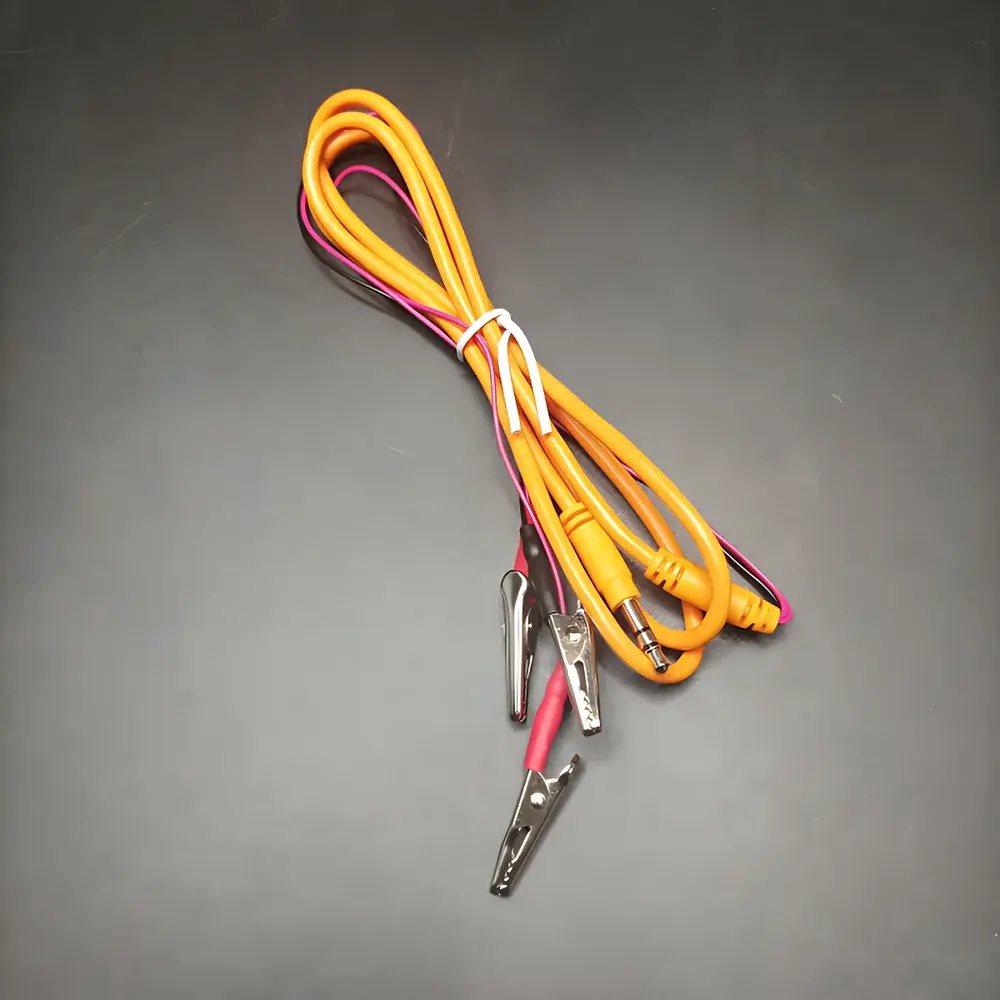
Muscle SpikerBox by Backyard Brains
| Brand | Backyard Brains |
|---|---|
| Origin | USA |
| Model | Muscle SpikerBox |
| Type | DIY Electrophysiology Kit for EMG Recording |
| Compliance | CE, RoHS |
| Intended Use | Educational and Research-Level Surface Electromyography (sEMG) Signal Acquisition |
Overview
The Muscle SpikerBox by Backyard Brains is a fully open-source, do-it-yourself (DIY) electrophysiology instrument designed for real-time acquisition and visualization of surface electromyographic (sEMG) signals from human skeletal muscle. Built upon the principles of differential amplification and analog signal conditioning, the device captures low-amplitude bioelectric potentials (typically 0.1–5 mV peak-to-peak) generated during voluntary or reflexive muscle contraction. It employs a high-input-impedance instrumentation amplifier (≥1012 Ω), adjustable gain (×100 to ×1000), and hardware-based 60 Hz notch filtering to suppress mains interference—enabling robust signal fidelity in non-shielded educational lab environments. Unlike clinical-grade EMG systems, the Muscle SpikerBox is engineered for pedagogical transparency: every circuit node is accessible, all schematics are publicly licensed under Creative Commons, and firmware source code is available on GitHub. It interfaces directly with standard audio inputs (3.5 mm TRS jack) on laptops, tablets, or smartphones, leveraging built-in sound cards as analog-to-digital converters (sampling up to 44.1 kHz, 16-bit resolution).
Key Features
- Open-hardware architecture with complete Bill of Materials (BOM), PCB layout files, and assembly documentation freely available online
- Real-time sEMG signal acquisition compatible with free, cross-platform SpikeRecorder software (macOS, Windows, Linux, iOS, Android)
- Differential input stage optimized for dry-surface electrode configurations; common-mode rejection ratio (CMRR) > 80 dB at 60 Hz
- Onboard LED indicator for signal activity and power status; tactile switch for manual trigger synchronization
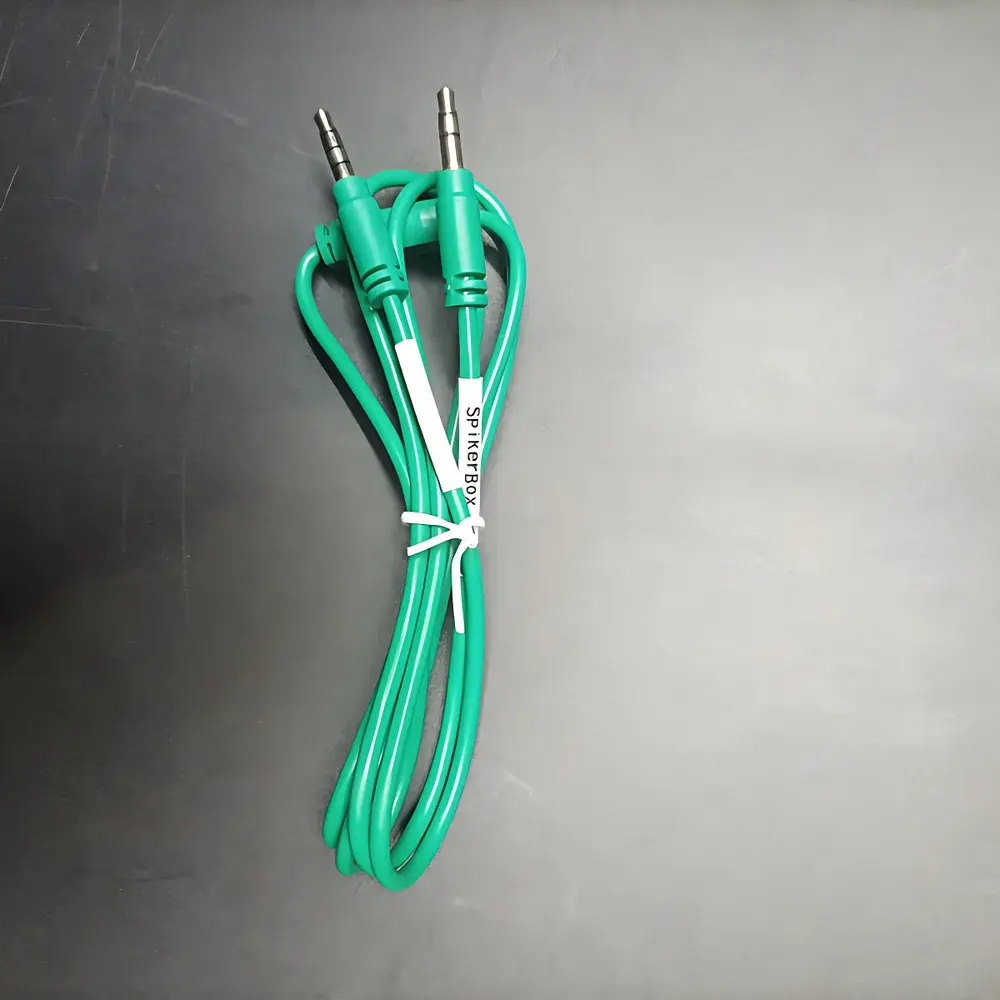
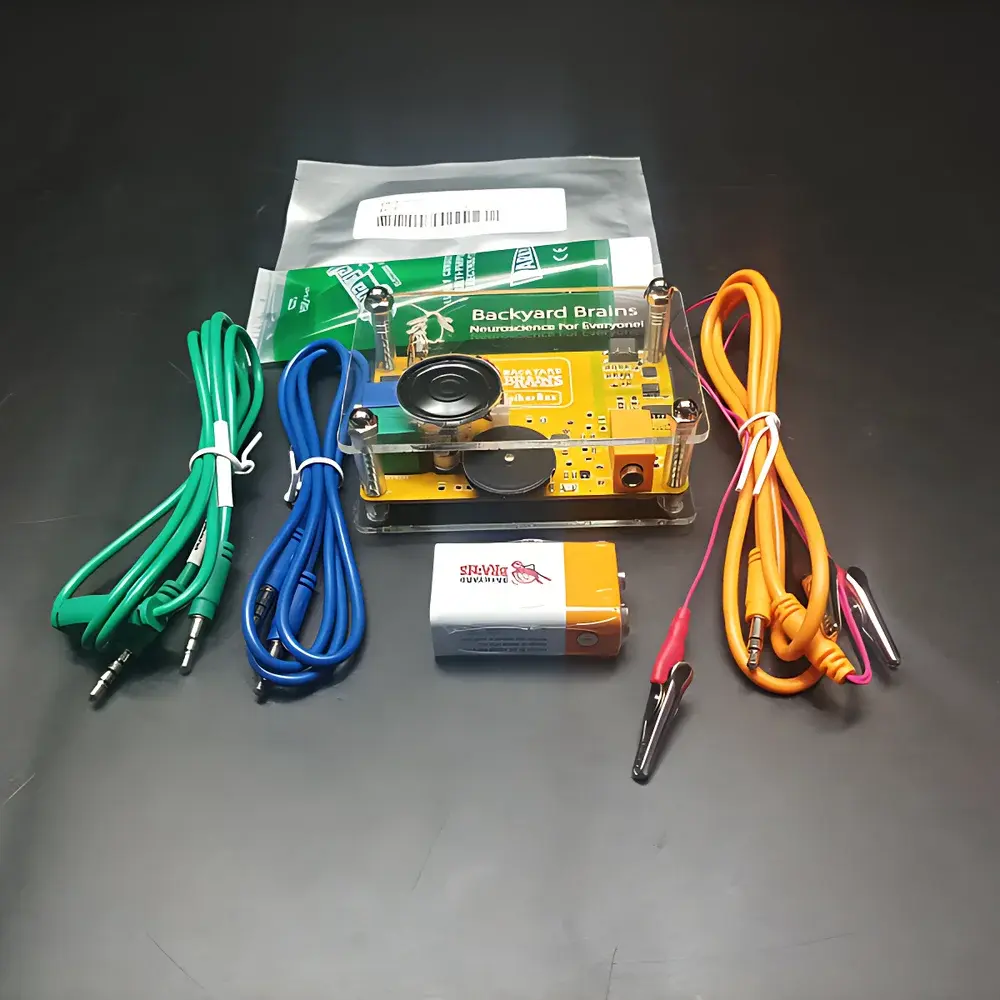
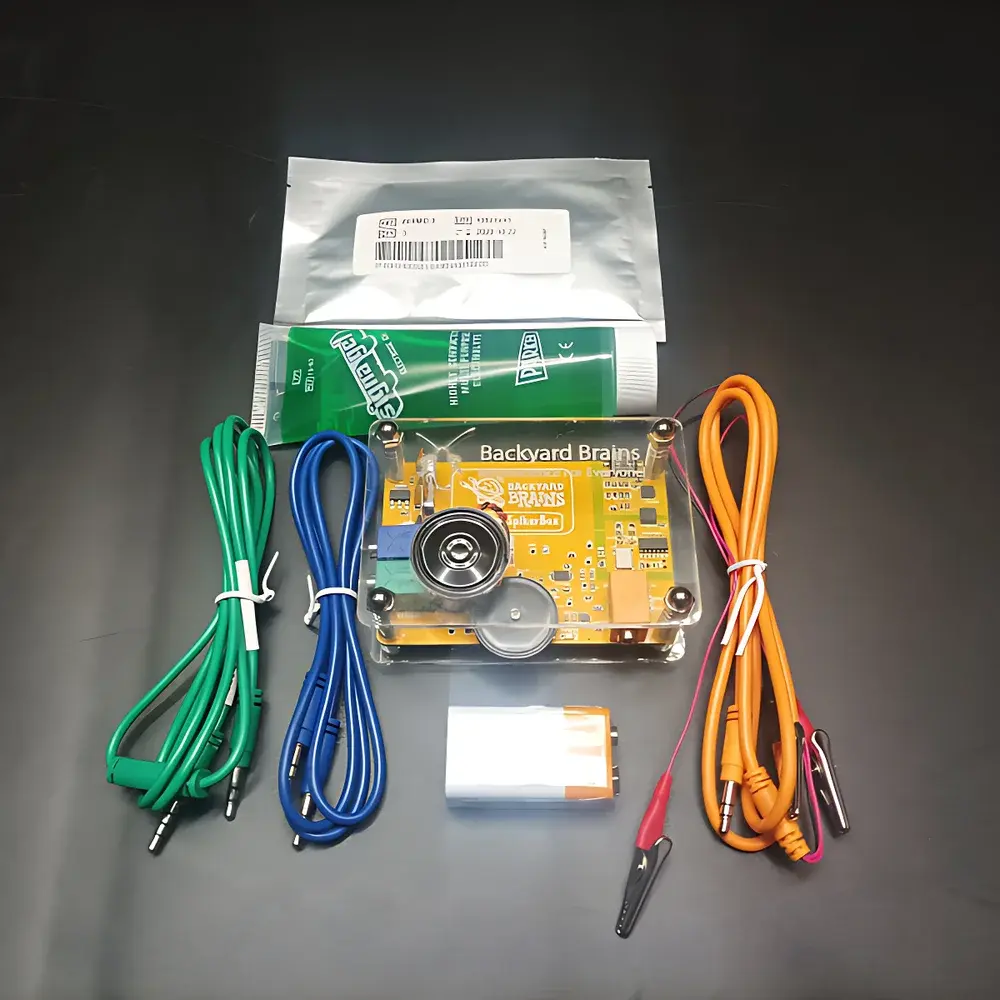
- No external power supply required—operates via USB bus power (5 V DC) or 9 V battery (included in kit)
- Scalable integration: supports simultaneous recording with other SpikerBox modules (e.g., Human-Human Interface, Plant SpikerBox) via Spike Recorder’s multi-channel mode
Sample Compatibility & Compliance
The Muscle SpikerBox is validated for use with standard Ag/AgCl surface electrodes applied to superficial striated muscles—including biceps brachii, quadriceps, tibialis anterior, and facial musculature. Electrode placement follows SENIAM (Surface Electromyography for the Non-Invasive Assessment of Muscles) guidelines for inter-electrode distance (20 mm) and orientation relative to muscle fiber direction. The device complies with EU Directive 2014/30/EU (EMC Directive) and 2011/65/EU (RoHS), bearing CE marking for educational and non-clinical research applications. It is not intended for diagnostic use, patient monitoring, or FDA-regulated clinical trials. All materials meet ISO 10993-5 biocompatibility requirements for short-term skin contact (<24 h). Documentation includes GLP-aligned calibration verification procedures using known test signals (e.g., 1 kHz sine wave at 1 mVpp).
Software & Data Management
Data acquisition is managed through SpikeRecorder—a free, open-source application developed and maintained by Backyard Brains. The software provides real-time waveform display, adjustable timebase (10 ms–10 s/div), digital filtering (low-pass, high-pass, band-stop), amplitude scaling, and event tagging. Recordings are saved in uncompressed WAV format (IEEE 754 float32), ensuring bit-perfect fidelity for downstream analysis in MATLAB, Python (SciPy, MNE), or LabChart. SpikeRecorder implements audit-trail functionality: each session file embeds metadata including timestamp, sampling rate, gain setting, and user-defined notes. While not 21 CFR Part 11 compliant out-of-the-box, the software architecture supports institutional validation protocols for undergraduate and graduate teaching labs operating under basic GLP frameworks.
Applications
- Undergraduate neuroscience and physiology laboratories: quantifying motor unit recruitment, fatigue onset, and reaction latency during voluntary contractions
- Kinesiology and biomechanics education: correlating sEMG amplitude with joint torque, movement velocity, and load resistance
- Neuroengineering outreach: demonstrating closed-loop human-computer interaction (e.g., controlling robotic arms or game avatars via muscle activation)
- Comparative physiology projects: recording interspecies EMG patterns (e.g., insect leg muscle, crustacean claw) using adapted electrode interfaces
- Low-cost neuroprosthetics prototyping: serving as front-end signal acquisition for myoelectric control algorithms
FAQ
Is soldering experience required to assemble the Muscle SpikerBox kit?
Yes—basic through-hole soldering proficiency is necessary. The kit contains ~35 components, including op-amps, resistors, capacitors, and an ABS enclosure. Estimated build time ranges from 90 to 240 minutes depending on experience level.
Can the Muscle SpikerBox be used for clinical diagnostics?
No. It is explicitly designated for educational demonstration and non-regulated research. It lacks medical device certification (e.g., FDA 510(k), CE Class IIa) and does not meet IEC 60601-1 safety standards for patient-connected equipment.
What electrodes are included, and are replacements available?
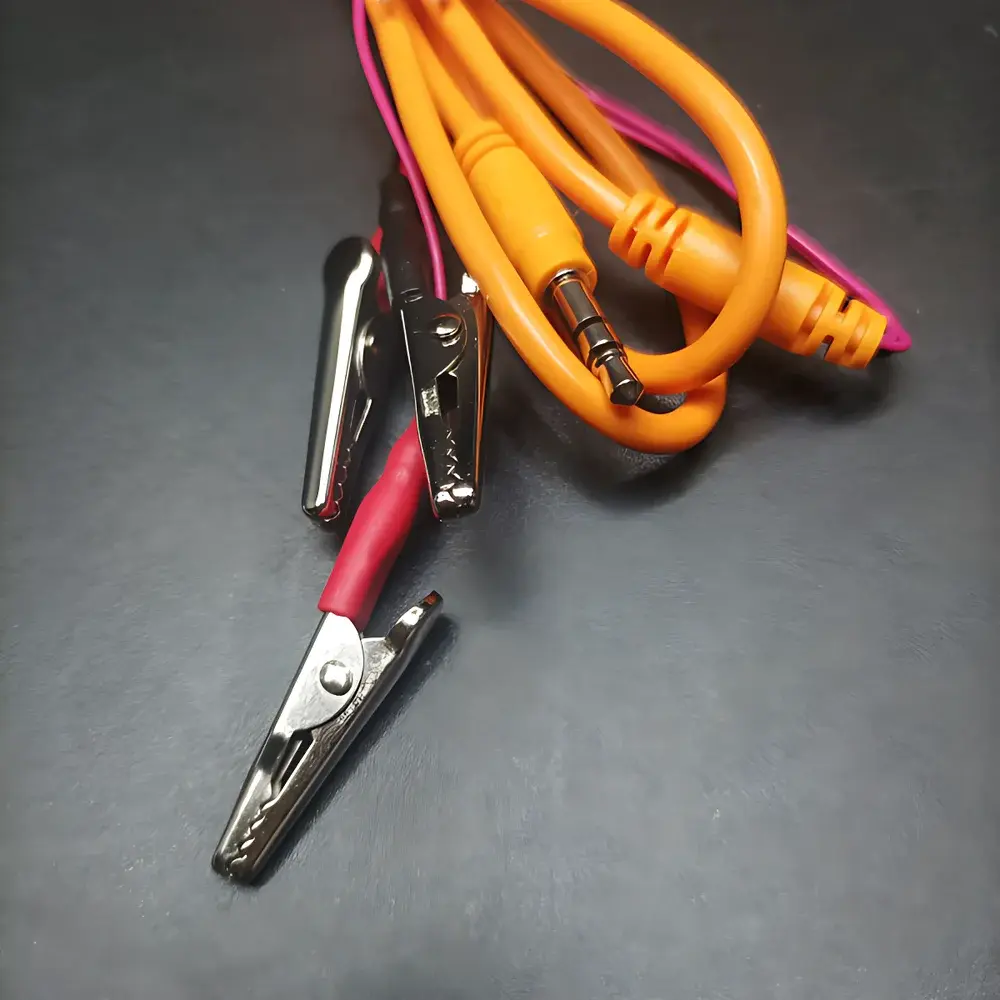
The kit includes six 22 mm diameter Ag/AgCl disposable EMG electrodes (pre-gelled, hypoallergenic). Replacement packs (10/pack) and reusable stainless-steel electrodes are sold separately via the manufacturer’s web store.
Does the device support wireless data transmission?
Not natively. However, third-party Bluetooth audio adapters (Class 1, aptX Low Latency certified) have been successfully validated by university labs for <50 ms end-to-end latency in classroom demonstrations.
Is technical support provided for academic institutions?
Yes—Backyard Brains offers dedicated instructor resources, including lab manuals, quiz banks, lecture slides, and direct email support (response within 48 business hours) for verified educators.





