
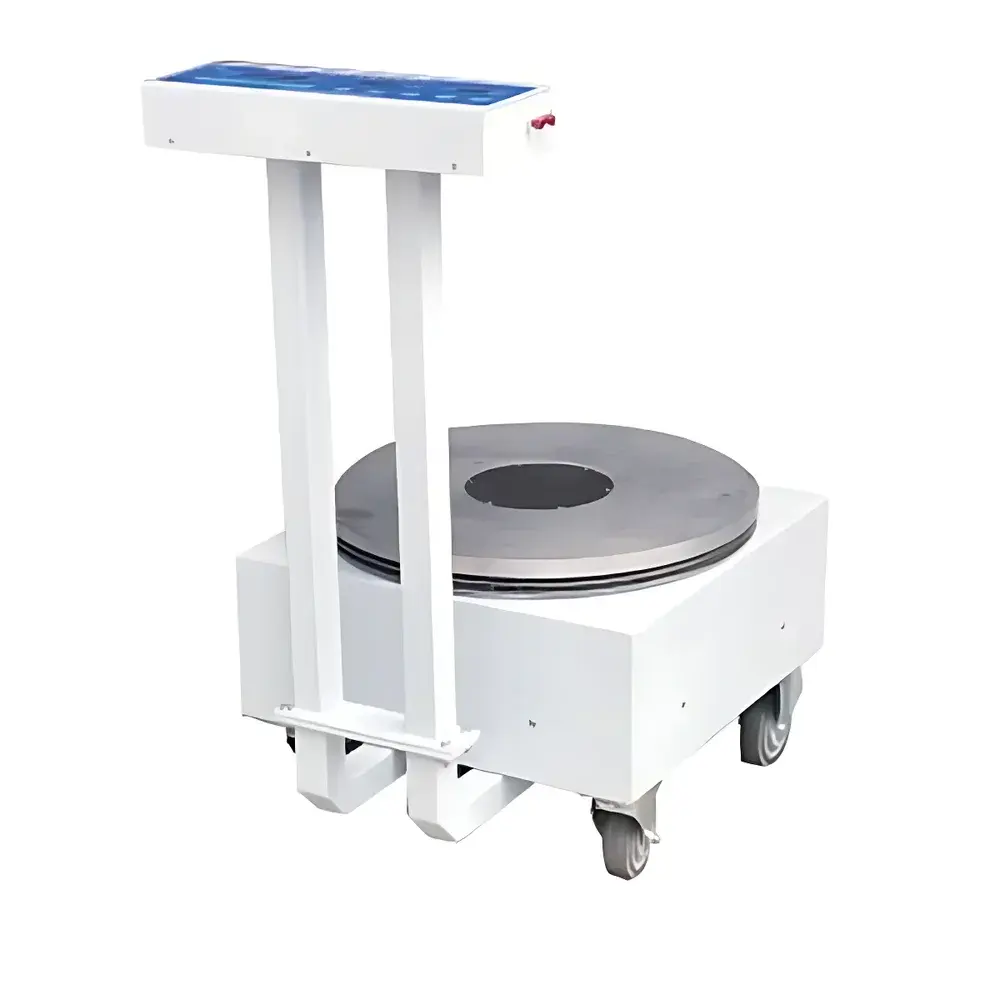
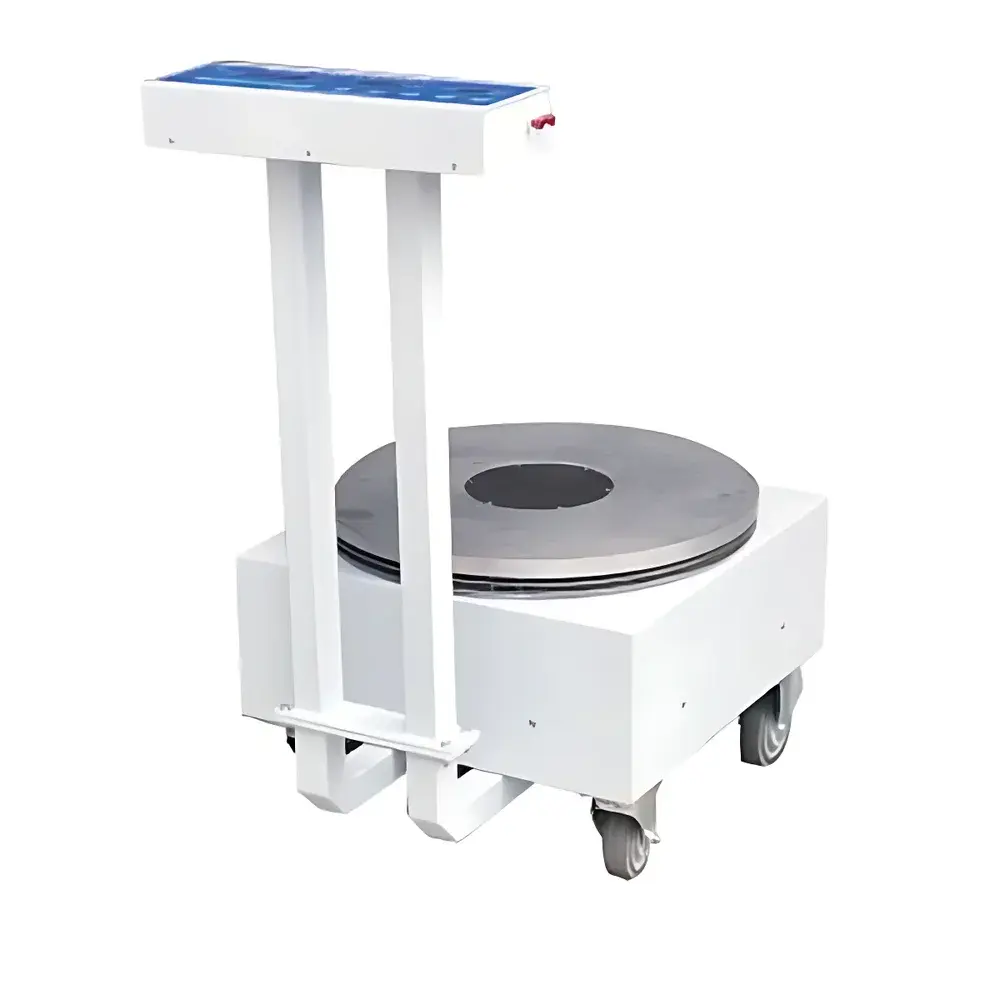
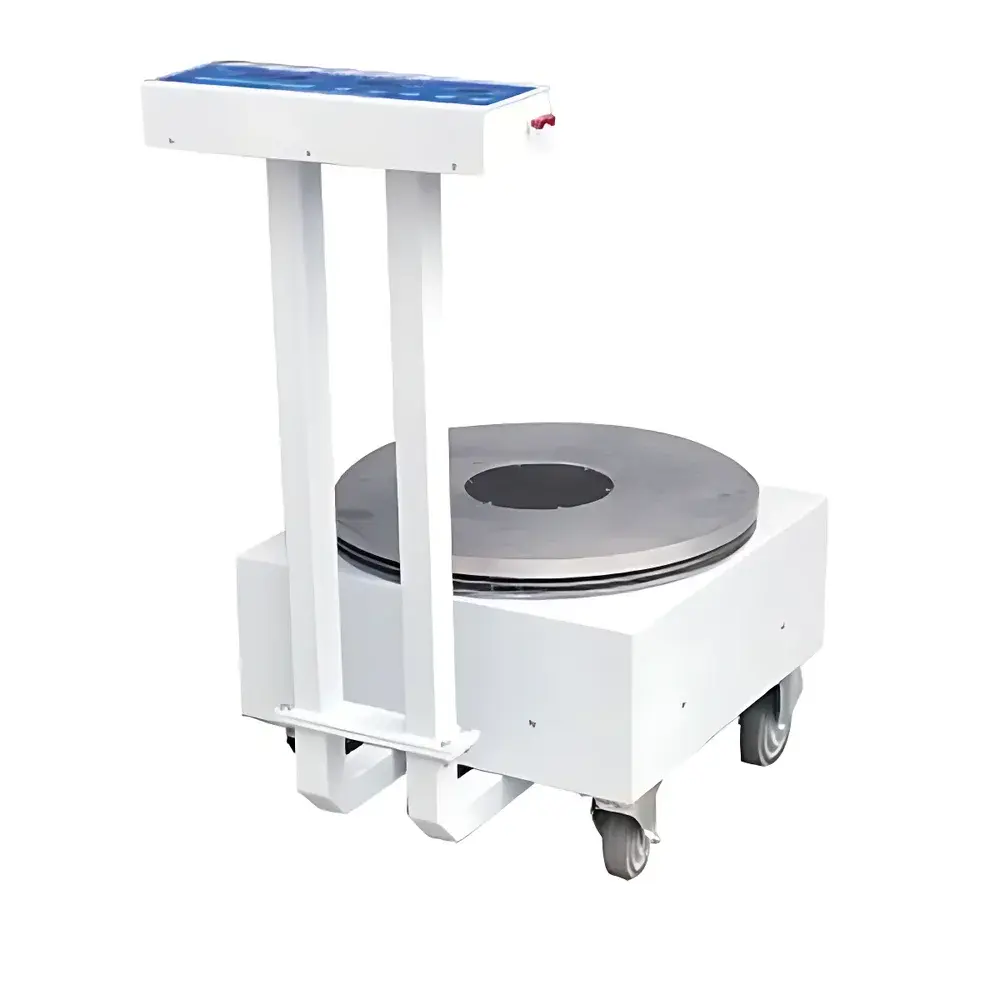
MyPu MYP20 Precision Weighing & Temperature-Controlled High-Capacity Magnetic Stirrer
| Brand | MyPu |
|---|---|
| Origin | Shanghai, China |
| Manufacturer Type | Authorized Distributor |
| Regional Classification | Domestic (PRC) |
| Model | MYP20 |
| Instrument Type | Electric Magnetic Stirrer |
| Max. Stirring Volume | 100 L (H₂O) |
| Speed Range | 60–1400 rpm |
| Temp. Control Range | 50–300 °C |
| Heating Power | 4.3 kW |
| Stirring Power | 150 W |
| Heating Plate Diameter | 500 mm |
| Working Surface Height | 375 mm |
| Max. Weighing Capacity | 250 kg |
| Weighing Resolution | 0.01 kg |
| Weighing Accuracy | ±0.2 kg |
| Stirring Timer | 1–9999 min |
| Overtemperature Protection | 350 °C |
| Dimensions (W×D×H) | 620 × 500 × 890 mm |
| Input Voltage | AC 220 V ±10% |
| Grounding Requirement | Yellow-Green Earth Conductor Mandatory |
Overview
The MyPu MYP20 Precision Weighing & Temperature-Controlled High-Capacity Magnetic Stirrer is an integrated laboratory workstation engineered for simultaneous mass monitoring, precise thermal regulation, and robust mechanical agitation of large-volume liquid samples. Unlike conventional magnetic stirrers, the MYP20 incorporates a calibrated load-cell-based weighing module directly into the instrument’s structural platform—enabling real-time mass tracking during heating and stirring operations. Its operational principle relies on permanent magnet coupling (rotor-driven via rotating magnetic field beneath the ceramic-coated aluminum heating plate), combined with PID-controlled resistive heating and high-resolution digital load-cell transduction. Designed for process-critical applications in chemical synthesis, polymer formulation, pharmaceutical suspension development, and materials dispersion, the MYP20 supports GLP-compliant documentation workflows when paired with compliant data logging systems.
Key Features
- Integrated dual-function control panel: right section manages stirring speed (60–1400 rpm, adjustable in 1-rpm increments) and plate temperature (50–300 °C, ±1 °C stability at setpoint); left section operates the high-capacity weighing system (0–250 kg, 0.01 kg resolution, ±0.2 kg accuracy per ISO 7500-1 Class III calibration)
- High-power thermal management: 4.3 kW heating capacity delivered through a 500 mm diameter ceramic-coated aluminum plate, rated for continuous operation up to 300 °C with independent overtemperature cutoff at 350 °C
- Robust mechanical architecture: reinforced steel frame with vibration-damping base; 375 mm working surface height optimized for compatibility with tall reactors (e.g., 100 L glass or stainless-steel vessels)
- Programmable timer function: 1–9999 minute interval control for unattended operation, with audible and visual end-of-cycle alerts
- Safety-engineered electrical design: dedicated 220 V ±10 % AC input requiring direct connection to a ≥30 A circuit breaker; mandatory grounding via yellow-green conductor; explicit prohibition against 380 V three-phase supply connection
Sample Compatibility & Compliance
The MYP20 accommodates standard laboratory vessels including borosilicate glass reactors (up to 100 L nominal volume), jacketed stainless-steel tanks, and open-top polypropylene containers—provided magnetic stir bars are appropriately sized (e.g., 60–100 mm length, PTFE- or glass-coated). Its weighing subsystem meets ISO 7500-1 Class III requirements for non-automatic weighing instruments used in industrial and laboratory settings. While the unit itself does not carry CE, UL, or UKCA certification, its electrical safety architecture conforms to IEC 61010-1:2010 Edition 3 provisions for laboratory equipment. For regulated environments (e.g., pharmaceutical QC labs), users must validate installation, operational, and performance qualifications (IQ/OQ/PQ) per internal SOPs and relevant regional guidelines (e.g., USP , EU Annex 15).
Software & Data Management
The MYP20 operates as a standalone hardware platform with no embedded firmware-based data export capability. All parameter displays—including real-time weight, temperature, RPM, and elapsed time—are rendered on dual high-contrast LED segments. To support audit-ready documentation, laboratories may interface the unit’s analog weight output (0–10 V or 4–20 mA, optional configuration) or use external USB/RS-232-connected digital scales with compatible drivers. When integrated into validated computerized systems, the MYP20 complies with FDA 21 CFR Part 11 requirements for electronic records and signatures—provided the host software implements appropriate access controls, audit trails, and electronic signature validation.
Applications
- Batch-scale dissolution testing of poorly soluble APIs under controlled thermal and hydrodynamic conditions
- In-situ mass-balanced addition of reagents or catalysts during exothermic polymerization reactions
- Preparation of high-viscosity suspensions (e.g., battery electrode slurries, ceramic pastes) requiring simultaneous temperature ramping and gravimetric feed control
- Standardized cleaning validation studies where detergent concentration is monitored via mass change during heated immersion cycles
- Educational and pilot-plant settings demanding reproducible, operator-independent protocol execution across multi-hour experiments
FAQ
Is the MYP20 suitable for use with corrosive solvents such as concentrated acids or halogenated organics?
Yes—provided the vessel material (e.g., PTFE-lined reactor, HF-resistant glass) and stir bar coating (e.g., chemically inert PFA or ETFE) are compatible. The heating plate surface is ceramic-coated aluminum and resistant to incidental splashes but not designed for direct solvent exposure.
Can the weighing function be tared during operation?
Yes—the front-panel tare function is active during stirring and heating cycles, allowing zeroing of container mass prior to reagent addition.
What is the recommended maintenance interval for load-cell calibration?
Annual verification against traceable NIST-certified test weights is advised; more frequent checks (e.g., quarterly) are required in GMP environments or after mechanical shock events.
Does the unit support external temperature probe feedback for jacketed vessel control?
No—the MYP20 regulates only the heating plate surface temperature. For bath or jacket temperature control, an external PID controller with thermocouple input must be used in cascade mode.
Is the 250 kg weighing capacity distributed across the entire plate or limited to the central zone?
Maximum rated capacity applies only within a 300 mm diameter circle centered on the plate; off-center loading reduces effective capacity and compromises accuracy per OIML R76 metrological guidelines.



