
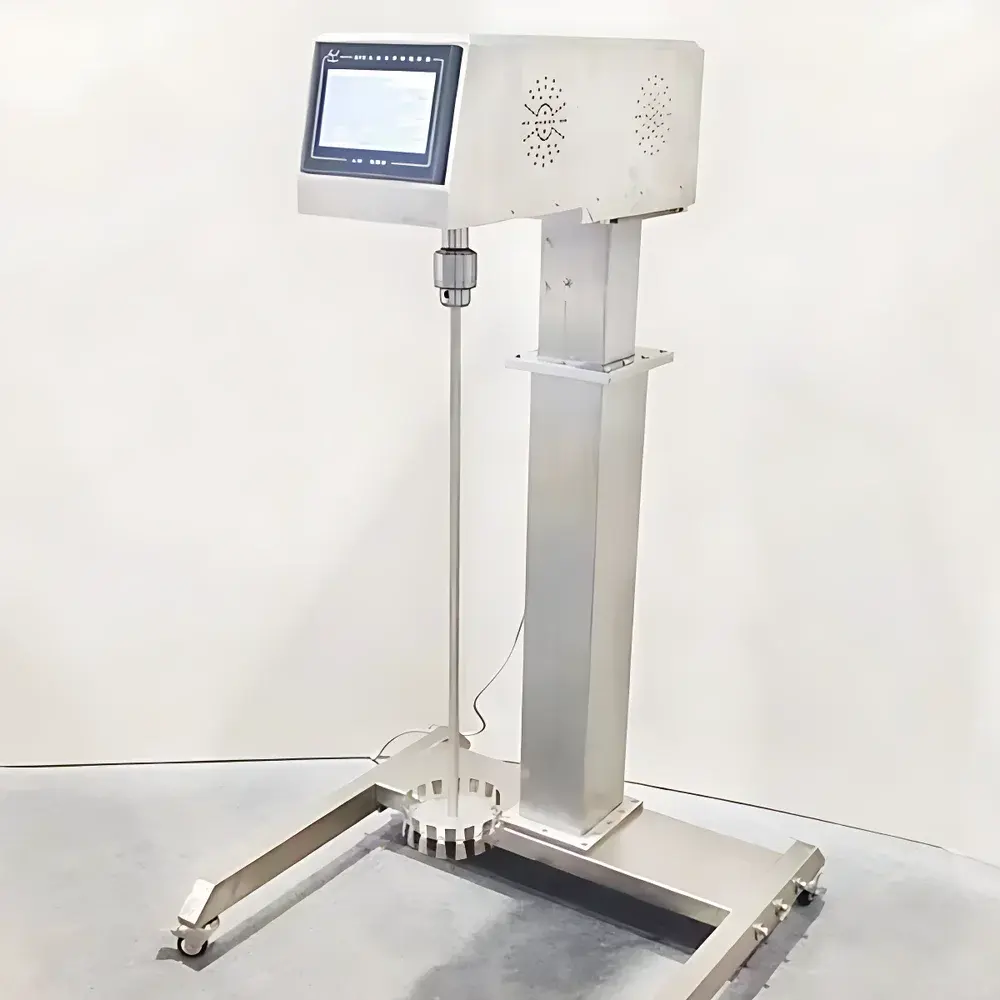
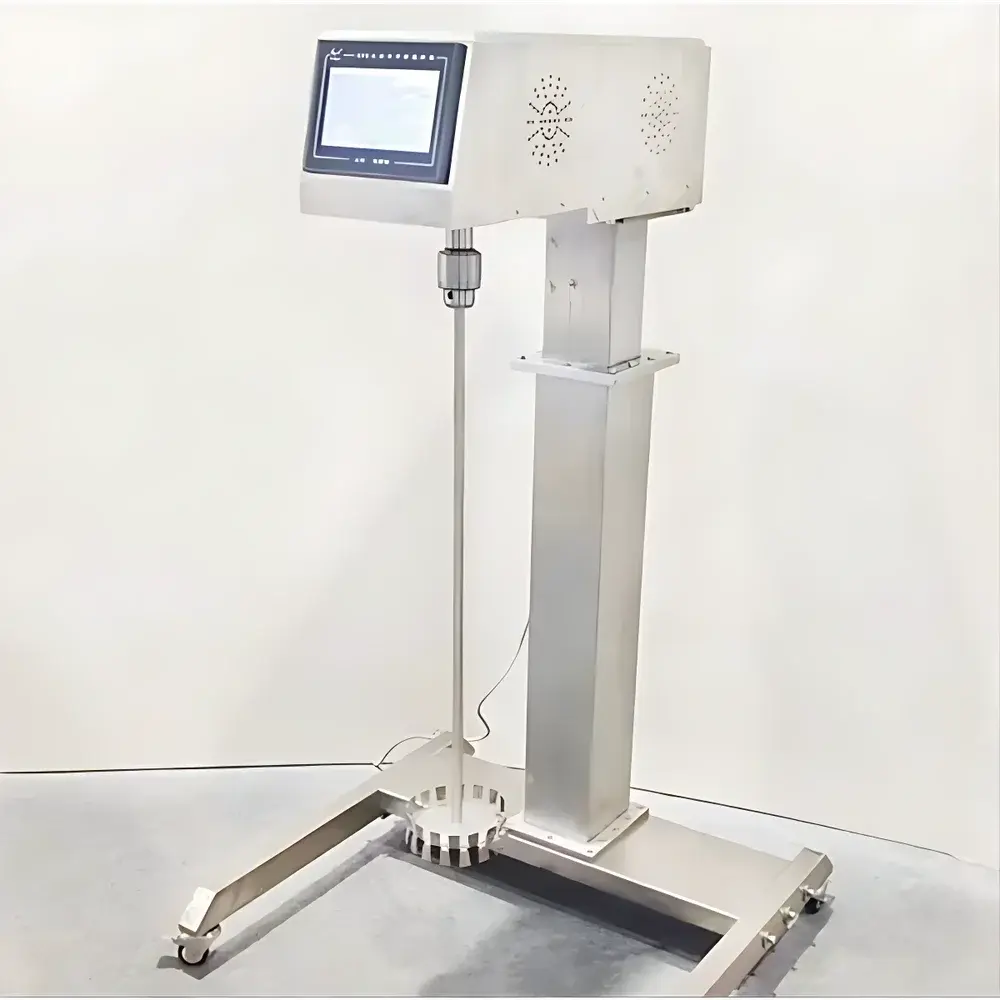
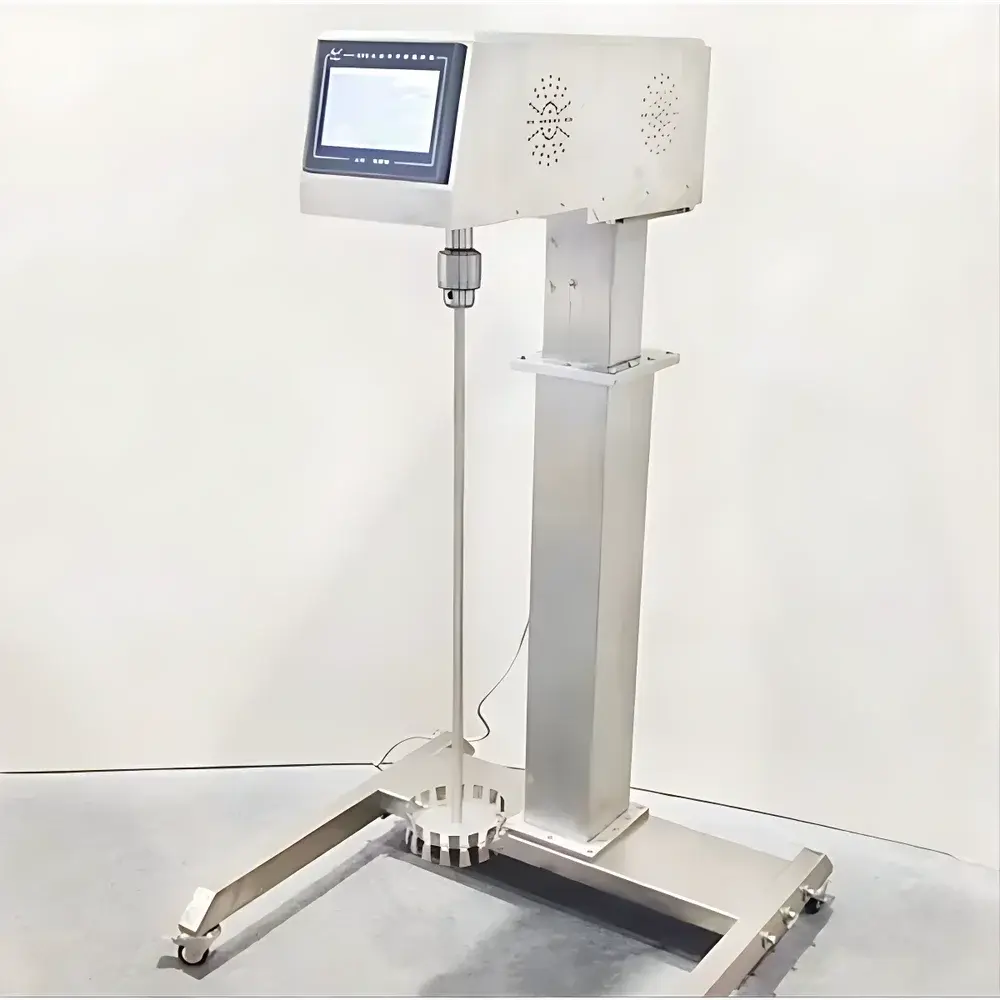
MyPu MYP23 Adjustable-Height Magnetic Stirrer
| Brand | MyPu |
|---|---|
| Origin | Shanghai, China |
| Manufacturer Type | Authorized Distributor |
| Country of Origin | China |
| Model | MYP23 |
| Instrument Type | Magnetic Stirrer |
| Maximum Stirring Volume | 200 L |
| Speed Range | 1–2000 rpm |
| Temperature Control Range | Not Integrated (External Heating Required) |
| Rated Voltage | AC 220 V |
| Rated Frequency | 50/60 Hz |
| Motor Power | 1500 W |
| Motor Type | Brushless DC Servo Motor |
| Duty Cycle | S1 (Continuous Operation) |
| Vertical Column Travel | 50 cm |
| Chuck Type | Quick-Release Clamp |
| Clamp Jaw Range | Φ3–16 mm |
| Timer Range | 1–9999 min |
Overview
The MyPu MYP23 Adjustable-Height Magnetic Stirrer is an engineered laboratory mixing system designed for reproducible, scalable agitation of low-to-medium viscosity liquids and suspensions in pilot-scale and R&D environments. Unlike conventional benchtop magnetic stirrers, the MYP23 integrates vertical column adjustability with a high-torque brushless DC servo motor—enabling precise positioning of the stirring element relative to vessel geometry while maintaining stable rotational output across its full 1–2000 rpm range. Its operation relies on magnetic coupling between the external drive unit and a PTFE- or glass-coated stir bar placed within the sample vessel; no mechanical shaft penetration is required, ensuring containment integrity and simplifying cleaning protocols. The system is not equipped with integrated heating or temperature sensing; thermal control must be achieved externally via hotplates, water baths, or jacketed reactors—making it compatible with ISO/IEC 17025-compliant workflows where thermal and mechanical actuation are independently validated.
Key Features
- Brushless DC servo motor delivering consistent torque output up to 1500 W, minimizing heat generation and eliminating carbon brush wear—ideal for extended-duration experiments under S1 continuous-duty rating.
- 50 cm vertical column travel with fine-positioning lock mechanism, enabling optimal immersion depth adjustment for vessels ranging from 500 mL beakers to 200 L stainless steel reactors.
- Stepless speed regulation with digital feedback control ensures ±1 rpm repeatability across the entire 1–2000 rpm operating window—critical for shear-sensitive formulations and kinetic studies.
- Programmable timer (1–9999 minutes) supports unattended operation with automatic shutdown, supporting GLP-aligned documentation requirements when paired with external data loggers.
- Quick-release clamp design accommodates standard cylindrical stir rods (Φ3–16 mm), facilitating rapid tool changes without recalibration; chuck geometry complies with DIN 12878 mechanical interface conventions.
- Rugged aluminum alloy frame with vibration-damping base plate minimizes transmission of rotational harmonics to adjacent instrumentation—essential in shared lab spaces housing analytical balances or microscopes.
Sample Compatibility & Compliance
The MYP23 is validated for use with aqueous, organic, and mildly corrosive media (pH 2–12) when paired with chemically resistant stir bars (e.g., PTFE-coated, ceramic-core, or glass-jacketed). It is unsuitable for high-viscosity pastes (>50,000 mPa·s), abrasive slurries containing >10% solids by volume, or vacuum-sealed systems due to reliance on atmospheric-pressure magnetic coupling. The device meets CE marking requirements per Directive 2014/30/EU (EMC) and 2014/35/EU (LVD), and conforms to IEC 61000-6-2/6-3 immunity and emission standards. While not intrinsically safe, optional ATEX-certified stir bars may be deployed in conjunction with appropriate enclosure strategies for Class II, Group IIA hazardous locations.
Software & Data Management
The MYP23 operates via front-panel membrane keypad with LED status indicators—no proprietary software or USB connectivity is provided. However, analog 0–10 V speed output and digital TTL-level timer completion signals are accessible via rear-panel terminals, enabling integration into SCADA systems or programmable logic controllers (PLCs) compliant with IEC 61131-3. When used in regulated environments (e.g., pharmaceutical QC labs), users may document operational parameters—including start time, setpoint rpm, duration, and operator ID—in paper-based or electronic batch records aligned with FDA 21 CFR Part 11 requirements via third-party audit-trail-capable platforms.
Applications
- Pre-formulation studies of polymer solutions, colloidal dispersions, and emulsions requiring controlled shear history prior to rheological or particle size analysis.
- Buffer and media preparation for bioreactor inoculation, where homogeneity and oxygen transfer efficiency depend on consistent vortex formation and bottom-scraping action.
- Catalyst slurry conditioning in heterogeneous catalysis research, particularly when combined with temperature-controlled jackets and gas sparging manifolds.
- Standardized dissolution testing per USP , where reproducible agitation of solid dosage forms in 900 mL vessels demands fixed impeller geometry and speed stability.
- Synthesis of metal-organic frameworks (MOFs) and perovskite precursors, where stoichiometric uniformity depends on uninterrupted mixing over multi-hour crystallization cycles.
FAQ
Does the MYP23 include built-in heating or temperature control?
No. The MYP23 is a standalone mechanical agitator without integrated thermal management. External heating sources must be used in coordination with independent temperature monitoring.
Can the MYP23 be used with non-magnetic vessels such as glass-lined reactors?
Yes—provided the vessel wall thickness does not exceed 25 mm and the material exhibits low magnetic permeability (e.g., borosilicate glass, 316 stainless steel cladding). Magnetic coupling efficiency should be verified empirically for each vessel configuration.
What maintenance is required for long-term reliability?
Annual inspection of chuck jaw alignment and column linear guide lubrication is recommended. Brushless motor electronics require no scheduled replacement; however, ambient particulate filtration should be maintained where operated in dusty environments.
Is RS-232 or Ethernet communication available for remote control?
No native serial or network interface is included. Integration with industrial automation systems requires external signal conditioning modules compatible with the unit’s analog/digital I/O terminals.
How is calibration performed for speed accuracy verification?
Speed calibration is traceable to NIST-traceable tachometers. Users should verify rotational output at three points (100 rpm, 1000 rpm, and 2000 rpm) using a handheld optical tachometer under no-load conditions, recording deviations per ISO 17025 Annex A.3 guidelines.



