
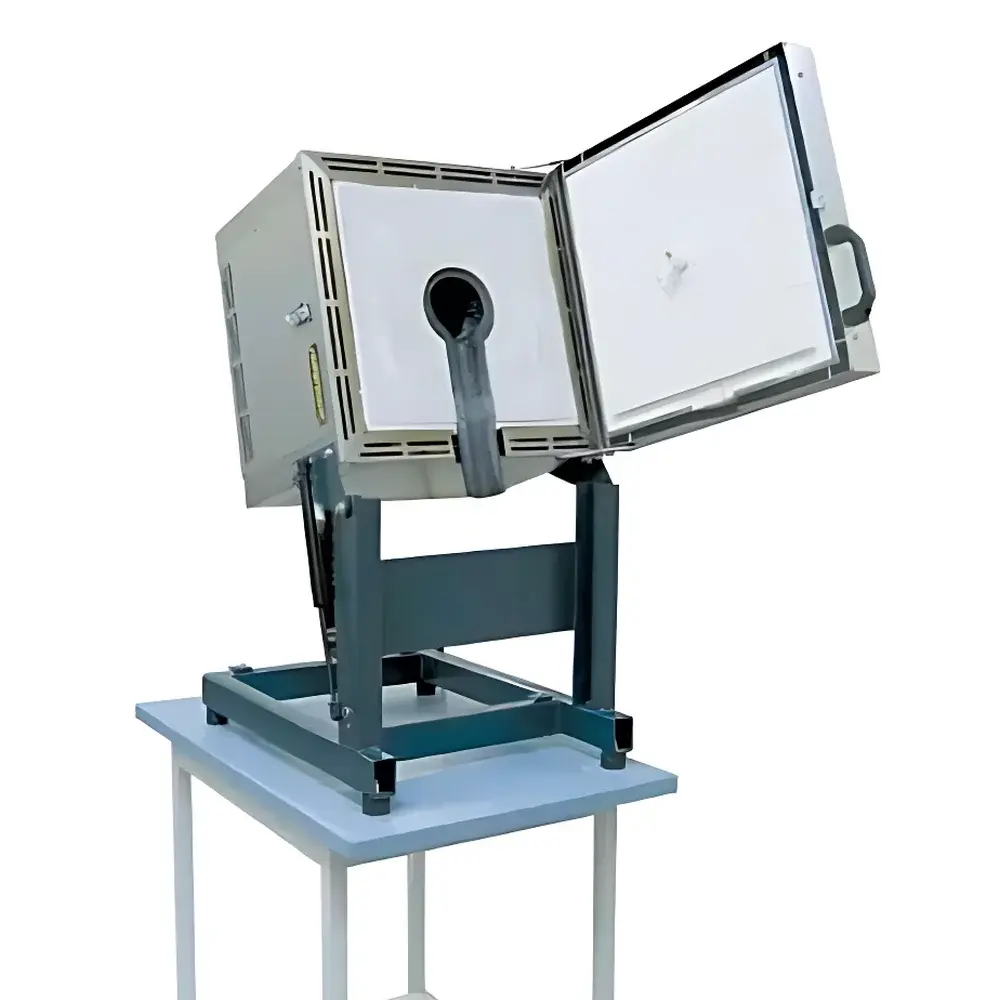
Nabertherm K1/10–K4/13 and KC Series Desktop Melting Furnaces
| Brand | Nabertherm |
|---|---|
| Origin | Germany |
| Model Range | K1/10, K2/10, K4/10, K1/132, K2/132, K4/132, KC1/153, KC2/153 |
| Max Temperature | 1000 °C, 1300 °C or 1500 °C |
| Crucible Capacity | 1 L, 2 L or 4 L |
| External Dimensions (W × D × H) | 520–580 mm × 630–755 mm × 580–705 mm |
| Power Supply | 1-phase (3–5.5 kW) or 3-phase (10.5 kW) |
| Weight | 85–170 kg |
| Crucible Type | Graphite (standard), optional steel or SiC |
| Tilt Mechanism | Pneumatic spring-assisted tilting with damper |
| Casting Trough | Integrated front-mounted (except KC series) |
| Overtemperature Protection | EN 60519-2 Class 2 thermal cut-off |
| Viewing Port | Integrated observation window |
Overview
The Nabertherm K1/10–K4/13 and KC Series are compact, benchtop-rated melting furnaces engineered for precise, repeatable melting of non-ferrous metals and specialty alloys in research laboratories, metallurgical QA/QC facilities, and small-scale foundry development environments. These furnaces operate on resistive heating principles using high-stability Kanthal or similar high-temperature resistance wire embedded in insulated ceramic fiber walls, enabling stable temperature control across three distinct maximum operating ranges: 1000 °C (K-series), 1300 °C (K-series with enhanced insulation), and 1500 °C (KC-series with molybdenum disilicide heating elements and reinforced alumina-silica refractory lining). A defining feature is the controlled thermal gradient design—melting occurs at 80–110 °C below the furnace’s nominal maximum temperature—thereby extending crucible service life, minimizing thermal stress on alloy microstructures, and improving melt homogeneity. The integrated pneumatic tilt mechanism, calibrated damping system, and front-mounted casting trough (standard on K models, optional on KC variants) ensure reproducible, operator-safe metal pouring with volumetric consistency critical for alloy standardization and casting trials.
Key Features
- Benchtop footprint optimized for space-constrained laboratory environments without compromising structural rigidity or thermal containment.
- Pneumatically assisted tilting system with adjustable damping enables smooth, controlled crucible倾倒 (tilt-to-pour) at pre-set angles; eliminates manual handling risks and supports GLP-compliant process documentation.
- Front-access casting trough (K-series) or optional side-mount pouring interface (KC-series) facilitates direct transfer into molds or ingot trays with minimal oxidation exposure.
- Top-hinged, insulated lid opens vertically during pouring to maintain peripheral heat retention while allowing unobstructed access to the crucible rim.
- Standard graphite crucibles (A6, A10, A25) supplied with each unit; compatible with alternative crucible materials including stainless steel and silicon carbide (SiC) for aggressive melts or reactive alloys.
- EN 60519-2 compliant overtemperature protection: dual-stage thermal monitoring with Class 2 cut-off ensures automatic power interruption above user-defined safety thresholds, followed by auto-reset only after safe cooldown—critical for unattended operation and regulatory audit readiness.
- Integrated quartz-glass viewing port enables real-time visual inspection of melt surface condition, slag formation, and degassing behavior without opening the chamber.
Sample Compatibility & Compliance
These furnaces accommodate a broad spectrum of metallic samples, including aluminum, copper, zinc, magnesium, lead, tin, brass, bronze, and nickel-based superalloys. Crucible volume options (1 L, 2 L, 4 L) support both small-batch R&D (e.g., composition screening per ASTM E882) and pilot-scale production validation. All models comply with IEC 61000-6-3 (EMC emissions) and IEC 61000-6-2 (immunity), and meet CE marking requirements under the EU Machinery Directive 2006/42/EC. The KC-series additionally conforms to ISO 8573-1 Class 4 compressed air quality standards for pneumatic actuation systems. Optional data logging modules support 21 CFR Part 11–compliant electronic records when paired with validated Nabertherm THERMCONTROL™ controllers.
Software & Data Management
While the base configuration includes analog or digital PID controllers with manual setpoint programming, integration with Nabertherm’s THERMCONTROL™ software suite enables full-cycle automation—including ramp-soak profiles, multi-step melting sequences, and real-time temperature logging with timestamped event markers (lid open/close, tilt activation, overtemp alerts). Data export is supported in CSV and XML formats for traceability in ISO/IEC 17025-accredited labs. Audit trails record all parameter modifications, user logins, and calibration events—fully aligned with GMP Annex 11 and FDA expectations for instrument qualification (IQ/OQ/PQ).
Applications
- Preparation of certified reference materials (CRMs) for spectroscopic analysis (OES, XRF).
- Thermal simulation of investment casting and centrifugal casting processes.
- Controlled remelting and homogenization of scrap alloys prior to mechanical testing (ASTM E8, E23).
- Development of novel brazing filler metals and solder compositions.
- Inert-atmosphere-compatible variants (with optional gas purge ports) support titanium and zirconium alloy processing.
- Education and training in metallurgical engineering curricula requiring hands-on melt practice under supervised conditions.
FAQ
What crucible materials are recommended for aluminum alloy melting?
Graphite crucibles (standard A6/A10/A25) are suitable for most Al-Si, Al-Cu, and Al-Mg alloys up to 800 °C melt temperature; SiC crucibles are advised for high-iron-content alloys prone to graphite pickup.
Can the furnace be operated under argon or nitrogen atmosphere?
Yes—models can be retrofitted with gas inlet/outlet ports and O-ring sealed door gaskets; consult factory for pressure-rated variants and flow controller integration.
Is remote monitoring supported?
Via optional Ethernet or RS485 interface, THERMCONTROL™ allows secure web-based access to live temperature curves, alarm status, and historical trend reports from any authorized workstation.
How often does the overtemperature protector require recalibration?
Per EN 60519-2, annual verification against traceable reference thermocouples is required; Nabertherm provides certified calibration certificates upon request.
Are spare parts such as heating elements and insulation modules available with documented shelf life?
Yes—Nabertherm maintains a 10-year spare parts guarantee with lot-specific material certifications and aging test reports for ceramic fiber components.



