
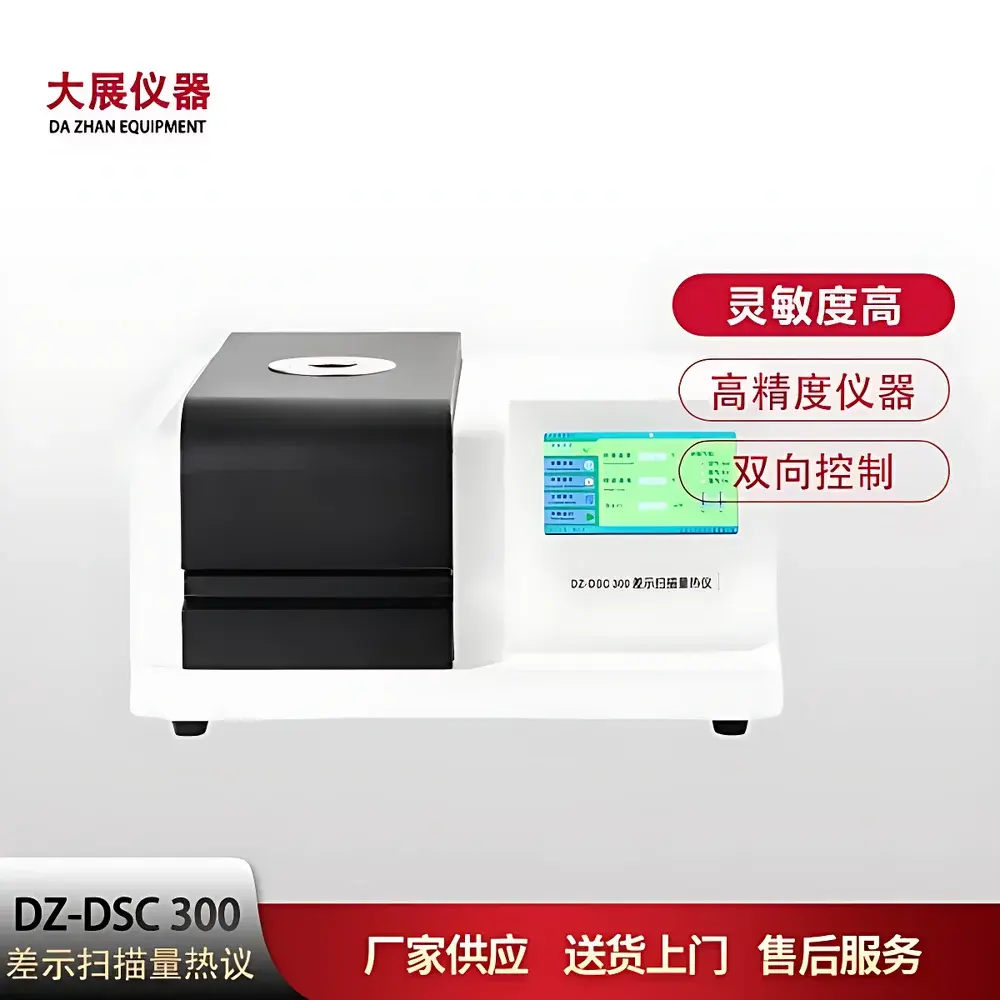
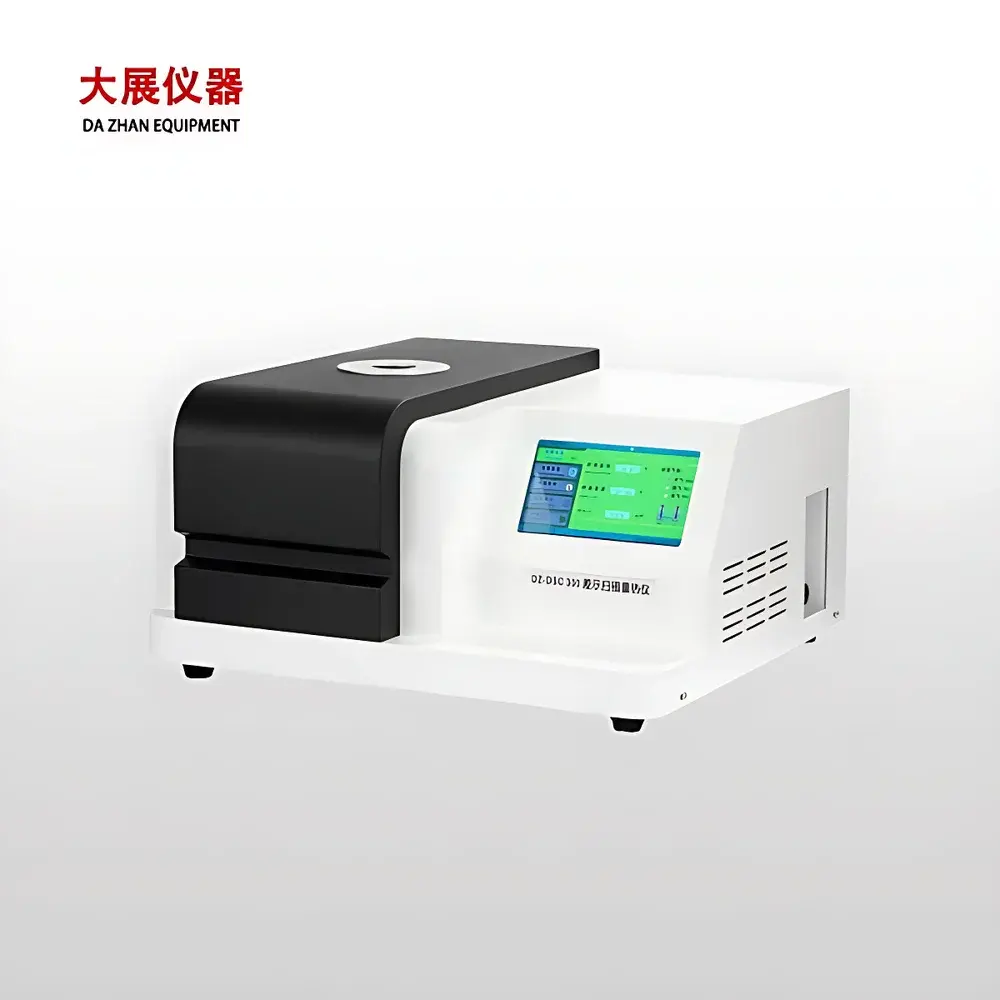
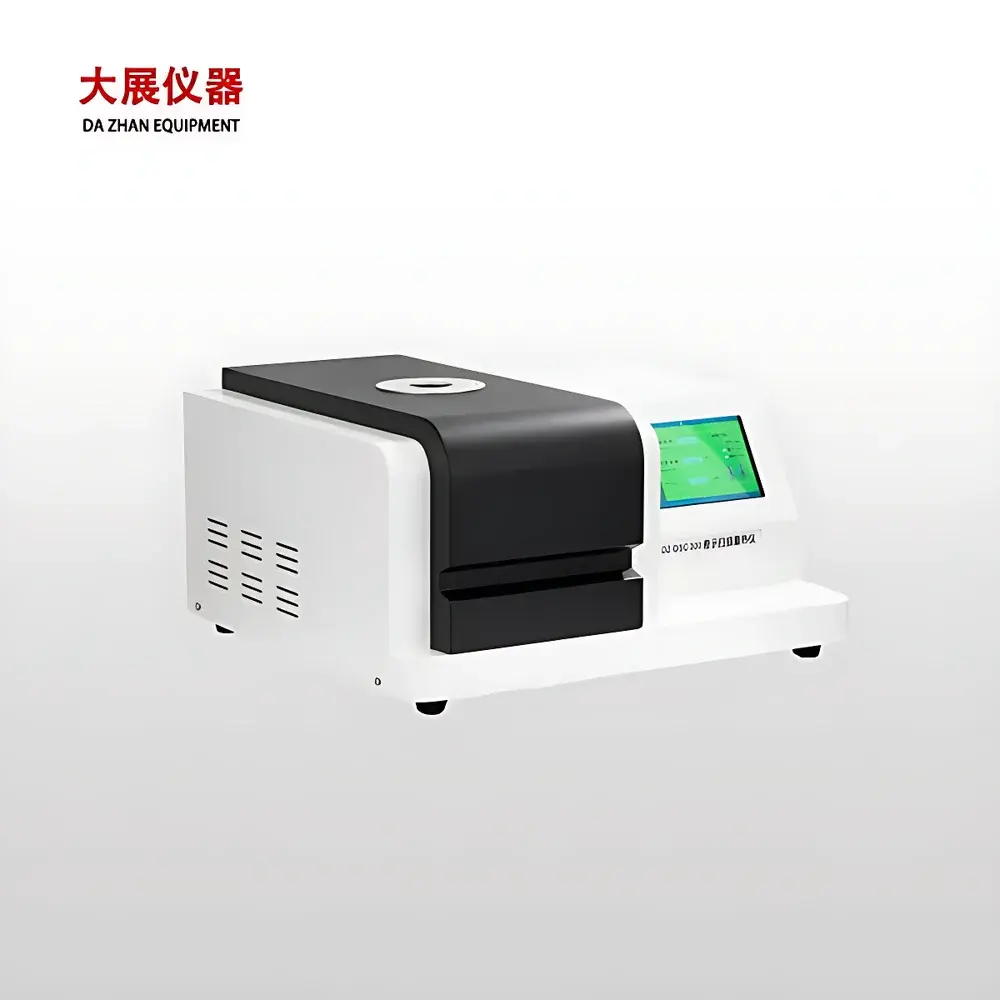
Nanjing Dazhan DSC 300 Differential Scanning Calorimeter
| Brand | Nanjing Dazhan |
|---|---|
| Origin | Jiangsu, China |
| Manufacturer Type | Direct Manufacturer |
| Product Category | Domestic |
| Model | DSC 300 |
| Sample Capacity | Single |
| Instrument Type | Differential Scanning Calorimeter (DSC) |
| Temperature Range | Ambient to 600 °C |
| Heating/Cooling Rate | 0.1–100 K/min |
| Temperature Accuracy | ±0.001 °C |
| Temperature Stability | ±0.01 °C |
| DSC Signal Range | 0 to ±600 mW |
| DSC Resolution | 0.01 µW |
| DSC Sensitivity | 0.001 mW |
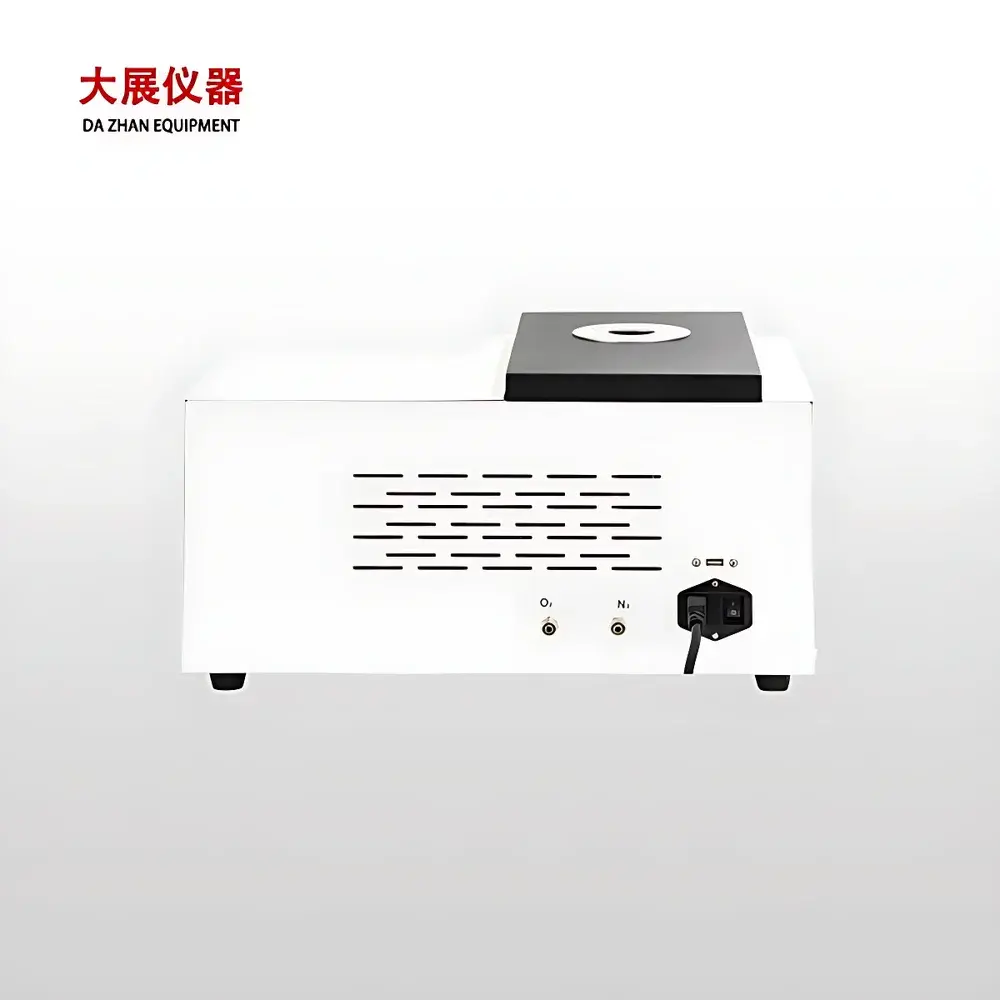
| Atmosphere Control | Dual-gas automatic switching (programmable) |
| Gas Flow Rate | 0–300 mL/min (customizable) |
| Gas Pressure Rating | ≤5 MPa |
| Display | 7-inch 24-bit color LCD touchscreen |
| Interface | Standard USB |
| Calibration Standards Included | Indium, Tin, Lead |
| Power Supply | AC 220 V / 50 Hz (custom voltage available) |
Overview
The Nanjing Dazhan DSC 300 is a high-precision differential scanning calorimeter engineered for quantitative thermal analysis of solid and semi-crystalline materials under controlled atmosphere conditions. It operates on the principle of heat-flux DSC, measuring the difference in heat flow between a sample and an inert reference as both are subjected to identical, programmable temperature profiles. This enables precise determination of endothermic and exothermic transitions—including melting point, crystallization onset, glass transition (Tg), oxidative induction time (OIT), and reaction enthalpy—critical for polymer stability assessment, pharmaceutical polymorph screening, metal alloy characterization, and quality control in R&D and production environments.
Key Features
- Optimized furnace architecture with enhanced thermal homogeneity, delivering superior baseline stability and improved peak resolution—particularly beneficial for overlapping transitions in complex formulations.
- Multi-segment thermal programming capability: up to six independent steps combining heating, isothermal hold, and cooling phases—fully customizable via intuitive touchscreen interface or PC-based software.
- Dual-control architecture supports both local operation (via 7-inch capacitive touchscreen) and remote instrument management through USB-connected host software—ensuring flexibility in lab workflow integration.
- Digitally shielded acquisition circuitry minimizes electromagnetic interference, ensuring signal integrity during low-magnitude thermal events such as weak glass transitions or subtle oxidative onset.
- Thermopile sensor fabricated using thermal fusion bonding (replacing conventional spot welding), resulting in higher mechanical robustness, long-term signal reproducibility, and improved sensitivity down to 0.001 mW.
- Integrated dual-gas manifold with automated solenoid switching, supporting sequential or alternating purge gas delivery (e.g., N2/O2) at precisely regulated flow rates (0–300 mL/min) and pressure tolerance up to 5 MPa.
Sample Compatibility & Compliance
The DSC 300 accommodates standard aluminum, gold-plated aluminum, and high-pressure stainless-steel crucibles (up to 100 bar optional), enabling analysis of volatile, reactive, or pressurized samples. Its design complies with core international thermal analysis standards including ASTM E794 (melting point), ASTM D3418 (Tg, Tm), ISO 11357 series (polymer characterization), and USP <1163> (thermal analysis in pharmaceutical development). The system supports GLP-compliant data handling when paired with validated software, including full audit trail logging, electronic signature support, and calibration traceability to NIST-traceable reference materials (Indium, Tin, Lead) supplied with each unit.
Software & Data Management
The included Windows-based analysis suite provides real-time data visualization, multi-curve overlay, baseline correction (tangent, polynomial, step), peak integration, and kinetic modeling (e.g., Ozawa-Flynn-Wall, Kissinger). All raw data files are stored in vendor-neutral ASCII format (.txt) with embedded metadata (timestamp, method ID, operator, instrument serial number). Software features multi-point temperature calibration routines, auto-detection of transition inflection points, and export compatibility with LIMS platforms via CSV or XML. Optional 21 CFR Part 11 compliance package includes role-based access control, electronic signatures, and immutable audit logs—validated for regulated QC/QA laboratories.
Applications
- Oxidative Induction Time (OIT) and Oxidative Induction Temperature (OITT) testing per ASTM D3895 and ISO 11357-6 for polyolefins, stabilizer efficacy evaluation, and shelf-life prediction.
- Thermal stability profiling of battery electrode materials, electrolytes, and separator films under inert and oxidative atmospheres.
- Polymorph identification and quantification in active pharmaceutical ingredients (APIs), excipients, and amorphous solid dispersions.
- Crystallinity assessment in semicrystalline thermoplastics (e.g., PP, PE, PET) and biodegradable polymers (PLA, PHA).
- Reaction calorimetry for curing kinetics of epoxies, polyurethanes, and dental composites.
- Heat capacity (Cp) measurement via sapphire calibration method across defined temperature ranges.
FAQ
What is the minimum detectable heat flow change?
The instrument achieves a DSC sensitivity of 0.001 mW and a resolution of 0.01 µW, enabling reliable detection of sub-milliwatt thermal events typical in thin-film transitions or low-concentration additives.
Can the DSC 300 perform isothermal OIT measurements?
Yes—users may define isothermal holds at elevated temperatures (e.g., 200 °C under O2) with automated onset detection based on first-derivative thresholding or user-defined inflection criteria.
Is external purging required for ambient-to-600 °C operation?
Continuous inert gas flow (N2) is recommended above 300 °C to prevent sensor oxidation and crucible degradation; the dual-gas system allows seamless switch to O2 for oxidation studies without manual intervention.
How is temperature accuracy verified?
Calibration uses certified reference materials (Indium: 156.6 °C, Tin: 231.9 °C, Lead: 327.5 °C) with multi-point correction applied across the operating range; uncertainty remains within ±0.001 °C per ASTM E967.
Does the system support custom crucible configurations?
Standard configurations include 40 µL aluminum pans; high-pressure (100 bar), hermetic, and sealed crucibles are available as optional accessories for volatile or reactive samples.



