
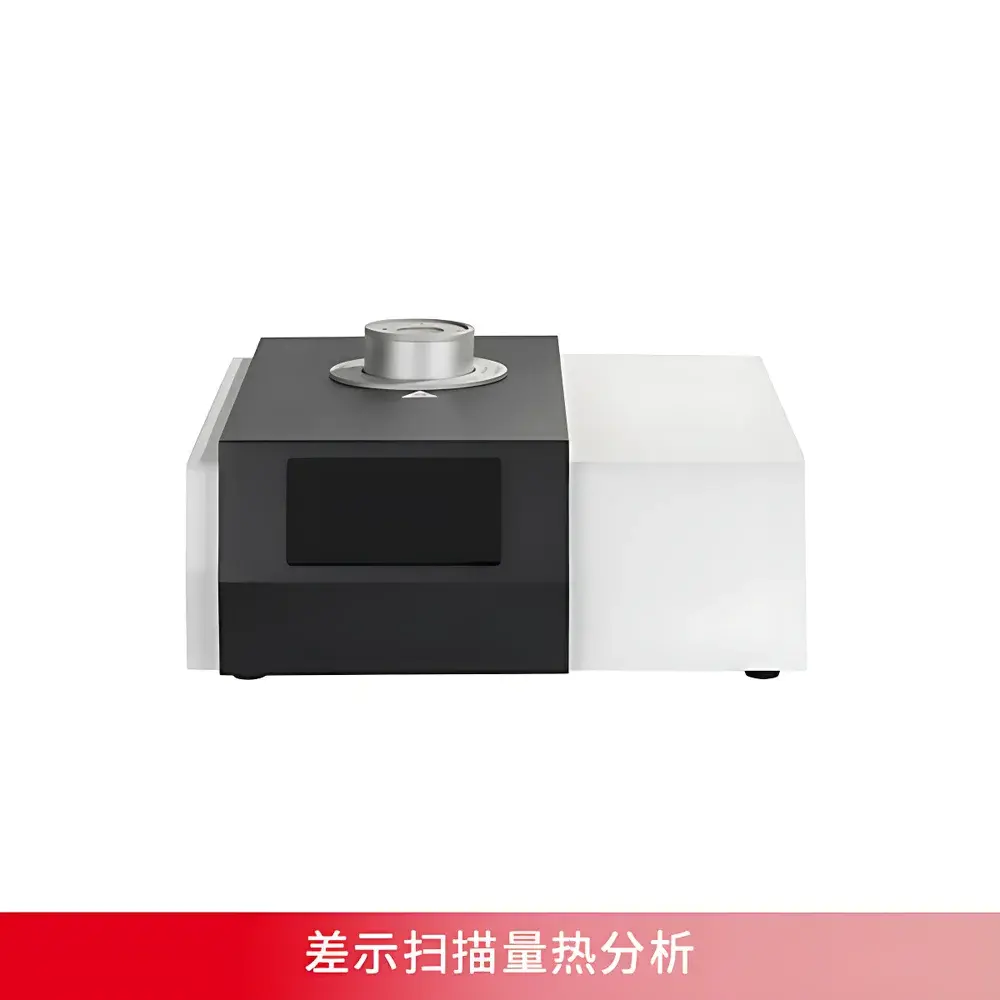
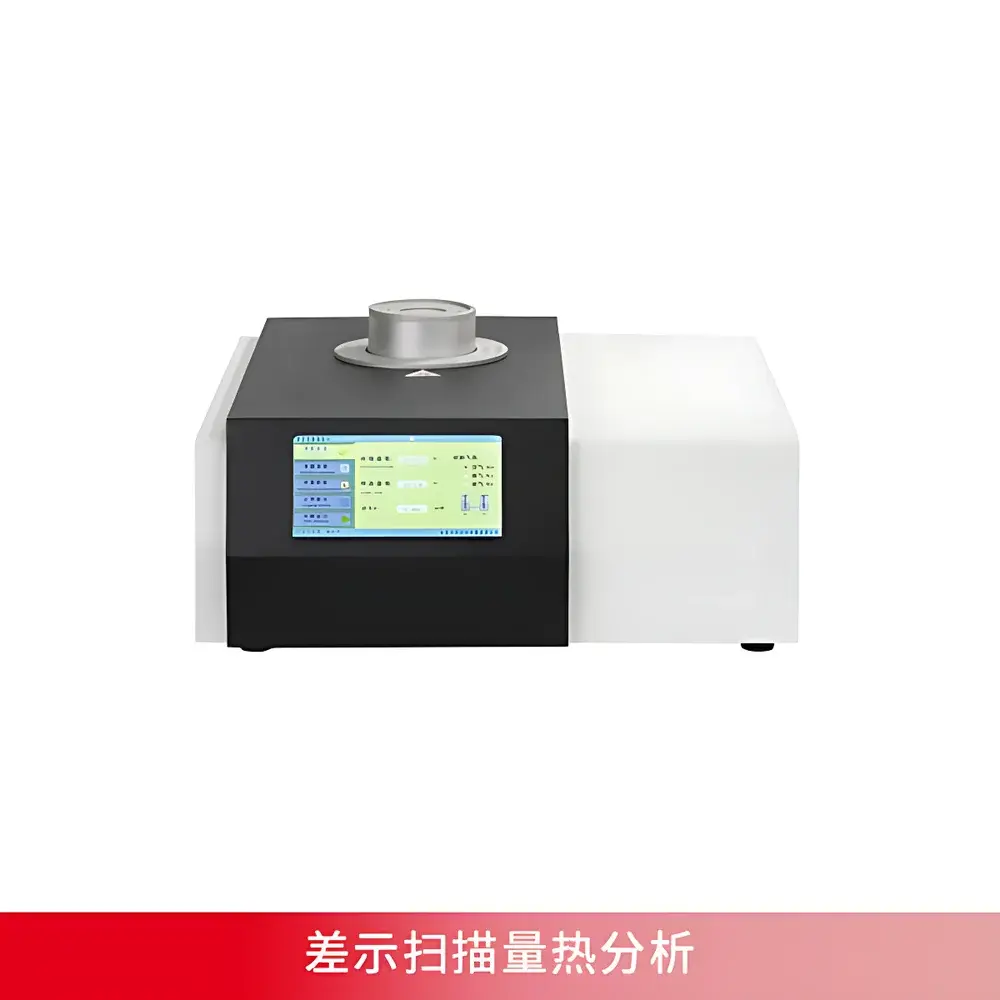
Nanjing Dazhan DSC100A Differential Scanning Calorimeter
| Brand | Nanjing Dazhan |
|---|---|
| Origin | Jiangsu, China |
| Manufacturer Type | Manufacturer |
| Product Origin | Domestic |
| Model | DSC100A |
| Sample Capacity | Single |
| Instrument Type | Differential Scanning Calorimeter (DSC) |
| Temperature Range | Ambient to 600 °C |
| Heating/Cooling Rate | 0.1–100 K/min |
| DSC Signal Range | 0 to ±600 mW |
| Temperature Stability | ±0.01 °C |
| Temperature Resolution | 0.01 °C |
| Temperature Repeatability | ±0.1 °C |
| DSC Noise Level | 0.01 μW |
| DSC Sensitivity | 0.001 mW |
| DSC Resolution | 0.01 μW |
| Control Interface | USB 2.0 |
| Display | 7-inch 24-bit color TFT LCD touchscreen |
| Gas Flow Control | Digital mass flow controller with database logging |
| Calibration | Integrated standard reference materials and one-click temperature/enthalpy calibration |
Overview
The Nanjing Dazhan DSC100A Differential Scanning Calorimeter is a precision thermal analysis instrument engineered for quantitative measurement of heat flow differences between a sample and inert reference as a function of temperature or time. Based on the heat-flux DSC principle, it detects endothermic and exothermic transitions—including glass transition (Tg), cold crystallization, melting (Tm), recrystallization, solid-solid phase changes, oxidative induction time (OIT), oxidative induction temperature (OITT), specific heat capacity (Cp), and crosslinking/curing enthalpies. Designed for routine quality control, R&D laboratories, and academic research, the DSC100A delivers high baseline stability and reproducible thermal data across its full operating range from ambient to 600 °C—enabling compliance with ASTM E794, ISO 11357, and USP <1163> thermal characterization protocols.
Key Features
- Optimized furnace architecture with enhanced thermal insulation and symmetric sensor design, delivering improved baseline flatness and long-term signal stability (±0.01 °C temperature fluctuation).
- Digital mass flow controller for purge gas (N2, O2, Ar), enabling programmable gas switching and automatic logging of flow rates into the raw data file for audit-ready traceability.
- Dual-mode operation: fully functional via integrated 7-inch 24-bit color capacitive touchscreen or remote PC-based software—both supporting identical parameter sets and real-time curve monitoring.
- Cortex-M3 ARM microcontroller core ensures deterministic thermal ramp execution, sub-millisecond PID loop response, and robust immunity to electromagnetic interference in shared lab environments.
- USB 2.0 interface supports plug-and-play connectivity, firmware updates, and synchronized data acquisition without external power adapters or proprietary drivers.
- Onboard calibration suite includes certified indium, zinc, and tin reference standards; one-click auto-calibration corrects both temperature offset and enthalpy scaling per ASTM E967 and ISO 11357-1.
Sample Compatibility & Compliance
The DSC100A accommodates standard aluminum, gold-plated aluminum, and high-pressure stainless-steel crucibles (40 µL and 100 µL volumes). It supports solid polymers, pharmaceutical powders, metallic alloys, composites, and cured resins—provided samples are thermally stable under inert or oxidative atmospheres. All hardware and firmware comply with IEC 61000-6-3 (EMC) and IEC 61010-1 (safety). Data acquisition and reporting modules support GLP/GMP-aligned workflows, including electronic signatures, user access levels, and audit trail generation per FDA 21 CFR Part 11 requirements when used with validated software versions.
Software & Data Management
Bundled DSC Analysis Suite v3.x provides ISO/IEC 17025-compliant data processing: baseline subtraction, peak integration, Tg inflection point determination (tangent, midpoint, onset), Cp calculation via step-change method, and OIT/OITT evaluation per ASTM D3895 and ISO 11357-6. Raw data is stored in vendor-neutral ASCII format (.txt) with embedded metadata (instrument ID, operator, date/time stamp, calibration status, gas flow settings). Export options include CSV, PDF reports with embedded spectra, and direct import into MATLAB, OriginLab, or Python (via pandas) for advanced statistical modeling.
Applications
- Pharmaceutical development: polymorph screening, amorphous content quantification, excipient compatibility studies, and stability-indicating assay validation.
- Polymer science: determination of degree of crystallinity, crosslink density estimation, degradation onset temperature, and kinetic modeling of cure reactions (e.g., epoxy, silicone).
- Materials engineering: thermal aging assessment of composites, oxidation resistance evaluation of lubricants and elastomers, and phase diagram construction for metal alloys.
- Food science: starch gelatinization, fat crystallization behavior, and shelf-life prediction via accelerated oxidation testing.
- Academic research: calorimetric validation of computational thermodynamics models (e.g., CALPHAD), nanomaterial surface energy estimation, and biomolecular unfolding thermodynamics.
FAQ
What reference materials are included for calibration?
Certified indium (Tm = 156.60 °C, ΔHfus = 28.45 J/g), zinc (Tm = 419.53 °C), and tin (Tm = 231.93 °C) are supplied with each unit. Calibration certificates conform to ISO/IEC 17025-accredited metrology practices.
Is the instrument compatible with nitrogen and oxygen purge gases?
Yes—the digital mass flow controller supports N2, O2, Ar, and synthetic air with programmable switching between up to two gases during a single run.
Can DSC100A perform modulated DSC (MDSC®) measurements?
No—this model implements conventional heat-flux DSC only. MDSC functionality requires additional hardware (oscillatory temperature control module) and is not supported.
What is the minimum detectable heat flow change?
The system noise floor is 0.01 μW, with a sensitivity of 0.001 mW and resolution of 0.01 μW, enabling detection of subtle transitions in low-mass samples (<1 mg) under optimized conditions.
Does the software support automated batch processing of multiple runs?
Yes—batch analysis mode allows sequential processing of ≥100 files using identical baseline and peak detection parameters, with export of summary statistics (mean Tg, SD, %RSD) to Excel-compatible reports.



