
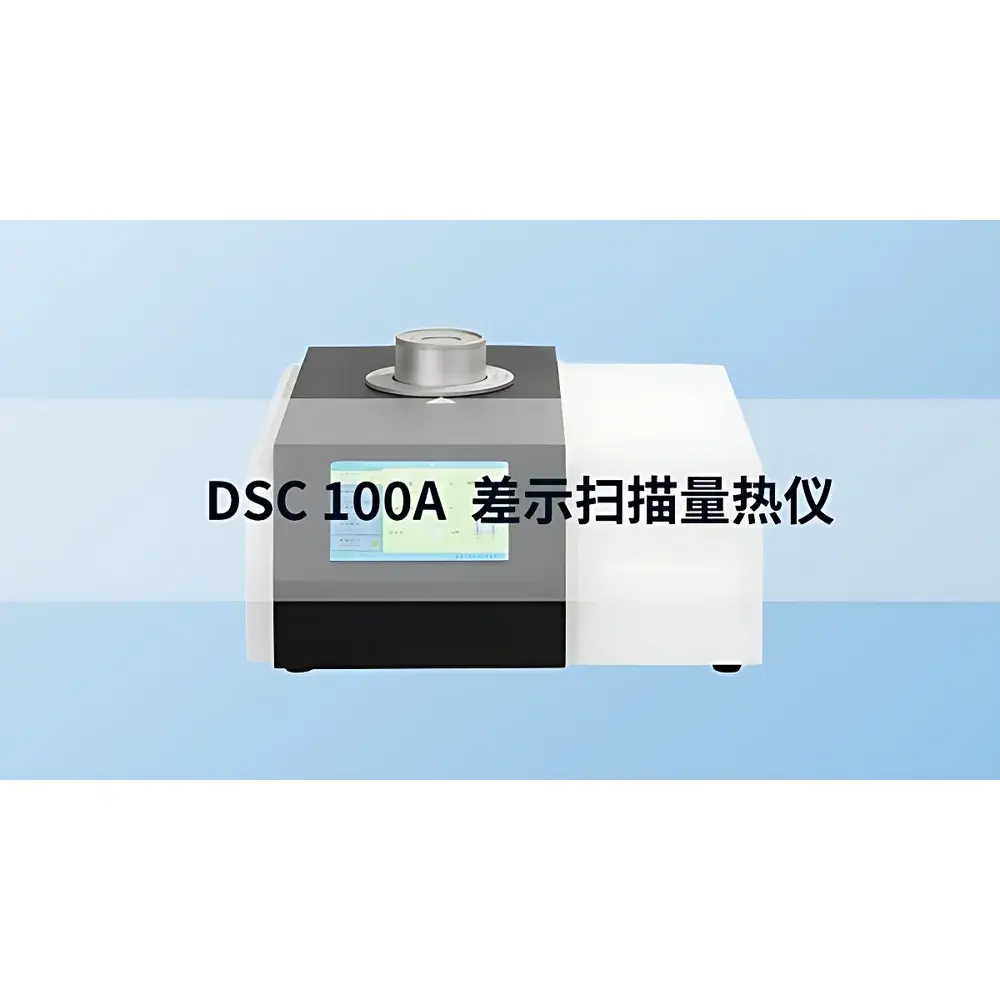
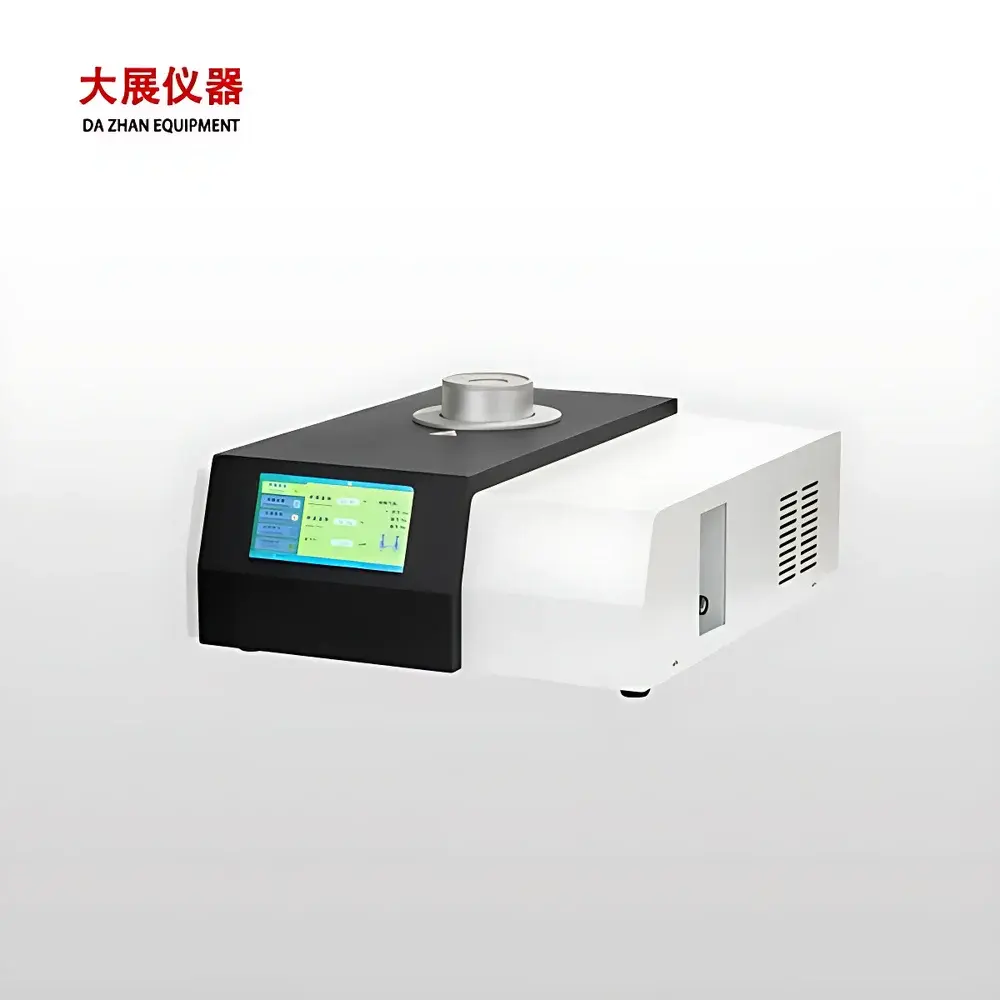
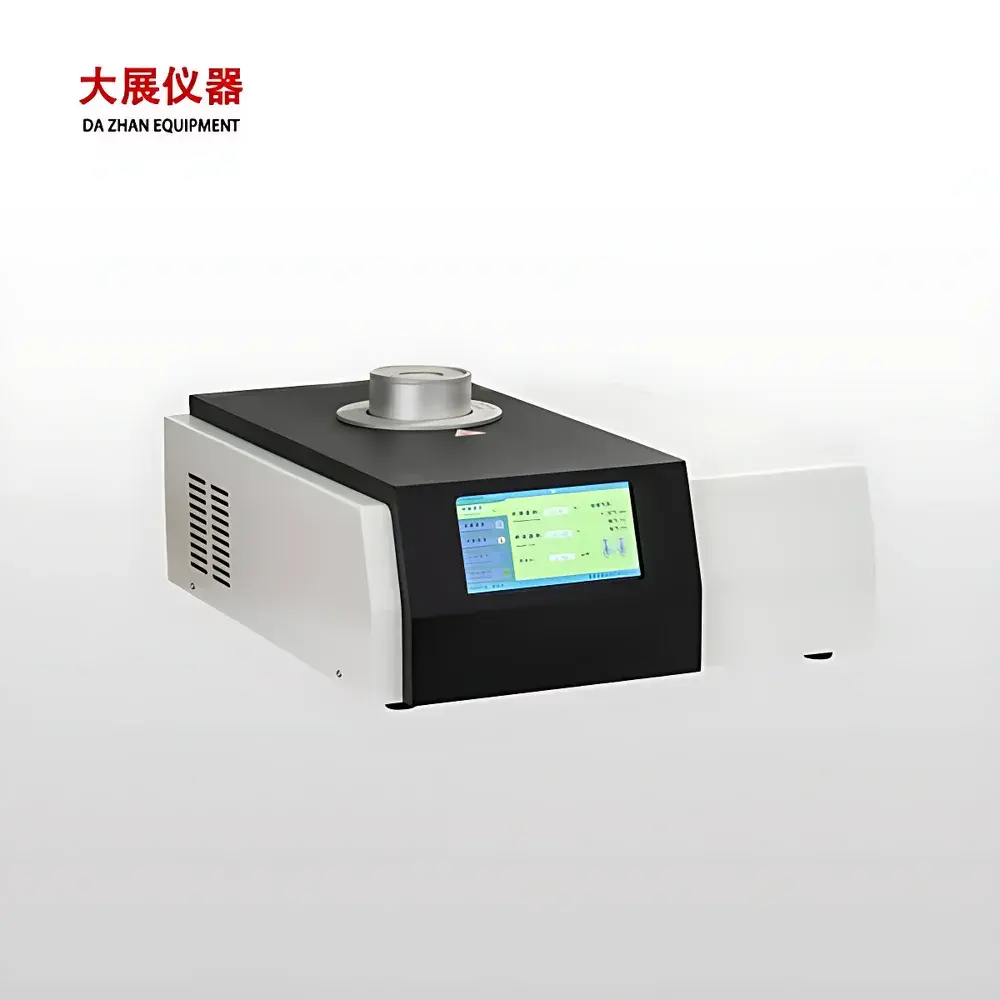
Nanjing Dazhan DZ-DSC100A Differential Scanning Calorimeter
| Brand | Nanjing Dazhan |
|---|---|
| Origin | Jiangsu, China |
| Manufacturer Type | Direct Manufacturer |
| Product Category | Domestic |
| Model | DZ-DSC100A |
| Sample Capacity | Single |
| Instrument Type | Differential Scanning Calorimeter (DSC) |
| Temperature Range | Ambient to 600 °C |
| Temperature Accuracy | ±0.01 °C |
| Heating/Cooling Rate | 0.1–100 K/min |
| DSC Heat Flow Range | 0 to ±600 mW |
| Temperature Stability | ±0.01 °C |
| Temperature Resolution | 0.01 °C |
| Temperature Repeatability | ±0.1 °C |
| DSC Noise Level | 0.01 μW |
| DSC Sensitivity | 0.001 mW |
| DSC Resolution | 0.01 μW |
| Control Mode | Fully Programmable Auto-Control |
| Atmosphere Control | Automated Gas Switching (N₂, Air, O₂) |
| Display | 7-inch 24-bit LCD Touchscreen |
| Interface | Standard USB 2.0 |
| Calibration | Certified Reference Materials Included |
Overview
The Nanjing Dazhan DZ-DSC100A is a precision benchtop differential scanning calorimeter engineered for high-reproducibility thermal analysis of solid and semi-crystalline materials. Operating on the principle of heat-flux DSC, it measures the difference in heat flow between a sample and an inert reference as both are subjected to identical, precisely controlled temperature programs. This enables quantitative determination of endothermic and exothermic transitions—including glass transition (Tg), melting (Tm), crystallization (Tc), solid-solid phase changes, oxidative induction time (OIT), oxidative induction temperature (OITT), specific heat capacity (Cp), and crosslinking enthalpy—under controlled atmospheric conditions. Designed for routine QC laboratories and R&D environments, the DZ-DSC100A delivers metrological traceability through NIST-traceable calibration standards and supports ISO 11357, ASTM E794, ASTM D3418, and USP compliance workflows.
Key Features
- Wide operational temperature range from ambient to 600 °C, enabling analysis of high-melting polymers, metals, ceramics, and pharmaceutical actives.
- Programmable heating/cooling rates spanning 0.1–100 K/min, facilitating both high-resolution transition profiling and rapid screening protocols.
- High-sensitivity heat-flow detection with ±600 mW full-scale range, 0.001 mW sensitivity, and sub-microwatt noise floor (0.01 μW), ensuring reliable detection of subtle thermal events.
- Thermal stability of ±0.01 °C and temperature accuracy of ±0.01 °C—validated using certified indium, zinc, and tin reference materials.
- Automated dual-gas switching system supporting inert (N₂), oxidizing (O₂), and ambient air atmospheres, with real-time pressure monitoring and leak-tight furnace design.
- Integrated 7-inch capacitive touchscreen with 24-bit color display, intuitive navigation, and on-device data visualization including baseline subtraction and peak integration.
- USB 2.0 interface compliant with Windows-based acquisition software; supports export of raw .csv and standardized .qtx formats for third-party analysis (e.g., TA Instruments Universal Analysis, NETZSCH Proteus).
Sample Compatibility & Compliance
The DZ-DSC100A accommodates standard aluminum, gold-plated aluminum, or hermetic stainless-steel crucibles (40 µL capacity), compatible with powders, films, fibers, granules, and small metallic specimens (≤25 mg). Its sealed furnace architecture meets IEC 61000-6-3 EMC requirements and operates within Class II biosafety cabinet-compatible dimensions. All thermal calibrations adhere to ISO/IEC 17025 principles, and instrument validation documentation includes as-delivered IQ/OQ records. The system supports GLP-compliant operation via audit-trail-enabled software (optional upgrade), satisfying FDA 21 CFR Part 11 requirements for electronic records and signatures when paired with validated PC configuration.
Software & Data Management
Bundled acquisition software provides full control over temperature ramping, hold segments, multi-step cycles, and dynamic atmosphere sequencing. Real-time baseline correction, automatic peak detection (with adjustable threshold and deconvolution), and Cp calculation via step-heating method are embedded. Data files include metadata headers (operator ID, timestamp, calibration status, gas flow rate), enabling traceable chain-of-custody reporting. Export options include ASCII (.csv), universal thermal analysis (.qtx), and PDF report generation with customizable templates aligned to internal SOPs or ISO 17025 reporting clauses.
Applications
- Pharmaceutical development: Polymorph screening, amorphous content quantification, excipient compatibility studies, and stability-indicating assay validation.
- Polymer science: Crystallinity index derivation, Tg mapping across copolymer compositions, cure kinetics modeling for thermosets, and degradation onset evaluation per ISO 20673.
- Materials engineering: Oxidative stability assessment of lubricants and elastomers (ASTM D3893), metal alloy phase diagram verification, and thermal aging behavior of composites.
- Food science: Starch gelatinization profiling, fat crystallization kinetics, and shelf-life prediction via Arrhenius-based OIT modeling.
- Academic research: Teaching thermodynamics fundamentals, validating computational models of phase equilibria, and benchmarking novel nanocomposite thermal responses.
FAQ
What reference materials are supplied for calibration?
Indium (Tm = 156.6 °C), Zinc (Tm = 419.5 °C), and Tin (Tm = 231.9 °C) are included with certified enthalpy values traceable to NIST SRM 3450 series.
Can the DZ-DSC100A perform modulated DSC (MDSC)?
No—this model implements conventional heat-flux DSC only. MDSC capability requires additional hardware modulation drivers and is not supported by the DZ-DSC100A platform.
Is remote operation possible?
Yes—via USB-connected host PC running the native software; Ethernet or Wi-Fi connectivity is not built-in but can be implemented externally using standard network-attached storage or VNC solutions under IT-controlled environments.
How often should temperature and enthalpy calibration be performed?
Per ISO 17025, initial calibration upon installation and after any major maintenance; routine verification before each analytical batch using one reference material is recommended for GLP environments.
Does the system support purge gas flow control?
Yes—the integrated mass flow controller regulates purge gas (N₂, O₂, air) from 0 to 100 mL/min with ±1 mL/min accuracy, and flow rate is logged synchronously with thermal data.



