
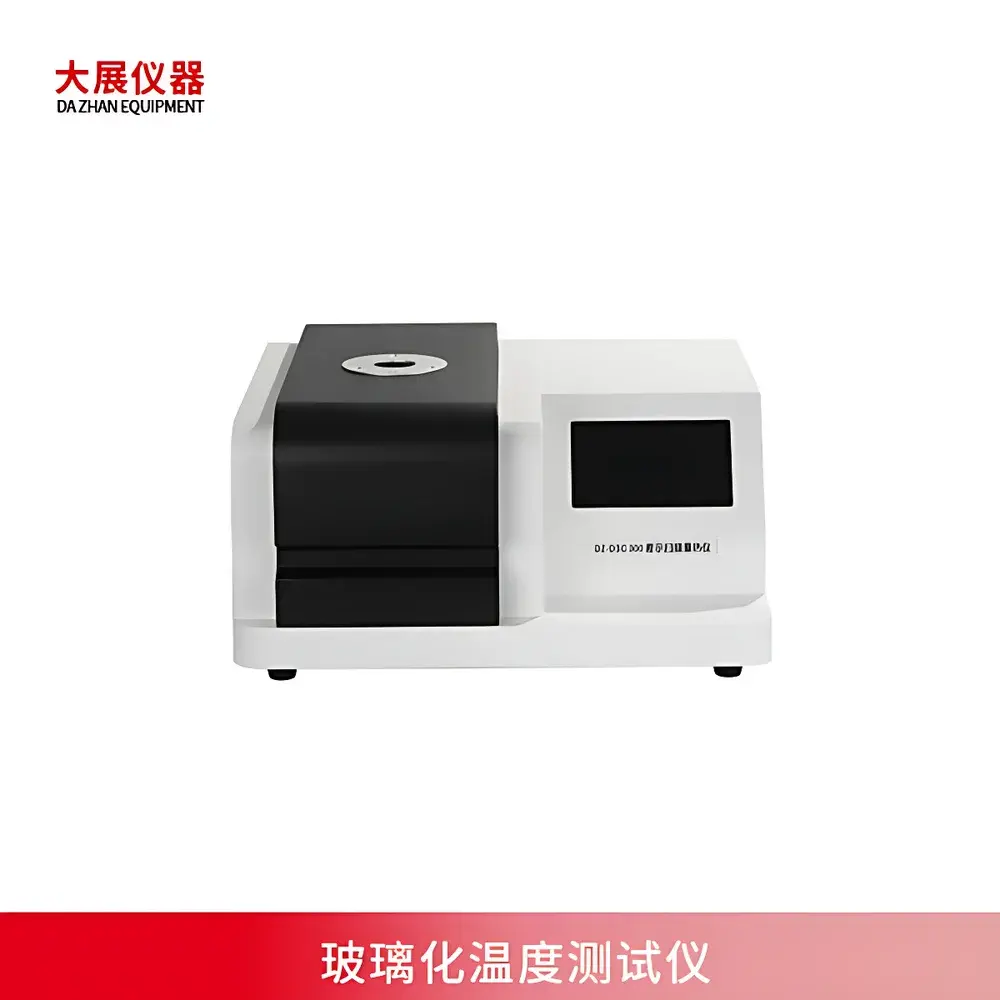
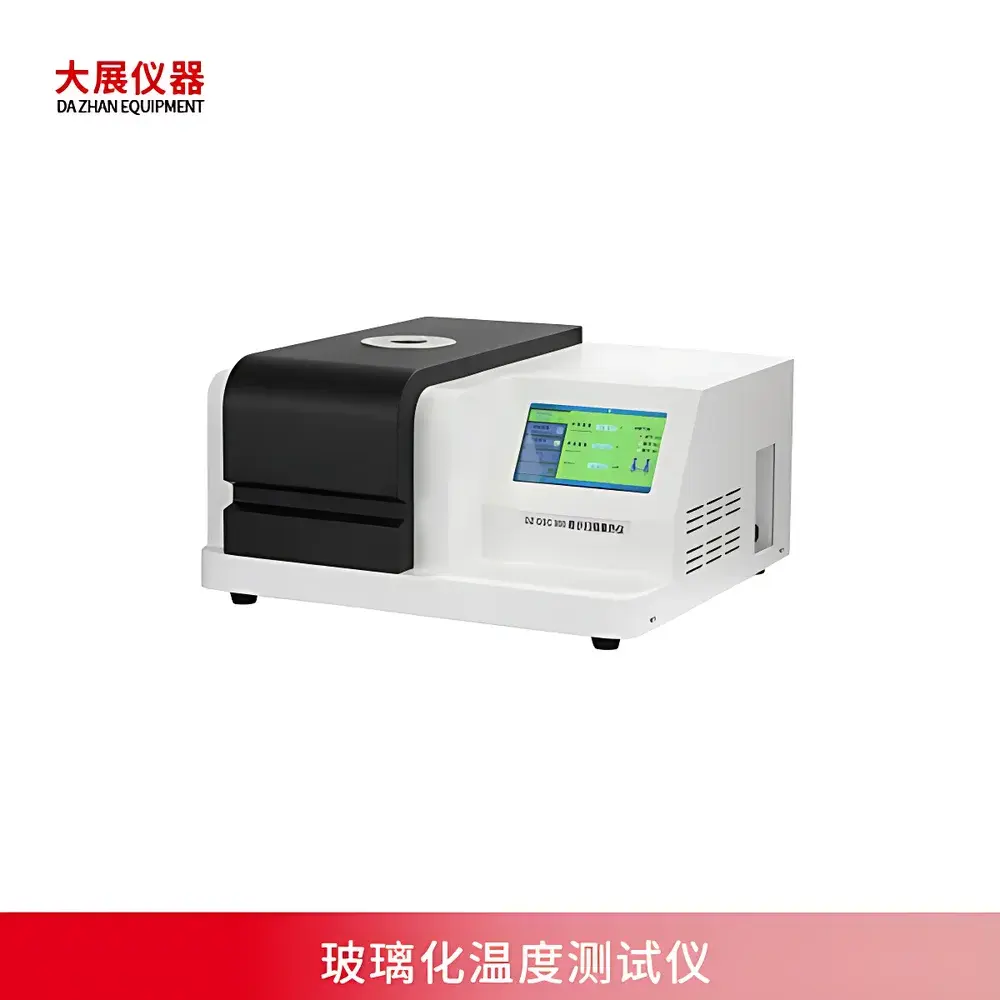
Nanjing Dazhan DZ-DSC300 Differential Scanning Calorimeter
| Brand | Nanjing Dazhan |
|---|---|
| Origin | Jiangsu, China |
| Manufacturer Type | Manufacturer |
| Product Origin | Domestic |
| Model | DZ-DSC300 |
| Sample Capacity | Single |
| Instrument Type | DSC |
| Temperature Range | Ambient to 600 °C |
| Heating/Cooling Rate | 0.1–100 °C/min |
| DSC Signal Range | 0 to ±600 mW |
| Temperature Stability | ±0.01 °C |
| DSC Resolution | 0.01 µW |
| DSC Sensitivity | 0.001 mW |
| Temperature Accuracy | ±0.001 °C |
| Gas Flow Control | Dual-channel automated switching, 0–300 mL/min (customizable) |
| Gas Pressure Rating | ≤5 MPa |
| Display | 7-inch 24-bit color LCD touchscreen |
| Interface | Standard USB |
| Calibration Standards Included | Indium, Tin, Lead |
Overview
The Nanjing Dazhan DZ-DSC300 Differential Scanning Calorimeter is a precision thermal analysis instrument engineered for quantitative measurement of heat flow differences between a sample and inert reference as a function of temperature or time. It operates on the principle of heat-flux DSC, utilizing a high-stability furnace and thermally optimized sensor architecture to detect endothermic and exothermic transitions—including glass transition (Tg), cold crystallization, melting, solid-solid phase changes, crystallization kinetics, oxidative induction time (OIT), and cure enthalpy. Designed for laboratory-based material characterization in regulated and research environments, the DZ-DSC300 delivers reproducible thermal data across a broad operational range (ambient to 600 °C) with programmable heating/cooling rates from 0.1 to 100 °C/min—enabling both high-resolution low-rate scans for subtle transitions and rapid screening protocols.
Key Features
- Thermally isolated, integrated furnace assembly with triple-layer lid design for enhanced thermal insulation and improved baseline stability.
- Advanced sensor module fabricated using thermal fusion bonding (replacing conventional spot welding), yielding higher signal-to-noise ratio and long-term drift resistance.
- Dual-mode control architecture supporting both front-panel touchscreen operation and PC-based software command—ensuring flexibility in standalone or networked lab workflows.
- 24-bit analog-to-digital conversion with electromagnetic shielding of acquisition circuitry to minimize environmental interference and ensure micro-watt-level resolution (0.01 µW).
- Automated dual-gas channel system with pressure-rated solenoid valves (≤5 MPa), enabling seamless switching between inert (N2, Ar) and oxidative (air, O2) atmospheres during dynamic thermal programs.
- Six-segment programmable temperature control supporting complex multi-step protocols: ramp-hold-ramp-cool-hold-ramp sequences with user-defined dwell times and rate profiles.
Sample Compatibility & Compliance
The DZ-DSC300 accommodates standard aluminum, gold-plated aluminum, and high-pressure stainless-steel crucibles (up to 150 bar), making it suitable for volatile, reactive, or moisture-sensitive samples. It complies with core thermal analysis standards including ASTM E794 (melting point), ASTM E1356 (Tg determination), ISO 11357 series (plastics—DSC), and USP <1228> (thermal analysis of pharmaceuticals). Its temperature calibration traceability is maintained via included certified reference materials (indium, tin, lead), with multi-point correction algorithms embedded in firmware to support GLP/GMP audit readiness. The instrument supports 21 CFR Part 11-compliant software configurations when paired with validated data management modules.
Software & Data Management
Bundled with Windows-compatible analytical software featuring real-time curve visualization, peak integration with baseline subtraction (tangent, linear, sigmoid), and customizable report generation (PDF, CSV, Excel). The software includes built-in temperature calibration routines, kinetic modeling tools (Ozawa-Flynn-Wall, Kissinger), and Tg extraction methods per ASTM E1356 (midpoint, onset, inflection). Raw data files are stored with full metadata (operator ID, timestamp, method name, gas flow settings, calibration history), ensuring full traceability. USB interface enables direct instrument connection without proprietary drivers; exported datasets conform to ASTM E1447 and NIST-recommended thermal data exchange formats.
Applications
- Polymers: Quantification of Tg, degree of crystallinity, curing kinetics, filler dispersion effects, and thermal degradation onset.
- Pharmaceuticals: Polymorph screening, amorphous content assessment, excipient compatibility studies, and stability-indicating assay development.
- Food science: Starch gelatinization, fat crystallization behavior, protein denaturation temperatures, and shelf-life prediction via oxidation induction time.
- Metals & alloys: Solidus/liquidus determination, precipitation heat effects, and phase transformation enthalpies in lightweight composites.
- Electronics: Thermal reliability testing of encapsulants, underfill materials, and solder reflow profile validation.
FAQ
What is the recommended calibration frequency for routine GLP use?
Annual calibration with certified reference materials is advised; however, daily verification using indium (Tm = 156.6 °C) is required per internal SOPs.
Can the DZ-DSC300 perform modulated DSC (MDSC)?
No—this model implements conventional heat-flux DSC only; MDSC capability requires optional hardware upgrades not supported in the DZ-DSC300 platform.
Is the instrument compatible with purge gas humidification modules?
Yes—when configured with optional vapor delivery accessories, it supports controlled humidity DSC (e.g., for hygroscopic polymer studies) within specified pressure and flow limits.
Does the software provide audit trail functionality for FDA-regulated labs?
Full electronic audit trail (user actions, parameter changes, data exports) is available in the validated software package compliant with 21 CFR Part 11 Annex 11 requirements.
What crucible types are supported for high-pressure applications?
Standard aluminum crucibles (up to 10 bar); custom stainless-steel high-pressure crucibles (150 bar) are available as OEM accessories with pre-installed pressure relief mechanisms.



