
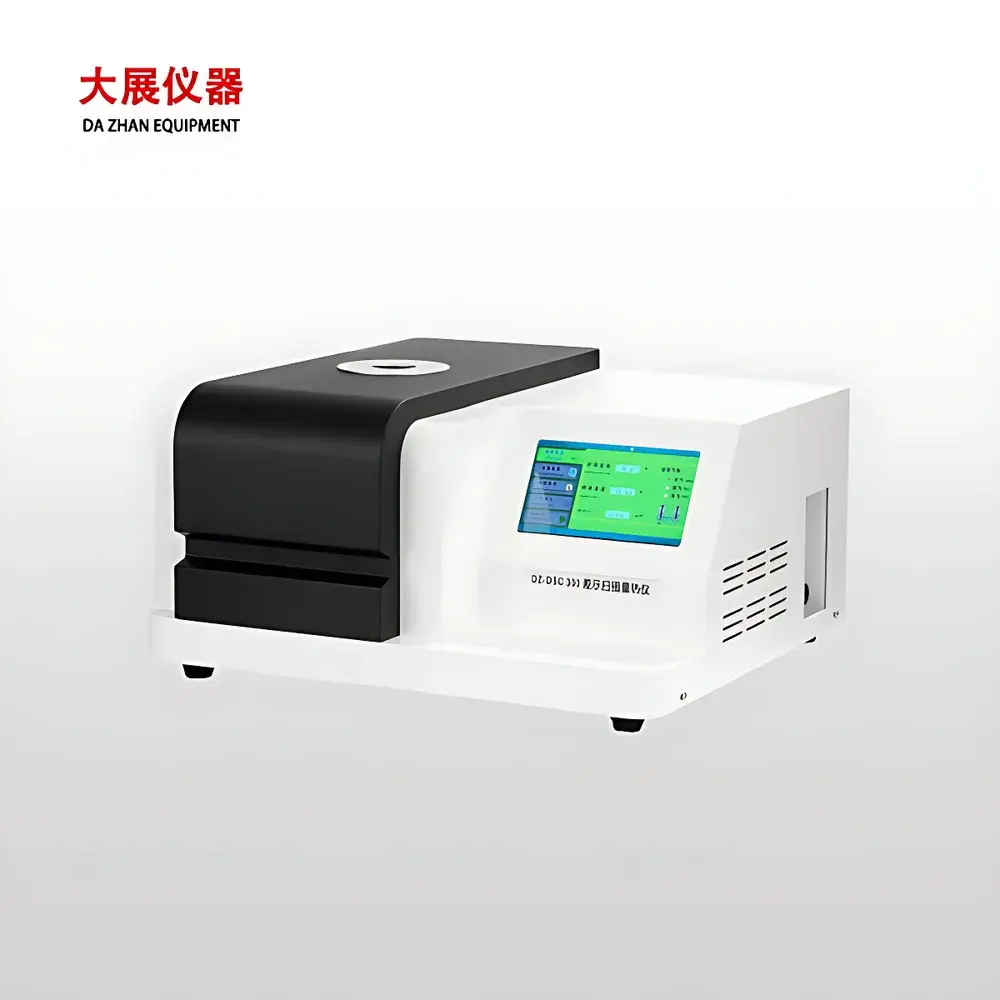
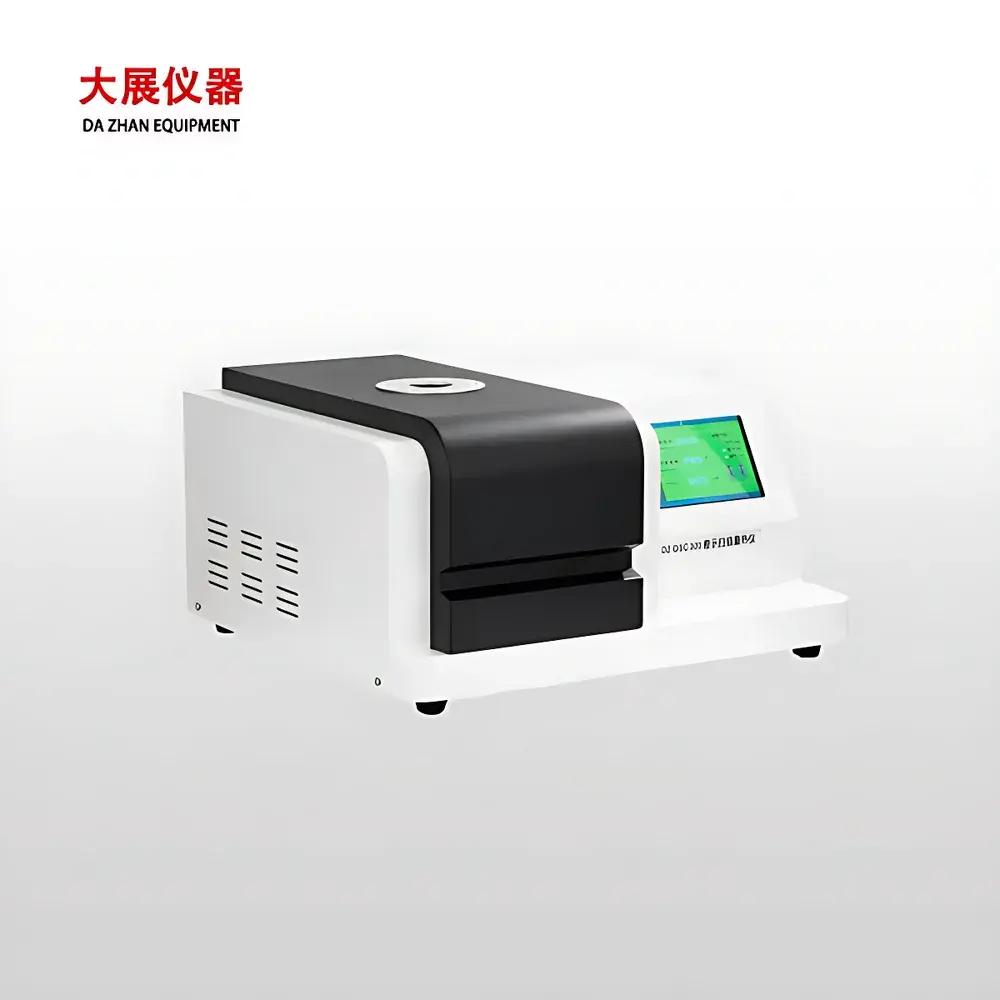
Nanjing Dazhan DZ-DSC300 Differential Scanning Calorimeter
| Brand | Nanjing Dazhan |
|---|---|
| Origin | Jiangsu, China |
| Manufacturer Type | Direct Manufacturer |
| Product Category | Domestic |
| Model | DZ-DSC300 |
| Sample Capacity | Single-sample |
| Instrument Type | Differential Scanning Calorimeter (DSC) |
| Temperature Range | Ambient to 600 °C |
| Programmable Temperature Control | Intelligent PID |
| Temperature Accuracy | ±0.01 °C |
| Heating/Cooling Rate | 0.1–100 K/min |
| Temperature Precision | ±0.1 °C |
| DSC Signal Range | ±800 mW |
| Temperature Stability (Drift) | ±0.01 °C |
| DSC Resolution | 0.01 mW |
| DSC Sensitivity | 0.001 mW |
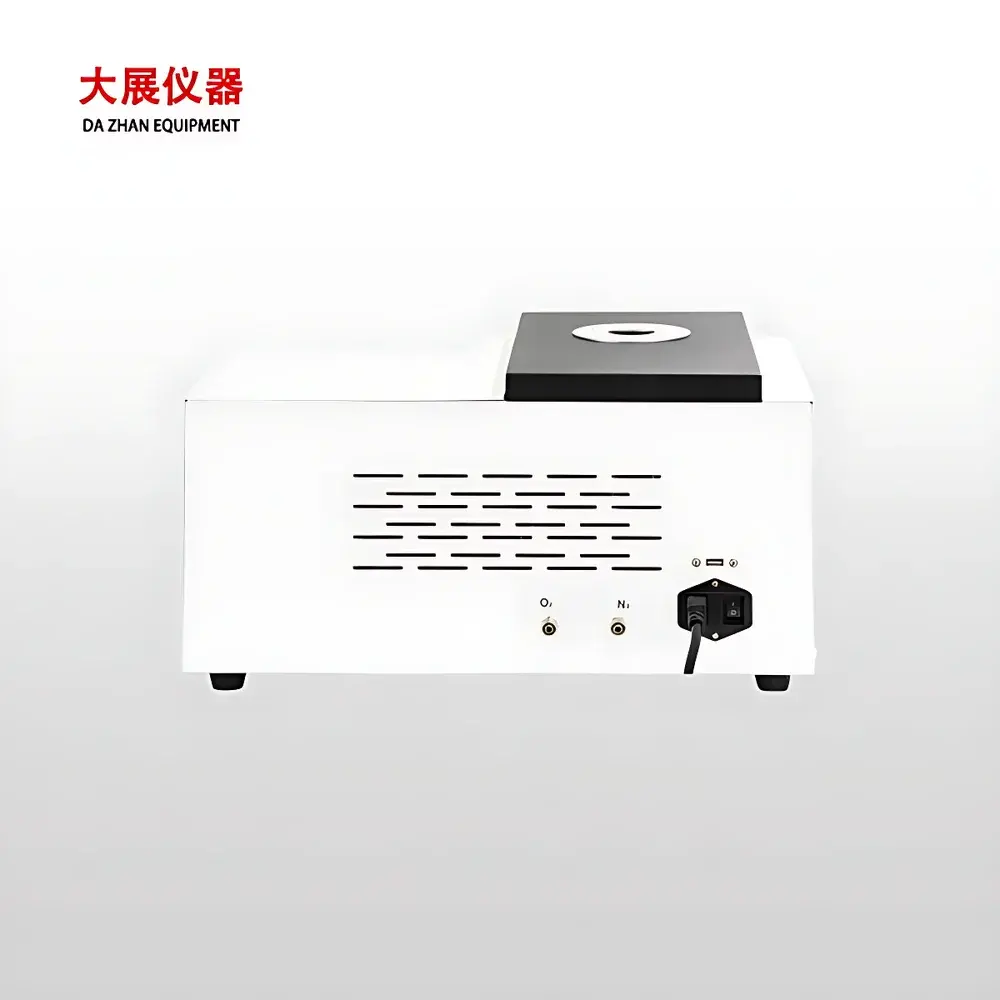
| Atmosphere Control | N₂/O₂ auto-switching, flow rate 0–300 mL/min, pressure up to 0.3 MPa |
| Display | 8-inch 24-bit color LCD touchscreen |
| Interface | Standard USB |
| Calibration Standards Included | Indium and Tin reference materials |
| Power Supply | AC 220 V / 50 Hz (customizable) |
Overview
The Nanjing Dazhan DZ-DSC300 Differential Scanning Calorimeter is a high-stability, single-cell thermal analysis instrument engineered for precise quantification of endothermic and exothermic transitions in solid and semi-crystalline materials. Based on the heat-flux DSC principle, it measures the differential heat flow between a sample and an inert reference as both are subjected to identical, programmable temperature profiles under controlled atmospheric conditions. This enables accurate determination of thermal events—including glass transition (Tg), melting point (Tm), crystallization onset (Tc), oxidative induction time (OIT), specific heat capacity (Cp), and enthalpy changes—across a broad operational range from ambient to 600 °C. Designed for routine quality control, polymer formulation development, pharmaceutical solid-state characterization, and academic research, the DZ-DSC300 integrates robust thermal architecture with digital signal integrity to ensure reproducible baseline stability and high signal-to-noise ratio across repeated runs.
Key Features
- Optimized furnace design featuring enhanced thermal symmetry and low thermal mass, delivering improved peak resolution, baseline flatness, and long-term drift suppression (±0.01 °C over 30 min).
- Multi-segment temperature programming capability: users define complex heating–cooling–isothermal sequences with independent ramp rates (0.1–100 K/min) and dwell times, supporting ASTM E794, ISO 11357, and USP <1163> thermal protocols.
- Dual-control architecture: fully operable via integrated 8-inch capacitive touchscreen or external PC software—enabling seamless method transfer, remote monitoring, and real-time parameter adjustment without interrupting ongoing runs.
- Digitally shielded acquisition circuitry with grounded Faraday enclosure minimizes electromagnetic interference, critical for low-magnitude transitions such as cold crystallization in amorphous polymers or weak curing exotherms in epoxy systems.
- Thermally bonded sensor assembly (replacing conventional spot-welded junctions) improves thermal coupling efficiency and signal fidelity, resulting in higher sensitivity (0.001 mW) and finer detection limits for subtle thermal events.
Sample Compatibility & Compliance
The DZ-DSC300 accommodates standard aluminum crucibles (hermetic or vented) and optional high-pressure stainless-steel cells for reactive or volatile samples. Its dual-gas manifold supports automated switching between nitrogen (inert) and oxygen (oxidative) atmospheres, with digitally regulated mass flow (0–300 mL/min) and pressure monitoring (up to 0.3 MPa). The system complies with essential regulatory frameworks for analytical instrumentation: temperature calibration traceability to NIST-traceable indium and tin standards is supported through multi-point correction routines embedded in firmware. Data acquisition meets ALCOA+ principles for raw data integrity, and audit-trail-enabled software versions satisfy FDA 21 CFR Part 11 requirements for electronic records and signatures when deployed in GLP/GMP environments.
Software & Data Management
Bundled Windows-based analysis software provides full instrument control, real-time visualization, baseline correction (tangent, linear, polynomial), peak integration, and Cp calculation using ASTM E1269 methodology. All raw thermograms are stored in vendor-neutral ASCII format with metadata timestamps, operator ID, and method parameters. Built-in reporting templates generate PDF/Excel outputs compliant with ISO/IEC 17025 documentation standards. Optional add-ons include automated OIT calculation per ASTM D3895, kinetic modeling (Friedman, Ozawa-Flynn-Wall), and batch processing for QC release testing across multiple lots.
Applications
- Polymer science: Crystallinity assessment, degradation kinetics, crosslink density estimation, and filler dispersion effects on thermal behavior.
- Pharmaceuticals: Polymorph screening, hydrate/anhydrate stability mapping, excipient compatibility studies, and lyophilized product residual moisture correlation.
- Metallurgy & ceramics: Solidus/liquidus determination, phase transformation enthalpies, and sintering behavior under controlled atmospheres.
- Food science: Fat crystallization profiling, starch gelatinization enthalpy, and shelf-life prediction via accelerated oxidation testing.
- Academic research: Teaching calorimetry fundamentals, validating computational thermodynamic models, and benchmarking against commercial reference instruments.
FAQ
What reference materials are supplied for calibration?
Indium (melting point 156.6 °C) and tin (231.9 °C) certified reference materials are included for temperature calibration; users may perform multi-point verification across the full 0–600 °C range.
Can the DZ-DSC300 operate under vacuum or corrosive gas environments?
Vacuum operation is not supported; however, optional quartz or alumina crucibles extend compatibility with mildly corrosive atmospheres (e.g., H₂S, CO₂) up to 400 °C. For aggressive gases, custom inlet/outlet fittings and corrosion-resistant seals are available upon request.
Is GLP-compliant data archiving supported?
Yes—when configured with audit-trail-enabled software, the system logs all user actions, method modifications, and calibration events with time stamps and operator credentials, satisfying GLP Annex 11 and FDA 21 CFR Part 11 requirements.
What cooling options are available below ambient temperature?
Standard configuration includes ambient-to-600 °C operation. Optional accessories include air-cooling (to ~−10 °C), Peltier-based semiconductor cooling (to −40 °C), and mechanical refrigeration units (to −80 °C), each requiring compatible sensor and crucible configurations.
How is baseline stability verified during qualification?
Baseline drift is measured per ISO 11357-1:2016 Annex B—using empty crucibles under isothermal hold at 50 °C for 60 minutes. Acceptance criterion: maximum deviation ≤ ±0.02 mW over the duration.



