
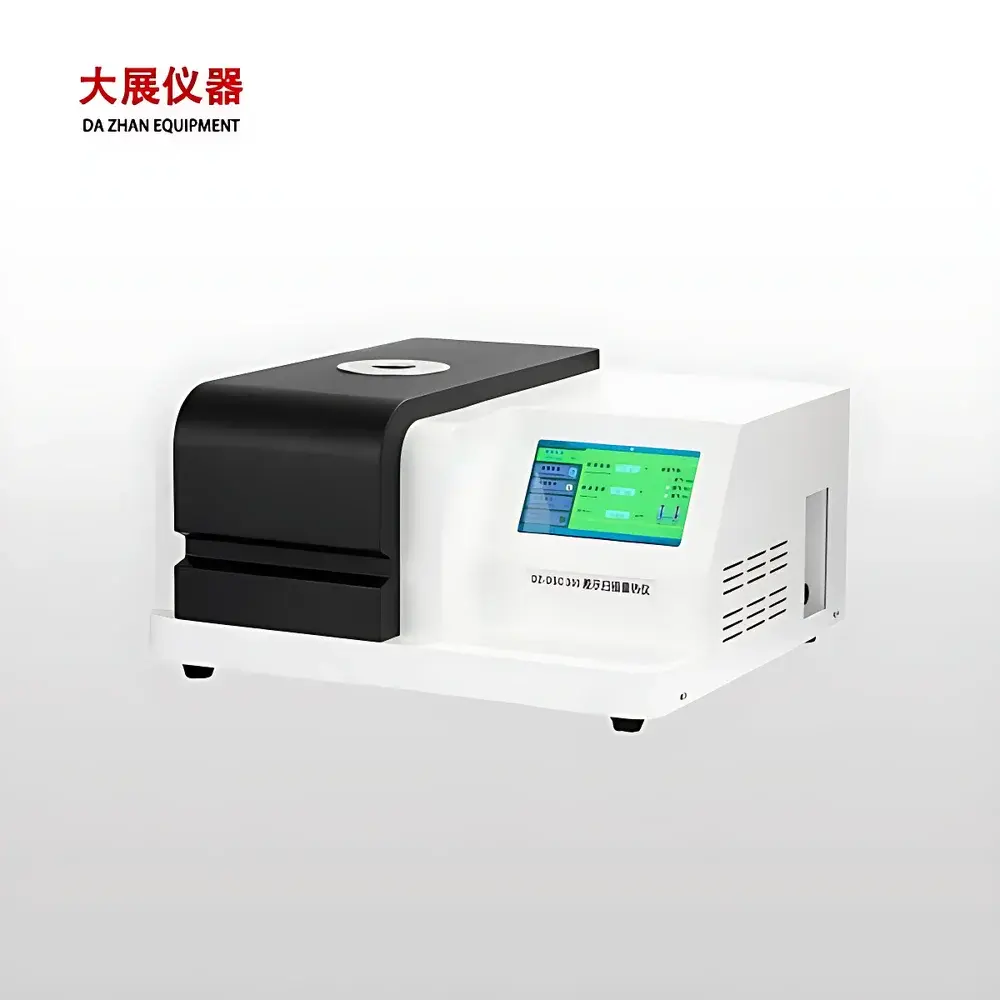
Nanjing Dazhan DZ-DSC300 Differential Scanning Calorimeter
| Brand | Nanjing Dazhan |
|---|---|
| Origin | Jiangsu, China |
| Manufacturer Type | Direct Manufacturer |
| Product Origin | Domestic (China) |
| Model | DZ-DSC300 |
| Sample Capacity | Single-sample |
| Instrument Type | Differential Scanning Calorimeter (DSC) |
| Temperature Range | Ambient to 600 °C |
| Temperature Accuracy | ±0.001 °C |
| Temperature Precision | ±0.001 °C |
| Temperature Stability | ±0.01 °C |
| Heating/Cooling Rate | 0.1–100 K/min |
| DSC Signal Range | 0 to ±600 mW |
| DSC Resolution | 0.01 µW |
| DSC Sensitivity | 0.001 mW |
| Control Mode | Intelligent PID Temperature Control |
| Thermal Program | Up to 6-segment ramp/hold/cool profiles |
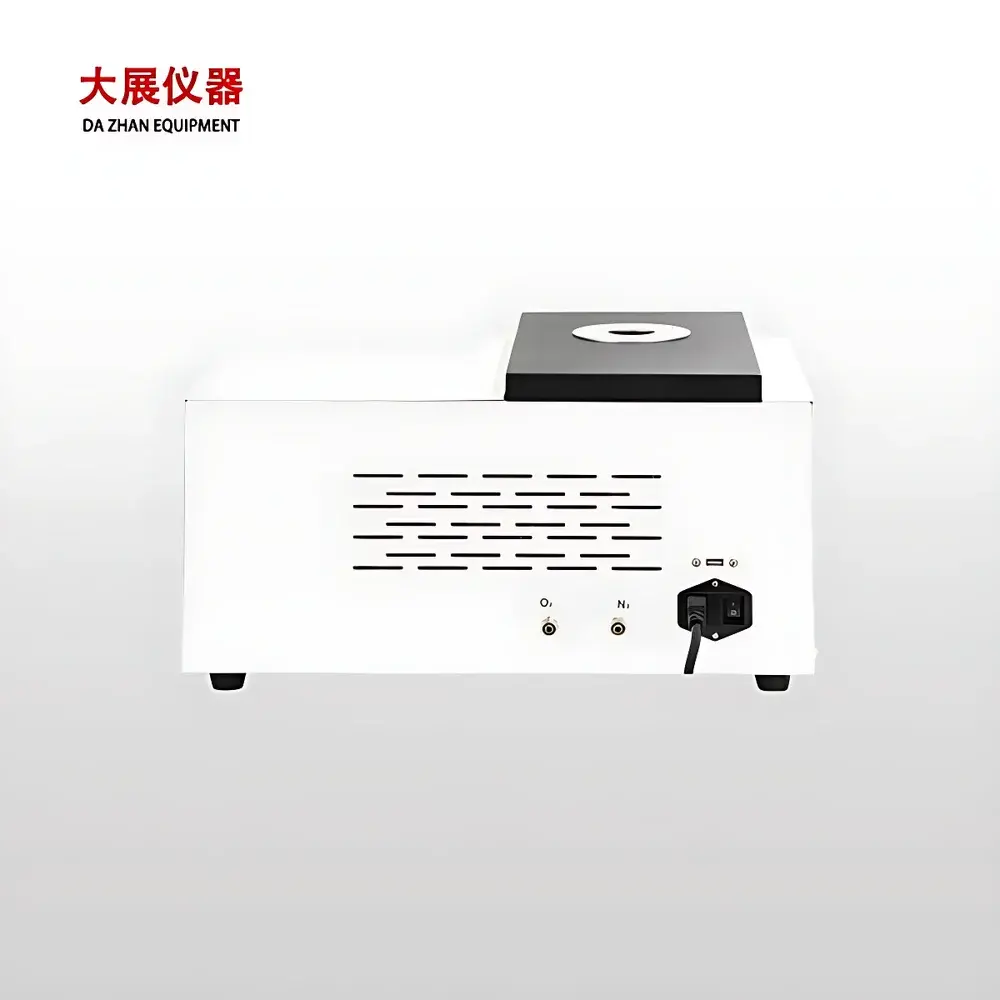
| Atmosphere Control | Dual-gas automatic switching (N₂, air, or other inert/oxidizing gases) |
| Gas Flow Rate | 0–300 mL/min (customizable) |
| Gas Pressure Rating | ≤5 MPa |
| Display | 7-inch 24-bit color LCD touchscreen |
| Data Interface | Standard USB |
| Calibration Standards Included | Indium, Tin, Lead |
| Software Features | Multi-point temperature calibration, real-time baseline correction, GLP-compliant data logging |
Overview
The Nanjing Dazhan DZ-DSC300 is a high-precision, single-cell differential scanning calorimeter engineered for rigorous thermal characterization of solid and semi-crystalline materials across academic research laboratories, polymer R&D centers, pharmaceutical development units, and quality control environments. Based on the heat-flux DSC principle, the instrument measures the differential heat flow between a sample and an inert reference as both are subjected to identical, precisely controlled temperature programs. This enables quantitative determination of endothermic and exothermic transitions—including glass transition (Tg), cold crystallization, melting point (Tm), crystallization onset and enthalpy, solid-solid phase transitions, oxidative induction time (OIT), cure kinetics, and thermal stability thresholds. Its operational range from ambient to 600 °C supports broad material applicability—from commodity thermoplastics and elastomers to high-performance engineering resins, pharmaceutical excipients, and inorganic salts—while maintaining traceable accuracy per ISO 11357 and ASTM E794 standards.
Key Features
- Optimized furnace architecture with symmetrical sensor design ensures superior baseline flatness (<±0.01 °C drift over 30 min), enhanced signal-to-noise ratio, and improved resolution of overlapping thermal events.
- High-fidelity thermal sensing using thermally fused sensor elements (replacing conventional spot-welded junctions) delivers increased sensitivity (0.001 mW) and long-term signal reproducibility.
- Intelligent PID temperature control algorithm enables stable, repeatable heating/cooling ramps across the full 0.1–100 K/min range, with programmable six-segment thermal profiles (ramp-hold-cool sequences).
- Dual independent gas inlet system with automated solenoid switching supports precise atmosphere management—enabling sequential or parallel use of inert (e.g., N₂), oxidizing (e.g., air, O₂), or reactive gas environments without manual intervention.
- Embedded 7-inch capacitive touchscreen interface with intuitive navigation permits standalone operation; all critical parameters—including ramp rate, hold duration, gas flow, and purge timing—are configurable directly on-device.
- Shielded analog front-end circuitry with industrial-grade signal conditioning ICs minimizes electromagnetic interference, ensuring robust data integrity in shared lab environments.
Sample Compatibility & Compliance
The DZ-DSC300 accommodates standard aluminum crucibles (hermetic or vented) and optional high-pressure stainless-steel cells (up to 5 MPa), supporting solids, powders, films, fibers, and small-volume viscous samples (≤30 mg typical). It complies with core thermal analysis regulatory expectations: temperature calibration traceability to NIST-traceable standards (Indium, Tin, Lead included), multi-point linearization routines, and real-time baseline correction algorithms aligned with ISO 11357-1:2016 requirements. For regulated industries, the instrument’s software supports audit trail generation, user access levels, electronic signatures, and raw-data immutability—facilitating alignment with FDA 21 CFR Part 11 and EU Annex 11 documentation practices when deployed with validated software modules.
Software & Data Management
Bundled Windows-based analysis software provides comprehensive post-run processing: peak integration with tangent/step baseline modes, Tg determination via midpoint or inflection methods, kinetic modeling (e.g., Ozawa-Flynn-Wall), and comparative overlay of multiple curves. All raw thermograms are stored in vendor-neutral ASCII format (.csv) alongside metadata (operator ID, date/time stamp, instrument serial number, calibration status). USB export enables seamless integration into LIMS or ELN platforms. The software includes built-in validation tools for temperature and enthalpy accuracy verification, supporting routine IQ/OQ protocols required under GLP and GMP frameworks.
Applications
- Polymers: Quantification of Tg, crystallinity %, melt enthalpy, cold crystallization behavior, and degradation onset temperature.
- Pharmaceuticals: Polymorph screening, amorphous content assessment, excipient compatibility studies, and stability-indicating assay development.
- Electronics: Thermal reliability evaluation of encapsulants, solder pastes, and underfill materials under reflow-relevant thermal cycles.
- Metals & Ceramics: Solidus/liquidus determination, phase diagram validation, and sintering behavior analysis.
- Food Science: Starch gelatinization, fat polymorphism, and protein denaturation profiling under controlled humidity-compatible conditions (with optional accessories).
FAQ
What calibration standards are supplied with the DZ-DSC300?
Indium (Tm = 156.6 °C), Tin (Tm = 231.9 °C), and Lead (Tm = 327.5 °C) are provided as primary temperature standards; enthalpy calibration is performed using certified Indium.
Does the instrument support modulated DSC (MDSC®) functionality?
No—the DZ-DSC300 operates in conventional heat-flux DSC mode only; MDSC requires proprietary hardware not present in this model.
Can the software generate 21 CFR Part 11-compliant reports?
Yes—when configured with password-protected user roles, electronic signature capture, and immutable audit logs, the system meets foundational Part 11 requirements for electronic records and signatures.
Is remote monitoring or network connectivity supported?
The device features USB host connectivity only; Ethernet or Wi-Fi interfaces are not integrated but may be enabled via third-party USB-to-Ethernet adapters compatible with the host PC.
What maintenance intervals are recommended for optimal performance?
Annual sensor verification and furnace cleaning are advised; gas line filters should be replaced every 6 months under continuous use; crucible sets are consumables with typical lifespans of 50–100 runs depending on sample corrosivity.



