
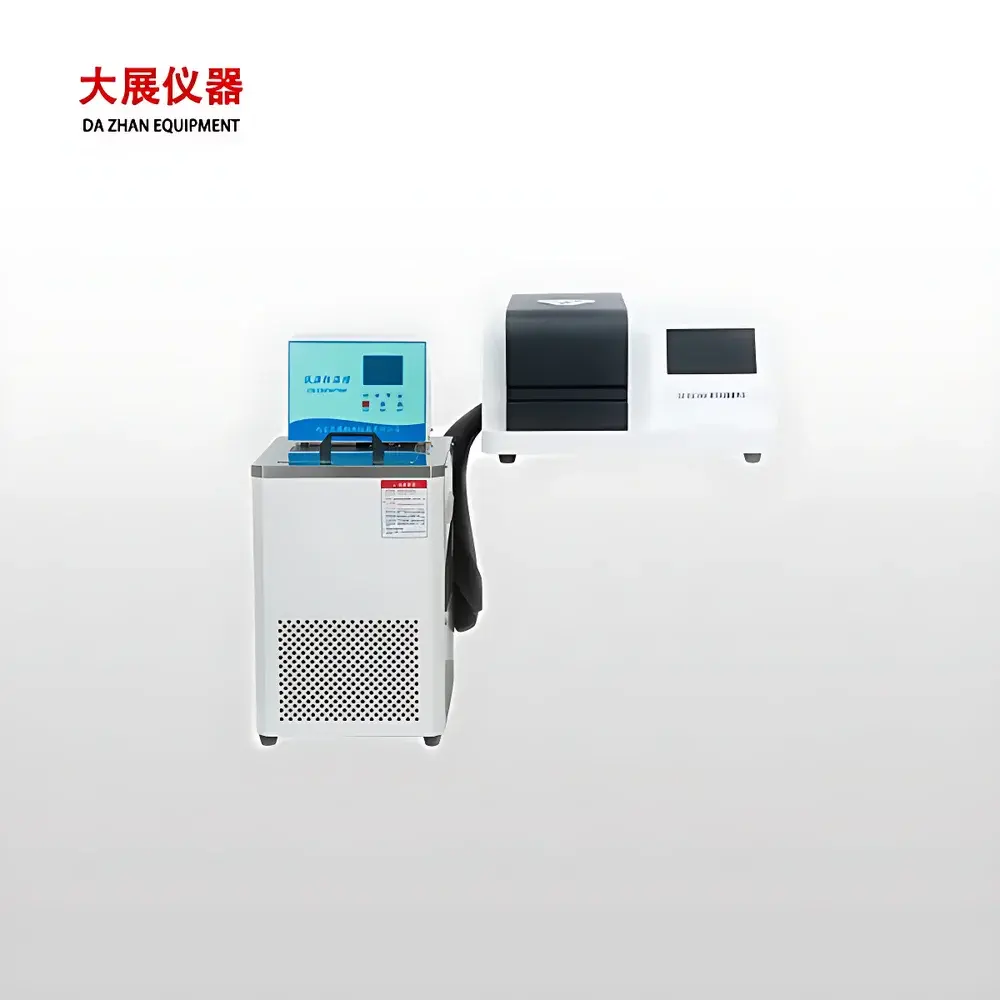
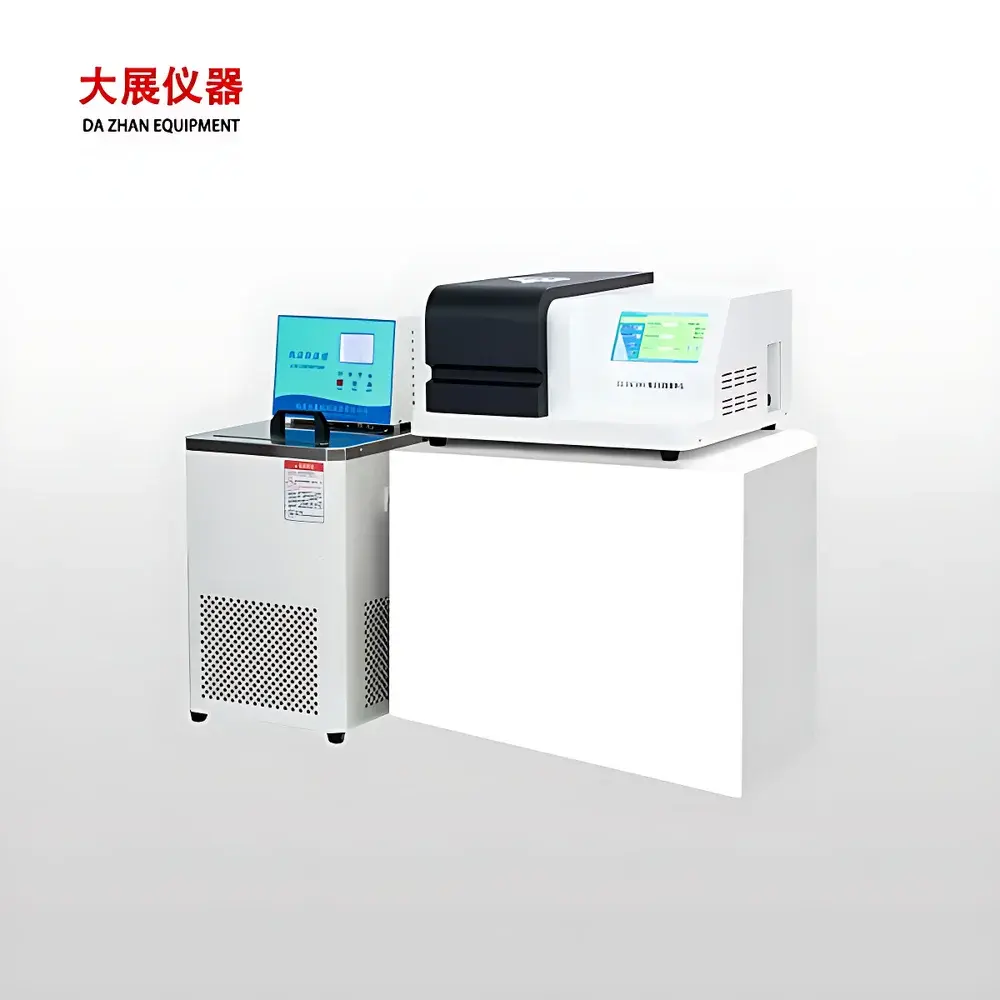
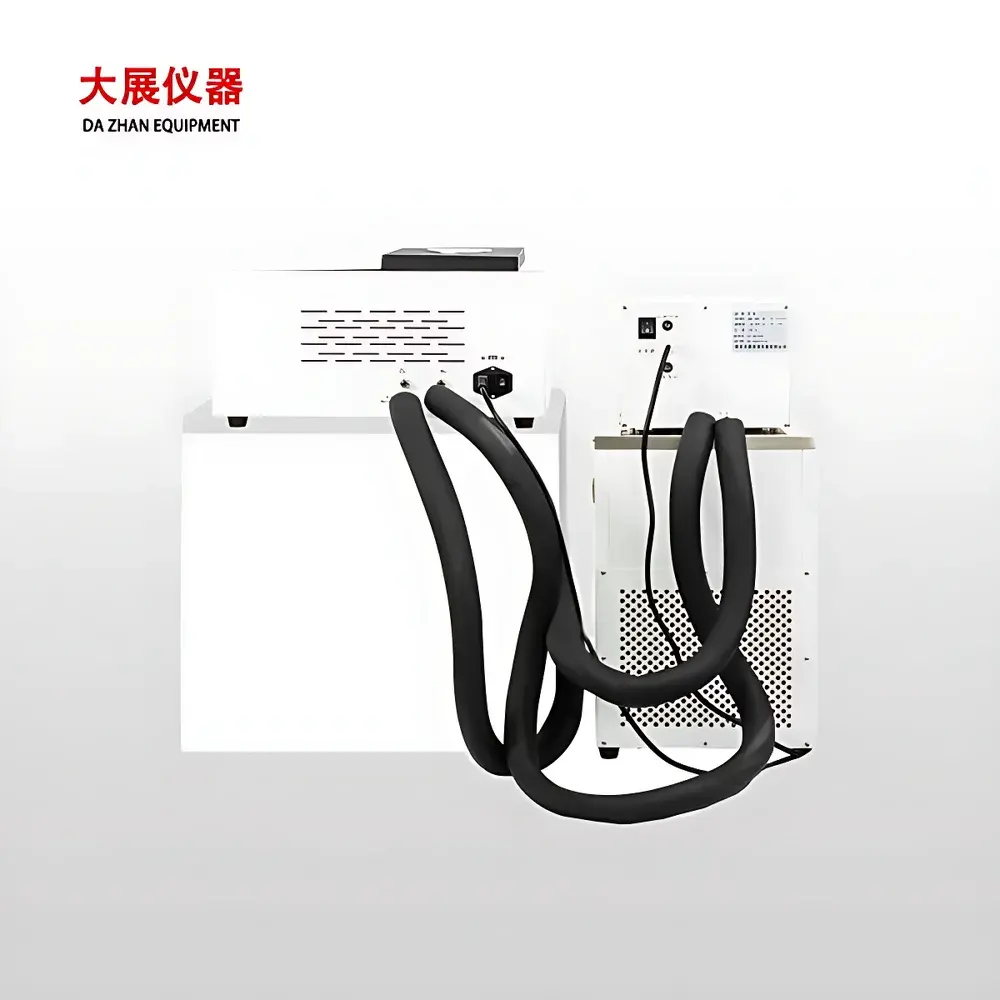
Nanjing Dazhan DZ-DSC300C Low-Temperature Differential Scanning Calorimeter
| Brand | Nanjing Dazhan |
|---|---|
| Origin | Jiangsu, China |
| Manufacturer Type | Direct Manufacturer |
| Product Category | Domestic |
| Model | DZ-DSC300C |
| Sample Capacity | Single-sample configuration |
| Instrument Type | Differential Scanning Calorimeter (DSC) |
| Temperature Range | −40 °C to 600 °C |
| Temperature Accuracy | ±0.01 °C |
| Heating/Cooling Rate | 0.1–100 K/min (heating), 0.1–40 K/min (cooling) |
| Temperature Precision | ±0.01 °C |
| DSC Signal Range | 0 to ±600 mW |
| Temperature Stability | ±0.01 °C |
| DSC Resolution | 0.01 µW |
| DSC Sensitivity | 0.001 mW |
| Atmosphere Control | Dual-gas auto-switching (N₂, air, or user-specified), plus dedicated purge gas inlet |
| Gas Flow Range | 0–300 mL/min |
| Max Gas Pressure | ≤5 MPa |
| Power Supply | AC 220 V / 50 Hz (customizable) |
| Calibration Standards Included | Indium, Tin, Lead |
Overview
The Nanjing Dazhan DZ-DSC300C Low-Temperature Differential Scanning Calorimeter is a precision thermal analysis instrument engineered for quantitative measurement of heat flow differences between a sample and inert reference as a function of temperature or time. Based on the heat-flux DSC principle, it employs a symmetrical, high-stability metal furnace architecture to deliver exceptional baseline reproducibility and thermal resolution across a wide operational range—from cryogenic conditions at −40 °C up to 600 °C. This enables rigorous characterization of solid-state transitions, including glass transition (Tg), cold crystallization, melting endotherms, recrystallization exotherms, solid-solid phase changes, oxidative induction time (OIT), crosslinking enthalpy, and thermal degradation kinetics. Designed for laboratories requiring regulatory-compliant data integrity, the DZ-DSC300C supports full traceability in accordance with ISO 11357, ASTM E794, ASTM E1356, and USP <1163> guidelines for thermal method validation.
Key Features
- Industrial-grade 7-inch capacitive touchscreen interface with 24-bit color LCD—supports real-time curve overlay, multi-step program editing, and intuitive parameter navigation without external PC dependency.
- Monolithic aluminum alloy furnace core with optimized thermal mass distribution—reduces thermal lag, improves baseline flatness (<0.02 mW drift over 30 min at 50 °C), and enhances signal-to-noise ratio for low-enthalpy transitions.
- Dual independent gas control system with electro-pneumatic valves—enables automatic switching between two process gases (e.g., N₂ and synthetic air) within <1.5 s, with stabilization time <3 s; includes dedicated inert purge line for oxygen-sensitive measurements.
- USB 2.0 communication protocol with auto-reconnect capability—ensures uninterrupted data streaming during extended runs (>72 h); compatible with Windows-based acquisition software and third-party data import (CSV, TXT, Q20 format).
- Full programmable thermal control: six-segment ramp-hold-cool sequences, customizable heating/cooling rates (0.1–100 K/min), isothermal dwell (0–999 min), and dynamic rate modulation during scans.
Sample Compatibility & Compliance
The DZ-DSC300C accommodates standard 40 µL aluminum crucibles (hermetic or vented), platinum pans for aggressive chemistries, and custom geometries up to 50 mg sample mass. It complies with GLP/GMP documentation requirements through built-in audit trail logging—including operator ID, timestamped method parameters, calibration history, and raw thermogram metadata. All firmware and software modules are validated per ICH Q2(R2) principles for analytical procedure verification. Optional 21 CFR Part 11-compliant software add-on provides electronic signatures, role-based access control, and immutable data archiving for regulated QC environments.
Software & Data Management
Bundled DSC Analysis Suite v3.2 offers baseline correction (tangent, sigmoidal, polynomial), peak integration (onset, peak, endset), enthalpy normalization (J/g), kinetic modeling (Ozawa-Flynn-Wall, Kissinger), and comparative overlay of up to 16 thermograms. Raw data files (.dsc) store unprocessed sensor voltages, thermocouple readings, and furnace power logs at 10 Hz sampling rate. Export options include ASTM E1461-compliant XML, Excel-ready CSV, and publication-ready SVG/PNG graphics with embedded metadata (temperature accuracy, calibration date, instrument ID). Software supports batch processing for routine QA checks and automated report generation with configurable templates.
Applications
- Polymers: Quantification of Tg, crystallinity % (via ΔHf vs. 100% crystalline reference), melt index correlation, aging studies under accelerated thermal stress.
- Pharmaceuticals: Polymorph screening, excipient compatibility assessment, stability-indicating assay development, lyophilized cake characterization.
- Metals & Alloys: Solidus/liquidus determination, precipitation heat effects, phase diagram validation, residual stress evaluation via thermal hysteresis.
- Batteries: SEI layer formation energy, cathode/anode decomposition onset, electrolyte thermal runaway profiling (under controlled O₂/N₂ atmospheres).
- Food Science: Starch gelatinization enthalpy, fat polymorphism transitions (α→β′→β), protein denaturation temperature mapping.
FAQ
What calibration standards are supplied with the DZ-DSC300C?
Indium (Tm = 156.60 °C, ΔHf = 28.45 J/g), Tin (Tm = 231.93 °C), and Lead (Tm = 327.50 °C) are included for temperature and enthalpy calibration per ISO 11357-1 Annex A.
Does the instrument support sub-ambient operation without liquid nitrogen?
Yes—the integrated Peltier-assisted cooling module achieves −40 °C using only electrical power; no cryogen handling or infrastructure is required.
Can the DZ-DSC300C perform modulated DSC (MDSC)?
No—this is a conventional heat-flux DSC platform. MDSC functionality requires separate hardware (oscillatory furnace driver) and is not supported in current firmware.
Is remote monitoring or networked data acquisition possible?
Local USB connection is standard; Ethernet or Wi-Fi modules are available as factory-installed options with optional OPC UA server integration for MES/SCADA systems.
How is baseline stability verified during qualification?
Baseline repeatability is assessed per ASTM E967 using empty crucible runs at 50 °C for 60 min; acceptance criterion is RMS noise ≤0.005 mW and linear drift <0.01 mW/h.



