
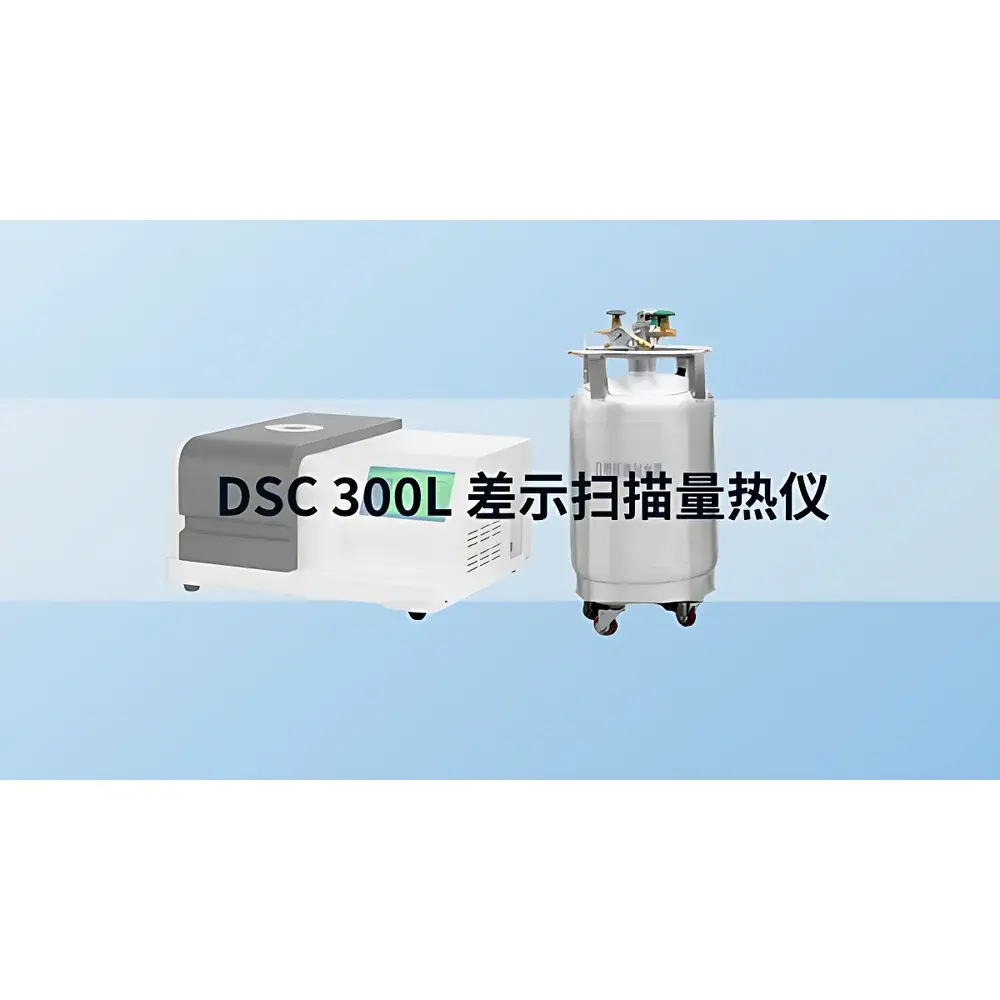
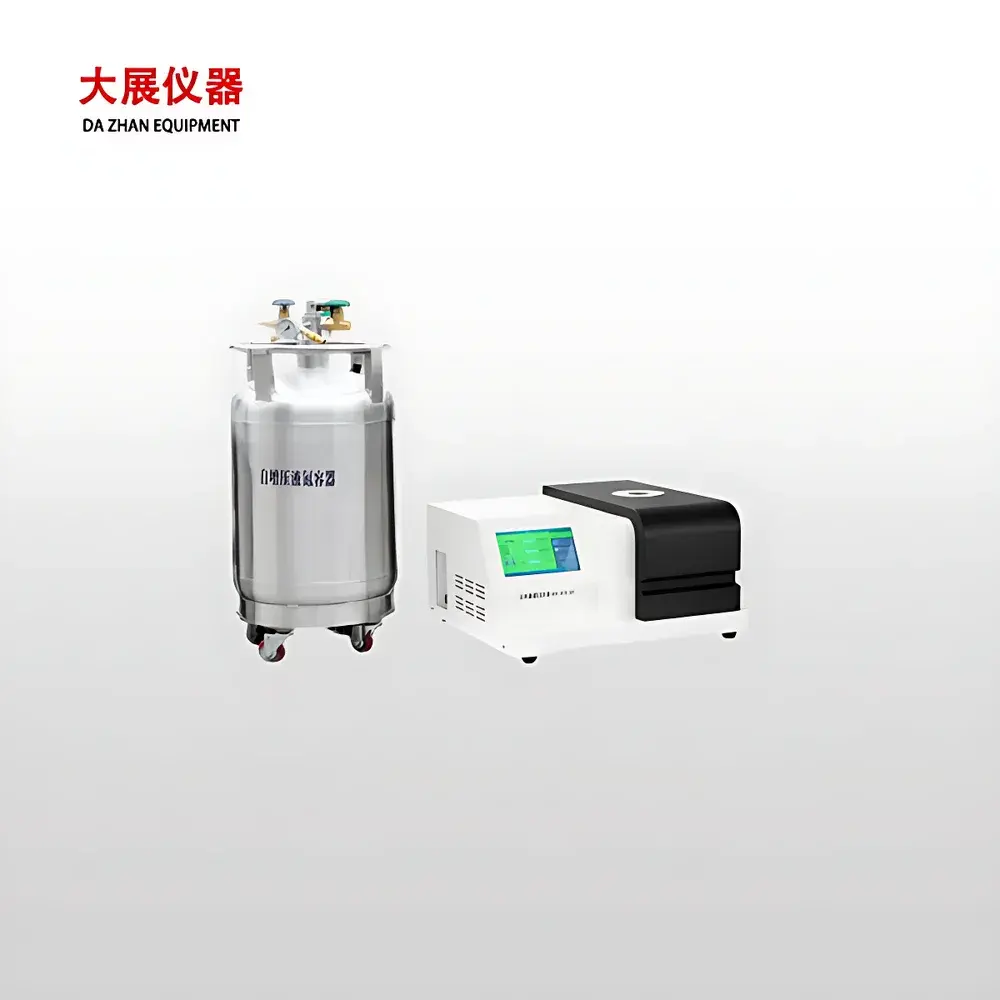
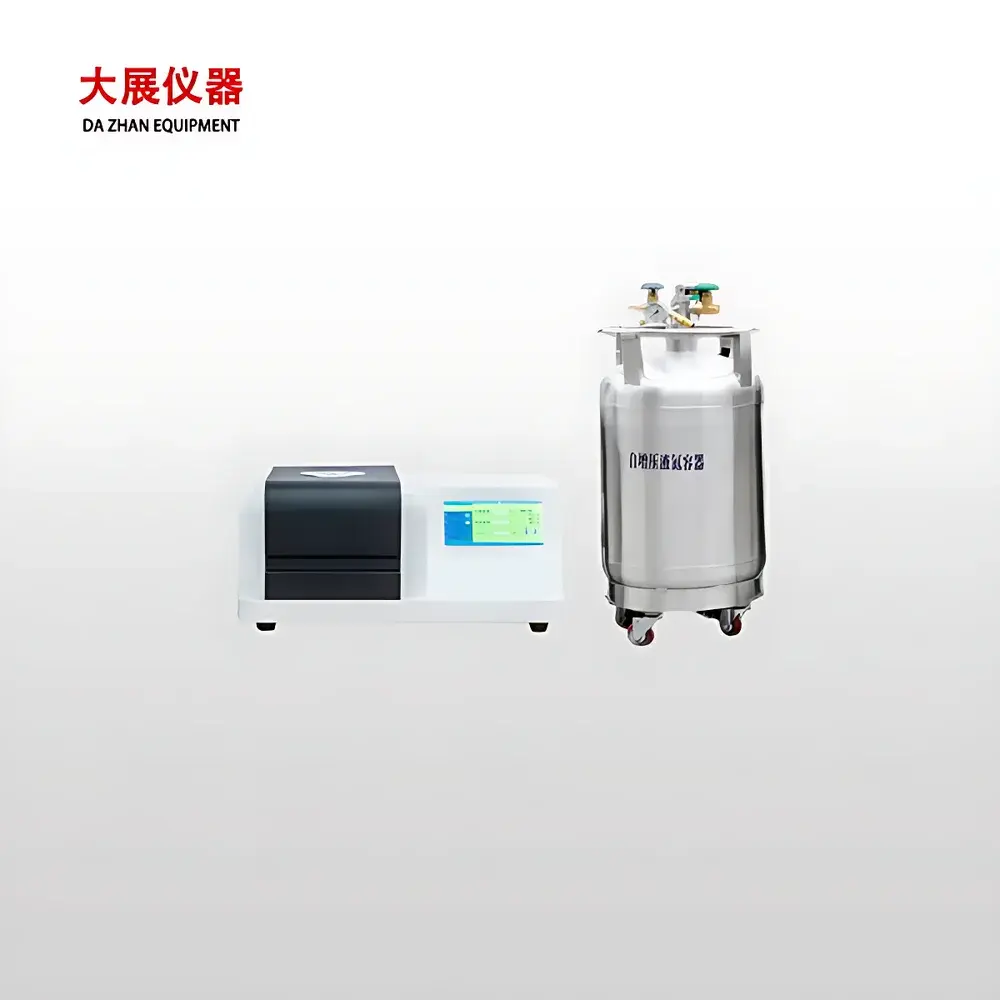
Nanjing Dazhan DZ-DSC300L Low-Temperature Differential Scanning Calorimeter
| Brand | Nanjing Dazhan |
|---|---|
| Origin | Jiangsu, China |
| Manufacturer Type | Manufacturer |
| Product Category | Domestic |
| Model | DZ-DSC300L |
| Sample Capacity | Single-sample |
| Instrument Type | Differential Scanning Calorimeter (DSC) |
| Temperature Range | −170 °C to 600 °C |
| Temperature Accuracy | ±0.001 °C |
| Temperature Precision | ±0.001 °C |
| Temperature Stability | ±0.01 °C |
| Heating/Cooling Rate | 0.1–100 K/min (heating), 0.1–40 K/min (cooling) |
| DSC Signal Range | 0 to ±600 mW |
| DSC Sensitivity | 0.001 mW |
| DSC Resolution | 0.01 µW |
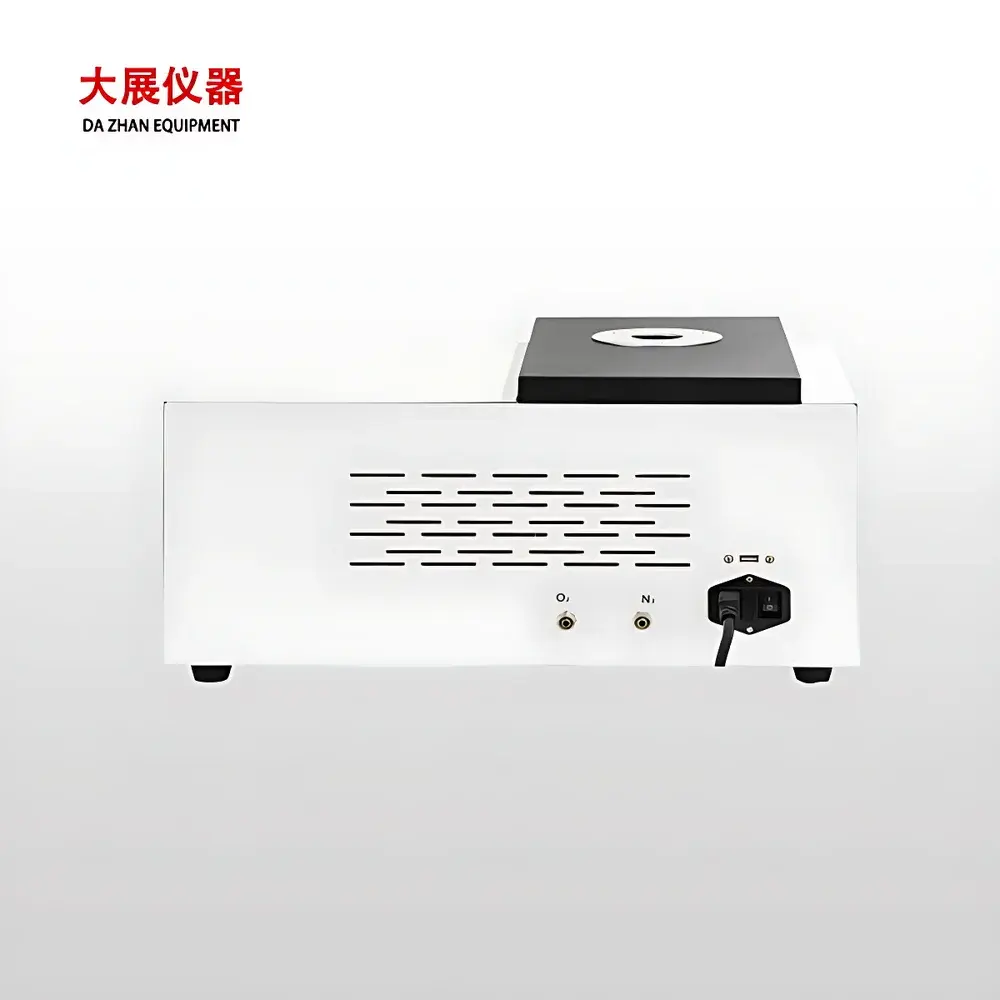
| Gas Flow Control | Dual-channel automated switching, 0–300 mL/min, ≤5 MPa |
| Power Supply | AC 220 V / 50 Hz (customizable) |
| Calibration Standards Included | Indium, Tin, Lead |
Overview
The Nanjing Dazhan DZ-DSC300L Low-Temperature Differential Scanning Calorimeter is a high-stability, precision thermal analysis instrument engineered for quantitative measurement of heat flow differences between a sample and an inert reference as a function of temperature or time. Operating on the principle of power-compensated DSC, it delivers high-resolution detection of endothermic and exothermic transitions—including glass transition (Tg), cold crystallization, melting (Tm), recrystallization, solid-solid phase transitions, oxidative induction time (OIT), crosslinking enthalpy, and thermal degradation kinetics. Its extended low-temperature capability down to −170 °C enables characterization of cryogenic polymers, pharmaceutical amorphous dispersions, battery electrolyte formulations, and low-melting-point metallic alloys—applications where conventional DSC systems lack sufficient thermal reach.
Key Features
- Optimized furnace architecture with dual-sensor symmetry and active temperature gradient compensation, ensuring superior baseline flatness (<±0.01 °C drift over 60 min) and enhanced peak resolution for overlapping transitions.
- High-speed 32-bit microcontroller with real-time PID feedback loop control, enabling precise ramp rate modulation (0.1–100 K/min heating; 0.1–40 K/min cooling) and sub-millikelvin thermal stability during isothermal holds.
- 7-inch 24-bit color capacitive touchscreen interface supporting full local operation—parameter entry, method execution, real-time curve monitoring, and basic data export—without external PC dependency.
- Dual-gas manifold with solenoid-driven automatic switching between purge and protective atmospheres (e.g., N2/O2), programmable flow rates (0–300 mL/min), and integrated pressure monitoring (≤5 MPa max).
- Comprehensive six-segment programmable temperature protocol: independent ramp/hold/cool steps with user-defined dwell times, ramp rates, and endpoint conditions—fully compliant with ASTM E794, ISO 11357, and USP <1158> thermal analysis guidelines.
Sample Compatibility & Compliance
The DZ-DSC300L accommodates standard hermetic and vented aluminum crucibles (40 µL and 100 µL), platinum crucibles for corrosive or high-temperature applications, and custom-fitted pans for fiber, film, or powder samples. It supports quantitative analysis per ISO 11357-1 through -7 series and meets essential requirements for GLP-compliant laboratories, including audit-trail-enabled method storage, electronic signature-ready operation logs, and traceable calibration using certified reference materials (Indium, Tin, Lead) supplied with each unit. Optional validation packages support IQ/OQ documentation aligned with FDA 21 CFR Part 11 and EU Annex 11 expectations.
Software & Data Management
Bundled Windows-based analysis software provides full instrument control, real-time data acquisition at up to 10 Hz sampling rate, baseline correction (tangent, linear, polynomial), peak integration (onset, peak, endset), and multi-curve comparison. Raw data are stored in vendor-neutral ASCII format (.txt) and proprietary .dsc binary files with embedded metadata (operator ID, timestamp, method name, calibration status). Export options include CSV, Excel, and image formats (PNG, SVG) suitable for inclusion in regulatory submissions. Software supports batch processing, derivative thermogram generation (dH/dT), and kinetic modeling (e.g., Ozawa-Flynn-Wall, Kissinger) for activation energy estimation.
Applications
- Pharmaceutical development: Amorphous content quantification, polymorph screening, excipient compatibility assessment, and freeze-drying cycle optimization via sub-zero Tg determination.
- Polymers & composites: Crystallinity calculation (ΔHf normalization), cure kinetics of epoxy resins, thermal aging studies, and nanofiller dispersion effect evaluation.
- Electrochemical materials: Solid-electrolyte interphase (SEI) formation enthalpy, lithium intercalation/deintercalation thermodynamics, and thermal runaway onset profiling in Li-ion cell components.
- Food science: Starch gelatinization enthalpy, fat polymorphism mapping, and protein denaturation temperature profiling under controlled humidity environments (with optional humidity module).
- Metallurgy & alloys: Eutectic point identification, precipitation hardening behavior, and phase diagram validation for Al-, Mg-, and Ti-based lightweight alloys.
FAQ
What calibration standards are included with the DZ-DSC300L?
Indium (Tm = 156.60 °C), Tin (Tm = 231.93 °C), and Lead (Tm = 327.46 °C) are provided as primary reference materials for temperature and enthalpy calibration.
Does the instrument support nitrogen and oxygen gas switching during a single run?
Yes—the dual-channel gas controller enables automated, step-triggered switching between two independently regulated gases without manual intervention or vacuum break.
Can the DZ-DSC300L perform isothermal OIT measurements per ASTM D3895?
Yes—its programmable isothermal hold function, combined with high-sensitivity DSC detection (0.001 mW) and stable temperature control (±0.01 °C), fully satisfies ASTM D3895 and ISO 11357-6 requirements.
Is remote operation possible via Ethernet or Wi-Fi?
The standard configuration includes USB 2.0 communication; optional Ethernet module (IEEE 802.3) is available for networked lab deployment and integration into LIMS environments.
What is the minimum detectable heat flow change?
The system achieves a DSC resolution of 0.01 µW and a sensitivity limit of 0.001 mW, validated using low-mass indium standards under controlled purge conditions.



