
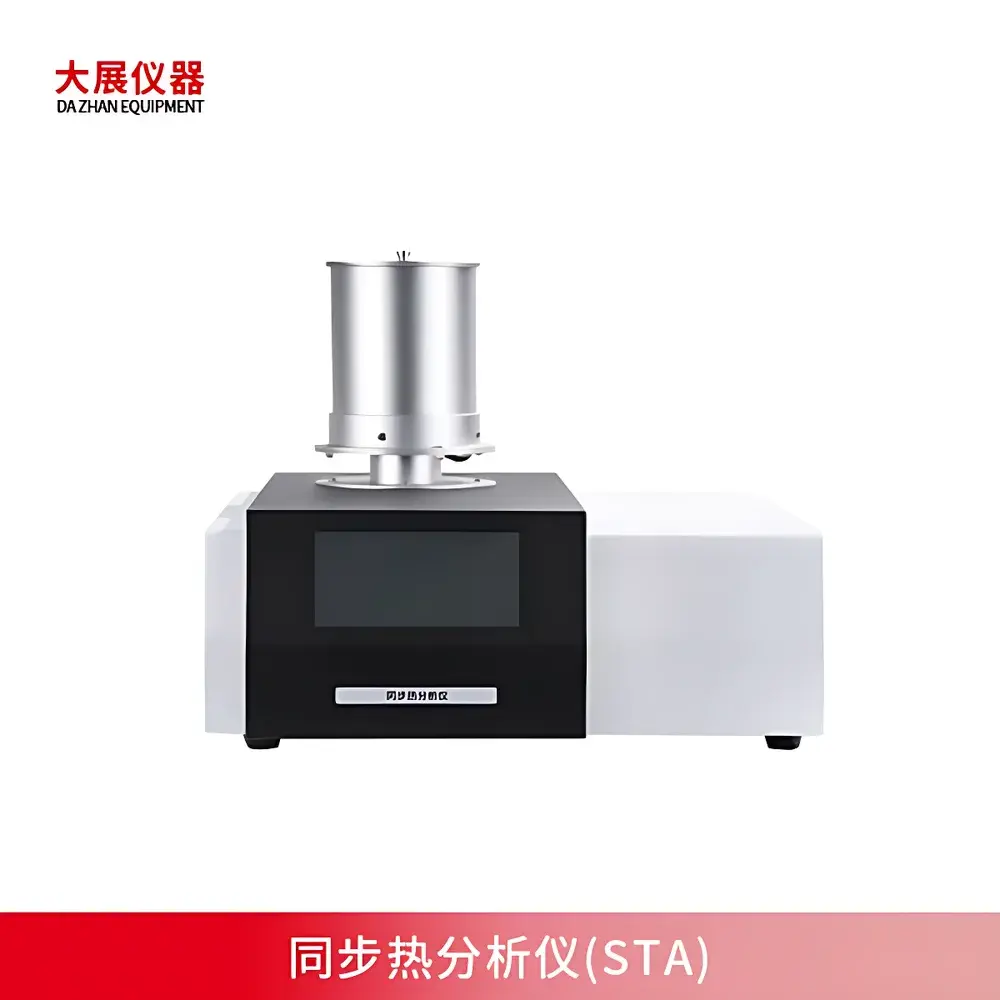
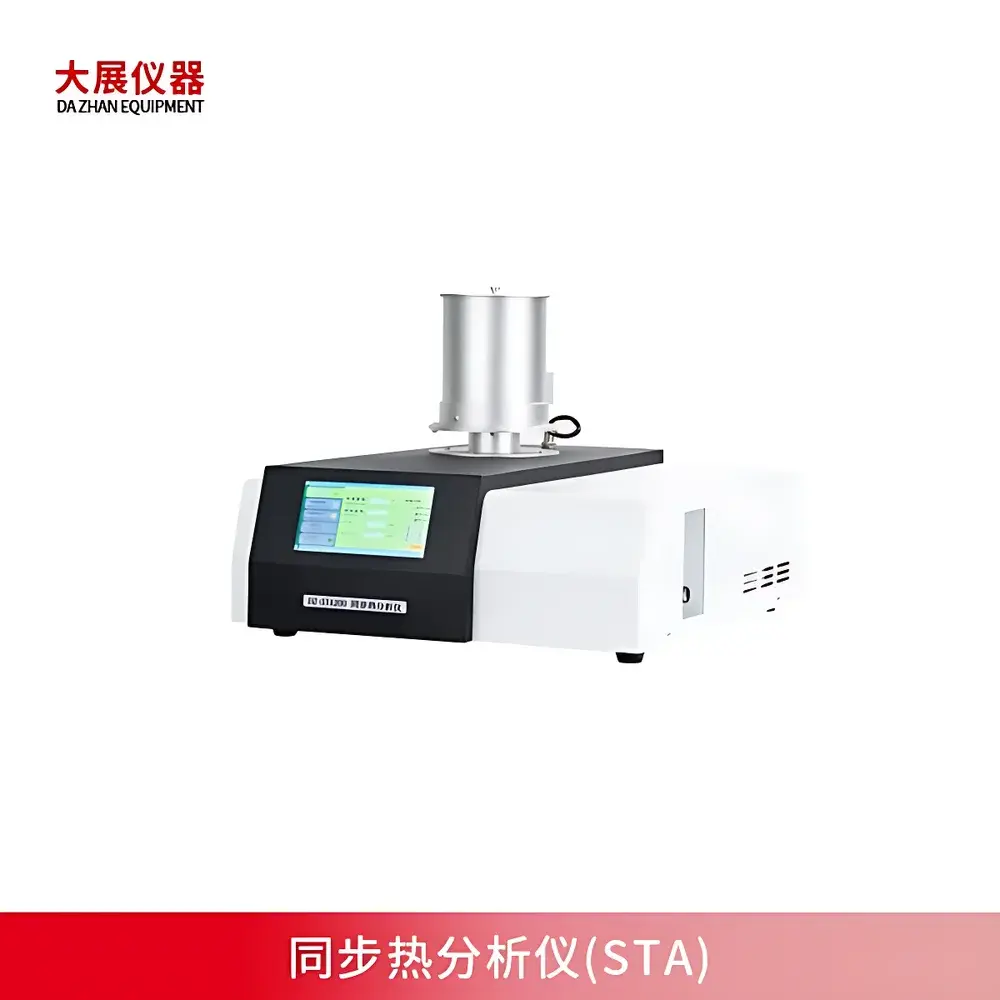
Nanjing Dazhan DZ-STA200 Simultaneous Thermal Analyzer (TG-DSC)
| Brand | Nanjing Dazhan |
|---|---|
| Origin | Jiangsu, China |
| Manufacturer Type | Direct Manufacturer |
| Country of Origin | China |
| Model | DZ-STA200 |
| Price | ¥85,000 |
| Temperature Range | Ambient to 1200 °C |
| Heating Rate | 0.1–100 °C/min |
| Max Sample Mass | 5 g |
| Atmosphere Options | Inert, Oxidizing, Reducing |
Overview
The Nanjing Dazhan DZ-STA200 Simultaneous Thermal Analyzer is an integrated thermogravimetric-differential scanning calorimetry (TG-DSC) instrument engineered for precision measurement of mass change (TG) and heat flow (DSC) under controlled temperature programs. Based on the principle of simultaneous dual-signal detection within a single furnace chamber, it enables direct correlation of thermal events—such as decomposition, phase transitions, oxidation, and crystallization—with their corresponding enthalpic and gravimetric signatures. The system operates across a wide temperature range from ambient to 1200 °C, supporting high-fidelity kinetic analysis, compositional quantification, and thermal stability assessment in compliance with ASTM E1131, ISO 11358, and USP . Its robust ceramic-sensor architecture, combined with active thermal isolation between furnace, microbalance, and electronics, ensures long-term baseline stability and measurement reproducibility under demanding thermal cycling conditions.
Key Features
- High-temperature furnace with dual-row precious-metal alloy heating wire, delivering uniform temperature distribution and minimized electromagnetic interference up to 1200 °C
- Ceramic rod–based sample holder assembly, offering exceptional resistance to thermal shock, oxidation, and chemical corrosion at elevated temperatures
- Top-opening furnace design for rapid, contamination-free sample loading and unloading—optimized for routine QC and R&D workflows
- Thermally decoupled mechanical layout: power supply, cooling fan module, and main chassis are physically separated from the microbalance and furnace to suppress vibration and conductive heat transfer
- Integrated thermal shielding system isolates the furnace core from the balance chamber and control electronics, maintaining sub-milligram mass stability during dynamic heating
- 24-bit color 7-inch capacitive touchscreen interface with real-time dual-curve display (TG + DSC), enabling on-device operation without external PC dependency
Sample Compatibility & Compliance
The DZ-STA200 accommodates standard crucible formats including alumina, platinum, and aluminum pans (with optional hermetic lids), supporting both open and sealed configurations. It accepts samples up to 5 g with a microbalance resolution of 0.1 µg and repeatability better than ±0.01 mg—validated per ASTM E1582. Atmosphere control includes two independently regulated gas channels with built-in mass flow meters (0–200 mL/min range), permitting precise switching between inert (N₂, Ar), oxidizing (air, O₂), and reducing (H₂/N₂, CO) environments under static or dynamic flow modes. All thermal protocols—including multi-segment ramps, isothermal holds (0–300 min, extendable to 72 h), and fast cooling (≤15 min from 1000 °C to 100 °C)—are fully programmable and auditable, satisfying GLP/GMP documentation requirements and FDA 21 CFR Part 11 data integrity standards when used with compliant software configurations.
Software & Data Management
The proprietary intelligent thermal analysis software provides full control over instrument parameters, real-time data acquisition, and post-run processing of TG, DTG, DSC, and TG-DSC overlay curves. Functions include automatic peak detection, baseline correction, enthalpy integration, derivative analysis, kinetic modeling (e.g., Kissinger, Ozawa-Flynn-Wall), and multi-point temperature/enthalpy calibration. Export options include Excel (.xlsx), PDF reports with embedded metadata (operator, date, method ID, instrument serial number), and image files (PNG, SVG). Data files are timestamped and stored with checksum validation; audit trails record all user actions, parameter changes, and calibration events. USB 2.0 interface ensures compatibility with Windows-based laboratory networks and LIMS integration.
Applications
The DZ-STA200 serves diverse sectors requiring correlated thermal behavior characterization: polymer science (crystallinity, degradation onset, filler content), pharmaceuticals (polymorph screening, excipient compatibility, desolvation kinetics), metallurgy (oxide formation, phase transformation temperatures), ceramics (sintering profiles, binder burnout), food science (moisture loss, starch gelatinization), and battery materials (electrode decomposition, SEI layer stability). Typical use cases include determination of glass transition (Tg), melting point (Tm), crystallization enthalpy (ΔHc), decomposition onset (Td), oxidative induction time (OIT), specific heat capacity (Cp), and quantitative residue analysis.
FAQ
What types of crucibles are supported?
Standard alumina and aluminum crucibles are included; platinum and quartz options are available as accessories for aggressive chemistries or high-temperature applications.
Can the system perform controlled-atmosphere experiments?
Yes—it supports fully programmable inert, oxidizing, and reducing atmospheres with independent flow control for two gases, including static purge and dynamic sweep modes.
Is the software compliant with regulatory data integrity requirements?
When deployed in validated environments with enabled audit trail and electronic signature features, the software meets core elements of FDA 21 CFR Part 11 and EU Annex 11 for traceable, tamper-evident thermal data.
How is temperature calibration performed?
Multi-point calibration uses certified reference materials (e.g., indium, zinc, tin, alumina) across the full operating range, with automated correction applied to both TG and DSC signals.
What maintenance is required for long-term accuracy?
Routine verification includes daily zero-balance checks, periodic crucible cleaning, annual sensor calibration, and biannual furnace insulation inspection—procedures documented in the GLP-compliant maintenance logbook.



