
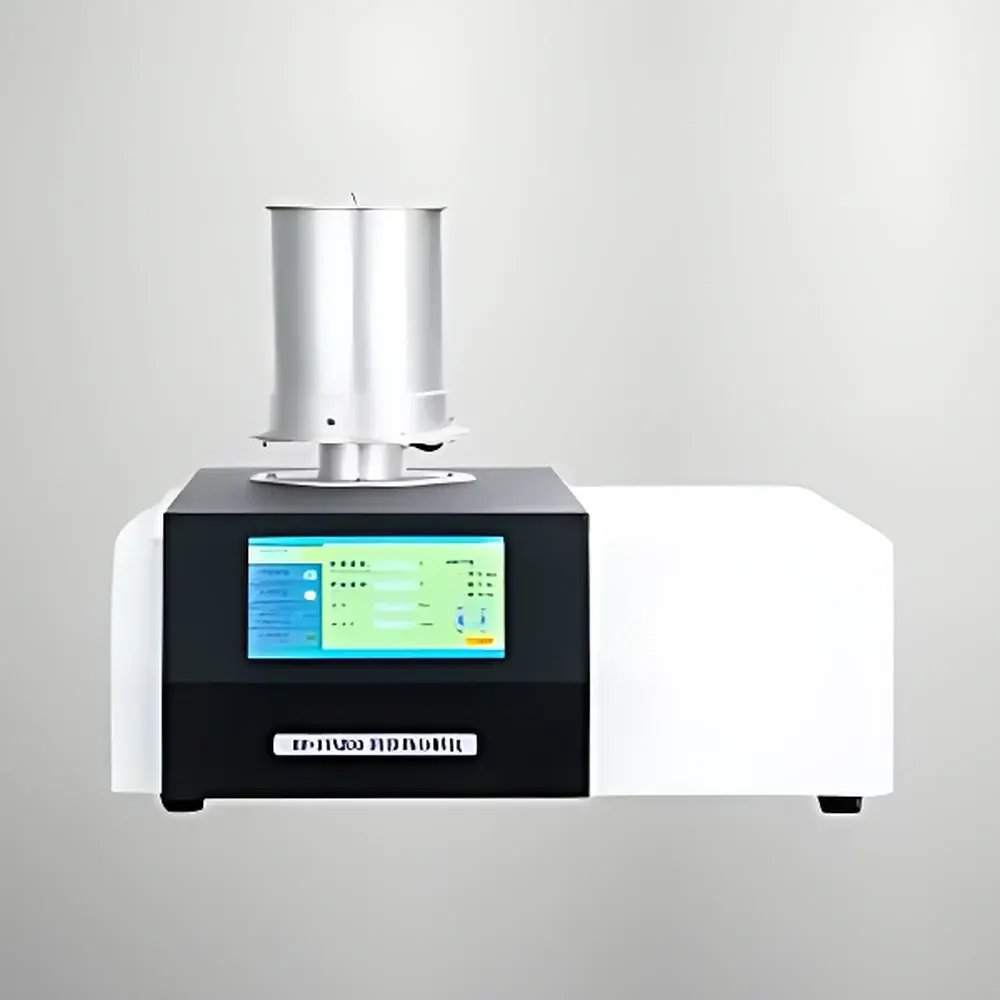
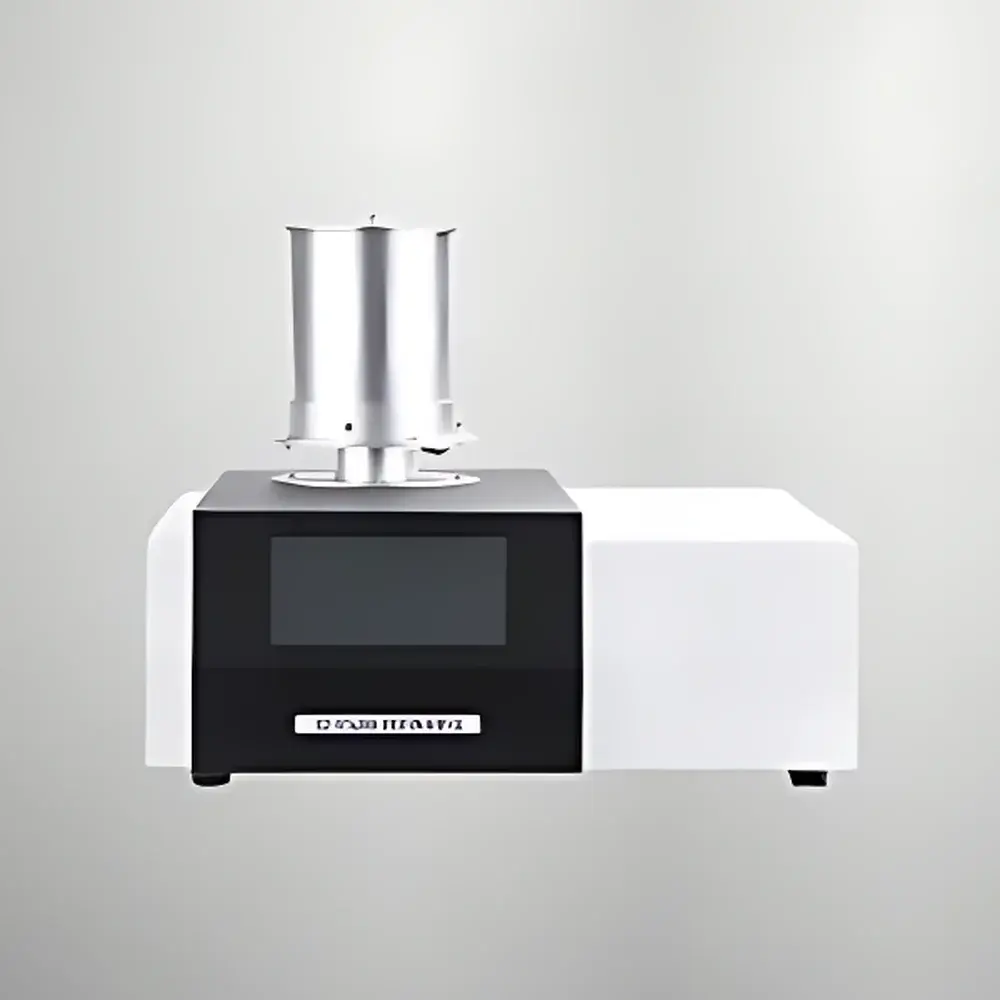
Nanjing Dazhan DZ-STA200 Simultaneous Thermal Analyzer (TG-DSC)
| Brand | Nanjing Dazhan |
|---|---|
| Origin | Jiangsu, China |
| Manufacturer Type | Direct Manufacturer |
| Model | DZ-STA200 |
| Price Range | USD 11,200–14,000 (FOB) |
| Temperature Range | Ambient to 1200 °C |
| Heating Rate | 0.1–100 °C/min |
| Max Sample Mass | 2 g (expandable to 5 g) |
| Atmosphere Control | Inert, Oxidizing, Reducing |
| TG Resolution | 0.1 µg |
| TG Accuracy | 0.01 mg |
| DSC Range | ±1000 mW |
| DSC Resolution | 0.1 µW |
| DSC Accuracy | 0.01 mW |
| Temperature Resolution | 0.01 °C |
| Temperature Stability | ±0.1 °C |
| Cooling Time (1000 °C → 100 °C) | ≤15 min |
| Atmosphere System | Dual-channel mass flow control with integrated digital flow meters |
Overview
The Nanjing Dazhan DZ-STA200 Simultaneous Thermal Analyzer is an engineered solution for high-fidelity, real-time coupling of thermogravimetric analysis (TG) and differential scanning calorimetry (DSC) in a single instrument platform. Based on the principle of simultaneous measurement under identical thermal and atmospheric conditions, it enables precise correlation between mass change (TG), its derivative (DTG), and heat flow (DSC) — critical for mechanistic interpretation of thermal events such as decomposition kinetics, phase transitions, oxidation onset, and multi-step reaction pathways. Designed for laboratories requiring compliance-grade data integrity and reproducible thermal profiling, the DZ-STA200 supports method development aligned with ASTM E1131, ISO 11357, ISO 11358, and USP <1225> validation frameworks. Its dual-sensor architecture — featuring a high-stability microbalance and calibrated heat-flux sensor — ensures synchronized acquisition without time-lag artifacts, eliminating inter-instrument calibration drift common in sequential measurements.
Key Features
- High-temperature furnace with dual-wound precious-metal alloy heating elements (up to 1200 °C), optimized for uniform temperature distribution and minimal electromagnetic interference.
- Ceramic rod-supported sample holder assembly — resistant to thermal shock, oxidation, and chemical corrosion across inert (N₂, Ar), oxidizing (air, O₂), and reducing (H₂, CO) atmospheres.
- Thermally decoupled mechanical design: power supply, forced-air cooling module, and main chassis are physically isolated from the microbalance and furnace chamber to suppress vibration and conductive heat transfer.
- Top-loading furnace configuration with precision-guided lid actuation — facilitates rapid sample exchange while maintaining consistent thermal sealing and gas-tight integrity.
- Modular furnace architecture allows field-replacement with alternative temperature-range modules (e.g., low-temperature cryo-furnace or ultra-high-temp SiC-based furnace), supporting long-term adaptability to evolving research needs.
- Integrated dual-gas mass flow control system with digital flow meters (0–200 mL/min per channel), enabling precise switching and blending between up to two process gases under static or dynamic flow conditions (10–500 mL/min).
Sample Compatibility & Compliance
The DZ-STA200 accommodates standard crucibles including high-purity alumina (Al₂O₃), platinum-rhodium (Pt/Rh), and quartz — compatible with powders, granules, films, fibers, and small metallic specimens (≤2 g nominal, extendable to 5 g with optional balance upgrade). All thermal protocols support GLP/GMP-aligned audit trails when used with validated software configurations. The instrument meets essential electromagnetic compatibility (EMC) requirements per IEC 61326-1 and safety standards per IEC 61010-1. Data outputs comply with FDA 21 CFR Part 11 readiness when deployed with user-configured electronic signatures, role-based access controls, and immutable raw-data archiving.
Software & Data Management
Built-in 7-inch 24-bit color touchscreen interface runs proprietary thermal analysis software supporting full-cycle operation: method definition (ramp/hold/cool profiles), real-time curve overlay (TG, DTG, DSC), baseline correction, peak deconvolution, and kinetic modeling (e.g., Kissinger, Ozawa-Flynn-Wall). Raw data exports are natively compatible with CSV, Excel (.xlsx), and PDF report generation with customizable templates. Software includes multi-point temperature and enthalpy calibration routines traceable to NIST-certified reference materials (e.g., indium, zinc, alumina). All acquisitions include embedded metadata (operator ID, timestamp, atmosphere log, calibration status), ensuring full traceability for internal QA reviews or external regulatory submissions.
Applications
- Quantification of bound water (free vs. crystalline) and volatile loss in pharmaceutical excipients and APIs per ICH Q5C stability guidelines.
- Decomposition onset temperature and activation energy determination in polymer composites and battery cathode materials (e.g., NMC, LFP).
- Reaction stoichiometry and enthalpy mapping for catalytic solid-state synthesis (e.g., metal oxide formation, carbonate decomposition).
- Thermal stability assessment of nanomaterials, MOFs, and aerogels under controlled oxidative aging conditions.
- Validation of thermal curing profiles for epoxy resins and thermoset composites in aerospace manufacturing.
- Residue quantification and ash content analysis in food-grade additives and ceramic precursors per AOAC and ISO 5984 protocols.
FAQ
What types of calibration standards are supported for DSC and TG verification?
Indium, tin, zinc, and sapphire are pre-configured in the software for temperature and enthalpy calibration; custom reference materials can be added via user-defined library entries.
Is the instrument compatible with purge gas humidification systems?
Yes — the dual-channel gas manifold supports integration with external humidity generators (e.g., VTI or Setaram RH modules) for controlled water vapor partial pressure studies.
Can the software perform model-free kinetic analysis?
Yes — the built-in Kinetics Neo module implements Friedman, FWO, and KAS methods using multiple heating rates, with uncertainty propagation reporting.
What is the typical service interval for preventive maintenance?
Annual calibration and vacuum seal inspection are recommended; furnace element lifetime exceeds 2,000 cycles at 1200 °C under inert atmosphere.
Does the system support remote monitoring or networked data collection?
Standard USB 2.0 interface is provided; optional Ethernet adapter enables TCP/IP communication for integration into centralized lab data management systems (LIMS/ELN).



