
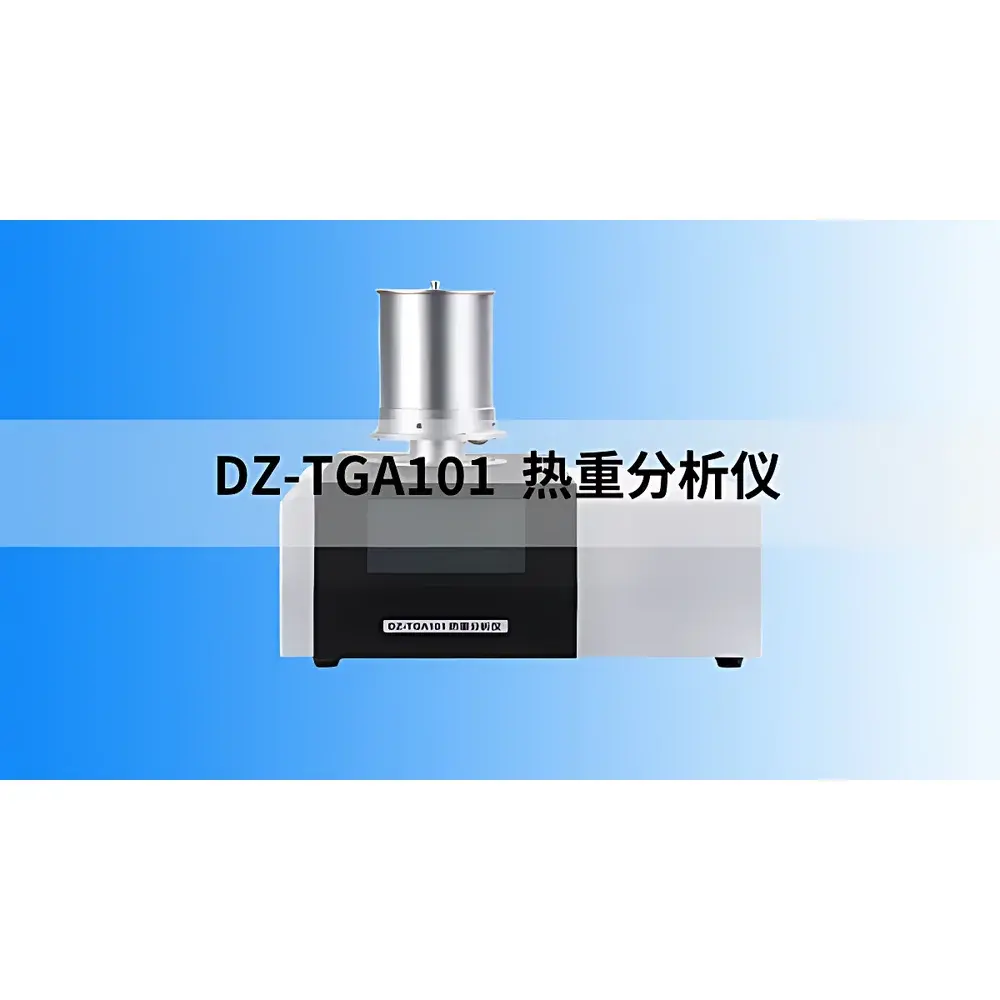
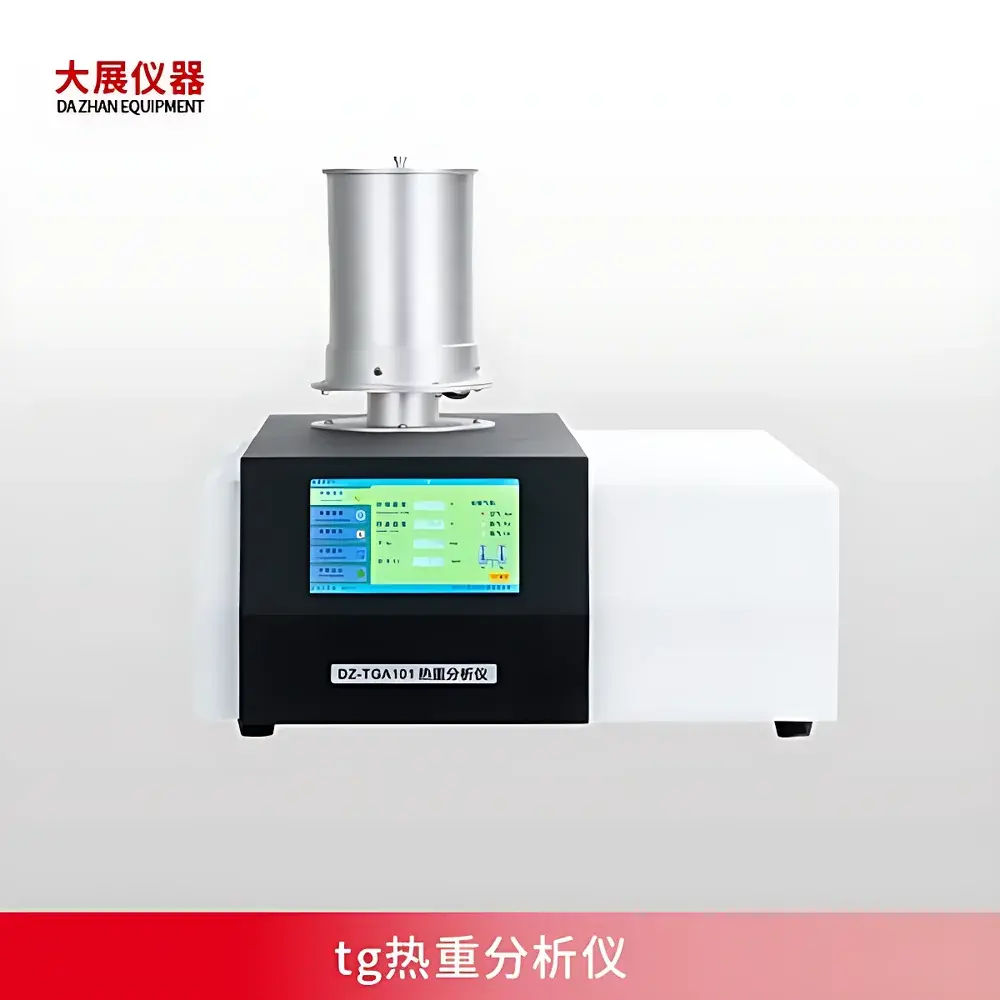
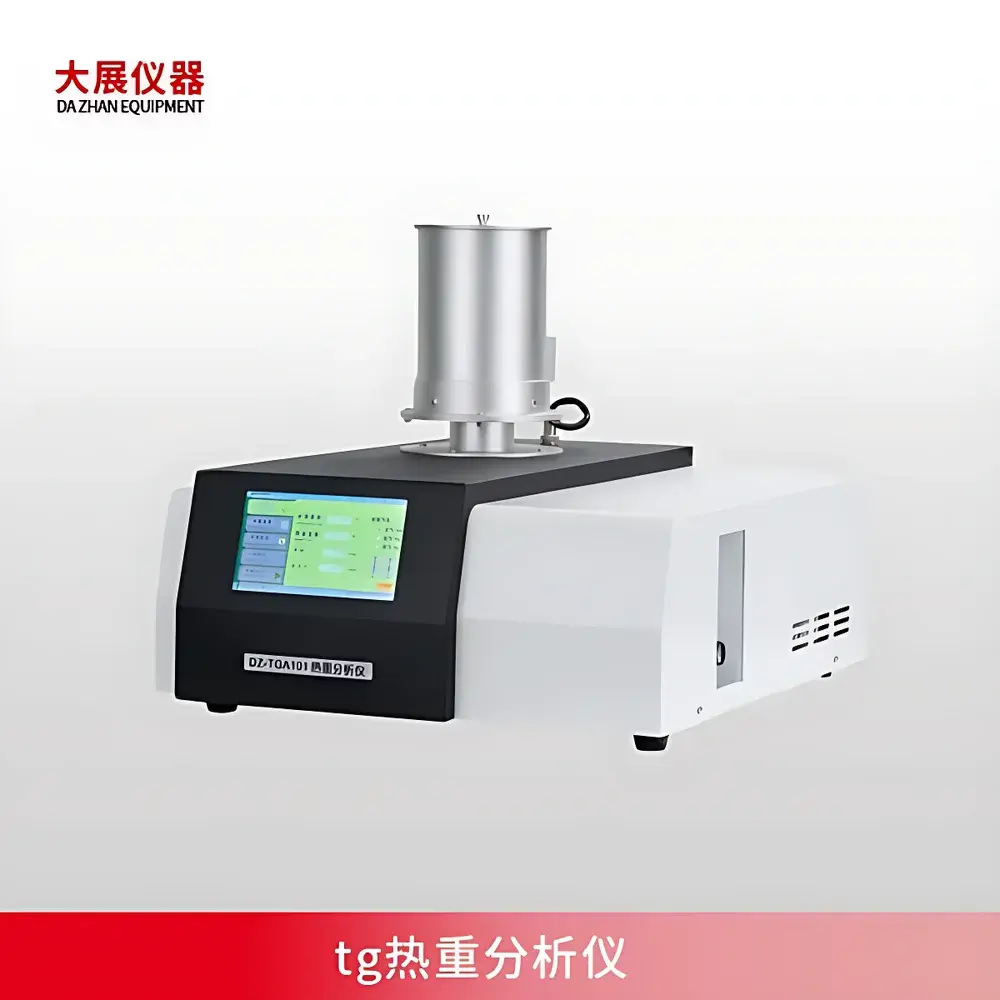
Nanjing Dazhan DZ-TGA101 Thermogravimetric Analyzer
| Brand | Nanjing Dazhan |
|---|---|
| Origin | Jiangsu, China |
| Manufacturer Type | Manufacturer |
| Product Category | Domestic |
| Model | DZ-TGA101 |
| Test Environment | Ambient Pressure |
| Sample Capacity | Single Sample |
| Instrument Type | General-Purpose |
| Temperature Range | Room Temperature to 1200 °C |
| Temperature Resolution | 0.01 °C |
| Temperature Accuracy | ±0.01 °C |
| Dynamic Weighing Range | 0.01 mg to 3 g |
| Mass Accuracy | ±0.01 mg |
| Heating/Cooling Rate | 0.1–100 °C/min |
| Mass Resolution | 0.01 mg |
| Maximum Sample Mass | 30 g |
| Baseline Repeatability | Excellent |
| Baseline Drift | Negligible |
| Cooling Time (1000 °C → 100 °C) | ≤15 min |
| Atmosphere Control | Dual-Gas Flow Regulation (Inert, Oxidizing, Reducing, Static, Dynamic) |
| Data Interface | USB 2.0 |
| Software | Integrated TG/DTG Analysis Suite with Excel Export, PDF Report Generation, Multi-Point Temperature Calibration, and GLP-Compliant Audit Trail |
Overview
The Nanjing Dazhan DZ-TGA101 Thermogravimetric Analyzer is a high-precision, general-purpose thermal analysis instrument engineered for quantitative measurement of mass change as a function of temperature or time under controlled atmospheric conditions. Based on the fundamental principle of thermogravimetry—monitoring real-time mass variation during programmed thermal cycles—the DZ-TGA101 enables rigorous characterization of thermal stability, decomposition kinetics, oxidative behavior, moisture/volatile content, filler loading, and compositional evolution in solid and powdered materials. Its design adheres to core ISO 11358-1:2014 (Plastics — Thermogravimetry — Part 1: General principles) and ASTM E1131-22 (Standard Test Method for Compositional Analysis by Thermogravimetry) frameworks, supporting method development and validation in R&D, quality assurance, and regulatory-compliant environments.
Key Features
- Vertical top-opening furnace architecture with dual-row wound noble-alloy (Ni-Cr) heating elements—ensuring uniform thermal distribution, extended service life, and minimal electromagnetic interference during microgram-level mass detection.
- High-stability single-pan microbalance system with 0.01 mg readability and <0.01 mg repeatability over full dynamic range (0.01 mg–3 g), extendable to 30 g via optional calibration protocols.
- Programmable temperature control covering room temperature to 1200 °C, with ramp rates adjustable from 0.1 to 100 °C/min and isothermal hold capability up to 72 hours (0.1 min resolution).
- Integrated dual-gas manifold with digital mass flow controllers (MFCs), enabling precise switching and independent regulation of inert (N₂, Ar), oxidizing (air, O₂), and reducing (H₂/N₂ mix) atmospheres—fully compatible with ASTM D3850 and ISO 11358-2 gas protocol requirements.
- 7-inch 24-bit color capacitive touchscreen interface with localized English UI; all instrument calibration (mass, temperature multi-point), parameter setup, and real-time curve monitoring executed locally without PC dependency.
- USB 2.0 bidirectional communication architecture supporting remote operation, automated method execution, and synchronized data acquisition—designed for integration into networked lab environments compliant with FDA 21 CFR Part 11 Annex 11 requirements when paired with validated software configuration.
Sample Compatibility & Compliance
The DZ-TGA101 accommodates standard crucibles—including alumina, platinum, and high-purity ceramic—with volume capacities suitable for 1–50 mg typical sample loads (adjustable per application). It supports heterogeneous solids, polymers, pharmaceutical excipients, catalysts, metal oxides, composites, and carbonaceous materials. All thermal protocols may be documented with timestamped metadata, operator ID, instrument serial number, and environmental logs—enabling full traceability per GLP and GMP guidelines. Baseline stability (<0.02 mg drift over 60 min at 1000 °C) and reproducibility (RSD <0.3% across replicate runs) meet ISO 11358-1 precision benchmarks for inter-laboratory comparability.
Software & Data Management
Bundled analytical software provides native support for TG, DTG, and derivative curve overlays, peak deconvolution, onset/endpoint temperature assignment (tangent, intersection, derivative maxima), and mass-loss step quantification. Export functions include CSV, Excel (.xlsx), and publication-ready PDF reports with embedded metadata and configurable templates. The software implements audit-trail functionality—recording every parameter modification, run initiation, calibration event, and user login—with immutable timestamps and electronic signatures. Firmware and software updates are delivered free-of-charge via secure vendor portal, maintaining long-term compliance with evolving ICH Q5C and USP validation expectations.
Applications
- Determination of polymer degradation onset temperature, char yield, and kinetic parameters (e.g., activation energy via Kissinger or Ozawa-Flynn-Wall methods)
- Quantitative analysis of hydrate/water content, solvent residues, and volatile organic compounds (VOCs) in pharmaceutical APIs and excipients per USP
- Characterization of catalyst thermal stability, coke burn-off profiles, and metal-support interactions under controlled O₂/N₂ sequences
- Filler content verification (e.g., CaCO₃, SiO₂, carbon black) in rubber and thermoplastic composites
- Oxidative induction time (OIT) assessment of stabilized polyolefins per ASTM D3895
- Thermal behavior mapping of battery electrode materials (e.g., cathode delithiation, SEI decomposition) under argon or synthetic air
FAQ
What is the maximum recommended sample mass for optimal resolution?
For highest mass sensitivity and thermal homogeneity, 5–20 mg is recommended; the 30 g extended capacity mode is intended for coarse screening or high-mass reference standards—not high-resolution analysis.
Does the system support purge gas switching during a single run?
Yes—dual MFC-controlled gas lines allow automatic atmosphere switching at user-defined temperature/time points, critical for sequential oxidation-reduction studies.
Is temperature calibration traceable to NIST standards?
Multi-point calibration (e.g., Ni, Cu, Al, Zn melting transitions) is supported; users may import certified reference material (CRM) certificates to establish metrological traceability per ISO/IEC 17025.
Can the instrument operate unattended overnight?
Fully—programmable cooling, auto-shutdown, and continuous baseline monitoring enable 24/7 operation with integrated safety interlocks for overtemperature and gas-flow failure.
What documentation is provided for IQ/OQ/PQ validation?
Factory-issued test certificates, hardware schematics, software validation protocols (including UAT scripts), and raw data integrity reports are supplied as part of the standard delivery package.



