
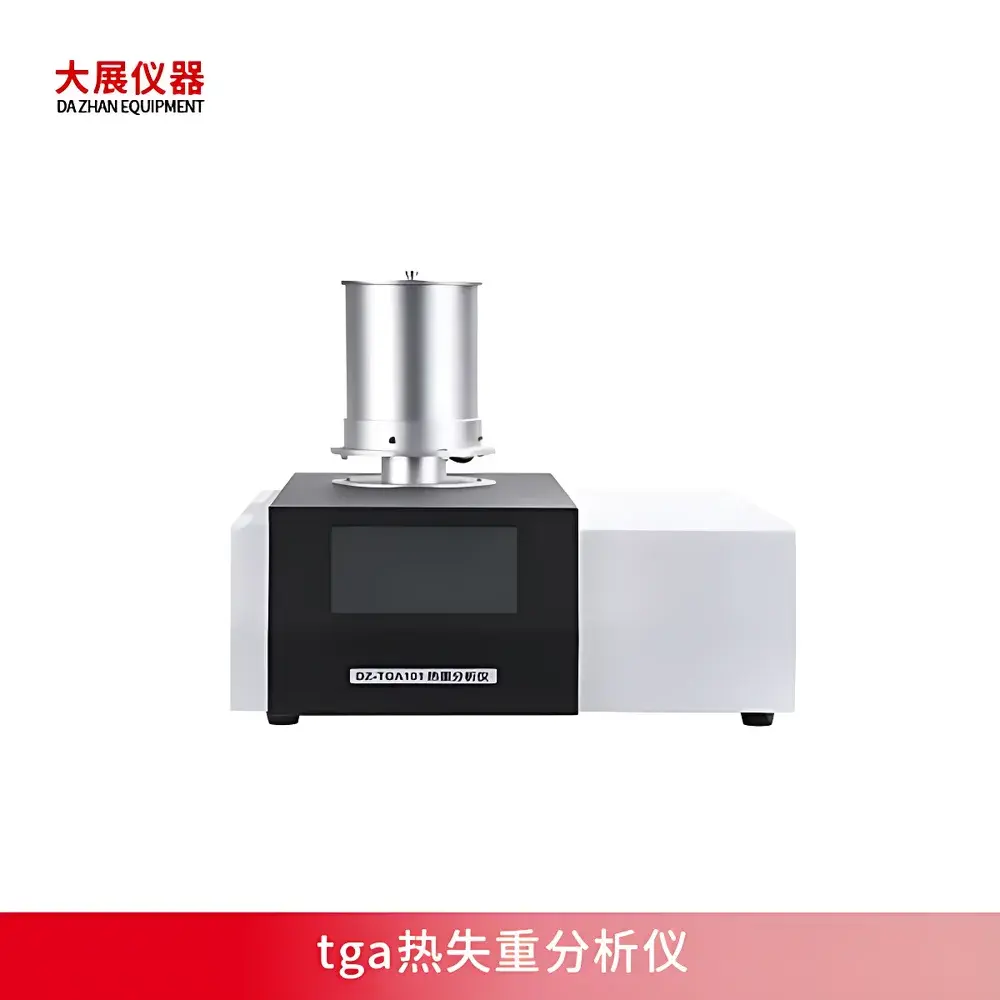
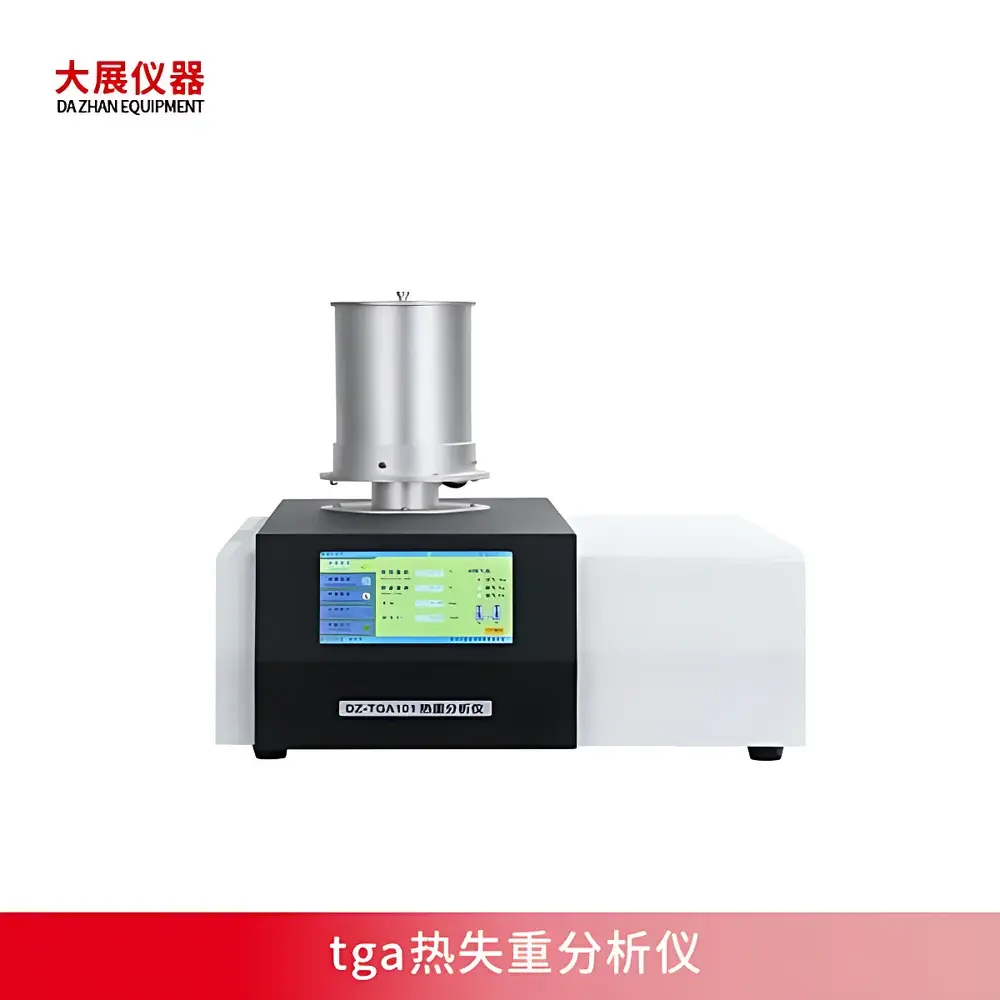
Nanjing Dazhan DZ-TGA101 Thermogravimetric Analyzer
| Brand | Nanjing Dazhan |
|---|---|
| Origin | Jiangsu, China |
| Manufacturer Type | Manufacturer |
| Origin Category | Domestic |
| Model | DZ-TGA101 |
| Price Range | USD 7,000–14,000 (FOB) |
| Operating Environment | Ambient Pressure |
| Sample Capacity | Single-sample |
| Instrument Type | General-purpose |
| Temperature Range | Room Temperature to 1200 °C |
| Balance Sensitivity | 0.1 mg to 3 g (standard), extendable to 30 g |
| Heating/Cooling Rate | 0.1–100 °C/min |
| Maximum Sample Mass | 30 g |
| Temperature Resolution | 0.01 °C |
| Temperature Stability | ±0.1 °C |
| Cooling Time (1000 °C → 100 °C) | ≤15 min |
| Atmosphere Control | Dual-gas channel with mass flow control (inert, oxidizing, reducing, static, dynamic) |
| Data Interface | USB 2.0 |
| Software | Proprietary TGA analysis suite with TG/DTG curve fitting, Excel/PDF export, GLP-compliant audit trail, multi-point temperature calibration, and remote instrument control |
Overview
The Nanjing Dazhan DZ-TGA101 Thermogravimetric Analyzer is a precision-controlled, single-sample thermal analysis instrument engineered for high-reproducibility mass-loss measurement under controlled atmospheric conditions. It operates on the fundamental principle of thermogravimetry—monitoring real-time changes in sample mass as a function of temperature or time under defined gas environments. The system integrates a high-stability microbalance (0.01 mg resolution), a dual-zone furnace with Ni-Cr alloy heating elements, and active thermal isolation architecture—including water-cooled chassis and vertically elevated furnace design—to minimize thermal drift and mechanical interference. Designed for compliance with ISO 11358, ASTM E1131, and USP , the DZ-TGA101 supports quantitative decomposition kinetics, compositional quantification (e.g., polymer filler content, hydrate/water-of-crystallization loss), and oxidative stability assessment across solid-phase materials.
Key Features
- Robust dual-row Ni-Cr alloy furnace with extended service life (>10,000 h at 1200 °C) and uniform axial temperature distribution (±1.5 °C over 30 mm)
- High-precision platinum-alloy sample holder and sensor assembly, resistant to oxidation and chemical corrosion up to 1200 °C
- Thermally decoupled architecture: water-jacketed mainframe isolates the microbalance from furnace radiation; independent power and cooling modules eliminate vibration coupling
- Top-access chamber design enables rapid, contamination-free sample loading without vertical sample rod manipulation—reducing mechanical stress and alignment error
- Integrated dual-gas manifold with digital mass flow controllers (0–200 mL/min per channel), supporting programmable gas switching during runs (e.g., N₂ → air transition for oxidation onset detection)
- 7-inch 24-bit color capacitive touchscreen with embedded calibration wizard, real-time TG/DTG preview, and on-device parameter validation
- USB 2.0 interface with bidirectional communication enabling full remote operation—including start/stop, ramp rate adjustment, and real-time data streaming via PC-based software
Sample Compatibility & Compliance
The DZ-TGA101 accommodates standard ceramic, alumina, and aluminum crucibles (up to 30 mm diameter), with optional high-temperature Pt/Rh crucibles for aggressive redox environments. It complies with GLP and GMP documentation requirements through timestamped audit logs, user access control, and electronic signature-ready report generation (PDF + Excel). Firmware and software support 21 CFR Part 11–compatible data integrity features, including immutable raw-data archiving, operator-level permission tiers, and revision-controlled method templates. All thermal calibrations (temperature, mass, and baseline) are traceable to NIST-certified reference materials (e.g., Ni, Al₂O₃, CaC₂O₄·H₂O).
Software & Data Management
The proprietary DZ-TGA Analysis Suite provides comprehensive post-run processing: derivative thermogravimetry (DTG) peak deconvolution, kinetic modeling (Friedman, Ozawa-Flynn-Wall), residue quantification, and multi-curve overlay with statistical deviation mapping. Data exports include CSV (for MATLAB/Origin), Excel (.xlsx), and publication-ready PDF reports with embedded metadata (operator ID, instrument serial, calibration date, atmosphere log). Software updates are delivered free-of-charge via secure HTTPS portal, with version history and change logs maintained per ICH Q5A guidelines.
Applications
The DZ-TGA101 delivers validated performance in R&D and QC laboratories across polymers (thermal degradation onset, char yield, plasticizer loss), pharmaceuticals (residual solvent quantification, polymorph stability, excipient compatibility), catalysts (coke burn-off profiling, metal oxide reduction), ceramics (dehydroxylation, phase transition mass loss), and composites (fiber-matrix interfacial stability, flame-retardant efficiency). It supports sequential thermal analysis protocols—e.g., TGA-DSC coupling via external synchronization—and meets routine testing demands in ISO/IEC 17025-accredited facilities.
FAQ
What temperature calibration standards are supported?
The system includes built-in multi-point temperature calibration using certified reference materials (Ni Curie point at 354 °C, Al₂O₃ transition at 1090 °C); calibration files are stored with cryptographic hash verification.
Can the balance range be upgraded in-field?
Yes—the 30 g extended capacity option is hardware-compatible and activated via firmware license key; no mechanical retrofit required.
Is dynamic atmosphere switching supported during a single run?
Yes—gas sequencing is programmable with millisecond-level valve actuation timing and synchronized DTG event tagging.
Does the software meet FDA 21 CFR Part 11 requirements?
Full electronic record and signature functionality is implemented, including role-based access, audit trail review tools, and ALCOA+ compliant data storage.
What is the typical maintenance interval for the furnace and sensor?
Under standard operating conditions (≤1000 °C, inert atmosphere), recommended preventive maintenance is scheduled every 12 months or after 2,000 operating hours—whichever occurs first.



