
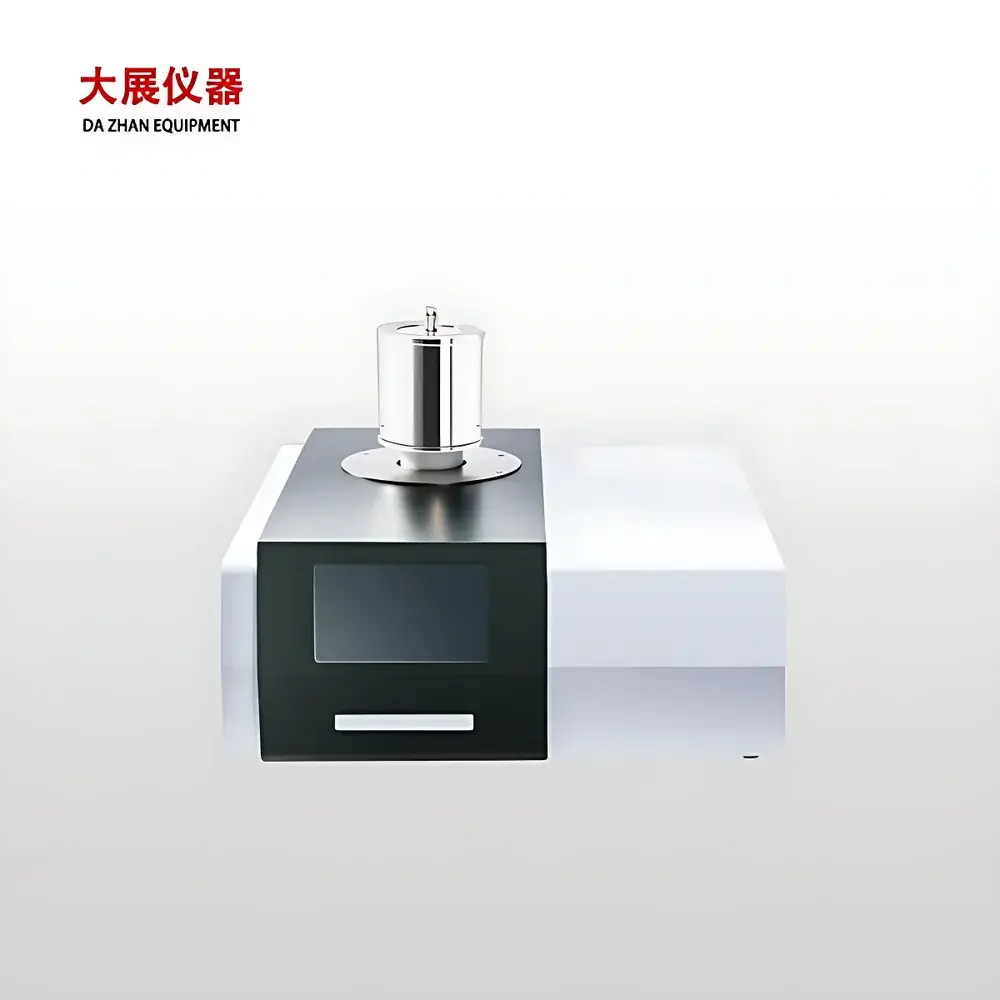
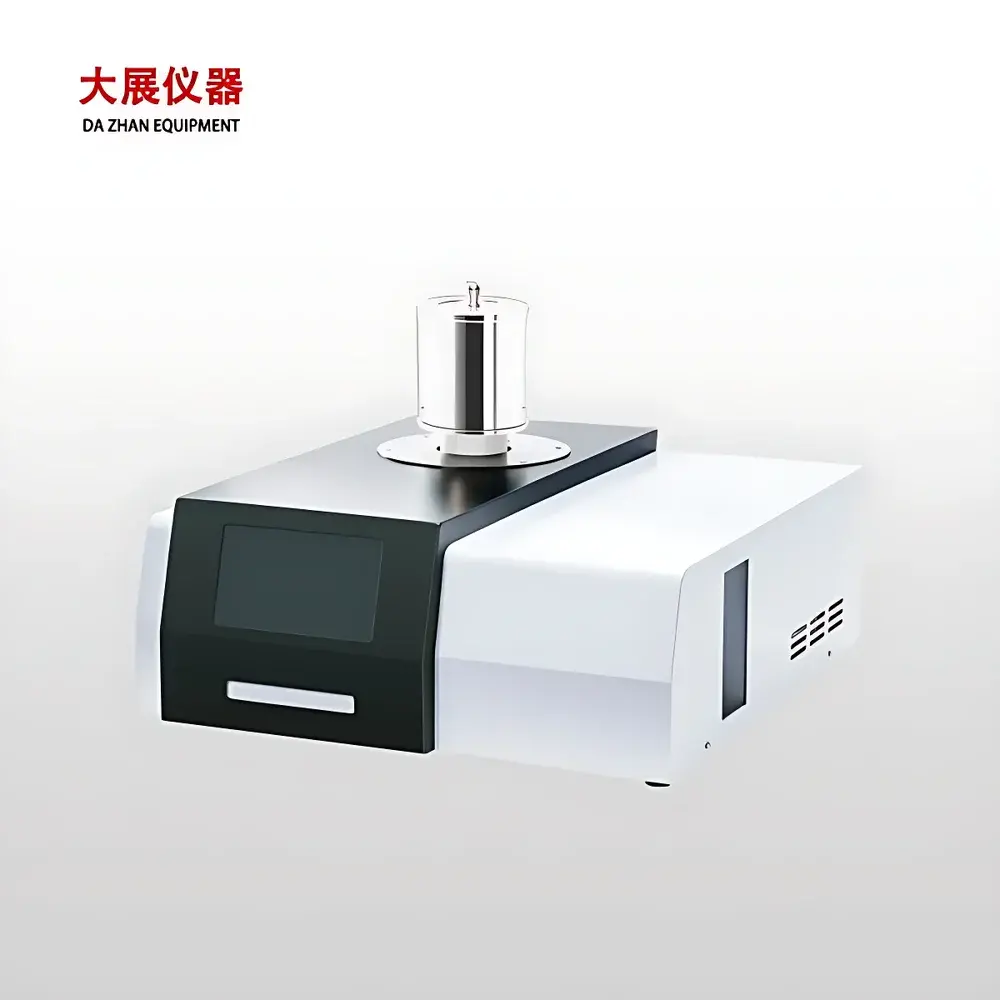
Nanjing Dazhan DZ3320C Differential Thermal Analyzer (DTA)
| Brand | Nanjing Dazhan |
|---|---|
| Origin | Jiangsu, China |
| Manufacturer Type | Direct Manufacturer |
| Country of Origin | China |
| Model | DZ3320C |
| Sample Capacity | Single-sample |
| Instrument Type | Differential Thermal Analyzer (DTA) |
| Temperature Range | Ambient to 1500 °C |
| Heating/Cooling Rate | 0.1–100 °C/min |
| DTA Signal Range | 0 to ±2000 µV |
| Temperature Stability | ±0.1 °C |
| DTA Sensitivity | 0.01 µV |
| Temperature Resolution | 0.01 °C |
| Temperature Accuracy | ±0.1 °C |
| Temperature Repeatability | ±0.1 °C |
| Sensor Material | Pt-Rh Alloy |
| Interface | USB 2.0 Bidirectional |
| Display | 7-inch 24-bit Color TFT Touchscreen |
| Furnace Design | Top-opening Lid Structure |
| Atmosphere Control | Programmable Internal Gas Switching |
| Power Supply | AC 220 V, 50 Hz (customizable) |
Overview
The Nanjing Dazhan DZ3320C Differential Thermal Analyzer (DTA) is a precision laboratory instrument engineered for quantitative thermal event detection under controlled temperature programs. Unlike calorimetric methods that measure heat flow, DTA operates on the principle of differential temperature measurement: it records the temperature difference (ΔT) between a sample and an inert reference material as both are subjected to identical thermal histories. This technique enables high-sensitivity identification of endothermic and exothermic transitions—including solid–solid phase transformations, melting, crystallization, glass transitions, decomposition, oxidation, reduction, dehydration, and lattice reorganization—without requiring absolute enthalpy calibration. The DZ3320C is optimized for research and quality control environments where reproducible detection of thermal anomalies up to 1500 °C is essential, particularly in metallurgy, ceramics, refractory materials, and advanced inorganic compound development.
Key Features
- High-temperature capability with a programmable furnace range from ambient to 1500 °C, enabled by a robust top-opening Pt–Rh alloy sensor assembly offering superior thermal stability, corrosion resistance, and long-term signal fidelity at elevated temperatures.
- Wide dynamic heating/cooling rate control (0.1–100 °C/min), supporting both slow-scan characterization for fine transition resolution and rapid thermal profiling for throughput-critical applications.
- STM32-based embedded controller architecture delivering deterministic real-time temperature regulation, low-latency data acquisition, and stable baseline performance across extended runs.
- 7-inch 24-bit color TFT touchscreen interface with intuitive graphical navigation, integrated parameter setup, real-time ΔT curve visualization, and on-device data review—eliminating dependency on external PCs during routine operation.
- USB 2.0 bidirectional communication protocol compliant with standard HID and CDC classes, enabling seamless integration with Windows/Linux-based analysis workstations and automated lab networks.
- Programmable atmosphere management system with internal solenoid valves for automatic gas purging or switching (e.g., N₂, Ar, air, O₂), supporting oxidative, inert, or reducing thermal analysis protocols per ASTM E1131 and ISO 11357-4.
Sample Compatibility & Compliance
The DZ3320C accommodates standard crucible formats (alumina, platinum, graphite) with single-sample configuration, ensuring optimal thermal coupling and minimal cross-contamination risk. Its design conforms to fundamental requirements of international thermal analysis standards, including ISO 11357 (Plastics — Differential Scanning Calorimetry), ASTM E1131 (Standard Test Method for Compositional Analysis by Thermogravimetry), and ICH Q5C (Stability Testing of Biotechnological/Biological Products). While classified as a DTA system—not a DSC—the instrument supports GLP-compliant workflows through built-in audit trail logging, user-access-controlled parameter locking, and traceable calibration using certified reference materials (e.g., In, Sn, Zn, Al, Ag) included with each unit. Baseline correction routines and one-click temperature calibration functions facilitate routine verification in regulated QC laboratories.
Software & Data Management
Bundled PC software provides full control over temperature programming, real-time data streaming, post-run baseline subtraction, peak identification (onset, peak, offset), and quantitative comparison against reference libraries. Export formats include CSV, TXT, and universal .tda files compatible with third-party analysis platforms (e.g., OriginLab, MATLAB, Thermo Scientific™ OMNIC). All raw and processed datasets retain embedded metadata—including operator ID, timestamp, furnace history, gas environment log, and calibration status—ensuring full traceability per FDA 21 CFR Part 11 requirements when configured with electronic signature modules. Data integrity is reinforced via cyclic redundancy checksums and auto-backup to external USB storage.
Applications
- Characterization of high-melting-point ceramics and refractory oxides (e.g., Al₂O₃, SiC, ZrO₂) for sintering behavior and polymorphic transitions.
- Thermal stability assessment of battery cathode materials (e.g., LiCoO₂, NMC, LFP) under inert and oxidative atmospheres.
- Decomposition kinetics analysis of metal hydroxides, carbonates, and hydrated salts in cement chemistry and geochemical modeling.
- Phase diagram validation for binary and ternary alloy systems in metallurgical R&D.
- Quality assurance of industrial catalysts, verifying thermal activation profiles and deactivation onset temperatures.
- Educational use in materials science curricula for hands-on demonstration of solid-state reaction thermodynamics.
FAQ
What is the difference between DTA and DSC?
DTA measures the temperature difference (ΔT) between sample and reference under identical heating conditions, while DSC quantifies the differential heat flow required to maintain both at the same temperature. DTA is inherently more sensitive to small thermal events at high temperatures but lacks direct enthalpy quantification without calibration.
Can the DZ3320C operate under vacuum?
The standard configuration supports gas-purged or switched atmospheres only; vacuum operation requires optional furnace sealing and vacuum feedthrough upgrades, which must be specified at time of order.
Is firmware update supported in the field?
Yes—firmware updates are delivered via USB stick and installed directly through the touchscreen interface, preserving all user-defined method templates and calibration records.
Does the system meet CE or RoHS requirements?
The DZ3320C complies with IEC 61010-1 (Safety Requirements for Electrical Equipment for Measurement) and RoHS Directive 2011/65/EU; CE marking is available upon request with full technical documentation package.
How is temperature accuracy verified?
Each unit ships with NIST-traceable metal standards (In, Sn, Zn, Al); users perform one-click calibration using the onboard routine, with results logged and exportable for audit purposes.



