
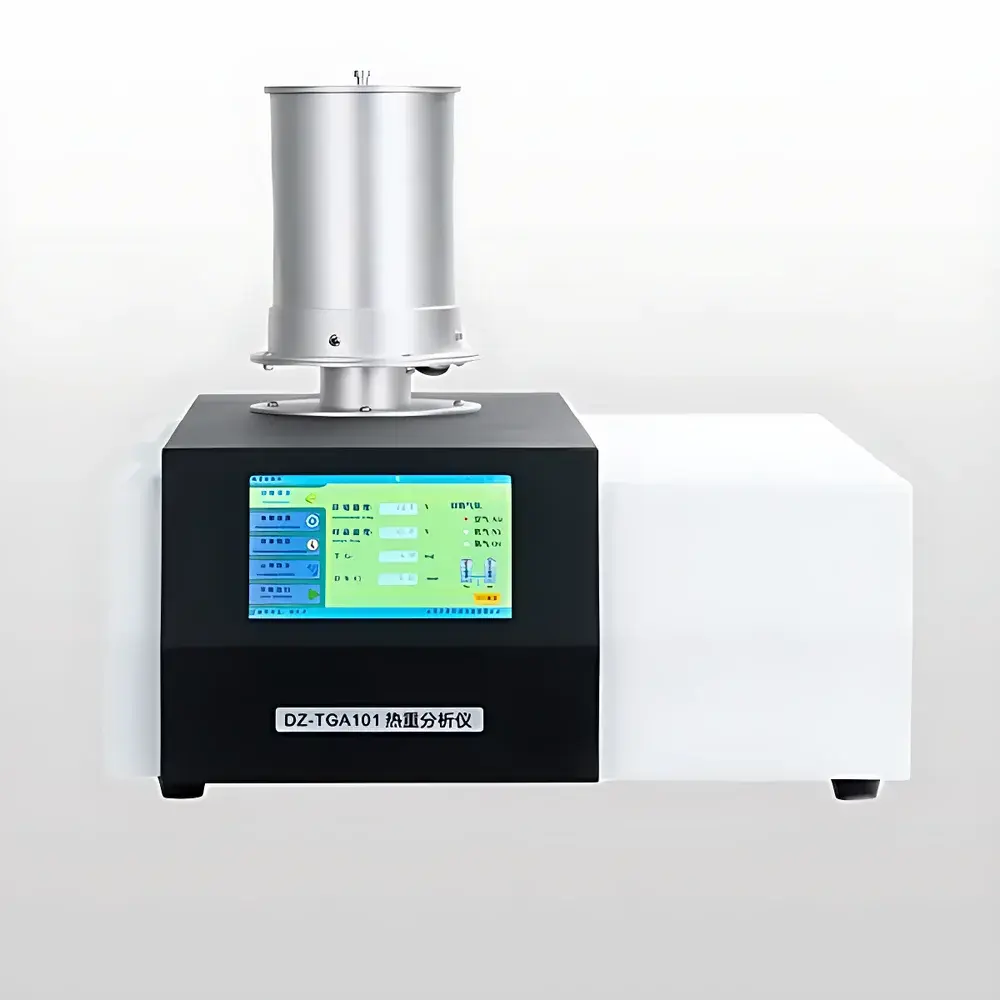
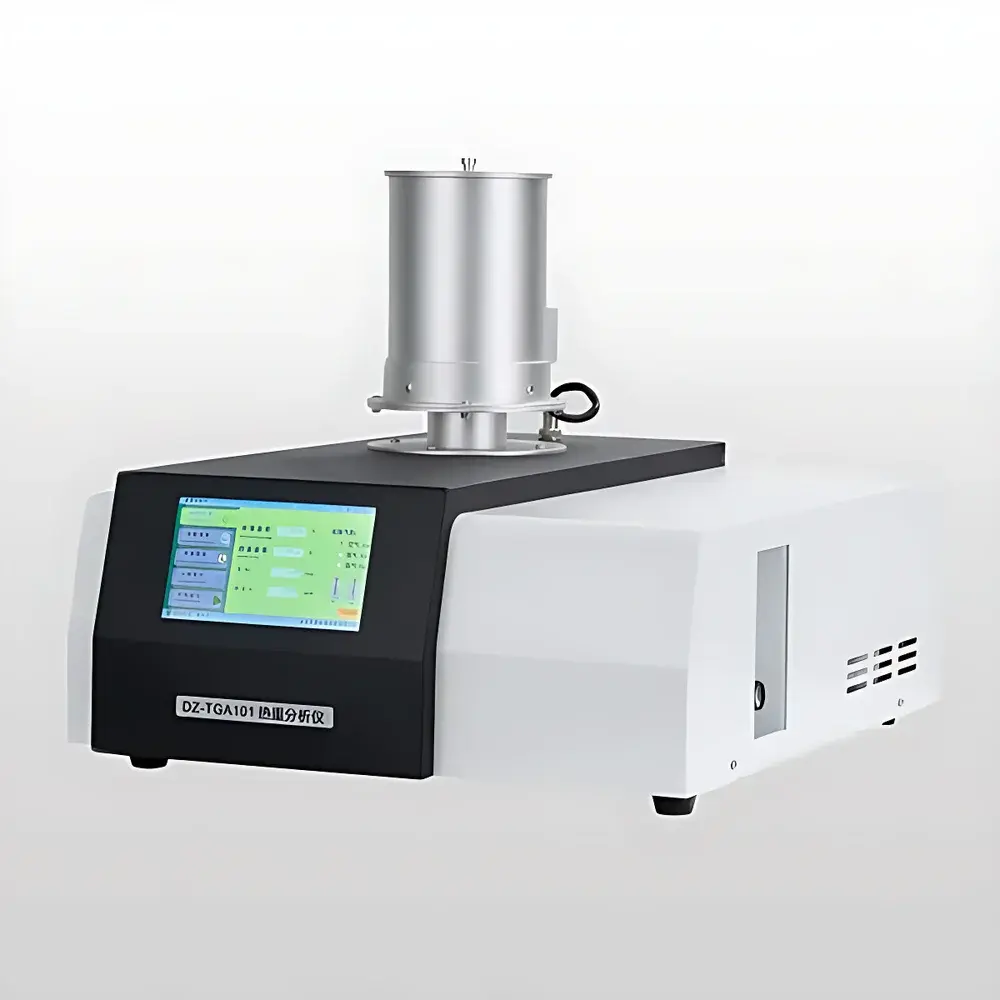
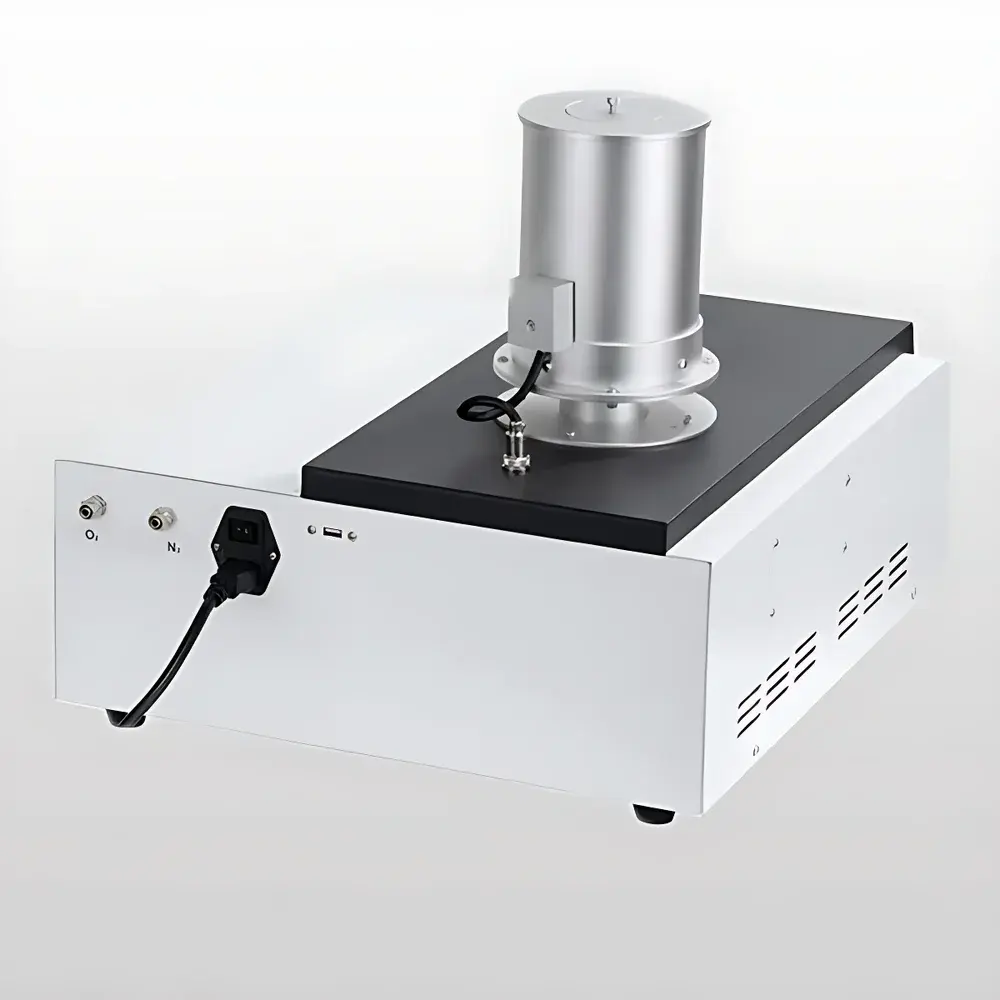
Nanjing Dazhan TGA 101 Thermogravimetric Analyzer
| Brand | Nanjing Dazhan |
|---|---|
| Origin | Jiangsu, China |
| Manufacturer Type | Direct Manufacturer |
| Country of Origin | China |
| Model | TGA 101 |
| Operating Environment | Ambient Pressure |
| Sample Capacity | Single Sample |
| Instrument Type | General-Purpose |
| Temperature Range | Room Temperature to 1200 °C |
| Heating/Cooling Rate | 0.1–100 °C/min |
| Maximum Sample Mass | 30 g |
| Temperature Resolution | 0.01 °C |
| Temperature Stability | ±0.1 °C |
| Cooling Time (1000 °C → 100 °C) | ≤15 min |
| Balance Range | 0.01 mg–2 g (expandable to 30 g) |
| Balance Sensitivity | 0.01 mg |
| Minimum Detection Limit | 0.1 µg |
| Isothermal Hold Duration | 0–500 min (extendable to 72 h) |
| Atmosphere Control | Dual-gas inlet with integrated mass flow meters |
| Display | 7-inch Chinese-language LCD |
| Data Interface | Standard USB |
| Software | Proprietary TGA analysis suite with TG/DTG curve processing, Excel export, PDF report generation, temperature multi-point calibration, and free version upgrades |
| Power Supply | AC 220 V, 50 Hz (customizable) |
Overview
The Nanjing Dazhan TGA 101 Thermogravimetric Analyzer is a precision benchtop instrument engineered for quantitative measurement of mass change in solid or liquid samples as a function of temperature or time under controlled atmospheric conditions. Based on the fundamental principle of thermogravimetry—where sample mass is continuously monitored during programmed thermal cycles—the TGA 101 delivers high reproducibility in determining thermal stability, decomposition kinetics, volatilization behavior, oxidative degradation, moisture content, filler loading, and compositional quantification. Its design adheres to core ISO 11358-1:2014 and ASTM E1131-20 standards for thermogravimetric analysis, supporting both research-grade method development and routine QC/QA workflows in regulated environments.
Key Features
- High-stability dual-wound Ni-Cr heating furnace rated for continuous operation up to 1200 °C, optimized for uniform thermal distribution and minimal electromagnetic interference.
- Precision microbalance system featuring a corrosion-resistant Ni-Cr alloy sample pan support and active thermal isolation via water-jacketed enclosure—reducing thermal drift and mechanical vibration coupling to the weighing sensor.
- Top-opening furnace architecture enabling rapid, tool-free sample loading without risk of stylus or rod damage—enhancing operational safety and throughput consistency.
- Modular furnace design allows field-replacement with alternative configurations (e.g., high-sensitivity low-mass furnace for nanogram-level applications), supporting long-term platform adaptability.
- Dual independent gas lines with integrated digital mass flow controllers (MFCs), permitting seamless switching between inert (N₂, Ar), oxidizing (air, O₂), or reducing (H₂, CO) atmospheres—configurable for static, dynamic, or pulsed gas modes.
- Embedded 7-inch LCD interface with localized Chinese UI, real-time TG/DTG trace visualization, and onboard parameter configuration—eliminating dependency on external PCs during basic operation.
Sample Compatibility & Compliance
The TGA 101 accommodates standard ceramic, alumina, and aluminum crucibles (up to 30 g gross load), making it suitable for polymers, pharmaceutical excipients, catalysts, metal oxides, composites, and geological specimens. All thermal protocols comply with GLP documentation requirements, including timestamped audit trails, user-access logs, and electronic signature-ready reporting. The system supports FDA 21 CFR Part 11–compliant data integrity practices when used with validated software configurations and networked server backup. Optional calibration kits enable traceable verification per ISO/IEC 17025 requirements for accredited laboratories.
Software & Data Management
The proprietary TGA analysis software provides full control over temperature programming (ramp, hold, step-cool), real-time DTG derivative calculation, baseline correction, peak deconvolution, and multi-curve overlay. Raw data exports directly to CSV or Excel formats; annotated reports—including metadata, calibration history, and operator ID—are generated as print-ready PDFs. Temperature multi-point calibration functionality ensures accuracy across the full 25–1200 °C range, with automated compensation for thermal lag and sensor hysteresis. Software updates are delivered free-of-charge via secure USB firmware update protocol, maintaining backward compatibility with legacy experiment files.
Applications
- Quantitative determination of polymer degradation onset temperature, char yield, and filler content (e.g., CaCO₃ in PP composites).
- Residual solvent and moisture analysis in API powders per USP <1251> guidelines.
- Oxidative induction time (OIT) assessment of stabilizers in polyolefins under ASTM D3895.
- Thermal decomposition profiling of battery cathode materials (e.g., NMC, LFP) under inert and air atmospheres.
- Calcination behavior and phase transformation studies of metal-organic frameworks (MOFs) and zeolites.
- Loss-on-ignition (LOI) testing of cementitious materials per ASTM C114.
FAQ
What is the minimum detectable mass change?
The balance achieves a resolution of 0.1 µg with a specified sensitivity of 0.01 mg under standard operating conditions.
Can the instrument operate under vacuum?
No—this model is configured for ambient-pressure operation only; vacuum compatibility requires optional furnace and seal modifications not included in the base TGA 101 configuration.
Is the software compatible with Windows 10/11 and networked lab environments?
Yes—the software runs natively on Windows OS and supports shared folder-based data archiving; however, centralized database deployment requires third-party LIMS integration.
How is temperature accuracy verified across the full range?
Via built-in multi-point calibration using certified reference materials (e.g., Ni, Cu, Al, KCl), with correction coefficients applied dynamically during data acquisition.
What maintenance intervals are recommended for routine operation?
Furnace insulation inspection every 6 months; MFC recalibration annually; balance zero-check before each analytical session; crucible replacement after 50 high-temperature cycles (>1000 °C).



