
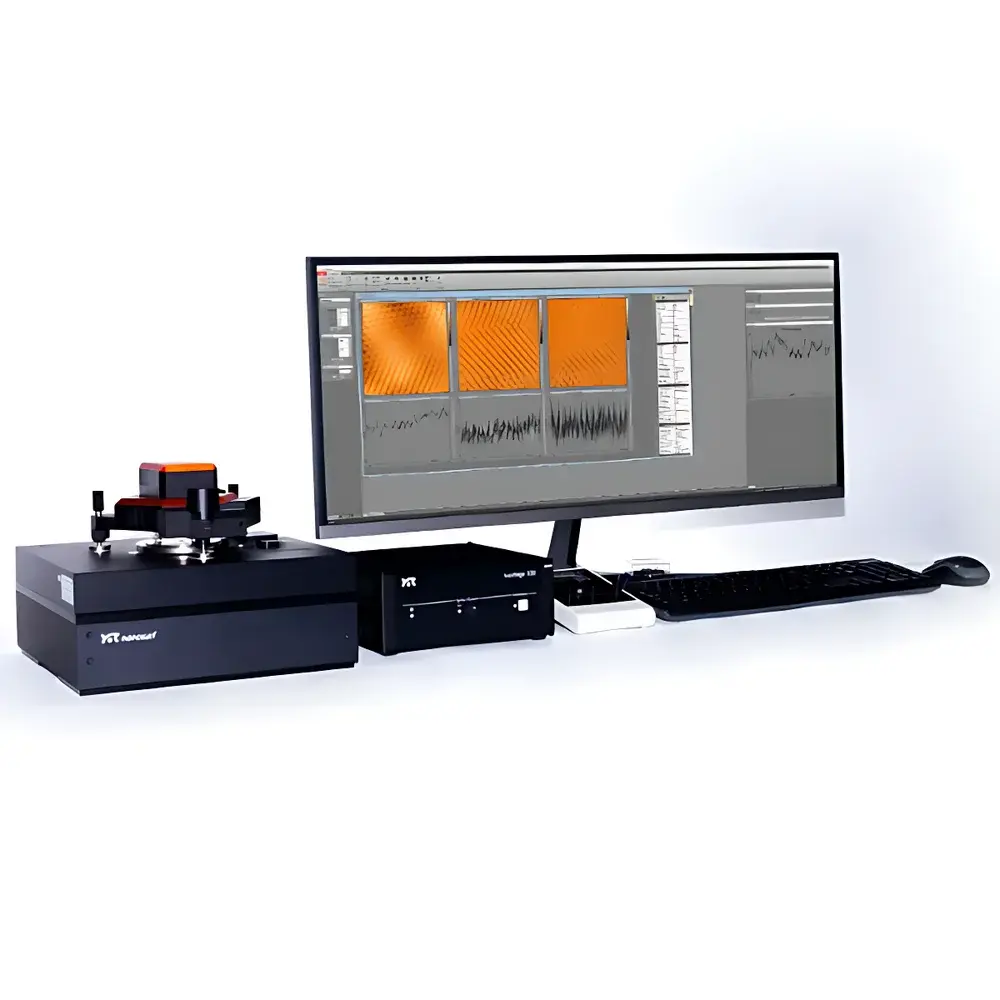
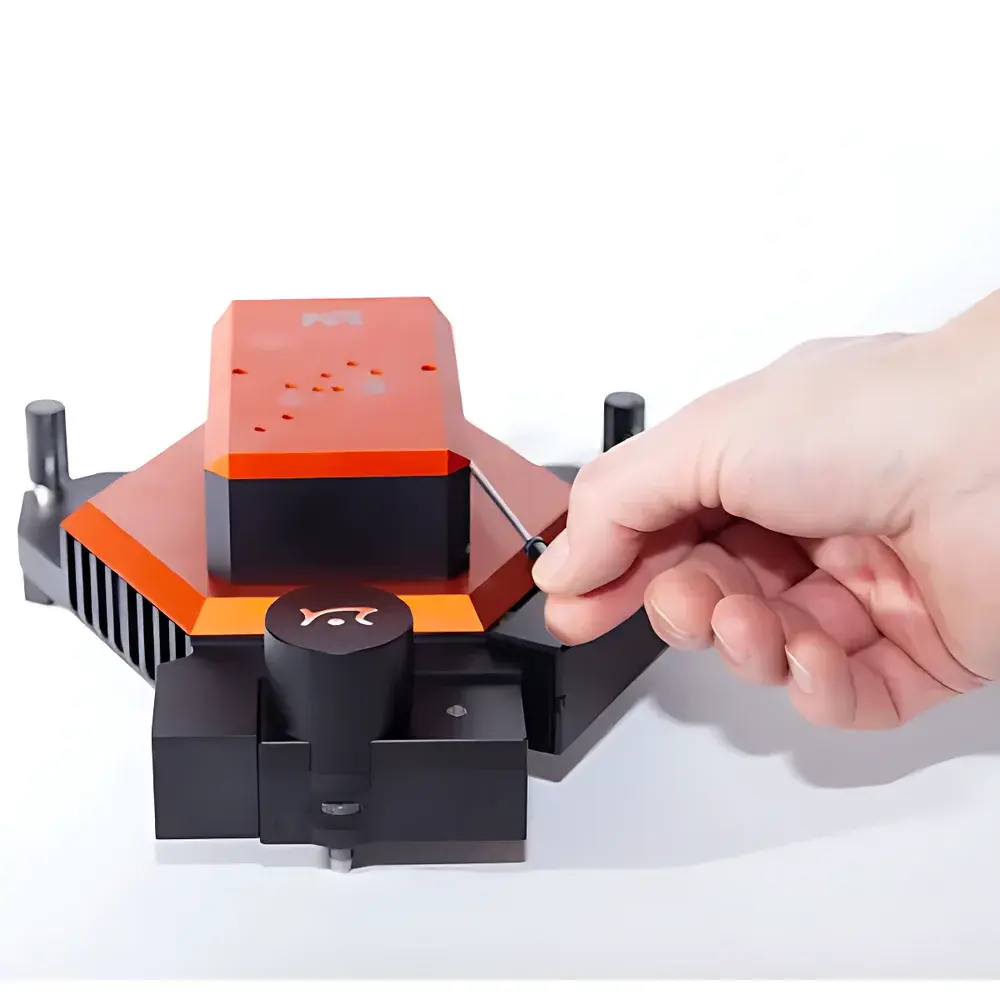
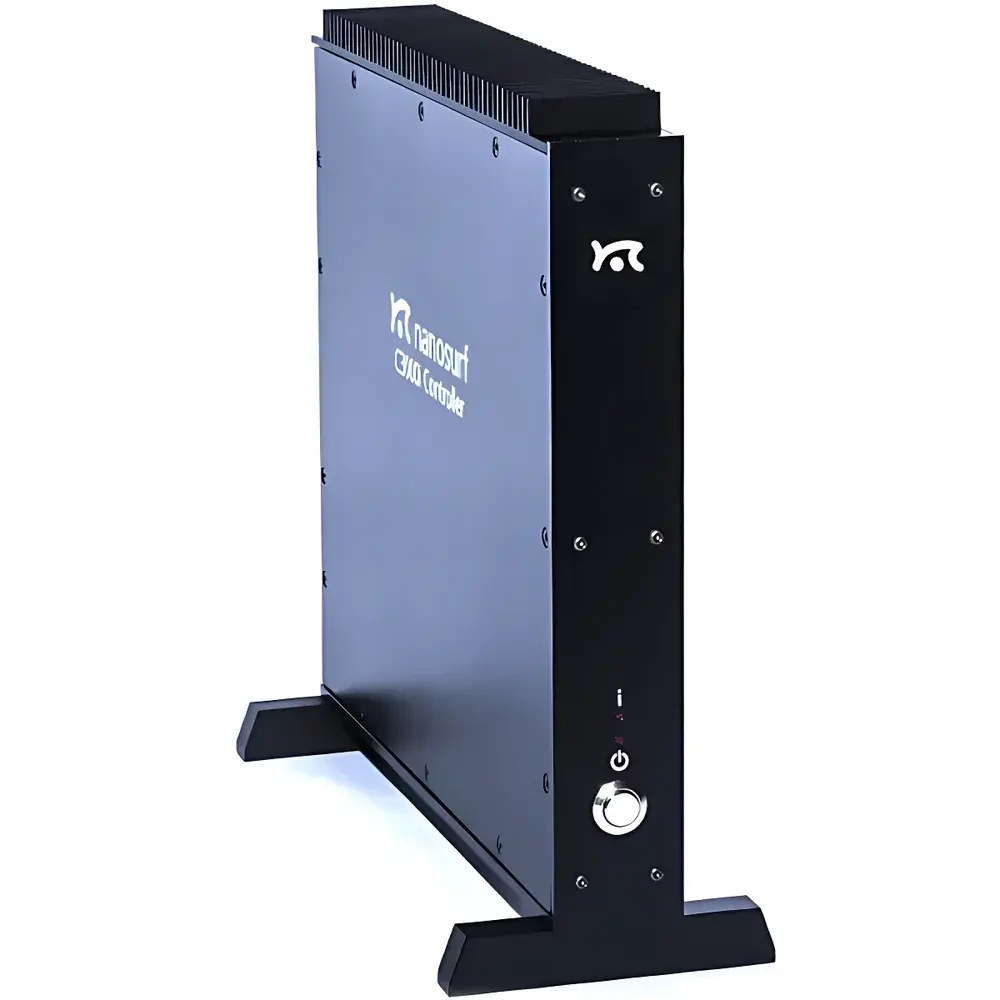
Nanosurf FlexAFM Research-Grade Atomic Force Microscope
| Brand | Nanosurf |
|---|---|
| Origin | Switzerland |
| Model | FlexAFM |
| Instrument Type | Material-Focused AFM |
| Position Detection Noise | <35 pm |
| Maximum Sample Diameter | ≤120 mm |
| Control Electronics | C3000i (24-bit), upgradeable to CX (28-bit) |
| Software | Nanosurf Software Suite |
| Compliance | Designed for ISO/IEC 17025-aligned lab environments, supports GLP/GMP audit trails via optional software modules |
Overview
The Nanosurf FlexAFM is a research-grade atomic force microscope engineered for high-stability, multi-environment nanoscale characterization across physics, materials science, and life sciences. Operating on the fundamental principle of probe-based mechanical interaction—where a sharp tip mounted on a microfabricated cantilever scans the sample surface while detecting deflection via optical beam bounce—the FlexAFM delivers quantitative topographic, mechanical, electrical, and magnetic data at sub-nanometer resolution. Its modular architecture enables seamless integration into diverse experimental infrastructures: it functions reliably inside inert-atmosphere gloveboxes for air-sensitive 2D materials (e.g., graphene stacking analysis), couples directly with inverted optical microscopes for correlative AFM-optical imaging, and maintains operational integrity in liquid cells for physiological-condition studies of biomolecules and living cells. The system’s rigid Z-stage design and low-noise position detection (<35 pm RMS) ensure exceptional thermal and acoustic stability—critical for long-duration scanning and atomic-layer-resolved imaging over micrometer-scale fields of view.
Key Features
- Modular platform supporting >15 operational modes—including contact, tapping, phase imaging, force spectroscopy, Kelvin probe force microscopy (KPFM), conductive AFM (C-AFM), and magnetic force microscopy (MFM)—with hardware- and software-configurable parameters.
- Compact yet robust mechanical design optimized for vibration isolation; compatible with standard optical tables, active damping systems, and custom-built enclosures.
- C3000i 24-bit digital controller enabling real-time feedback control, high-speed data acquisition (up to 1 MHz line rate), and sub-piconewton force resolution; field-upgradable to the 28-bit CX controller for advanced synchronization with external instrumentation (e.g., patch-clamp amplifiers, laser sources, or environmental chambers).
- Glovebox-compatible configuration with feedthrough-enabled cabling, sealed electronics housing, and vacuum-rated motion stages—validated for operation under N₂ or Ar atmospheres down to 1 ppm O₂/H₂O.
- Integrated FluidFM® interface support: enables simultaneous nanomechanical probing and microfluidic manipulation (e.g., single-cell injection, localized drug delivery, or nanoscale pipette-based electrophysiology).
Sample Compatibility & Compliance
The FlexAFM accommodates samples up to 120 mm in diameter and 25 mm in height, with customizable sample holders for wafers, TEM grids, petri dishes, and custom substrates. It supports ambient, vacuum (down to 10⁻³ mbar), liquid (aqueous and organic solvents), and controlled-gas environments. All hardware and firmware comply with CE marking requirements and electromagnetic compatibility (EMC) Directive 2014/30/EU. Nanosurf Software includes optional 21 CFR Part 11-compliant audit trail logging, electronic signature support, and user access level management—facilitating adherence to GLP, GMP, and ISO/IEC 17025 quality management frameworks in regulated laboratories.
Software & Data Management
Nanosurf Software is a native 64-bit application built on a modular, scriptable architecture (Python API included). It provides real-time image acquisition, multi-channel data overlay, automated tip approach routines, batch processing pipelines, and export to industry-standard formats (e.g., Gwyddion, ImageJ, MATLAB, HDF5). Advanced features include drift correction algorithms, spectral analysis tools for noise quantification, and customizable reporting templates aligned with journal submission standards (e.g., Nature, ACS Nano, Ultramicroscopy). Raw data files retain full metadata—including instrument configuration, calibration history, environmental logs, and operator annotations—to ensure traceability and reproducibility.
Applications
- Materials Science: Quantitative mapping of grain boundaries, defect structures, and interfacial strain in perovskites, transition metal dichalcogenides, and heterostructured 2D materials—particularly within inert gloveboxes where oxidation must be avoided.
- Nanoelectronics: Local conductivity profiling, surface potential mapping (KPFM), and nanoscale current-voltage spectroscopy on thin-film transistors and memristive devices.
- Life Sciences: In situ imaging of membrane proteins, cytoskeletal dynamics, and extracellular matrix remodeling under physiological buffer conditions; combined with FluidFM for mechanical phenotyping and targeted intracellular perturbation.
- Correlative Microscopy: Synchronized acquisition with Zeiss, Nikon, Olympus, and Leica inverted microscopes—enabling pixel-registered correlation between fluorescence localization, phase contrast morphology, and nanomechanical stiffness maps.
FAQ
Is the FlexAFM compatible with ultra-high vacuum (UHV) systems?
No—the FlexAFM is rated for operation down to 10⁻³ mbar. For UHV applications, Nanosurf offers the NaioFTM platform with differential pumping and UHV-certified components.
Can I perform electrical measurements such as C-AFM or SSRM on insulating substrates?
Yes—conductive AFM and scanning spreading resistance microscopy are supported using dedicated probes and biasing modules; substrate conductivity requirements depend on measurement mode and signal-to-noise targets.
Does Nanosurf Software support automated tip exchange or lifetime monitoring?
Tip exchange is manual per standard configuration; however, software logs all tip-related parameters (resonance frequency, spring constant, usage time) and integrates with third-party tip databases for calibration traceability.
What documentation is provided for regulatory compliance in pharmaceutical QC labs?
A full IQ/OQ protocol package, calibration certificates traceable to NIST standards, and optional 21 CFR Part 11 validation documentation are available upon request.
How is thermal drift compensated during long-term force spectroscopy experiments?
The system employs real-time Z-piezo feedback compensation, combined with passive thermal shielding and optional active temperature stabilization kits (±0.1 °C stability over 8 h).




