
NanoTemper Prometheus Panta+ Robotic Autosampler Protein Stability Analyzer
| Brand | NanoTemper |
|---|---|
| Origin | Germany |
| Manufacturer Type | Original Equipment Manufacturer (OEM) |
| Product Category | Imported Instrument |
| Model | Panta+Robotic Autosampler |
| Measurement Principle | Orthogonal Differential Scanning Fluorescence (oDSF) |
| Sample Volume | 10 µL |
| Temperature Control Range | 15–110 °C |
| Sample Capacity | 64 sample groups per run (1536 samples total before reload |
| Sample Loading Method | Capillary-based loading |
| Dimensions | 110 cm (W) × 188 cm (H) × 90 cm (D) |
Overview
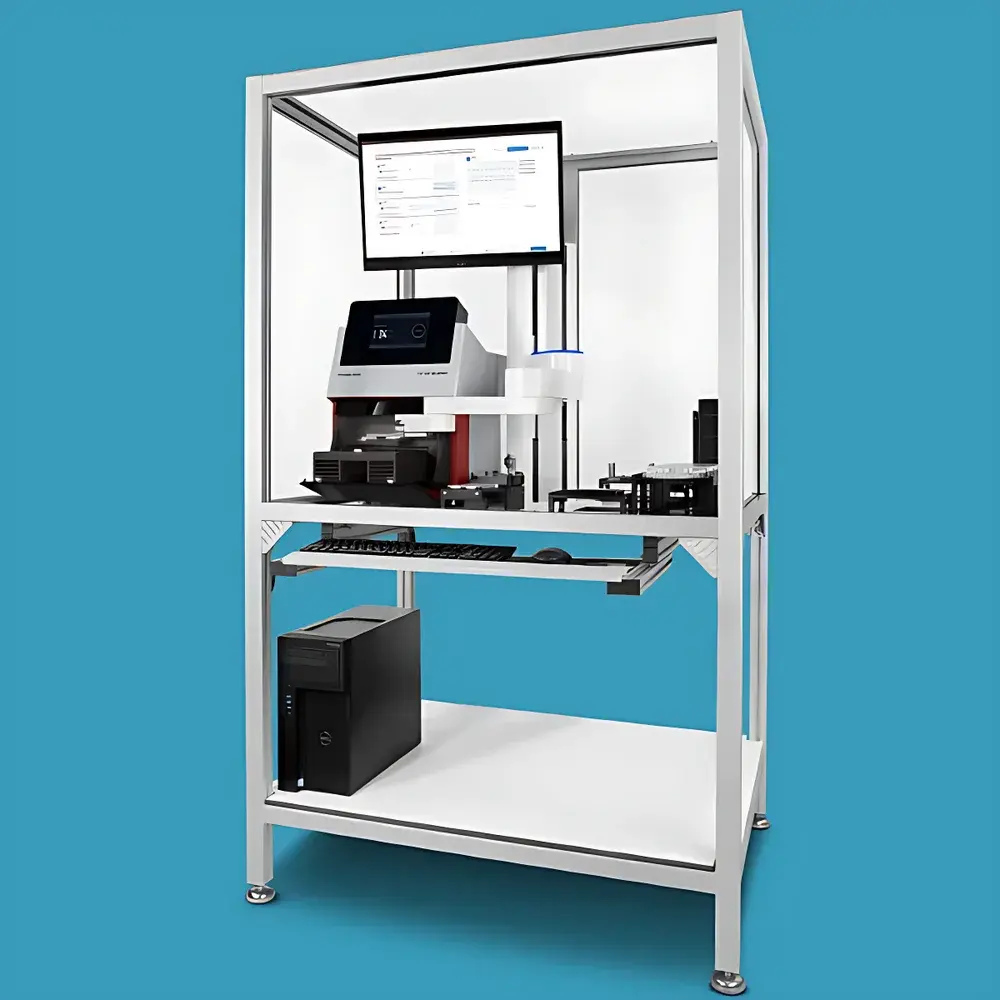
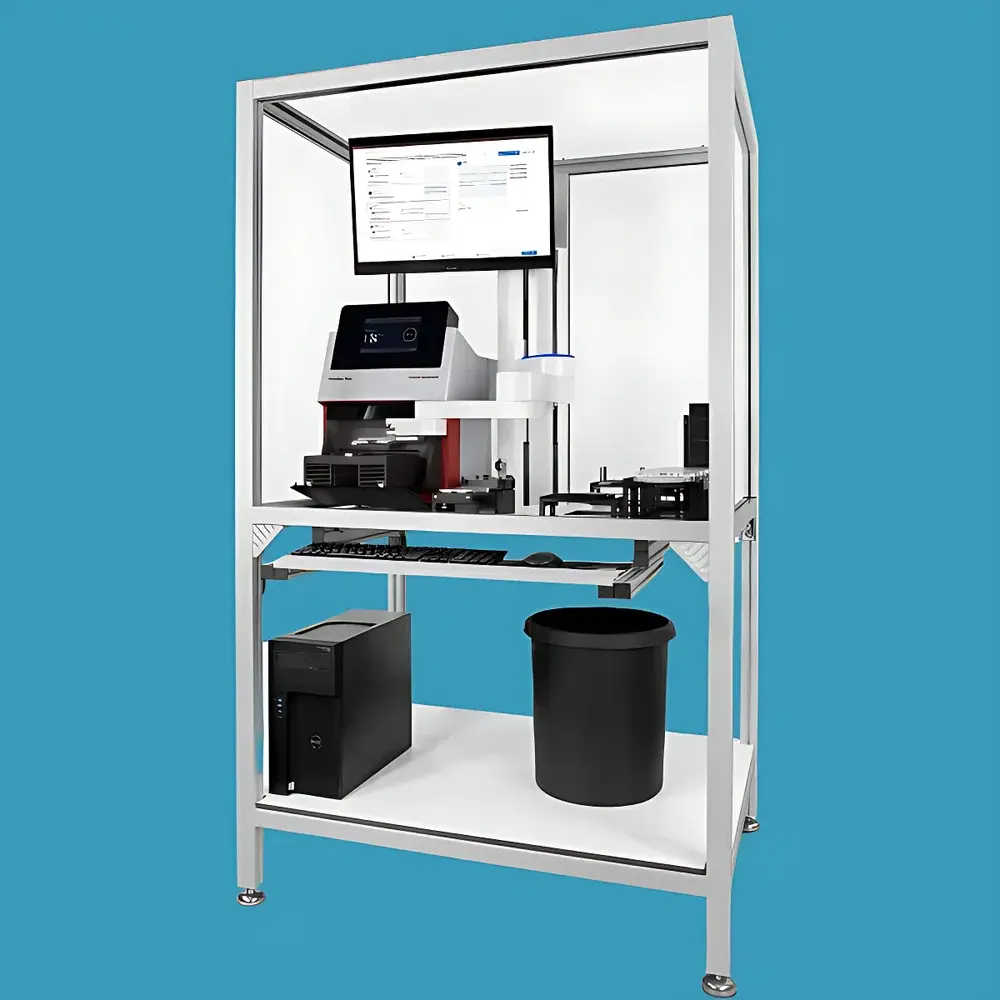
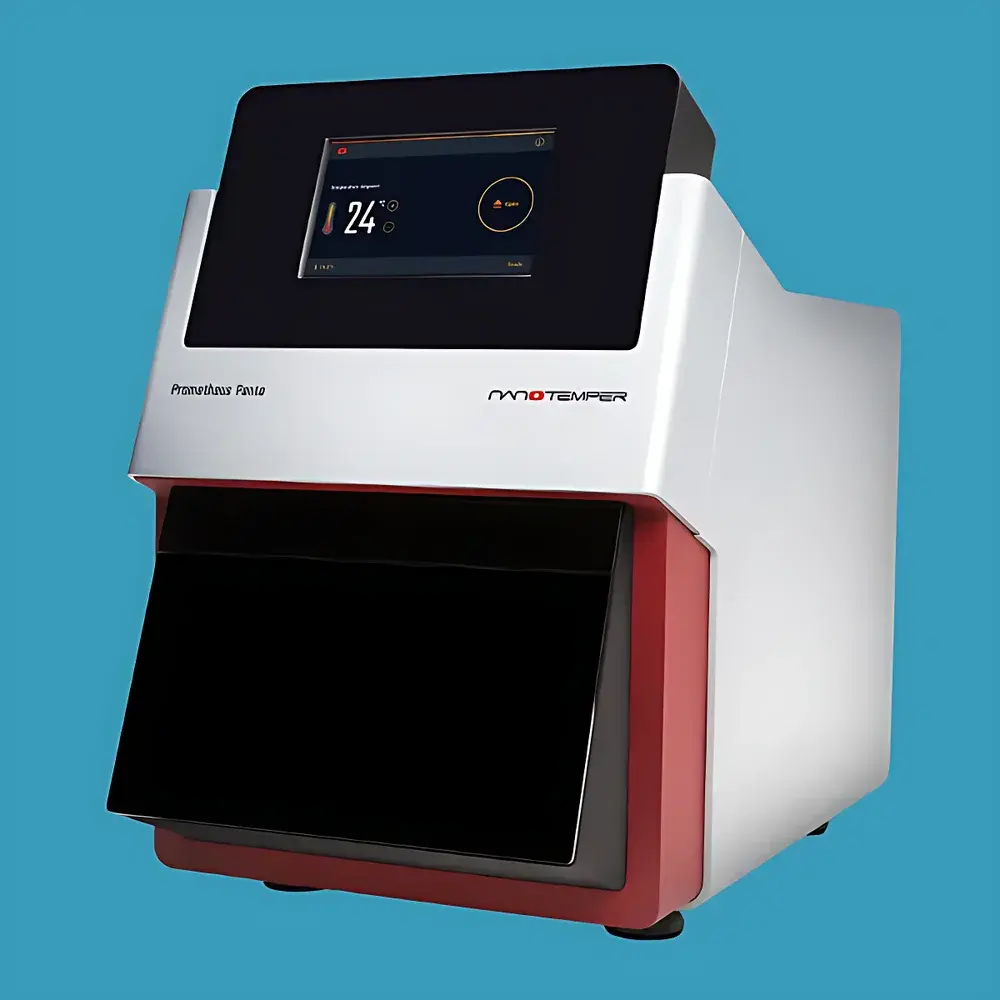
The NanoTemper Prometheus Panta+ Robotic Autosampler is an integrated, high-throughput protein stability analysis platform engineered for precision, reproducibility, and unattended operation in modern biopharmaceutical development laboratories. It combines the core Prometheus Panta optical detection module—based on orthogonal Differential Scanning Fluorescence (oDSF)—with a fully synchronized robotic arm, structural enclosure, dedicated control computer, and integrated monitor. Unlike conventional thermal shift assays relying on extrinsic dyes, oDSF leverages intrinsic tryptophan and tyrosine fluorescence to report conformational changes during thermal or chemical denaturation, eliminating labeling artifacts and preserving native protein behavior. The system simultaneously acquires four orthogonal biophysical signals—oDSF, back reflection (BR), dynamic light scattering (DLS), and static light scattering (SLS)—enabling concurrent assessment of thermal midpoint (Tm), aggregation onset (Tagg), hydrodynamic radius (Rh), molecular weight (Mw), and colloidal stability—all from a single 10 µL capillary-loaded sample. This multi-parameter readout supports comprehensive developability profiling under physiologically relevant conditions, including formulations containing detergents or high-viscosity excipients.
Key Features
- Four orthogonal detection modalities co-registered in real time: oDSF for thermal/chemical stability, back reflection for early-stage aggregate detection, DLS for size distribution analysis, and SLS for absolute molecular weight determination.
- Capillary-based sample handling eliminates fluidic pumps, valves, and tubing—resulting in zero carryover, no maintenance downtime, and full compatibility with viscous, detergent-containing, or particulate-laden formulations.
- Robotic autosampler supports up to four standard 384-well microplates (1536 samples per full unattended run), with programmable plate mapping, collision avoidance, and tip calibration routines compliant with ISO/IEC 17025 traceability requirements.
- Temperature-controlled measurement chamber with ±0.1 °C stability across the full 15–110 °C range, validated per ASTM E2923 for thermal uniformity and ramp rate accuracy.
- Modular architecture allows field-upgradable integration of additional detection modules or software licenses without hardware replacement.
Sample Compatibility & Compliance
The Prometheus Panta+ Robotic Autosampler is designed for direct analysis of native, purified proteins—including monoclonal antibodies, Fc-fusions, AAV capsids, viral-like particles, and membrane proteins solubilized in mild detergents (e.g., DDM, CHAPS). Its label-free oDSF workflow conforms to ICH Q5C guidelines for higher-order structure characterization and supports regulatory submissions requiring orthogonal stability data. Instrument firmware and software comply with FDA 21 CFR Part 11 for electronic records and signatures, including full audit trail logging, user access controls, and electronic signature capture. All calibration procedures follow GLP/GMP-aligned documentation standards, and temperature verification reports are generated per ISO/IEC 17025-accredited protocols.
Software & Data Management
Control and analysis are performed via Prometheus Control Software v4.x, a Windows-based application supporting method templating, batch scheduling, and automated report generation in PDF and CSV formats. Raw data files are stored in vendor-neutral HDF5 format with embedded metadata (sample ID, timestamp, instrument configuration, calibration status). The software includes built-in statistical tools for Tm error propagation, Rh polydispersity index calculation, and aggregation kinetic modeling. For enterprise deployment, optional integration with LIMS (e.g., LabVantage, Thermo Fisher SampleManager) and ELN systems (e.g., Benchling, Dotmatics) is supported via RESTful API and secure SFTP transfer. Audit trails meet ALCOA+ principles and are exportable for internal QA review or regulatory inspection.
Applications
- Biologics developability screening: simultaneous evaluation of thermal unfolding, aggregation propensity, and formulation robustness across pH, ionic strength, and excipient matrices.
- AAV vector characterization: quantification of capsid thermal stability across serotypes, detection of empty/full particle ratios via SLS/DLS correlation, and assessment of storage-induced aggregation.
- Cryo-EM sample qualification: rapid identification of monodisperse, non-aggregated protein batches prior to grid freezing—reducing costly EM session failures.
- Chemical stability profiling: monitoring structural integrity under oxidative, acidic, or deamidation stress conditions using oDSF and BR kinetics.
- High-throughput formulation scouting: parallel testing of >1000 candidate buffer compositions with automatic pass/fail decision logic based on user-defined stability thresholds.
FAQ
Does the system require fluorescent dyes or protein labeling?
No. oDSF relies exclusively on intrinsic protein fluorescence; no exogenous dyes, tags, or modifications are needed.
Can the instrument analyze samples containing detergents or reducing agents?
Yes. The capillary-based optical path and absence of microfluidic channels enable reliable analysis of samples with up to 2% DDM, 0.1% Triton X-100, or 5 mM DTT.
How is temperature calibration verified and documented?
Each instrument ships with NIST-traceable Pt100 sensor validation reports. Users may perform routine verification using certified reference materials (e.g., lysozyme Tm standards), with logs automatically archived in the audit trail.
Is remote monitoring or unattended overnight operation supported?
Yes. Scheduled runs can be initiated remotely via secure VPN; system health alerts (e.g., plate misalignment, temperature deviation) are sent via email or SMS through configurable notification rules.
What data formats are supported for export and integration with downstream analytics platforms?
HDF5 (primary raw data), CSV (processed parameters), PDF (regulatory-ready reports), and JSON (via API) for integration with Python/R-based analytics pipelines or enterprise data lakes.
Related Products



