
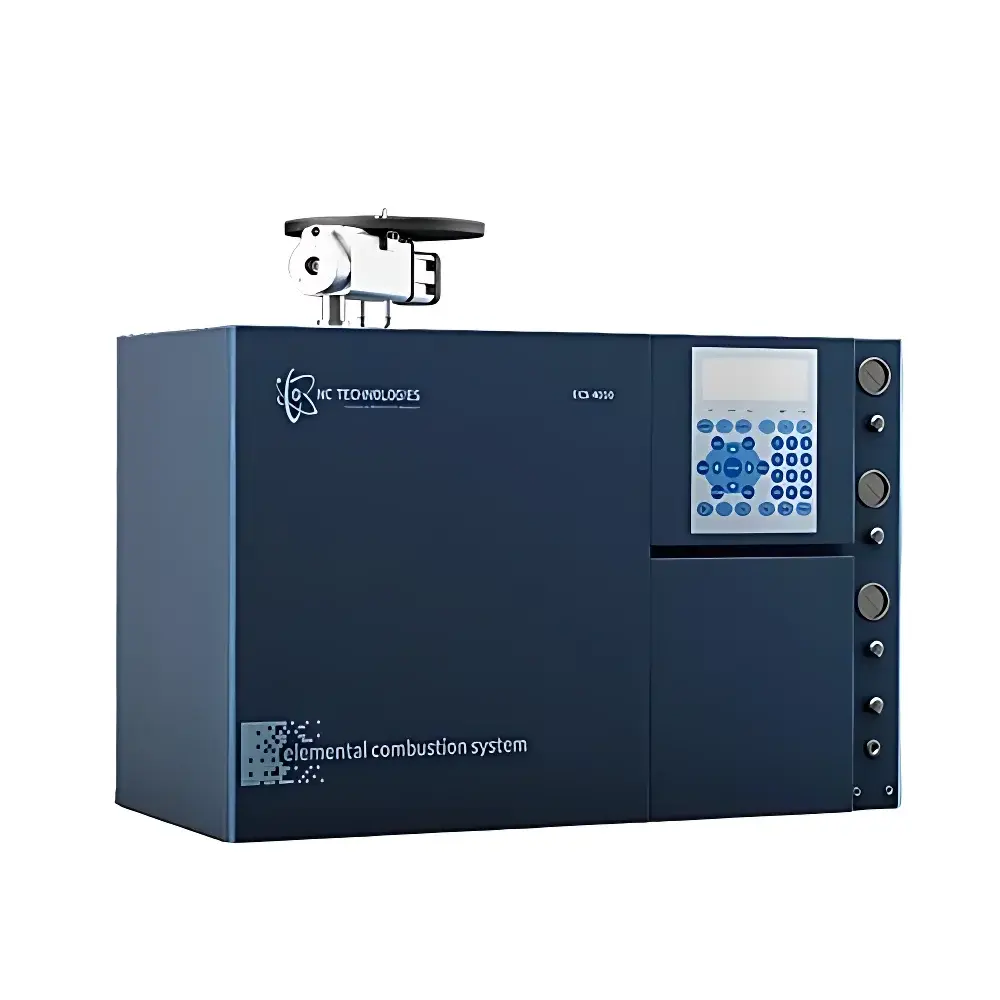
NC Technologies ECS 4010 Automated Elemental Analyzer
| Brand | NC Technologies |
|---|---|
| Origin | Italy |
| Model | ECS 4010 |
| Analysis Principle | High-Temperature Catalytic Combustion (Dumas Method) |
| Elements Determined | C, H, N, S (optional O) |
| Detection Method | Thermal Conductivity Detection (TCD) |
| Chromatographic Separation | Isothermal GC column (30–110 °C) |
| Automation Level | Fully Automated with Microprocessor Control |
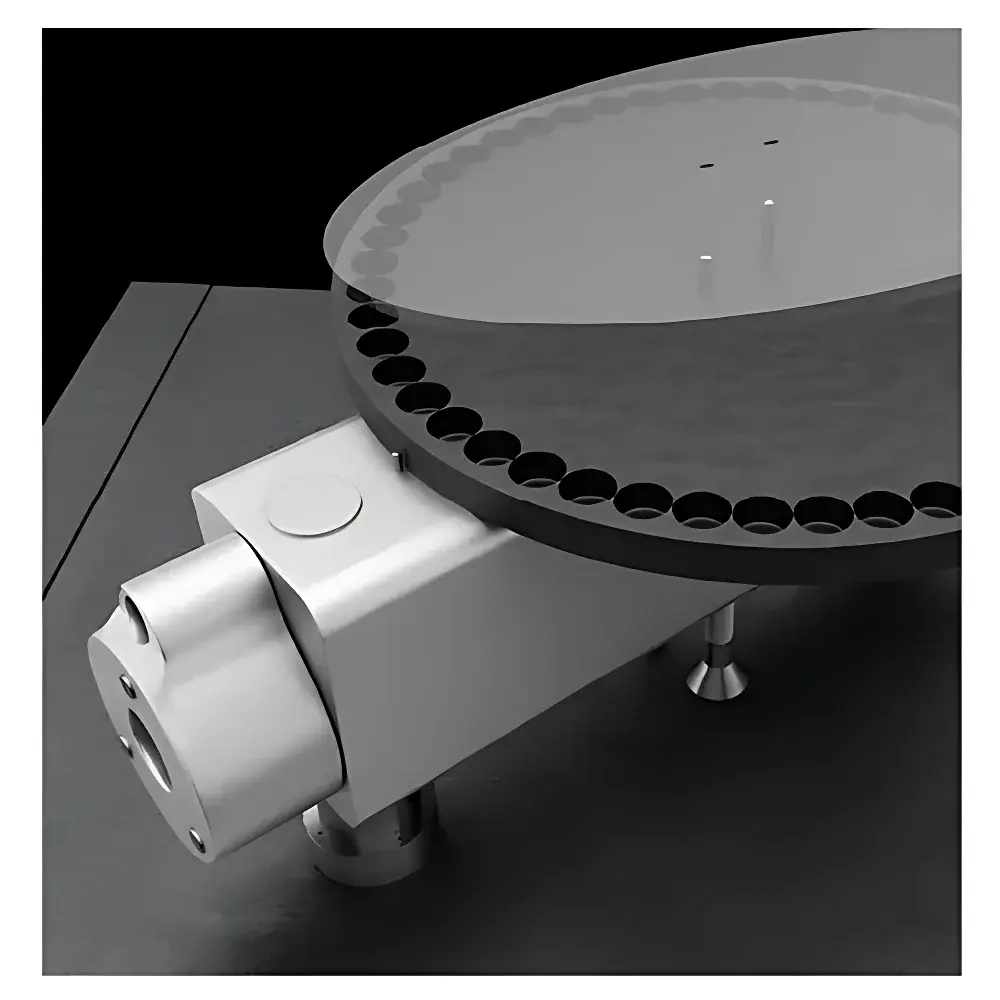
| Sample Introduction | Pneumatic or Zero-Blank Electric Autosampler |
| Isotope Ratio Compatibility | Yes (for δ¹³C, δ¹⁵N, δ³⁴S, etc.) |
| Software | PC-based acquisition and reporting suite with audit trail capability |
| Compliance Support | Designed for GLP/GMP environments |
Overview
The NC Technologies ECS 4010 Automated Elemental Analyzer is a high-precision, microprocessor-controlled instrument engineered for quantitative determination of carbon (C), hydrogen (H), nitrogen (N), sulfur (S), and optionally oxygen (O) in homogeneous organic and inorganic solid or liquid samples. It operates on the Dumas combustion principle—subjecting samples to flash combustion at temperatures up to 1,150 °C in an oxygen-rich environment over proprietary catalysts. The resulting gaseous effluent (CO₂, H₂O, NOₓ, SO₂, and N₂) is carried through a precisely temperature-controlled isothermal gas chromatographic column (30–110 °C), where components are separated based on thermal conductivity differences and retention time. Quantification is performed using a high-stability, self-calibrating Thermal Conductivity Detector (TCD), eliminating the need for reference gas streams and enhancing long-term baseline stability. Unlike traditional Kjeldahl or wet-chemical methods, the ECS 4010 delivers rapid, operator-independent results with sub-milligram sample consumption—making it ideal for high-throughput laboratories requiring regulatory-compliant elemental data.
Key Features
- Fully automated operation with dual-furnace architecture—enabling independent optimization of oxidation and reduction zones for extended catalyst lifetime and improved reproducibility
- Two interchangeable autosamplers: pneumatic-driven for routine throughput and Zero-Blank electric sampler for ultra-low background analysis (e.g., environmental matrices or isotopic work)
- Modular design comprising three core subsystems—sample introduction & combustion unit, GC/TCD detection module, and integrated data management platform
- TCD detector with real-time auto-zeroing and drift compensation algorithms; no reference gas required, reducing consumables and maintenance intervals
- Flexible method programming: user-defined combustion parameters (temperature ramp profiles, oxygen flow rates), GC oven setpoints, and integration windows
- Low operational cost profile: minimal carrier gas consumption (He or Ar), energy-efficient standby mode, and reduced catalyst replacement frequency due to dual-zone thermal management
Sample Compatibility & Compliance
The ECS 4010 accepts a broad range of homogeneous samples—including pharmaceutical actives, polymers, foodstuffs, soil extracts, marine sediments, petrochemical fractions, and certified reference materials (CRMs). Sample mass ranges from 0.1 mg to 500 mg depending on matrix and target element concentration. Its design supports compliance with ASTM D5291, ISO 17248, USP , and EN 15407 for CHNS determination. When configured with optional interface modules, the system meets GLP and GMP documentation requirements—including electronic signatures, audit trails, and 21 CFR Part 11–compliant data handling via its native software suite. All hardware components adhere to CE, RoHS, and IEC 61010-1 safety standards.
Software & Data Management
The ECS 4010 is operated via NC Technologies’ proprietary Windows-based software, featuring intuitive method setup, real-time chromatogram visualization, peak integration with manual override, and customizable report generation (PDF, CSV, XML). Data files include full metadata: instrument ID, operator login, calibration history, sequence logs, and raw detector voltage traces. Built-in validation tools support IQ/OQ protocols, while secure user roles (administrator, analyst, reviewer) enforce access control. Raw data and processed results are stored in a relational database with automatic backup scheduling and encryption options. For laboratories engaged in stable isotope ratio analysis (e.g., δ¹³C, δ¹⁵N), the software supports synchronized output to external IRMS systems via TTL triggers and analog/digital I/O ports.
Applications
The ECS 4010 serves diverse sectors requiring trace-level elemental quantification under stringent quality frameworks. In pharmaceutical development, it validates elemental impurity profiles per ICH Q3D guidelines. In academic research, it characterizes novel catalysts, biomass feedstocks, and synthetic polymers. Environmental labs use it for total organic carbon (TOC) and nitrogen content in wastewater sludge or atmospheric particulates. Petrochemical QA/QC teams rely on its precision for sulfur speciation in fuels and lubricants. Marine biologists apply it to determine C:N:P stoichiometry in phytoplankton cultures and sediment cores. Its compatibility with isotope-ratio interfaces further extends utility into geochemical fingerprinting, forensic溯源, and metabolic flux studies.
FAQ
What sample types are compatible with the ECS 4010?
Solid powders, pressed pellets, liquids (via sealed capsules), and homogeneous slurries—with appropriate encapsulation and matrix-matched calibration.
Can the ECS 4010 perform oxygen analysis?
Yes—via pyrolytic reduction in a dedicated tungsten furnace; requires optional O-module and specific calibration standards (e.g., benzoic acid, sucrose).
Is the system compliant with FDA 21 CFR Part 11?
The software architecture supports electronic records and signatures when deployed with validated configurations, including audit trail logging and user authentication.
How often does the TCD require recalibration?
The self-calibrating TCD maintains baseline stability for ≥72 hours under continuous operation; manual verification is recommended weekly using certified CRMs.
What maintenance is required for the dual-furnace system?
Catalyst replacement every 1,500–2,000 injections (depending on sample matrix); quartz tube cleaning every 500 runs; annual vacuum pump oil change and GC column bake-out.
Related Products





