
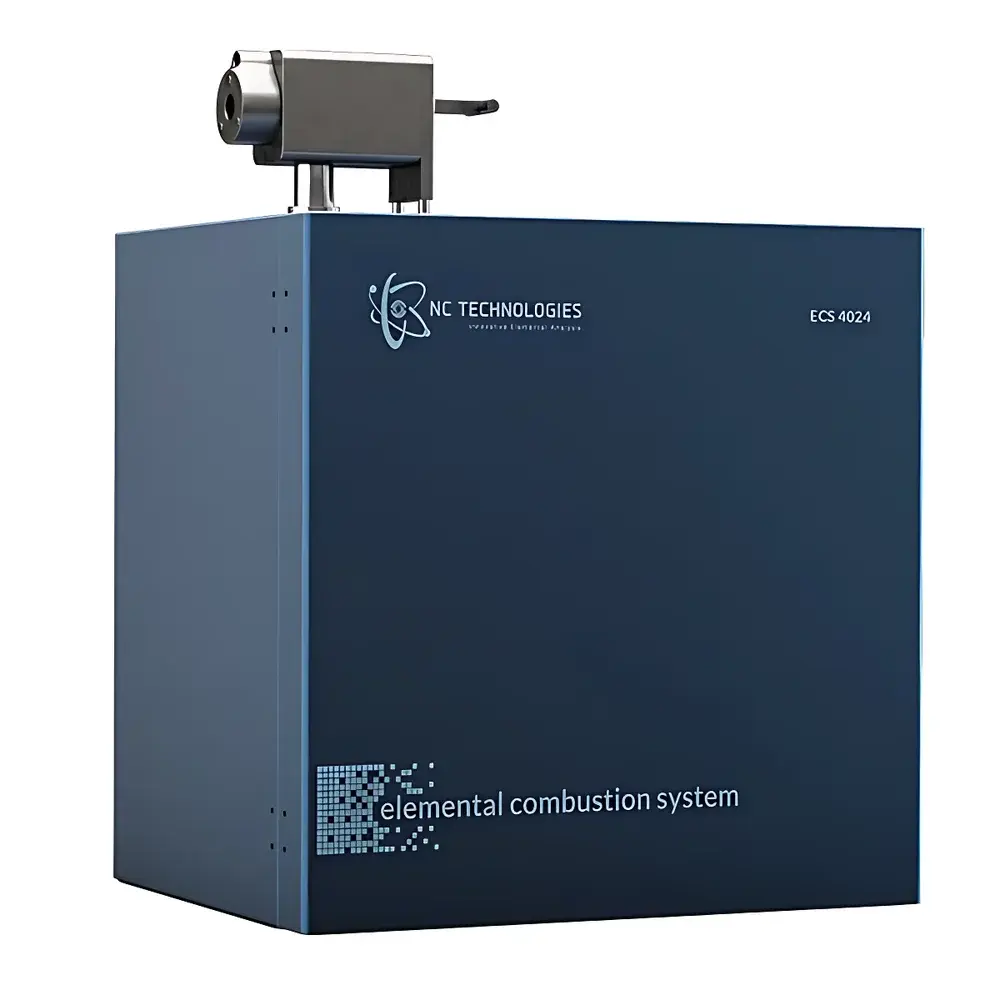
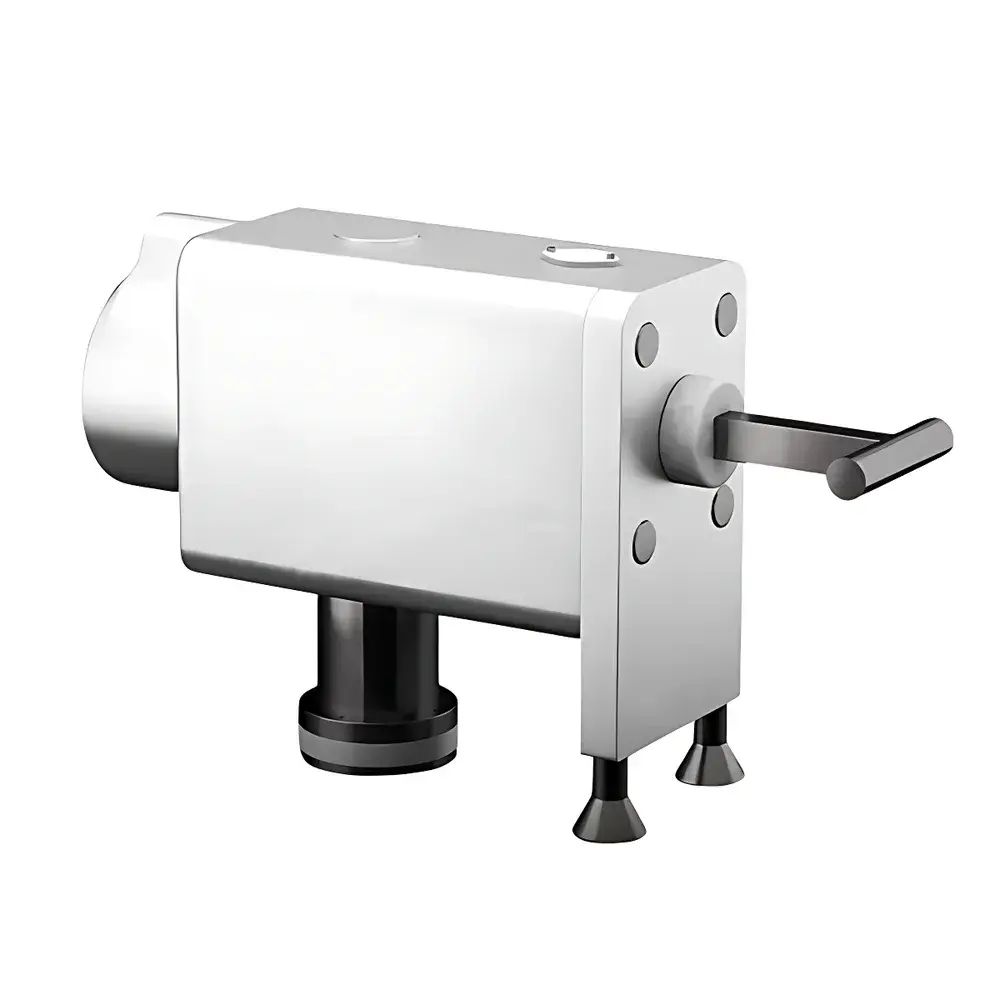
NC Technologies ECS 4024 Classic Elemental Analyzer
| Brand | NC Technologies |
|---|---|
| Origin | Italy |
| Model | ECS 4024 |
| Analysis Principle | High-Temperature Catalytic Combustion (Dumas Method) |
| Elements Determined | C, H, N, S (O optional) |
| Detection Method | Thermal Conductivity Detection (TCD) |
| Gas Separation | Isothermal Chromatographic Column (30–110 °C) |
| Automation Level | Semi-Automatic |
| Software Interface | PC-Connected Dedicated Data Acquisition & Processing Software |
| Isotope Compatibility | Yes (via external MS coupling) |
| Sample Type | Homogeneous Solid or Liquid Organic Samples (Micro-Weighing Compatible) |
Overview
The NC Technologies ECS 4024 Classic Elemental Analyzer is a semi-automated, microprocessor-controlled instrument engineered for quantitative determination of carbon (C), hydrogen (H), nitrogen (N), and sulfur (S) in organic materials using high-temperature catalytic combustion—commonly referred to as the Dumas method. Optional oxygen (O) analysis is supported via pyrolytic reduction. The system operates on the principle of instantaneous flash combustion at temperatures up to 1,150 °C in a pure oxygen atmosphere, followed by catalytic oxidation and reduction stages to ensure complete conversion of sample-derived elements into stable, detectable gaseous species: CO2, H2O, SO2, and N2. These gases are then separated under isothermal conditions using a packed chromatographic column maintained between 30 °C and 110 °C. Quantification is performed via dual-cell thermal conductivity detection (TCD), delivering high reproducibility without requirement for reference gas streams—a key design advantage for routine laboratory operation.
Key Features
- Semi-automated workflow with manual sample loading and gas pressure adjustment, optimized for method flexibility and operator control
- Self-calibrating TCD detector with zero-reference drift compensation—no external reference gas required
- Modular architecture comprising three core subsystems: sample introduction & combustion unit, chromatographic separation module, and integrated data acquisition electronics
- Configurable analysis modes: CN, CHN, and CHNS; optional O-module available for simultaneous oxygen quantification
- Micro-weighing compatible—designed for high-precision analysis of homogeneous samples with masses as low as 0.1–5 mg, ensuring excellent repeatability (RSD < 0.3% for certified reference materials)
- Robust furnace design with ceramic insulation and platinum/rhodium catalyst beds for long-term stability and minimal maintenance
- Thermally stabilized chromatographic column oven with ±0.1 °C temperature control for consistent retention time alignment
Sample Compatibility & Compliance
The ECS 4024 accommodates a broad range of organic matrices including pharmaceutical compounds, polymers, foodstuffs, agricultural products, environmental samples (e.g., soils, sediments), and synthetic chemicals. It complies with internationally recognized standard methods including ASTM D5291 (standard test method for instrumental determination of carbon, hydrogen, and nitrogen in petroleum products and lubricants), ISO 16968 (determination of carbon, hydrogen and nitrogen in solid biofuels), and USP (elemental impurities—organic compounds). Its modular output interface supports direct integration with external mass spectrometers for stable isotope ratio analysis (e.g., δ13C, δ15N), enabling compliance with GLP/GMP environments where audit trails and electronic records are mandated per FDA 21 CFR Part 11.
Software & Data Management
Data acquisition and processing are managed through proprietary Windows-based software that provides real-time signal visualization, peak integration, calibration curve generation, and report export in CSV, PDF, and XML formats. The software implements user-level access control, full audit trail logging (including method parameters, calibration history, and raw chromatograms), and automated quality control checks against certified reference standards. All analytical sequences—including method selection, injection timing, oven temperature ramping, and detector gain settings—are fully programmable and recallable. Raw data files are stored in vendor-neutral binary format with embedded metadata, facilitating long-term archival and third-party reprocessing.
Applications
- Pharmaceutical QC/QA: Verification of elemental composition in active pharmaceutical ingredients (APIs) and excipients per ICH Q5C guidelines
- Academic & industrial research: Characterization of novel polymers, catalysts, and nanomaterials requiring precise stoichiometric validation
- Environmental laboratories: Total organic carbon (TOC) and total nitrogen (TN) profiling in wastewater sludge, compost, and biochar
- Food & feed analysis: Protein content estimation via nitrogen measurement (Kjeldahl-equivalent accuracy without digestion)
- Geochemical studies: Stable isotope-ratio preparatory analysis when coupled to IRMS systems
- Regulatory compliance testing: Screening for elemental impurities in accordance with ICH Q3D and USP /
FAQ
What sample types are suitable for analysis on the ECS 4024?
Homogeneous solid or liquid organic samples with known matrix composition—such as purified compounds, pharmaceutical powders, polymer pellets, or homogenized biological tissues—are optimal. Inhomogeneous or highly volatile samples require pre-treatment or dilution.
Is oxygen analysis possible with this model?
Yes—oxygen determination is available as an optional add-on module utilizing high-temperature pyrolysis and Ni-reduction, with detection via TCD in tandem configuration.
Does the system support 21 CFR Part 11 compliance?
The software includes electronic signature capability, audit trail generation, and secure user authentication—fully configurable to meet 21 CFR Part 11 requirements when deployed in validated environments.
Can the ECS 4024 be interfaced with a mass spectrometer?
Yes—the instrument features a standardized effluent port with heated transfer line compatibility, enabling seamless coupling to IRMS or quadrupole MS systems for isotopic analysis.
What maintenance intervals are recommended?
Catalyst replacement is typically required every 1,500–2,000 analyses; combustion tube inspection every 500 runs; and TCD filament cleaning every 100–200 injections, depending on sample load and matrix complexity.
Related Products




