
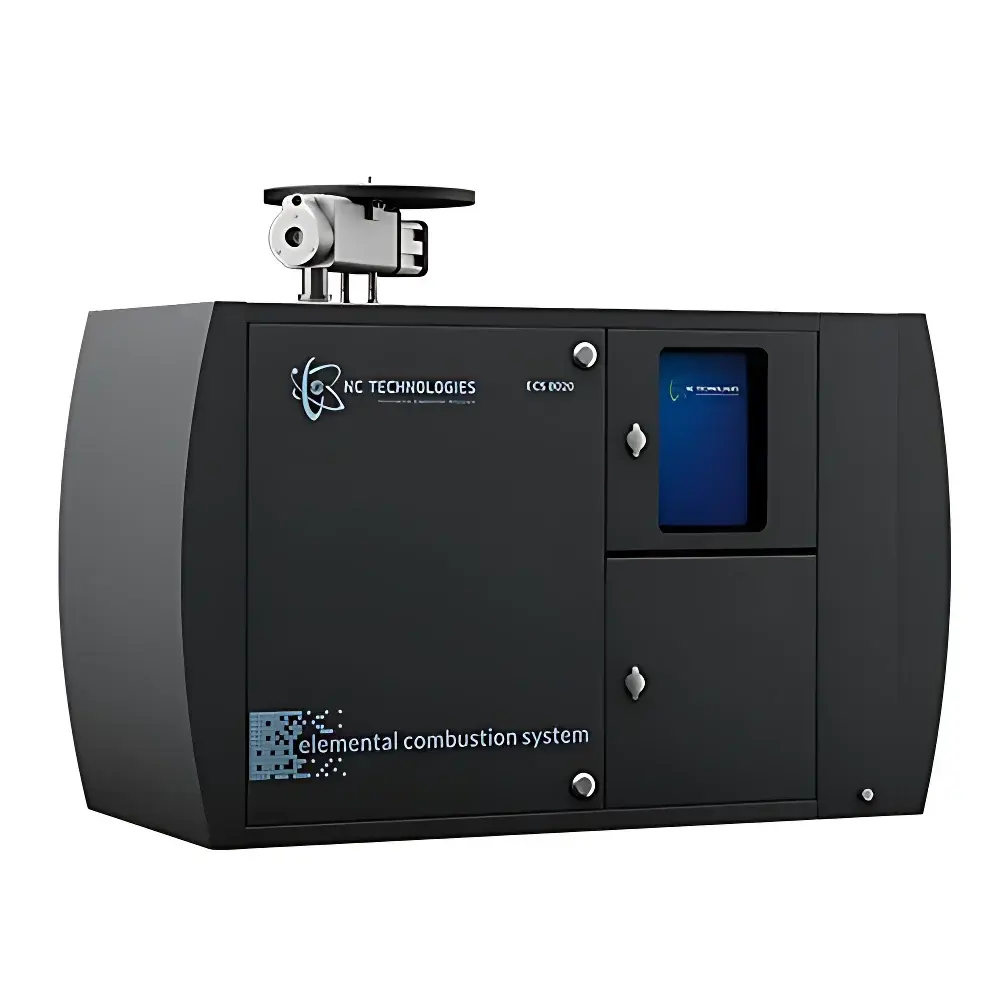
NC Technologies ECS 8020 Automated Organic Elemental Analyzer
| Brand | NC Technologies |
|---|---|
| Origin | Italy |
| Model | ECS 8020 |
| Analysis Principle | High-Temperature Catalytic Combustion (Dumas Method) |
| Elements Measured | C, H, N, S (O optional) |
| Detection Method | Thermal Conductivity Detection (TCD) |
| Chromatographic Separation | Isothermal GC column (30–110 °C) |
| Automation Level | Fully automated with microprocessor control and PC integration |
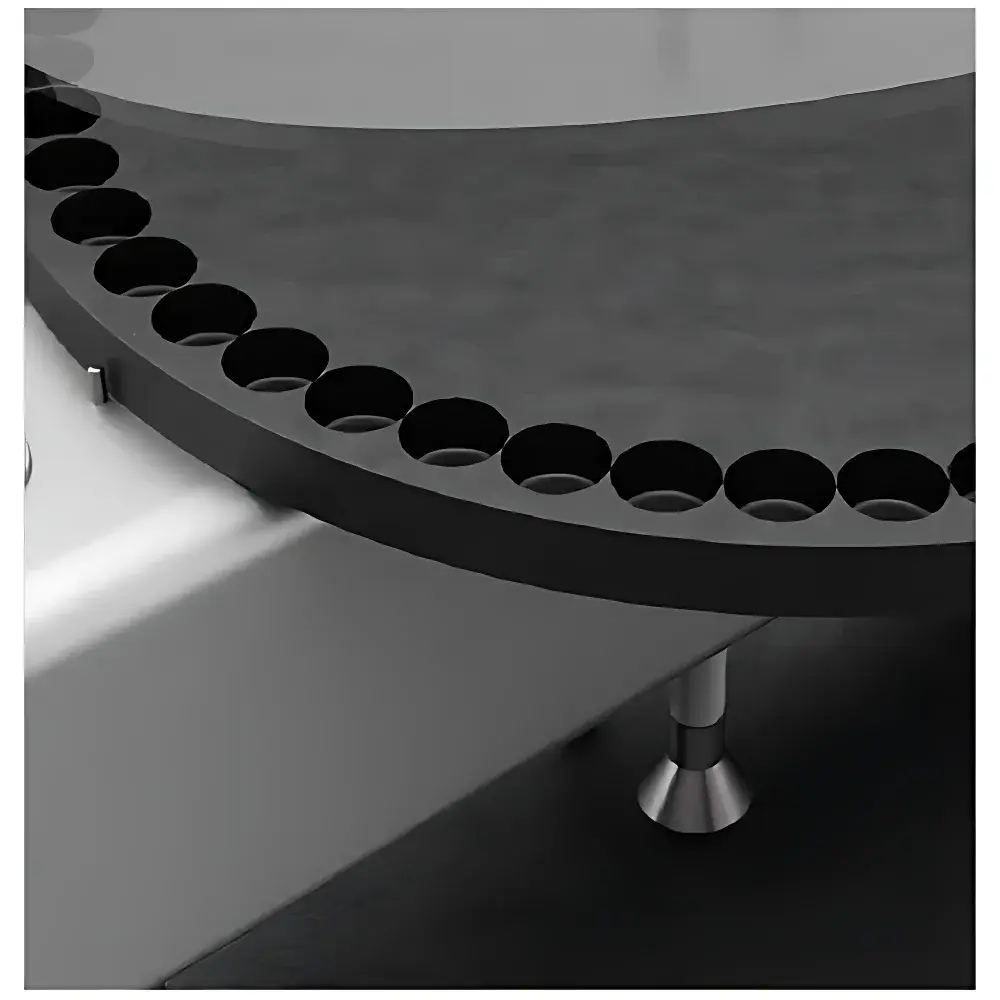
| Sample Introduction Options | Manual, Pneumatic, Electric Zero-Blank autosampler |
| Detector Features | Reference-gas-free TCD with auto-calibration |
| Interface Capability | IDMicro EA port for stable isotope ratio mass spectrometry (IRMS) coupling |
| Compliance Context | Designed for GLP/GMP-aligned workflows |
Overview
The NC Technologies ECS 8020 Automated Organic Elemental Analyzer is a high-precision, fully integrated combustion-based instrument engineered for quantitative determination of carbon (C), hydrogen (H), nitrogen (N), and sulfur (S) in solid and viscous organic matrices. It operates on the Dumas principle—high-temperature catalytic oxidation (up to 1,150 °C) in a pure oxygen environment—ensuring complete and reproducible conversion of organic matter into gaseous oxides (CO₂, H₂O, SO₂) and molecular nitrogen (N₂). Optional oxygen module enables simultaneous O determination via pyrolysis–reduction. Post-combustion gases undergo isothermal chromatographic separation on a thermally stabilized packed column (operable between 30 °C and 110 °C), followed by selective quantification using a robust, reference-gas-free thermal conductivity detector (TCD). The system’s architecture eliminates drift-related calibration dependencies, delivering long-term baseline stability essential for routine QC/QA laboratories handling heterogeneous samples such as soils, composts, biochars, agricultural feedstocks, and industrial waste streams.
Key Features
- Fully automated microprocessor-controlled operation with real-time status monitoring via integrated touchscreen interface
- Three interchangeable autosampler configurations: manual loading, pneumatic push-rod, and electric Zero-Blank sampler (minimizing atmospheric contamination for ultra-low-N or trace-C applications)
- Modular combustion unit with dual-zone furnace and programmable catalyst regeneration protocols to extend lifetime of CuO/Pt and Cr₂O₃ catalysts
- Self-calibrating TCD detector—no reference gas required—ensuring consistent sensitivity across extended run sequences
- IDMicro EA interface compliant with international IRMS standards (e.g., ASTM D7653, ISO 10694), enabling seamless coupling to isotope ratio mass spectrometers for δ¹³C, δ¹⁵N, δ³⁴S analysis
- Dynamic consumables tracking system with predictive alerts for catalyst depletion, desiccant saturation, and column aging
- Low-power standby mode reducing O₂ consumption by >60% and eliminating idle-time helium/N₂ purge requirements
Sample Compatibility & Compliance
The ECS 8020 accommodates sample masses from 0.1 mg to 500 mg, supporting both macro- and semi-micro weighing strategies for heterogeneous solids (e.g., soil aggregates, plant tissues, sewage sludge) without homogenization preprocessing. Its combustion chamber design tolerates high-ash, high-salt, and halogen-rich matrices—common in environmental and agronomic samples—through optimized trap geometry and secondary oxidation zones. Instrument validation follows ISO 17025:2017 guidelines for testing laboratories; method performance meets ASTM D5373 (for coal and coke), ASTM D7653 (for soils), and EN 15936 (for animal feeding stuffs). When deployed with version-controlled firmware and audit-trail-enabled software, the system satisfies documentation requirements under FDA 21 CFR Part 11 and EU Annex 11 for regulated environments.
Software & Data Management
Control and data acquisition are managed through NC Technologies’ proprietary EA-Link™ software suite, compatible with Windows 10/11 and supporting Unicode character sets for multilingual lab reporting. The software provides full method scripting—including temperature ramp profiles, carrier gas flow optimization, and peak integration thresholds—as well as automated calibration curve generation using certified reference materials (CRMs) such as IAEA-CH-6, USGS40, and NIST SRM 2710a. All raw chromatograms, calibration logs, instrument parameter histories, and user action timestamps are stored in encrypted SQLite databases with configurable backup intervals. Export options include CSV, PDF analytical reports, and XML files compliant with LIMS interfaces (ASTM E1467, HL7).
Applications
- Environmental monitoring: Total organic carbon (TOC), total nitrogen (TN), and C/N ratio profiling in soils, sediments, and leachates
- Agricultural science: Nutrient composition analysis of fertilizers, manures, composts, and bio-based amendments
- Waste characterization: Quantification of elemental composition in municipal solid waste, tire-derived fuel, and incineration residues
- Academic research: Stoichiometric modeling of biomass pyrolysis feedstocks and biogeochemical cycling studies
- Regulatory compliance: Testing per EPA Method 9060A (total organic carbon), ISO 13878 (soil nitrogen), and DIN 19739 (wastewater sludge)
FAQ
What sample types are compatible with the ECS 8020?
Solid, powdered, or pelletized organic materials—including soils, plant tissues, polymers, pharmaceutical excipients, and food products—are routinely analyzed. Liquid samples require pre-drying or freeze-drying; viscous oils may be mixed with tungsten oxide prior to combustion.
Can the ECS 8020 measure oxygen content?
Yes—when equipped with the optional oxygen module, the system performs pyrolytic reduction of oxides at 1,050 °C over graphite, followed by CO detection via TCD.
Is the instrument compatible with IRMS systems?
Yes—the IDMicro EA interface provides standardized vacuum-tight connections, precise gas flow regulation, and synchronization signals for external mass spectrometer triggering.
How often does the TCD require recalibration?
The self-calibrating TCD maintains baseline stability for ≥72 hours under continuous operation; full system recalibration is recommended every 30 days or after major maintenance events.
Does the software support multi-user access with role-based permissions?
Yes—EA-Link™ supports up to 16 concurrent users with configurable roles (operator, supervisor, administrator), password policies, and session timeout enforcement.




