
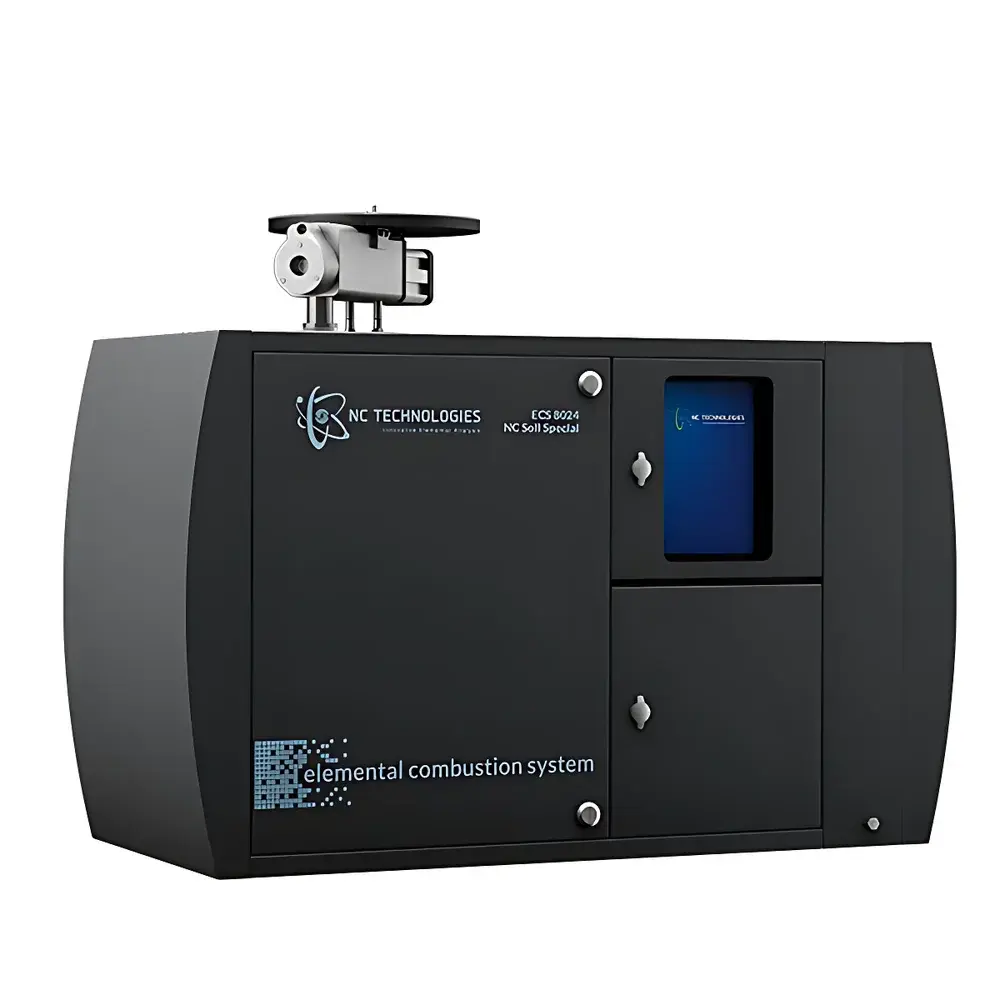
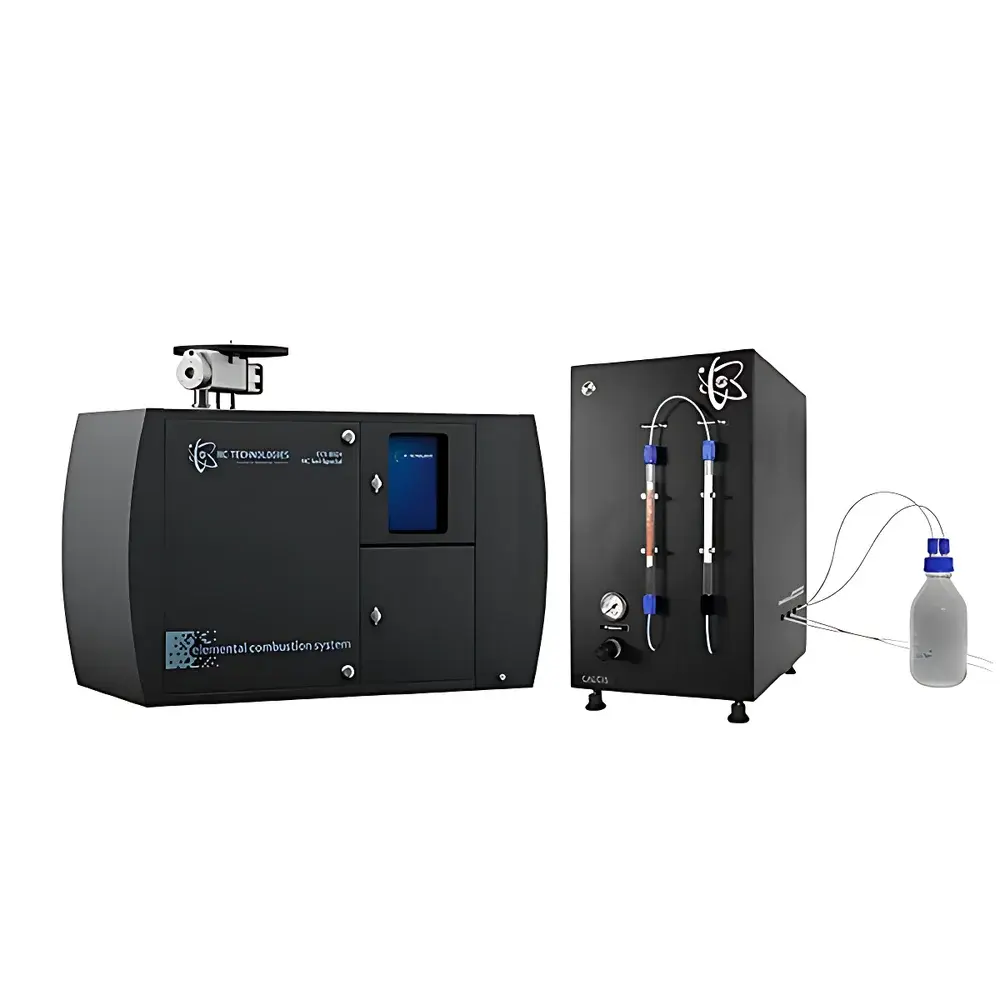
NC Technologies ECS 8024 NC SOIL SPECIAL Organic Elemental Analyzer for Soil Carbon and Nitrogen Analysis
| Brand | NC Technologies |
|---|---|
| Origin | Italy |
| Model | ECS 8024 NC SOIL SPECIAL |
| Detection Principle | High-Temperature Catalytic Combustion (Dumas Method) |
| Elements Measured | Total Carbon (TC), Total Nitrogen (TN) |
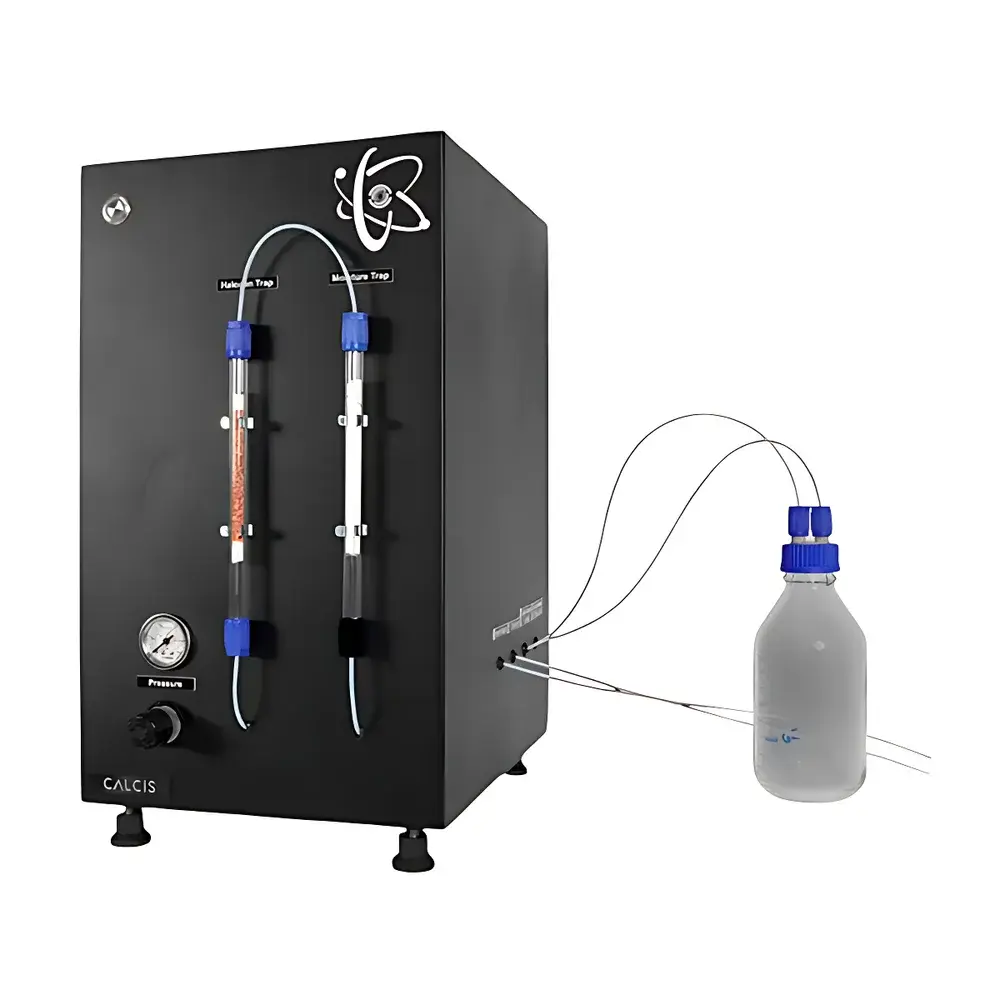
| Optional Coupling | TIC DISCOVER for Total Inorganic Carbon (TIC) |
| Detector Type | Thermal Conductivity Detector (TCD) |
| Column Temperature Range | 30–110 °C |
| Sample Types | Soils, Fertilizers, Sludges, Sediments, Plant Tissues |
| Automation Level | Fully Automated with Motorized/Pneumatic/Manual Sampler Options |
| Software Control | PC-based with Touchscreen Interface |
| Compliance Ready | Supports GLP/GMP audit trails, ASTM D5373, ISO 10694, USP <281>, EN 15936 |
Overview
The NC Technologies ECS 8024 NC SOIL SPECIAL is a fully automated organic elemental analyzer engineered specifically for the precise and reproducible quantification of total carbon (TC) and total nitrogen (TN) in complex solid environmental matrices. Built upon the Dumas combustion principle—high-temperature catalytic oxidation at 950–1100 °C in an oxygen-rich environment—the instrument converts all organic and inorganic carbon and nitrogen species in the sample into CO₂ and N₂, respectively. These gaseous products are then separated via isothermal gas chromatography on a packed column maintained between 30 °C and 110 °C, followed by quantitative detection using a high-stability thermal conductivity detector (TCD). Unlike Kjeldahl-based nitrogen analyzers or wet-chemistry TOC systems, the ECS 8024 delivers simultaneous C/N results in a single run without acid pretreatment or catalyst poisoning concerns, making it ideal for routine soil testing laboratories operating under ISO/IEC 17025 or USDA-NRCS method validation frameworks.
Key Features
- Soil-optimized combustion protocol with proprietary catalyst formulation resistant to silicate and chloride matrix interference
- Three interchangeable autosampler configurations: motor-driven carousel (up to 112 positions), pneumatic push-rod loader, and manual quartz boat insertion
- Real-time catalyst health monitoring with predictive lifetime estimation based on cumulative oxygen consumption and temperature cycling history
- Integrated touchscreen HMI with intuitive method wizard, user-level access control (admin/operator/technician), and embedded diagnostics
- No reference gas required—TCD baseline stability maintained via dual-beam compensation and active thermal shielding
- Modular architecture enabling seamless coupling with the TIC DISCOVER system for TC/TN/TIC/TOC workflows
- Low-pressure helium or argon carrier gas operation (≤120 kPa); optional He-free mode using synthetic air with enhanced signal-to-noise ratio
Sample Compatibility & Compliance
The ECS 8024 NC SOIL SPECIAL accepts untreated, homogenized solid samples ranging from 1–100 mg (typical soil load: 20–50 mg), including air-dried or freeze-dried soils, composts, biosolids, agricultural lime, biochar, plant tissues, and municipal sludge. It complies with multiple international standards for environmental analysis, including ASTM D5373 (standard test method for instrumental determination of carbon, hydrogen, and nitrogen in petroleum products and lubricants), ISO 10694 (soil quality — determination of organic and total carbon after dry combustion), EN 15936 (characterization of sewage sludge — determination of total carbon and nitrogen), and USP (elemental impurities – limits). When paired with the TIC DISCOVER module, the combined system satisfies EPA Method 9060A (inorganic carbon in soils) and supports full TC/TIC/TOC mass balance reporting required for carbon sequestration verification under Verra or GHG Protocol protocols.
Software & Data Management
Control and data acquisition are managed through NC’s proprietary EASY-ANALYZE™ software, a Windows-based platform compliant with FDA 21 CFR Part 11 requirements—including electronic signatures, role-based permissions, immutable audit trails, and secure data archiving. The software provides real-time chromatogram visualization, peak integration with customizable baselines, automatic calibration curve generation (linear, quadratic, or multi-point weighted), and batch report export in PDF, CSV, or LIMS-compatible XML formats. All method parameters—including combustion temperature, oxygen flow rate, column oven setpoint, and detector gain—are stored as version-controlled templates. System logs record every hardware event (e.g., valve actuation, furnace ramp, injector trigger), enabling full traceability during regulatory inspections or method transfer studies.
Applications
This analyzer serves critical functions across agro-environmental research, regulatory compliance labs, and carbon credit verification programs. Typical use cases include: routine soil health assessment for precision agriculture programs; monitoring carbon accrual in regenerative farming trials; speciation of carbon pools (labile vs. recalcitrant) via sequential oxidation protocols; nitrogen use efficiency (NUE) modeling in fertilizer trials; characterization of digestate and compost maturity; regulatory reporting for landfill cover soil specifications (e.g., EPA 40 CFR Part 258); and preparation of certified reference materials (CRMs) for inter-laboratory comparison studies. Its compatibility with stable isotope ratio mass spectrometry (IRMS) enables δ¹³C and δ¹⁵N fingerprinting when coupled via a universal interface module.
FAQ
What sample preparation is required prior to analysis?
Air-dried, finely ground (<250 µm) soil samples are loaded directly into quartz boats—no acid fumigation, sieving beyond standard lab practice, or pre-oxidation is needed.
Can the ECS 8024 measure sulfur or chlorine simultaneously with C/N?
No—this model is dedicated to C/N only. For multi-element capability (C/H/N/S/Cl), consult the ECS 8024 CHNS/O variant.
Is method validation support available for ISO 17025 accreditation?
Yes—NC Technologies provides documented IQ/OQ/PQ protocols, uncertainty budget templates per EURACHEM/CITAC Guide, and on-site method transfer assistance.
How does the system handle high-salt or high-clay content soils?
The optimized combustion tube geometry and platinum-rhodium catalyst formulation minimize ash adhesion and chloride-induced signal drift, validated up to 15% NaCl-equivalent content.
What maintenance intervals are recommended for routine operation?
Catalyst replacement every 10,000 injections; TCD filament inspection quarterly; GC column regeneration every 6 months; full system performance verification semiannually per ASTM D7213.





