
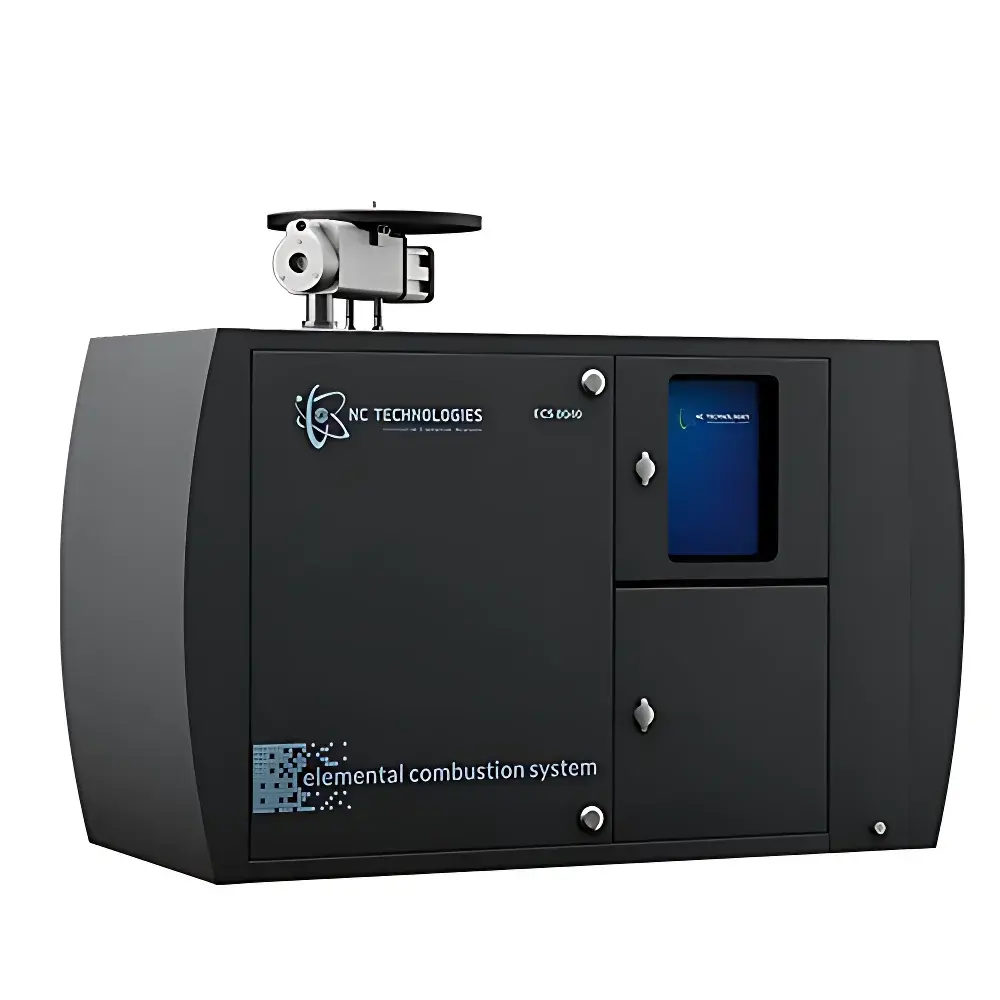
NC Technologies ECS 8040 Automated Elemental Analyzer
| Brand | NC Technologies |
|---|---|
| Origin | Italy |
| Model | ECS 8040 |
| Analysis Principle | High-Temperature Catalytic Combustion (Dumas Method) |
| Elements Measured | C, H, N, S (O optional) |
| Detection Method | Thermal Conductivity Detection (TCD) |
| Gas Separation | Isothermal Chromatographic Column (30–110 °C) |
| Automation Level | Fully Automated with Microprocessor Control and PC Integration |
| Sample Introduction Options | Manual, Pneumatic, Motorized Zero-Blank Autosampler |
| Compliance Ready | ASTM D5291, ISO 16968, USP <281>, EN 15104, DIN 51725 |
| Software Features | Real-Time Parameter Monitoring, Catalyst Life Tracking, Leak Detection, Audit Trail Logging (21 CFR Part 11–compliant mode available) |
Overview
The NC Technologies ECS 8040 Automated Elemental Analyzer is a high-precision, fully integrated combustion-based system engineered for quantitative determination of carbon (C), hydrogen (H), nitrogen (N), and sulfur (S) in organic matrices—optionally extended to oxygen (O) analysis via pyrolysis. It operates on the Dumas principle: samples are combusted quantitatively at temperatures up to 1,150 °C in an oxygen-rich environment over proprietary platinum- and chromium-based catalysts. The resulting gaseous effluent—CO₂, H₂O, N₂, SO₂ (and CO for O-mode)—is swept through a thermostatically controlled, high-resolution chromatographic column (30–110 °C isothermal operation). Element-specific peak separation is achieved via differential thermal conductivity, with detection performed by a dual-cell, low-drift TCD configured for maximum baseline stability and signal reproducibility. Unlike classical Kjeldahl or wet-chemical methods, the ECS 8040 eliminates acid digestion, mercury catalysts, and manual titrations—reducing analyst exposure, waste generation, and method variability.
Key Features
- Fully automated microprocessor-controlled combustion and gas separation sequence, synchronized with PC-based acquisition and reporting
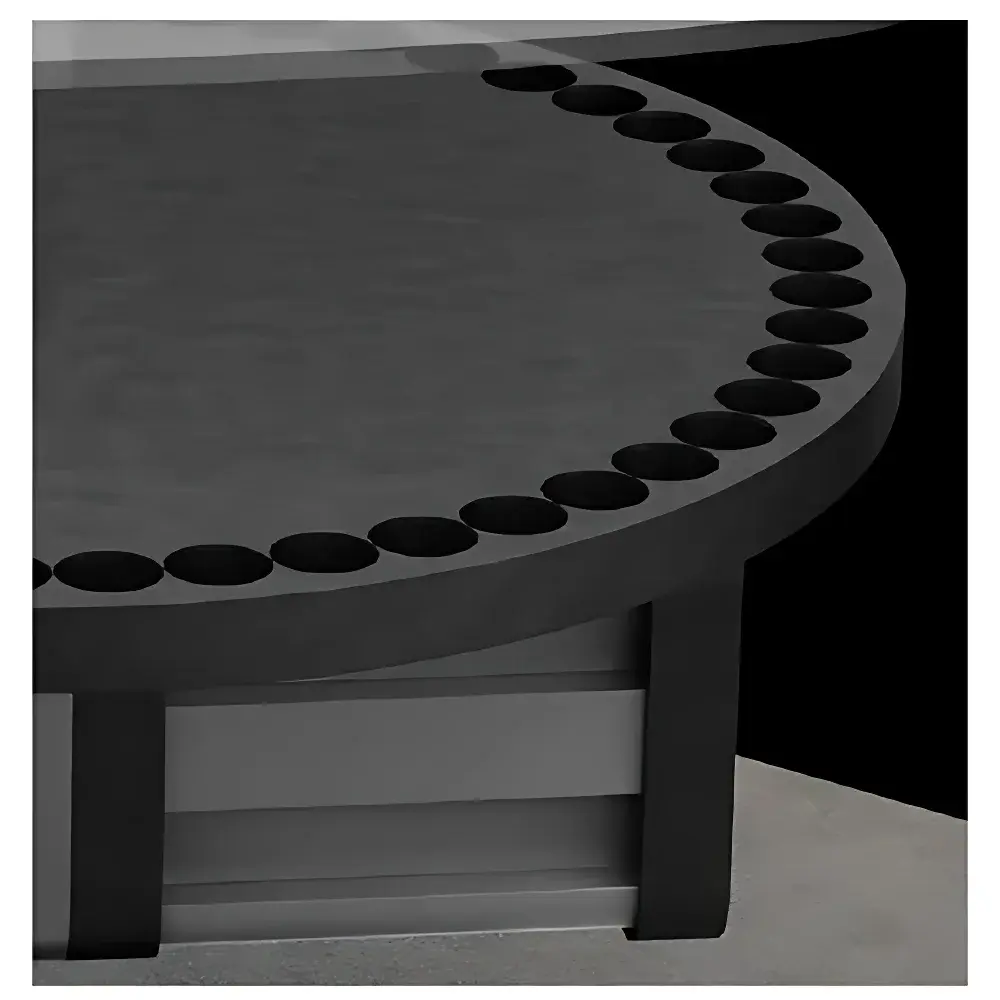
- Three interchangeable autosampler configurations: manual loading, pneumatic push-rod, and motorized zero-blank sampler (designed for trace-level and ultra-low-mass samples)
- Real-time consumables monitoring—including catalyst bed status, CuO/Co₃O₄ regeneration cycles, and desiccant saturation alerts
- Integrated automatic leak detection and pressure integrity verification prior to each run
- Oxygen dosing control with programmable pulse injection for optimized combustion efficiency and minimal blank contribution
- TCD detector with no reference gas requirement—eliminating calibration drift from reference flow instability
- Modular architecture enabling seamless coupling to external mass spectrometers (e.g., IRMS) for δ¹³C, δ¹⁵N, δ³⁴S, and δ¹⁸O isotopic ratio analysis
- Low-power standby mode reducing He/N₂ carrier consumption by >70% and enabling unattended overnight operation
Sample Compatibility & Compliance
The ECS 8040 accommodates solid, liquid, and viscous samples across diverse matrices—including pharmaceutical actives, polymers, soils, foodstuffs, biofuels, and environmental solids—with sample masses ranging from 0.1 mg to 500 mg. Its semi-micro weighing capability ensures statistical representativeness for heterogeneous materials (e.g., plant tissues, composite powders, or mineral ores), where sub-milligram heterogeneity critically impacts result reproducibility. The system complies with internationally recognized standards for elemental analysis: ASTM D5291 (petroleum products), ISO 16968 (soils and sediments), USP <281> (pharmaceutical assay), EN 15104 (solid biofuels), and DIN 51725 (coal and coke). Optional 21 CFR Part 11–enabled software provides electronic signatures, audit trails, and role-based access control for GLP/GMP-regulated laboratories.
Software & Data Management
The ECS 8040 is operated via NC Technologies’ ElementSoft™ v4.x platform—a Windows-native application supporting real-time chromatogram visualization, peak integration with customizable baselines, and automated stoichiometric correction (e.g., for matrix-dependent combustion efficiency). All instrument parameters—including furnace temperature ramps, O₂ pulse timing, column oven setpoints, and TCD gain—are stored with timestamped metadata. Raw data files (.raw) and processed reports (.pdf/.xlsx) are archived with SHA-256 checksums. Batch processing, QC flagging (e.g., %RSD >2.0 across triplicates), and LIMS export (ASTM E1384, HL7) are natively supported. Software validation packages—including IQ/OQ/PQ documentation templates—are provided for regulated environments.
Applications
- Pharmaceutical quality control: assay of C/H/N content in APIs and excipients per ICH Q5C and USP monographs
- Environmental testing: total organic carbon (TOC), nitrogen, and sulfur speciation in soils, sludges, and fly ash
- Food & agriculture: protein estimation (via N × 6.25), adulteration screening (e.g., melamine detection), and nutrient labeling compliance
- Materials science: elemental composition verification of carbon blacks, graphene derivatives, and flame-retardant polymers
- Academic research: stoichiometric validation of synthetic intermediates, coordination compounds, and MOFs
- Energy sector: fuel characterization (bio-oil, coal, biomass pellets) under ISO 1928 and ASTM D3176
FAQ
What sample types are compatible with the ECS 8040?
Solid powders, granules, tablets, liquids, oils, and slurries—provided they are non-explosive and thermally stable below 1,150 °C. Halogenated or highly fluorinated compounds require quartz liner replacement and modified catalyst protocols.
Can the ECS 8040 quantify oxygen without additional hardware?
Yes—the O-module integrates a separate pyrolysis furnace (900 °C) and tungsten carbide reduction column; no external reactor is needed. Oxygen is calculated from CO yield using certified benzoic acid and sucrose standards.
Is method validation support included?
NC Technologies supplies application notes, certified reference material (CRM) test protocols (e.g., NIST SRM 2782, 85d), and full validation kits—including linearity, LOD/LOQ, precision, and robustness assessments.
How often must catalysts be replaced?
Under typical usage (50 samples/day), the primary combustion catalyst lasts ≥1,200 runs; the reduction catalyst ≥800 runs. The software tracks cumulative furnace cycles and recommends replacement based on TCD signal decay trends.
Does the system support remote diagnostics?
Yes—ElementSoft™ includes secure VNC-enabled remote access (with user-defined permission tiers) and automated error logging with diagnostic code mapping to NC’s global service portal.
Related Products







