
NCS NC-C-SC-AN Phased Array Ultrasonic Testing System for Bars
| Brand | NCS (China Iron and Steel Research Institute Group) |
|---|---|
| Origin | Beijing, China |
| Manufacturer | Yes |
| Country of Origin | China |
| Model | NC-C-SC-AN Series for Bar Inspection |
| Pricing | Upon Request |
| Probe Configuration | 128-element array, max 32 elements fired per group |
| Static Sensitivity | Φ0.8 mm flat-bottom hole at depths of ½, ¼, and 1/8 bar diameter (≥5 mm min depth), SNR > 12 dB |
| Dynamic Sensitivity | Φ0.8 mm FBH at ≤0.5 m/s |
| End Blind Zone | <30 mm |
| Near-Surface Blind Zone | None |
| False Negative Rate | 0% |
| Inspection Speed | ≥60 m/min |
| Scan Modes | Linear Scan, Sector Scan, Dynamic Depth Focusing (DDF) |
| Applicable Standards | GB/T 4162, ISO 18563-1:2015, ISO 18563-2:2015, ASTM E2700 |
| Material Coverage | Carbon steel, alloy steel, bearing steel, spring steel, cold-heading steel |
| Bar Diameter Range | 16–65 mm (customizable) |
| Bar Length Range | 6–12 m |
| Surface Roughness Requirement | ≤25 µm Ra |
Overview
The NCS NC-C-SC-AN Phased Array Ultrasonic Testing (PAUT) System for Bars is an industrial-grade, fully integrated non-destructive testing platform engineered for high-throughput, high-reliability volumetric inspection of long metallic bars and billets. Unlike conventional pulse-echo ultrasonic systems requiring mechanical probe rotation or complex manipulator arms, this system leverages electronic beam steering and dynamic focusing—principles rooted in Huygens’ wavefront synthesis—to achieve full volumetric coverage without moving the transducer assembly relative to the part. The core measurement principle relies on coherent summation of time-delayed signals from individual piezoelectric elements within a 128-element linear phased array probe. By applying programmable delay laws, the system synthesizes steerable, dynamically focused beams across variable depths and angles—enabling real-time B-scan, C-scan, S-scan, and A-scan visualization simultaneously. Designed specifically for continuous production environments, it meets stringent requirements for repeatability, traceability, and regulatory compliance in metallurgical quality assurance.
Key Features
- Electronic beam steering and dynamic depth focusing (DDF) eliminate mechanical rotation, reducing wear, maintenance intervals, and alignment drift—resulting in superior long-term measurement stability.
- Multi-scan mode support: Linear scan (sequential element group activation), sector scan (angular sweep via variable delay laws), and DDF (simultaneous multi-depth focusing with post-processed beamforming).
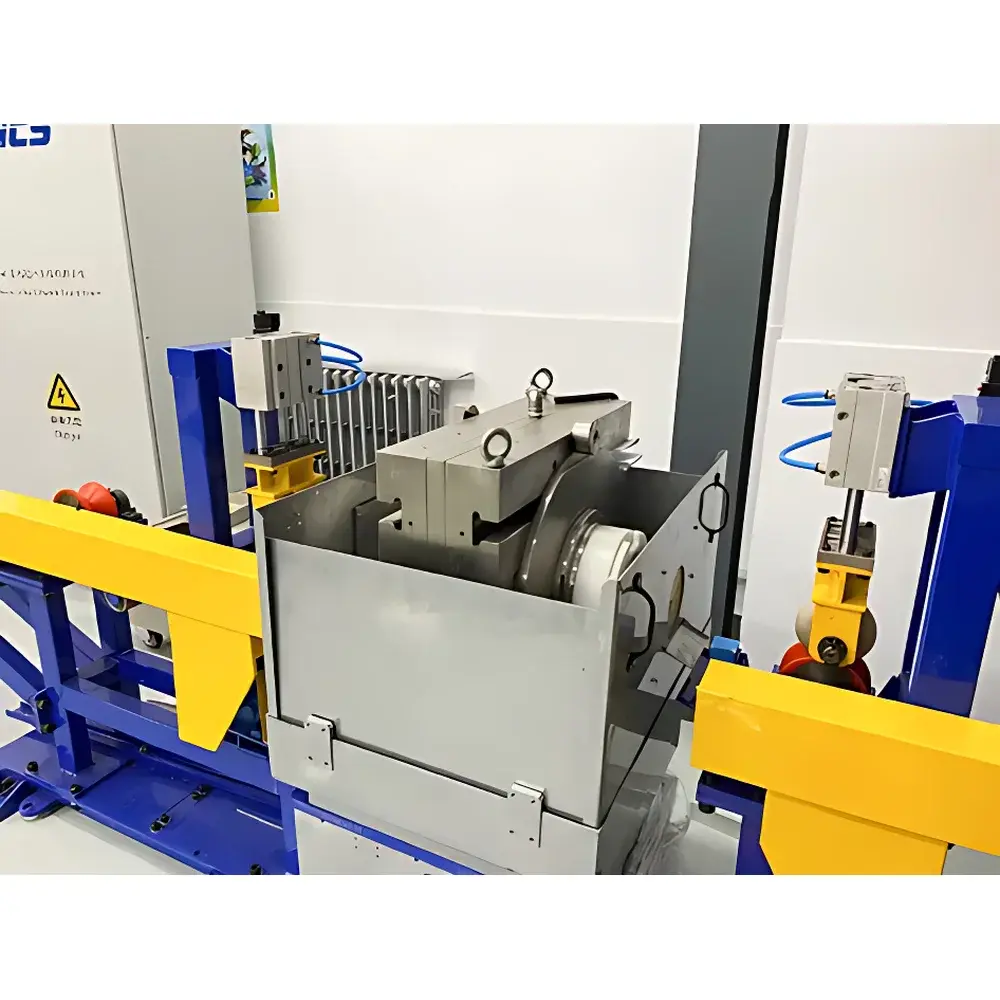
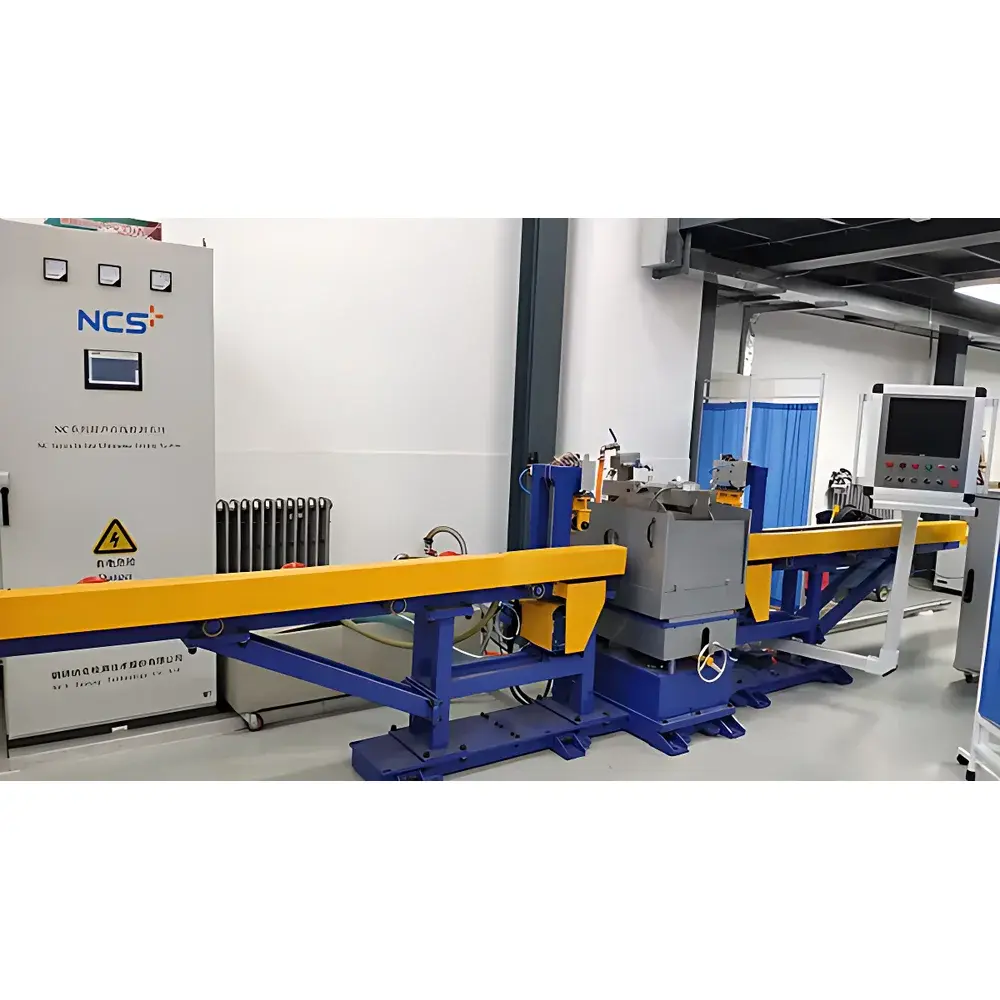
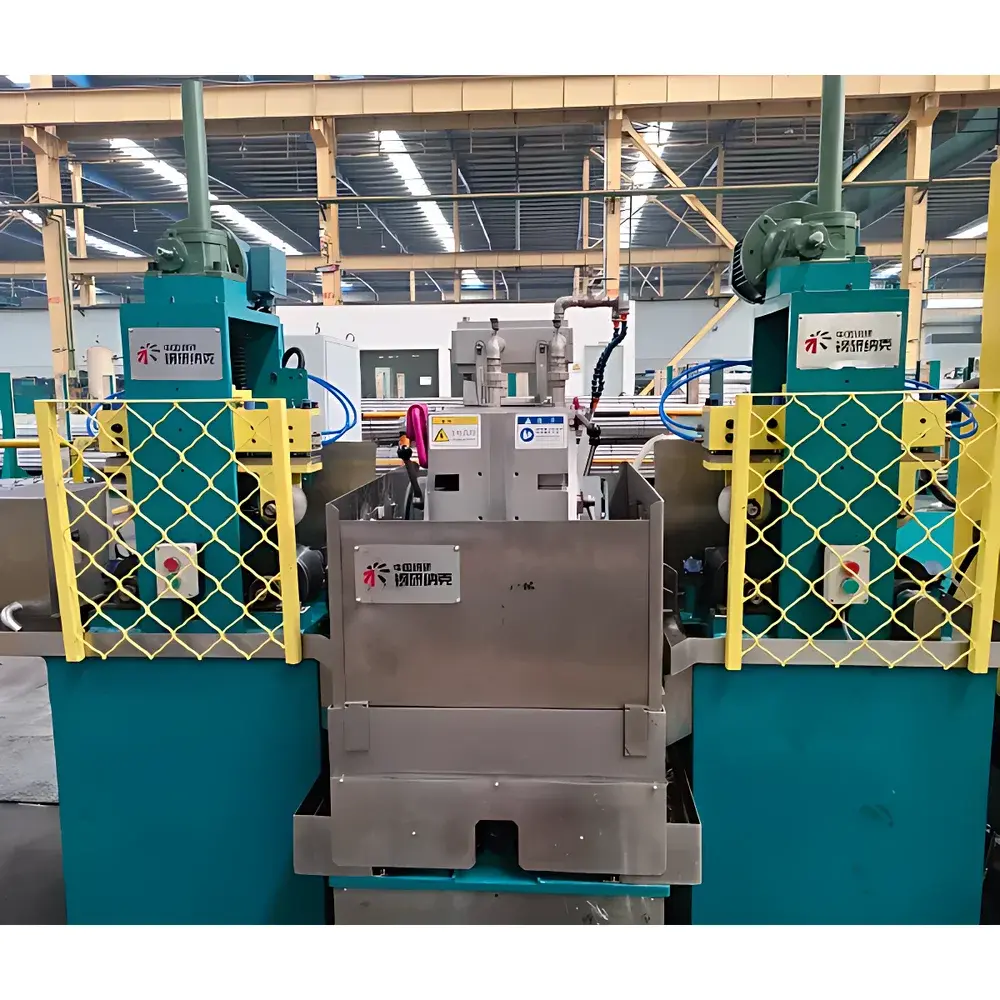
- Integrated V-groove roller conveyor with pneumatically actuated top-pressure rollers; end detection via photoelectric sensors ensures automatic engagement/disengagement—minimizing operator intervention and preventing damage during entry/exit.
- Modular hardware architecture supports scalable channel count configurations, enabling parallel acquisition across multiple zones for throughput optimization up to ≥60 meters per minute.
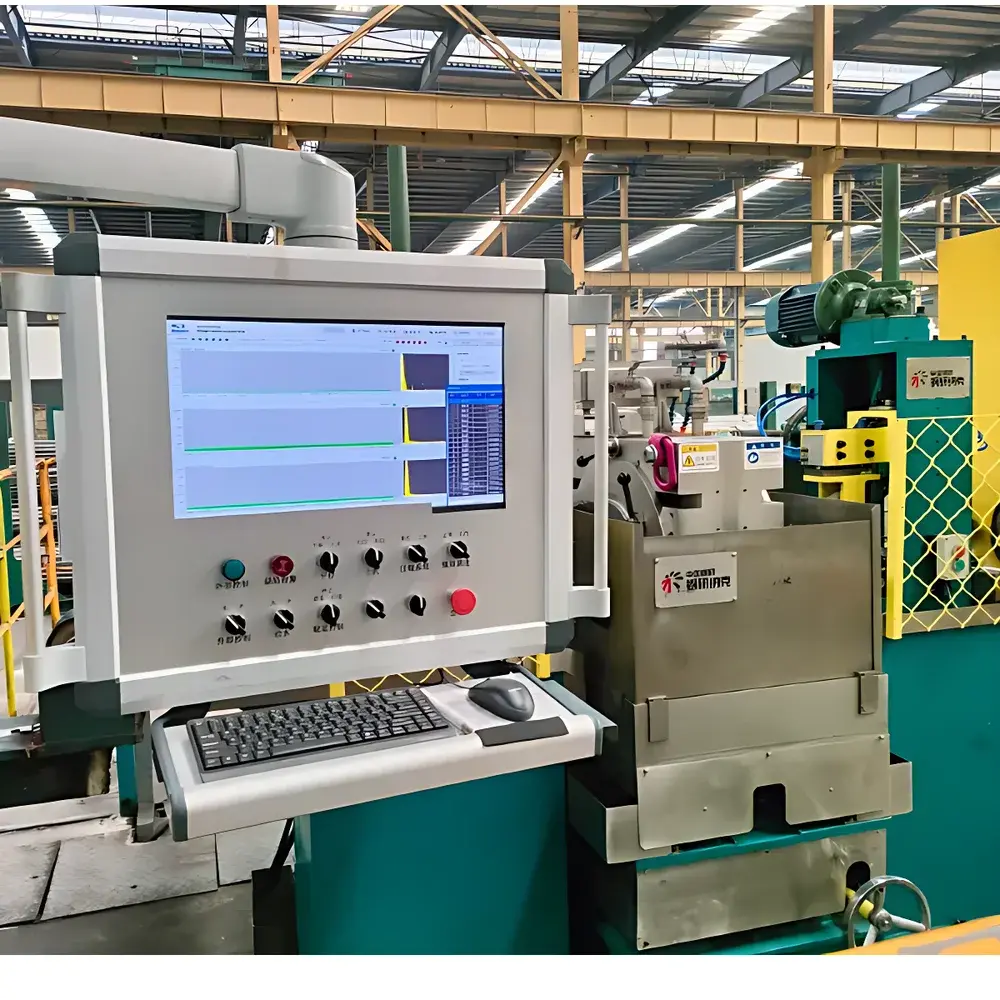
- Real-time multi-view display (A-, B-, C-, and S-scan) with synchronized defect mapping, color-coded amplitude thresholds, and configurable gating logic for precise signal discrimination.
- Robust water-coupled immersion scanning design with closed-loop filtration and temperature-controlled recirculation—ensuring consistent acoustic coupling and minimizing bubble-induced noise.
Sample Compatibility & Compliance
The NC-C-SC-AN system is validated for seamless inspection of hot-rolled and cold-drawn bars ranging from 16 mm to 65 mm in diameter and up to 12 meters in length. It accommodates diverse ferrous alloys including carbon steels (e.g., SAE 1045), low-alloy steels (e.g., 4140), bearing steels (e.g., GCr15), spring steels (e.g., 60Si2Mn), and cold-heading grades (e.g., SWRCH35K). Surface roughness must not exceed 25 µm Ra to maintain stable water coupling and minimize scattering artifacts. All inspection protocols are aligned with internationally recognized standards: GB/T 4162–2017 (Ultrasonic Testing of Forged Steel Bars), ISO 18563-1:2015 (PAUT equipment characterization), ISO 18563-2:2015 (PAUT application guidelines), and ASTM E2700–21 (Standard Practice for PAUT of Metallic Products). The system architecture supports audit-ready documentation per ISO 9001, IATF 16949, and GLP/GMP frameworks, including full traceability of calibration records, operator logs, and inspection parameters.
Software & Data Management
The embedded inspection software provides a deterministic, deterministic real-time acquisition engine compliant with EN 13588:2016 requirements for PAUT data recording. Raw RF data is stored in ASME-compliant binary format with metadata embedding—including timestamp, material grade, diameter, speed, focus law ID, gain settings, and environmental conditions (water temperature, ambient humidity). Post-processing tools include dynamic depth gain correction (DGC), lateral noise suppression filters, and automated defect sizing per ISO 10893-11. Export options include PDF reports with embedded images and measurements, CSV datasets for statistical process control (SPC), and DICOM-RT compatible files for integration into enterprise-level QA/QC databases. Software validation documentation includes IQ/OQ/PQ protocols and supports FDA 21 CFR Part 11 compliance when deployed in regulated manufacturing environments.
Applications
- Automated in-line inspection of rolled bars prior to heat treatment or machining—detecting subsurface inclusions, pipe defects, centerline segregation, and forging laps.
- Final quality gate for bearing steel billets, verifying absence of micro-shrinkage cavities and carbide banding at depths exceeding 10 mm from surface.
- Verification of cleanliness in spring steel used for automotive valve springs—identifying non-metallic stringers ≥0.2 mm in height with axial resolution <0.5 mm.
- Production monitoring of cold-heading wire—ensuring freedom from seam defects, laminations, and decarburization-related discontinuities.
- Rejection screening of recycled steel billets where internal porosity and oxide stringers pose critical service risks.
FAQ
What standards does the NC-C-SC-AN system comply with for certification and validation?
It conforms to GB/T 4162–2017, ISO 18563-1/2:2015, ASTM E2700–21, and EN 13588:2016. Calibration procedures follow ISO 16810 and ISO 16828 for sensitivity verification and resolution assessment.
Can the system inspect bars with diameters outside the 16–65 mm range?
Yes—custom mechanical modules and focal law libraries can be developed for diameters as small as 10 mm or as large as 120 mm, subject to probe availability and water column optimization.
Is near-surface resolution truly free of blind zones?
The system achieves zero near-surface blind zone through front-wall echo suppression algorithms and optimized pulse-receive timing—validated using SDH reflectors positioned at 0.2 mm depth.
How is traceability ensured for regulatory audits?
Every inspection record contains immutable digital signatures, time-stamped operator IDs, full parameter logs, and raw waveform archives—structured to satisfy ISO 17025 and FDA 21 CFR Part 11 requirements.
What maintenance is required for sustained performance?
Scheduled quarterly verification of water conductivity (<5 µS/cm), transducer cable continuity, and encoder synchronization accuracy; annual recalibration of time-of-flight and gain linearity per ISO 2400.



