
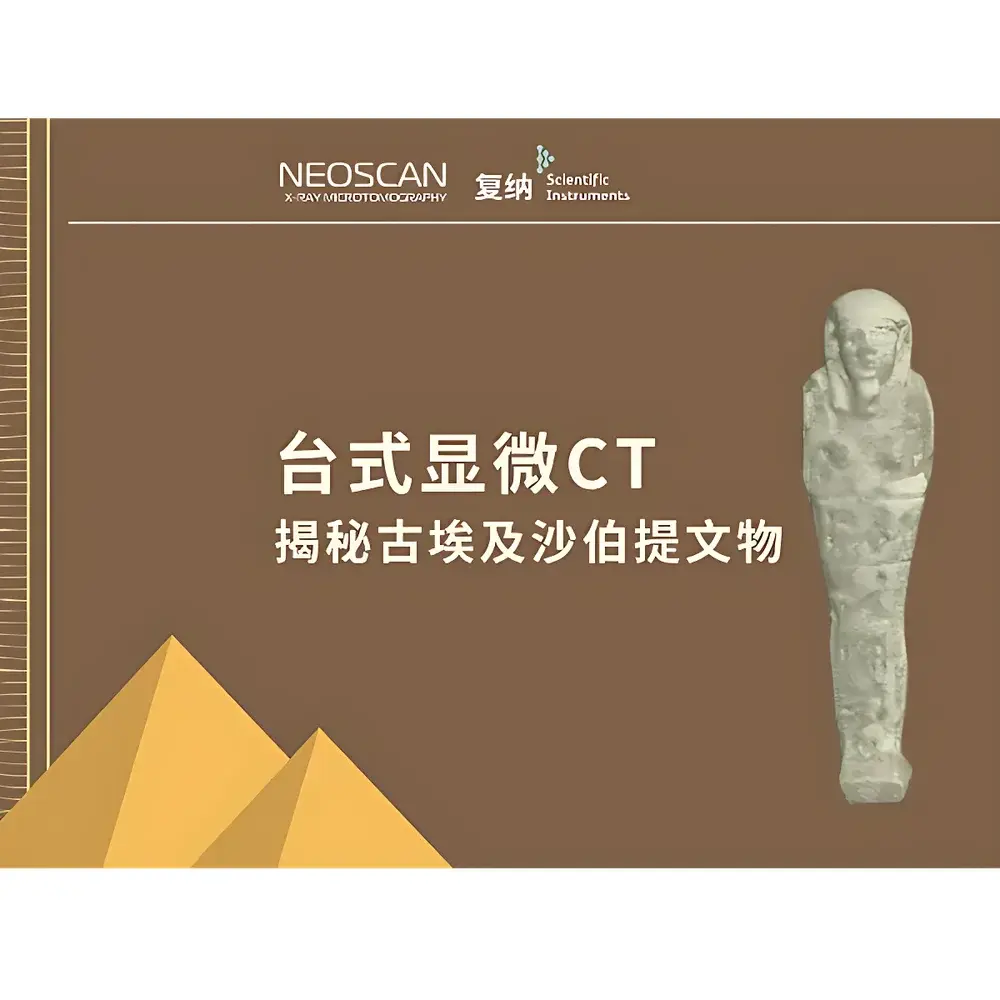
Neoscan N70 Desktop Micro-CT System for Archaeological Research
| Brand | Neoscan |
|---|---|
| Origin | Belgium |
| Detector Type | Flat-Panel Detector |
| Scan Mode | Sample Rotation Only (RO) |
| Spatial Resolution | 2 µm |
| X-ray Energy | 110 kV |
| Field of View | 100 mm × 163 mm |
| Maximum Sample Weight | 20 kg |
| System Dimensions | 1200 mm × 640 mm × 520 mm |
Overview
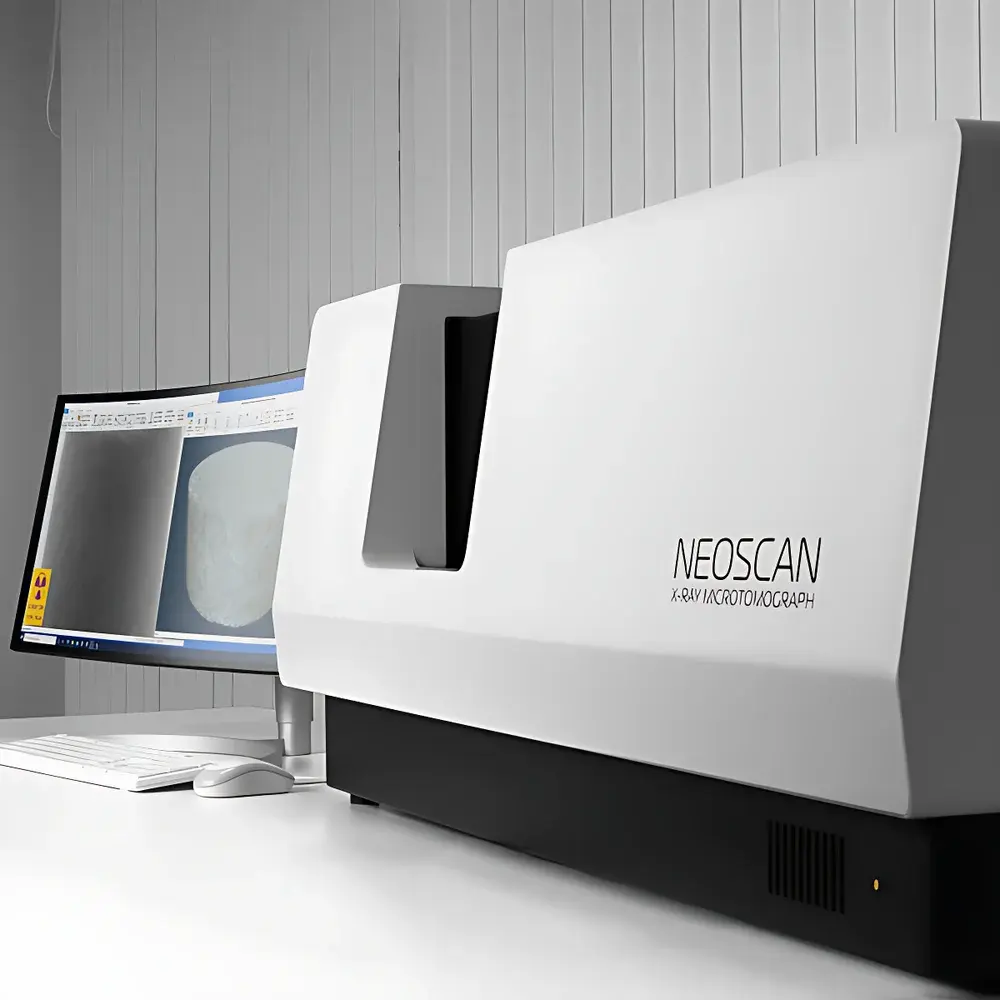
The Neoscan N70 Desktop Micro-CT System is an industrial-grade, benchtop X-ray computed tomography platform engineered specifically for non-destructive, high-fidelity 3D characterization of archaeological artifacts and cultural heritage objects. Operating on the principle of cone-beam micro-computed tomography, the system employs a fixed microfocus X-ray source and flat-panel detector while rotating the sample through 360°—a geometry optimized for stability, repeatability, and minimal motion-induced artifacts. With isotropic spatial resolution down to 2 µm and a maximum photon energy of 110 kV, the N70 delivers quantitative volumetric data suitable for sub-surface morphology reconstruction, internal defect mapping, and microstructural analysis without physical contact or sample preparation. Its compact footprint and integrated shielding meet international radiation safety standards (IEC 61000-6-3, IEC 61000-6-4), enabling deployment in museum conservation labs, university archaeometry facilities, and heritage science centers under standard electrical and ventilation conditions.
Key Features
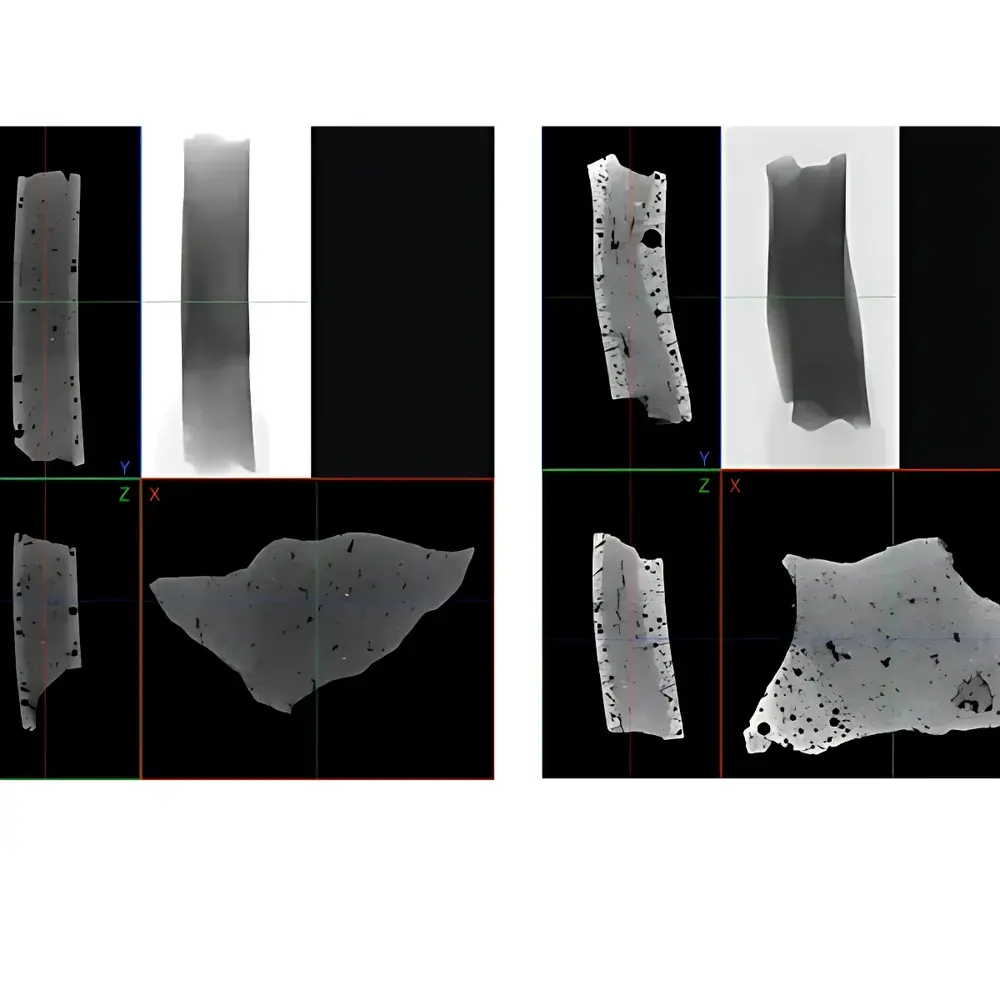
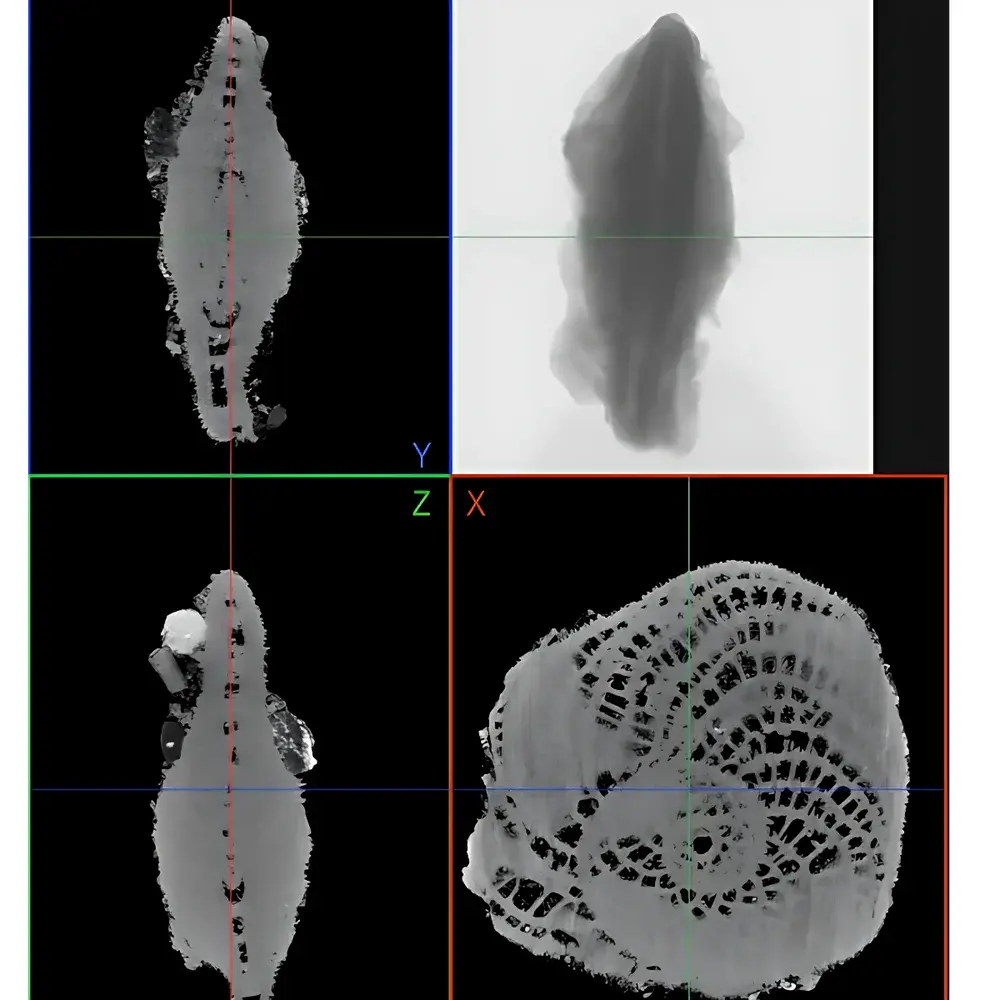
- Sub-2 µm isotropic voxel resolution achievable under optimal acquisition parameters, enabling visualization of fine ceramic pore networks, metal grain boundaries, and organic fiber alignment in degraded textiles.
- Flat-panel detector with high dynamic range (>16-bit depth) and low electronic noise, ensuring robust signal-to-noise ratio across heterogeneous density contrasts typical of composite archaeological materials (e.g., calcified bone within resinous matrix, gilded bronze over corroded copper core).
- Motorized precision rotation stage with angular accuracy ≤ 0.01° and repeatable positioning tolerance < ±2 µm, critical for artifact-centric scans requiring multi-angle registration and longitudinal monitoring.
- Integrated hardware-based beam hardening correction and scatter rejection algorithms, minimizing cupping artifacts and improving quantitative CT number (HU) linearity for comparative density analysis across material classes.
- Modular gantry design supporting optional add-ons including phase-contrast enhancement kits and dual-energy scanning modules for elemental differentiation in future upgrades.
Sample Compatibility & Compliance
The N70 accommodates archaeological specimens up to 20 kg and 163 mm in diameter, covering common artifact categories: ceramic vessels, bronze ritual objects, fossilized bone fragments, mummified tissue samples, wooden funerary masks, and composite inlaid jewelry. All scanning protocols adhere to UNESCO’s “Principles for the Conservation of Heritage Sites” and ICCROM guidelines on minimally invasive diagnostics. Data acquisition workflows are compatible with ISO 18562-2 (biocompatibility of medical devices) and ASTM E1441-22 (standard guide for computed tomography), providing traceable metrology frameworks for peer-reviewed publication and regulatory documentation. Radiation exposure per scan remains below 50 µSv—well within occupational limits defined by ICRP Publication 103 and EU Directive 2013/59/Euratom—ensuring safe operation by trained conservators without dedicated radiological licensing.
Software & Data Management
Acquisition and reconstruction are managed via Neoscan’s proprietary CT Studio v5.2 software suite, compliant with FDA 21 CFR Part 11 requirements for electronic records and signatures. The platform includes audit trail logging, user role-based access control, and encrypted DICOM 3.0 export with embedded metadata (scan parameters, calibration logs, operator ID). Reconstruction leverages iterative SART (Simultaneous Algebraic Reconstruction Technique) and GPU-accelerated FDK algorithms, producing isotropic 32-bit TIFF stacks suitable for downstream segmentation in Avizo Fire, Dragonfly, or open-source tools like 3D Slicer. Exported volume data supports FAIR (Findable, Accessible, Interoperable, Reusable) principles through integration with institutional digital repositories using standardized schemas (e.g., CIDOC-CRM extensions for cultural heritage objects).
Applications
- Archaeometric Provenance Studies: Quantitative analysis of clay matrix porosity, temper inclusion size distribution, and firing-induced microcrack networks in ancient ceramics to infer regional production technologies and trade routes.
- Non-Invasive Metallography: Visualization of casting cores, cold-working deformation bands, and corrosion front progression in bronze statuary—enabling metallurgical attribution without sectioning.
- Paleopathological Assessment: High-resolution 3D rendering of skeletal trauma, dental caries progression, and biomechanical stress markers in human remains from burial contexts.
- Conservation Decision Support: Pre-intervention volumetric quantification of delamination extent in polychrome wood panels or plaster detachment in wall paintings, informing consolidation strategy selection.
- Digital Archiving & Replication: Generation of geometrically accurate, mesh-ready STL files for archival storage, virtual exhibition, and CNC-machined replication of fragile originals.
FAQ
Is the N70 suitable for scanning fragile organic materials such as desiccated plant remains or parchment?
Yes—the system’s low-dose acquisition modes and variable kV/mA settings allow optimization for low-Z materials; combined with phase-sensitive reconstruction, it preserves surface texture and internal laminar structure without dehydration or coating.
Can reconstructed volumes be used for finite element analysis (FEA) of mechanical behavior?
Absolutely—exported segmented binary volumes maintain topological fidelity and can be directly imported into ANSYS Mechanical or COMSOL Multiphysics after mesh generation using native smoothing and boundary layer controls.
Does Neoscan provide validation protocols for archaeological use cases?
Yes—each instrument ships with NIST-traceable resolution phantoms (MTF, DQE), density calibration rods (hydroxyapatite, aluminum, PMMA), and application-specific SOPs aligned with EN 16092:2021 (non-destructive testing of cultural property).
How is data interoperability ensured with existing museum collection management systems (CMS)?
CT Studio supports batch metadata injection via CSV/XML templates conforming to CDWA Lite and LIDO schemas; direct API integration with KE EMu and CollectiveAccess is available under extended support contracts.
What training and technical support options are included with purchase?
Neoscan provides on-site installation qualification (IQ), operational qualification (OQ), and user certification workshops covering GLP-aligned scanning, reconstruction QA/QC, and DICOM archive compliance—delivered by certified archaeometrists with field experience in Egyptology and Near Eastern studies.



