
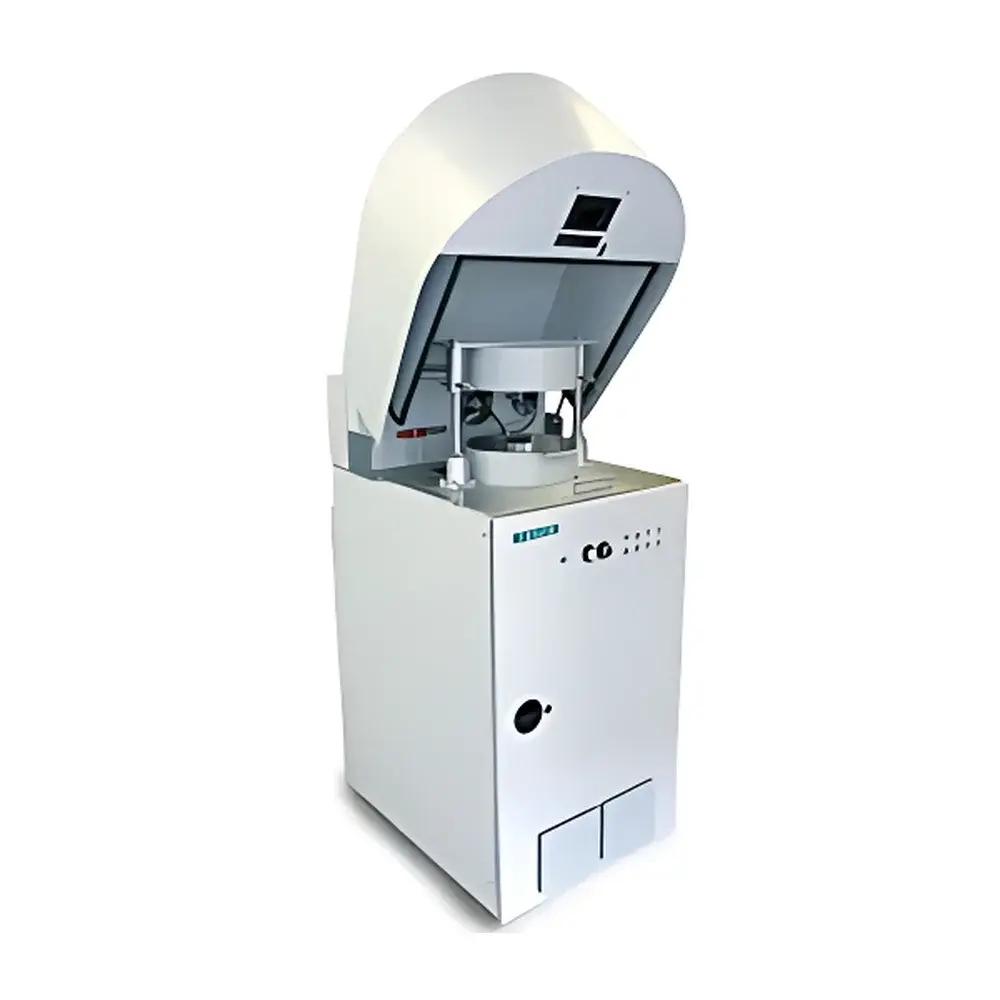
NETZSCH ARC 244 Accelerating Rate Calorimeter
| Brand | NETZSCH |
|---|---|
| Origin | Germany |
| Model | ARC 244 |
| Temperature Range | RT to 500 °C |
| Temperature Tracking Rate | 0–20 °C/min |
| Minimum Detectable Heat Flow Rate | 0.01 °C/min |
| Pressure Range | 0–200 bar |
| Optional Features | Integrated Stirring, Venting Module, VARIPHI™ Thermal Inertia Compensation Technology |
| Safety Architecture | Dual-Redundant Interlock System, Top-Lifting Furnace Assembly, Tubular Heater Design for Minimized Thermal Backflow |
Overview
The NETZCH ARC 244 Accelerating Rate Calorimeter is a high-precision, adiabatic calorimetric system engineered for rigorous thermal safety assessment of reactive chemical systems under near-zero heat loss conditions. Based on the fundamental principle of adiabatic temperature tracking—where the instrument actively adjusts its furnace temperature to match the sample’s self-heating rate—the ARC 244 enables quantitative determination of onset temperatures, self-heating rates, pressure rise kinetics, time-to-maximum-rate (TMR), and adiabatic temperature rise (ΔTad). Designed and manufactured in Selb, Germany, it complies with internationally recognized test protocols including ASTM E698, ASTM E1981, ISO/IEC 17025-accredited laboratory practices, and EU REACH Annex VII requirements for thermal stability evaluation. Its core architecture integrates a thermally isolated reaction chamber, precision-matched thermocouple arrays, and real-time pressure transduction—ensuring traceable, reproducible data essential for process hazard analysis (PHA), design of emergency relief systems (DIERS), and regulatory submissions to authorities such as the U.S. Chemical Safety Board (CSB), EU ECHA, and FDA for pharmaceutical intermediate screening.
Key Features
- Tubular heater configuration minimizes thermal backflow and improves adiabatic fidelity by reducing radial heat conduction losses during exothermic events.
- Top-lifting furnace assembly enables rapid, tool-free sample insertion and retrieval while maintaining mechanical alignment integrity and operator safety.
- Integrated measurement wizard streamlines test method definition—including ramp-and-hold, heat-wait-search, and dynamic tracking modes—reducing operator dependency and method transfer variability.
- VARIPHI™ technology—a patented thermal inertia compensation algorithm—dynamically corrects for heat capacity lag between the sample cell and surrounding sensor array, delivering improved accuracy in low-thermal-mass or highly transient reactions.
- Dual-redundant hardware interlocks (mechanical + electronic) prevent operation outside defined pressure/temperature safety envelopes and enforce automatic shutdown upon threshold violation.
- Modular accessory support includes optional magnetic stirring for heterogeneous mixtures and automated venting modules compliant with ISO 8503-2 for controlled gas release quantification.
Sample Compatibility & Compliance
The ARC 244 accommodates standard 2–10 mL stainless steel or Hastelloy sample cells with hermetic sealing, suitable for solids, slurries, viscous liquids, and energetic formulations—including battery electrolytes, nitrocellulose-based propellants, API intermediates, polymerization initiators, and coal dust suspensions. Cell geometries are validated per UN Test Series H (UN Manual of Tests and Criteria) and meet ASTM D6186 requirements for adiabatic calorimetry of hazardous materials. All firmware and calibration routines are traceable to PTB (Physikalisch-Technische Bundesanstalt) standards. The system supports GLP-compliant audit trails and meets 21 CFR Part 11 requirements when paired with NETZSCH’s ThermoKinetics software suite.
Software & Data Management
Controlled via NETZSCH ThermoKinetics v5.x, the ARC 244 provides full IEC 62443-aligned cybersecurity architecture, role-based user access, electronic signatures, and immutable data logging. Raw thermal and pressure time-series data are stored in HDF5 format with embedded metadata (operator ID, calibration certificate IDs, environmental conditions). Automated reporting templates generate PHA-ready outputs aligned with CCPS Guidelines, NFPA 495, and EU CLP Annex VI classification criteria. Export options include CSV, XML, and PDF with embedded digital signatures for regulatory submission.
Applications
- Chemical process safety: Determination of TMRad, ΔTad, and Pmax for runaway reaction modeling in batch and continuous reactors.
- Battery safety R&D: Thermal abuse testing of Li-ion cathode/anode slurries, electrolyte decomposition kinetics, and SEI layer instability thresholds.
- Pharmaceutical development: Screening of oxidative degradation pathways in APIs, excipient compatibility studies, and stability-indicating method validation.
- Energetic materials characterization: Sensitivity profiling of explosives, propellants, and pyrotechnic compositions under simulated storage and transport conditions.
- Fuel and lubricant formulation: Oxidative induction time (OIT) prediction, deposit formation propensity, and thermal aging behavior of base oils and additives.
FAQ
What distinguishes the ARC 244 from conventional differential scanning calorimeters (DSC)?
Unlike DSC—which measures relative heat flow under controlled heating rates—the ARC 244 operates in true adiabatic mode, dynamically matching furnace temperature to sample self-heating, thereby enabling extrapolation to real-world thermal runaway scenarios.
Can the ARC 244 be used for low-energy reactions such as enzymatic catalysis?
Yes, provided the reaction generates measurable exothermicity above the 0.01 °C/min detection limit; however, for sub-milliwatt-scale biological processes, isothermal microcalorimetry (IMC) remains more appropriate.
Is VARIPHI™ technology applicable to all sample types and cell configurations?
VARIPHI™ requires prior thermal characterization of the specific cell type and is pre-calibrated for standard NETZSCH ARC cells; custom vessels require individual validation per ISO/IEC 17025 clause 5.4.2.
Does the system support remote monitoring and alarm notification?
Yes—via optional Ethernet/IP interface and NETZSCH CloudLink gateway, enabling real-time status dashboards, SMS/email alerts on safety threshold breaches, and encrypted remote diagnostics.
How frequently must the system undergo recalibration?
Annual traceable calibration is recommended per ISO/IEC 17025; pressure transducers require biannual verification, and thermocouple reference checks should be performed before each critical test campaign.



