Neuron SpikerBox Pro by Backyard Brains
| Brand | Backyard Brains |
|---|---|
| Origin | USA |
| Model | Neuron SpikerBox Pro |
| Sampling Rate | 10 kS/s (2-channel) |
| Frequency Range | 220–3100 Hz |
| Max Sound Pressure Level | 104 dB SPL |
| Neuronal Signal SNR | 30 dB |
| Battery Life | 4 h (full-volume audio mode), 18 h (recording-only mode) |
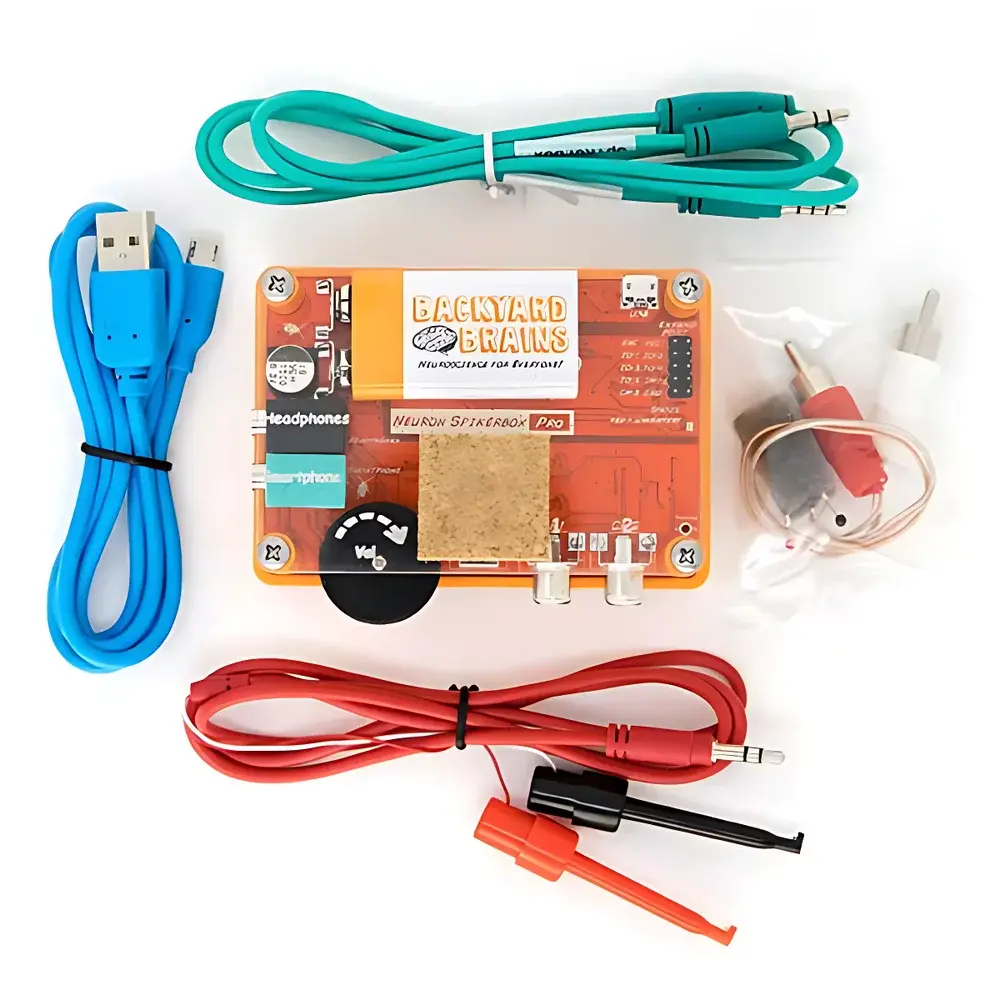
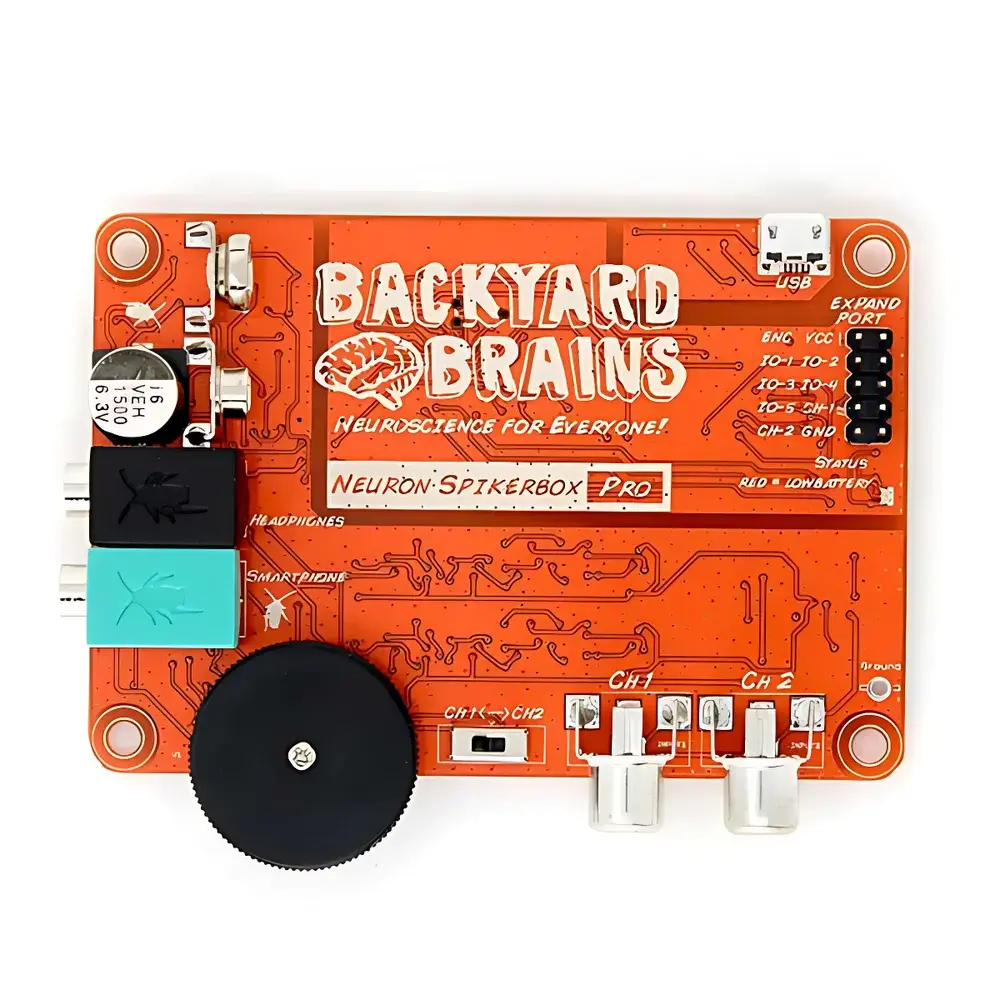
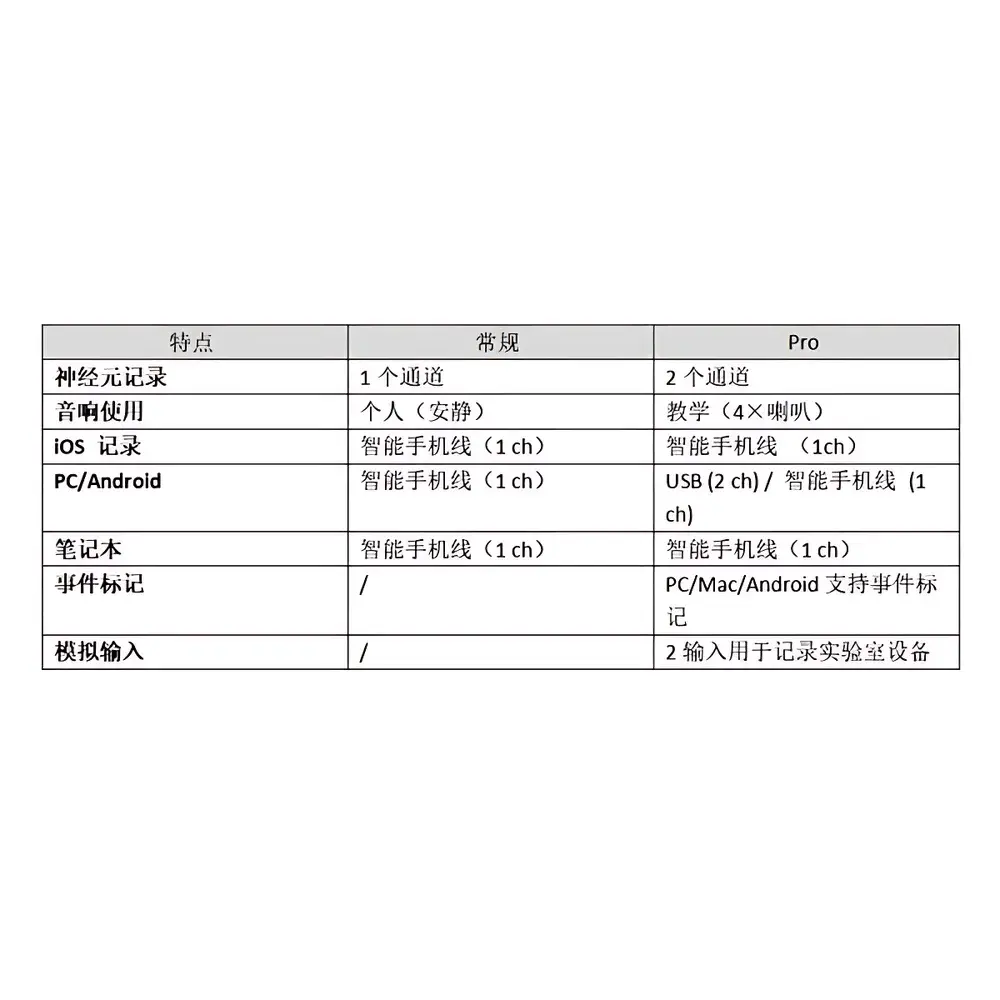
| Outputs | USB Micro-B, 3.5 mm headphone jack, smartphone audio interface, 2 analog outputs |
| Inputs | 2 × neuron recording leads, 5 × digital inputs OR 3 × digital inputs + 2 × analog inputs |
| Electrical Safety Classification | Type BF (floating body) |
Overview
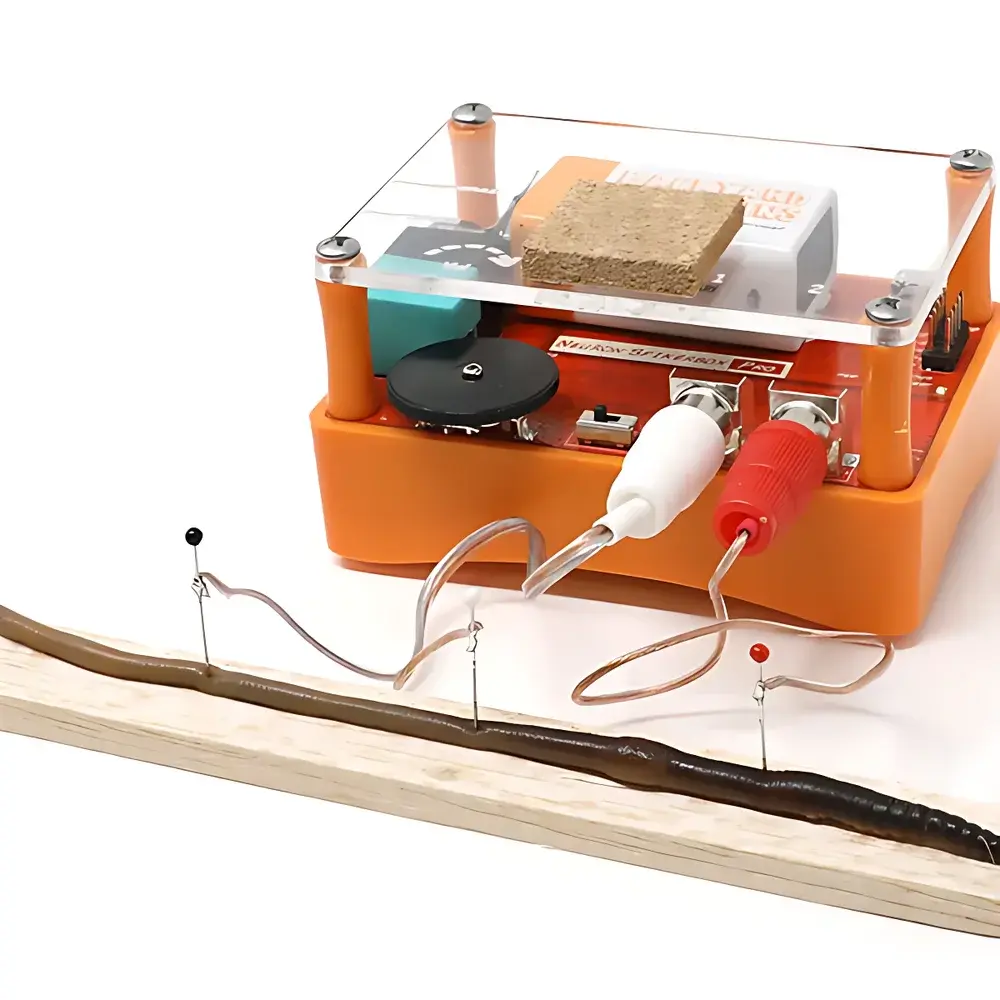
The Neuron SpikerBox Pro by Backyard Brains is a portable, dual-channel electrophysiology instrument engineered for real-time extracellular recording and stimulation of neuronal activity in intact, living preparations. It operates on the principle of differential amplification of bioelectric potentials generated by action potentials (spikes) in excitable tissues—primarily insect neurons (e.g., cockroach leg nerve), but also applicable to vertebrate peripheral nerves and cultured neural preparations under controlled conditions. Unlike traditional benchtop electrophysiology systems requiring Faraday cages, high-end oscilloscopes, or patch-clamp rigs, the SpikerBox Pro integrates signal conditioning, analog-to-digital conversion, audio translation, and stimulus delivery into a single, battery-powered unit. Its architecture complies with IEC 60601-1 for medical electrical equipment safety, classified as Type BF (body-floating), ensuring safe operation during classroom demonstrations and undergraduate laboratory exercises where direct contact with biological tissue occurs.
Key Features
- Dual-channel acquisition: Simultaneous recording from two independent neural sources—enabling comparative spike timing analysis, cross-correlation studies, and basic neural circuit interrogation.
- Real-time audio translation: Converts action potentials into audible clicks via onboard amplification and frequency modulation; output reaches 104 dB SPL through integrated headphone and speaker interfaces—audible across lecture halls without external amplification.
- Flexible input architecture: Supports up to five digital inputs for TTL-compatible event triggers (e.g., stimulus onset markers, behavioral timestamps) or configurable as three digital + two analog inputs for hybrid electrophysiology–behavioral experiments.
- Cross-platform compatibility: Native support for iOS, Android, macOS, and Windows via USB-Micro or 3.5 mm audio jack; data streams directly into open-source applications including SpikeRecorder (Backyard Brains), Audacity, MATLAB, Python (with PyAudio or SciPy), and LabVIEW.
- Low-noise signal chain: 30 dB signal-to-noise ratio optimized for extracellular spike detection; hardware filtering (220–3100 Hz bandpass) suppresses EMG, power-line interference, and thermal noise without compromising temporal fidelity.
- Extended operational autonomy: Rechargeable lithium-ion battery provides 18 hours of continuous recording at low-power mode and 4 hours when driving high-SPL audio output—ideal for multi-session lab courses or field-based neuroethology work.
Sample Compatibility & Compliance
The SpikerBox Pro is validated for use with invertebrate nervous systems—including cockroach cercal nerves, cricket auditory neurons, and earthworm giant fibers—as well as isolated frog sciatic nerves and mammalian dorsal root ganglion (DRG) explants under non-invasive, acute preparation protocols. It does not support intracellular or patch-clamp recordings. All hardware meets CE marking requirements for EMC Directive 2014/30/EU and RoHS 2011/65/EU. The device’s Type BF classification confirms isolation from earth ground and leakage current limits compliant with IEC 60601-1 Ed. 3.1, making it suitable for educational use involving direct electrode contact with biological tissue. While not intended for clinical diagnostics, its design aligns with GLP-aligned documentation practices for academic research reporting.
Software & Data Management
Data acquisition is supported via open-source software tools distributed under MIT License. SpikeRecorder (v3.0+) enables real-time visualization, threshold-based spike sorting, latency measurement, and export to CSV, MAT, or HDF5 formats. All timestamps are hardware-synchronized using internal 10 kHz sampling clock with sub-millisecond jitter. The firmware supports firmware-over-USB updates and exposes a serial command protocol for custom integration. Audit trails—such as session start time, sampling rate, gain settings, and input configuration—are automatically embedded in metadata headers. For regulated environments, users may implement supplementary procedural controls (e.g., electronic lab notebooks, version-controlled analysis scripts) to satisfy 21 CFR Part 11 traceability requirements where applicable.
Applications
- Undergraduate neuroscience laboratories: Action potential propagation velocity, refractory period measurement, temperature-dependent conduction studies.
- K-12 STEM outreach: Live demonstration of neural coding principles using auditory feedback and visual waveform display.
- Comparative neurophysiology: Cross-species spike morphology analysis between arthropod and amphibian preparations.
- Neuroengineering education: Integration with Arduino/Raspberry Pi for closed-loop stimulation paradigms (e.g., sound-triggered nerve activation).
- Behavioral neurobiology: Correlating spike trains with video-recorded locomotion or tactile stimuli using synchronized digital input triggers.
FAQ
Can the SpikerBox Pro be used for human EEG or ECG recordings?
No. It is designed exclusively for extracellular nerve recordings in non-human, ex vivo, or semi-intact preparations. Human biosignal acquisition requires additional regulatory clearance and different sensor configurations.
Is the firmware open source?
Yes—the full schematic, PCB layout, and Arduino-based firmware are publicly available on GitHub under permissive licensing for academic modification and pedagogical adaptation.
What is the effective input impedance and common-mode rejection ratio (CMRR)?
Input impedance exceeds 100 MΩ at 1 kHz; CMRR is >80 dB at 60 Hz, achieved through precision-matched instrumentation amplifier topology and shielded twisted-pair cabling.
Does it support spike sorting algorithms?
Hardware does not perform on-device sorting; however, exported waveforms contain sufficient resolution (12-bit ADC, 10 kS/s) for offline template-matching or PCA-based clustering in Python or MATLAB.
How is calibration performed?
The system uses factory-trimmed gain stages and references; no user calibration is required. Validation against known square-wave test signals (1 mVpp, 100 Hz) is recommended before critical experiments.