
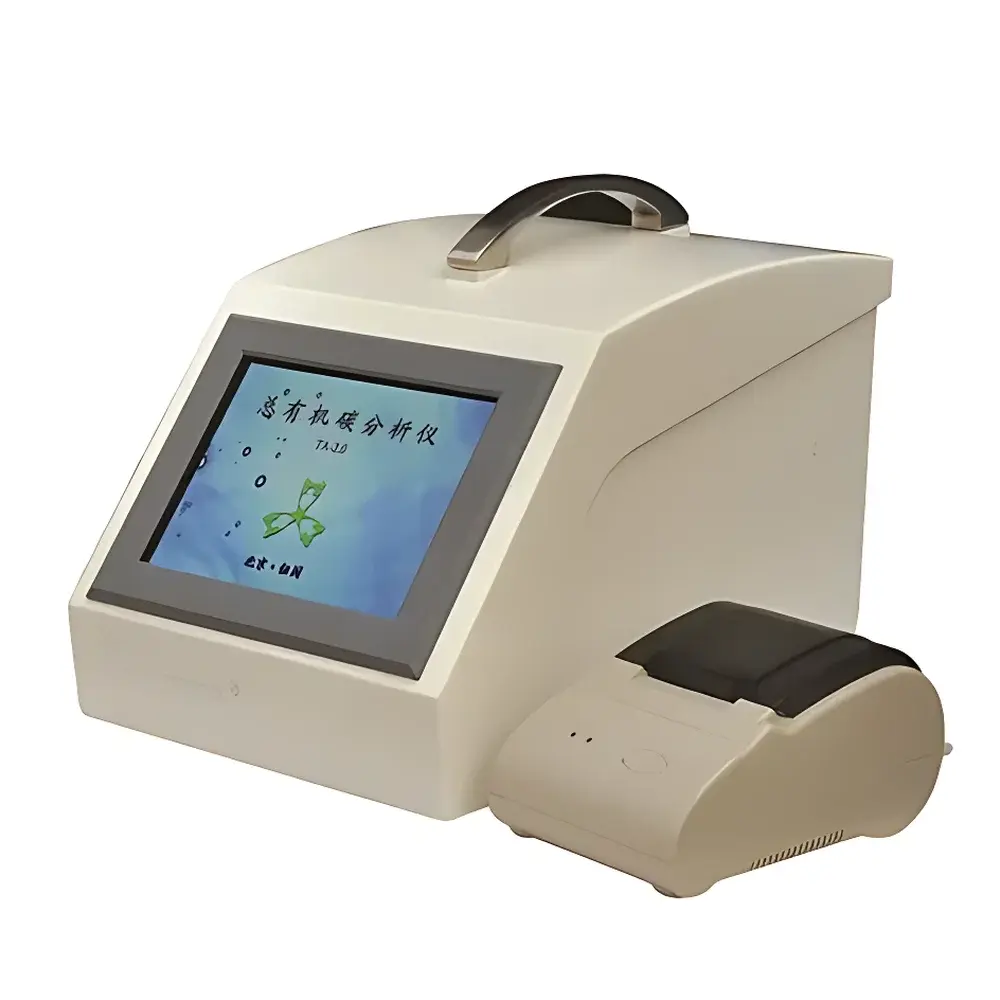
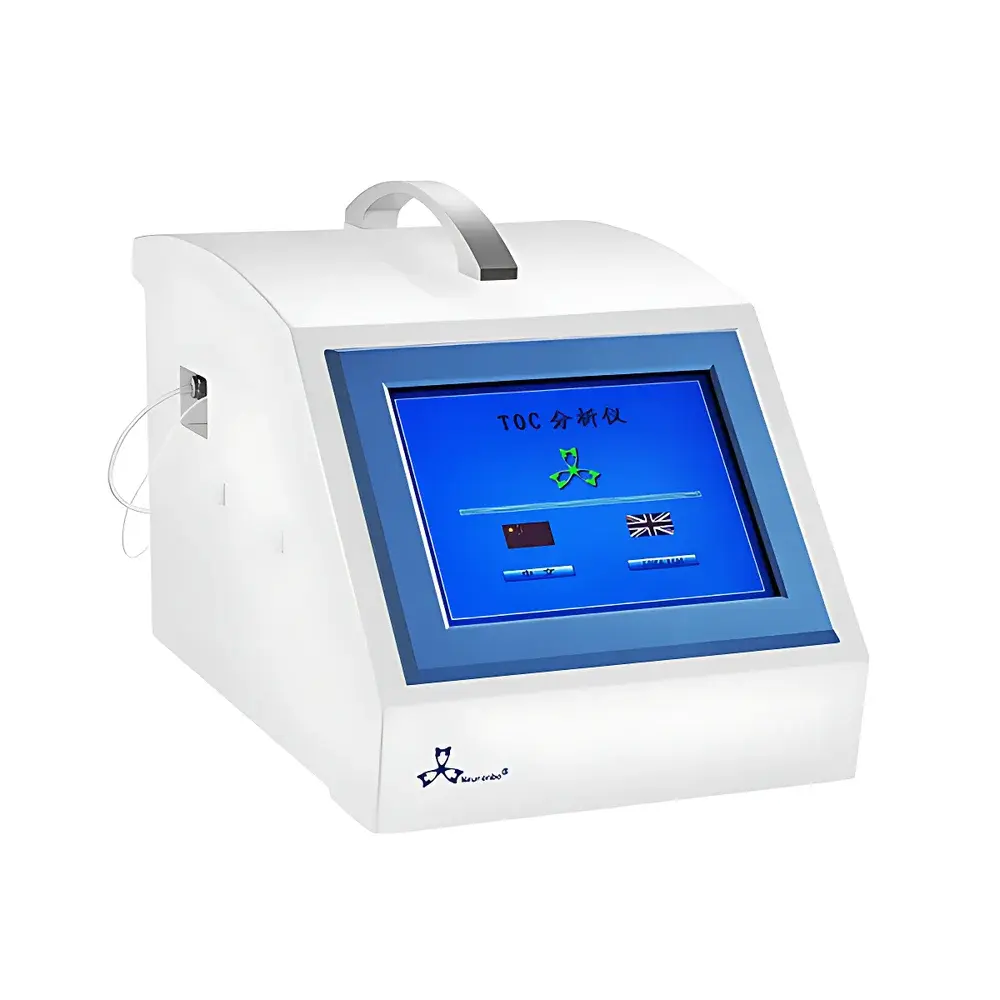
NeuronBC TA-2.0 Online Total Organic Carbon Analyzer
| Brand | NeuronBC |
|---|---|
| Origin | Beijing, China |
| Model | TA-2.0 |
| Instrument Type | Online TOC Analyzer |
| Detection Principle | Direct Conductivity Method |
| Oxidation Method | UV Photolysis (185/254 nm) |
| Measurement Range | 1–1000 ppb (as C) |
| Accuracy | ±4% of reading |
| Resolution | 1 ppb |
| Detection Limit | 1 ppb |
| Repeatability | ≤3% RSD |
| Conductivity Range | 0.055–8.000 µS/cm |
| Sample Temp. | 1–95 °C |
| Ambient Temp. | 5–65 °C |
| Power | 100–240 VAC, 50 Hz, 120 W |
| Dimensions (L×W×H) | 400 × 240 × 270 mm |
| Weight | 8.5 kg |
| Compliance | USP <643>, EP 2.2.44, FDA 21 CFR Part 11 (Audit Trail & User Authentication), GLP/GMP-ready |
Overview
The NeuronBC TA-2.0 Online Total Organic Carbon Analyzer is an engineered solution for continuous, real-time monitoring of organic carbon contamination in high-purity water systems. Designed specifically for pharmaceutical, biotechnology, and semiconductor clean-water applications, it employs direct conductivity detection following low-energy ultraviolet (UV) photolysis at dual wavelengths (185 nm and 254 nm) to fully mineralize non-purgeable organic compounds into CO2. The resulting CO2 dissolves in the carrier water stream, altering its conductivity — a change linearly correlated to total organic carbon concentration. Unlike combustion-based or NDIR-detected TOC analyzers, the TA-2.0 eliminates the need for carrier gases, acid reagents, catalysts, or moving mechanical parts, delivering inherent operational stability, minimal maintenance, and long-term measurement consistency across multi-point water distribution networks.
Key Features
- Multi-point sampling architecture: Supports up to three independent water system lines via integrated solenoid valve manifold — each valve mounted directly adjacent to the pipe to eliminate dead-leg stagnation and ensure representative, time-resolved sample integrity.
- Micro-bore fluidic path: 1 mm ID PEEK or stainless-steel capillary tubing minimizes hold-up volume (<100 µL per line), enabling rapid line purging (<90 s) between sequential measurements and reducing cross-contamination risk.
- Intelligent interlock control: RS-232 communication between the analyzer and solenoid controller enables automated response to out-of-specification events — including immediate valve closure on affected loop and configurable alarm output (relay or Modbus) for integration with SCADA or BMS platforms.
- FDA 21 CFR Part 11-compliant software architecture: Role-based access control (four-tier user permissions), encrypted audit trail logging (≥16 event categories with timestamp, operator ID, and action), electronic signatures, and tamper-proof data storage.
- Embedded color touchscreen HMI: Intuitive navigation for method configuration, calibration management, historical query, and real-time trend visualization — all without external PC dependency.
- Zero-consumables operation: No acids, persulfate, carrier gas, or replaceable oxidation lamps required; UV lamp lifetime exceeds 12,000 hours under typical duty cycles.
Sample Compatibility & Compliance
The TA-2.0 is validated for use with purified water (PW), water for injection (WFI), and clean steam condensate per pharmacopeial requirements. It meets the performance criteria outlined in United States Pharmacopeia <643> “Total Organic Carbon” and European Pharmacopoeia 2.2.44, including system suitability testing (SST) with sucrose and 1,4-benzoquinone standards. Its measurement range (1–1000 ppb as C) and resolution (1 ppb) satisfy stringent validation protocols for Phase I–III manufacturing environments. All firmware and data handling modules are designed to support GMP-aligned quality systems, including full traceability of calibration records, maintenance logs, and raw measurement archives — essential for regulatory inspection readiness.
Software & Data Management
Data acquisition and archival are managed through an embedded Linux-based operating system. Each measurement is timestamped, geotagged (via valve ID mapping), and stored with full metadata: oxidation efficiency status, conductivity baseline drift, temperature-compensated conductivity value, and calculated TOC result. Up to 5,000 test records are retained onboard; historical datasets can be exported via USB flash drive in CSV or PDF format — preserving column headers, units, and ISO 8601 timestamps. Optional Ethernet interface supports OPC UA or Modbus TCP integration for enterprise-level LIMS or MES synchronization. Audit trail entries include login/logout events, parameter changes, calibration initiations, and alarm acknowledgments — all immutable and exportable for QA review.
Applications
- Continuous monitoring of PW/WFI distribution loops in sterile manufacturing facilities
- Post-purification verification at point-of-use (POU) locations including filling lines and autoclave inlets
- Clean-in-place (CIP) rinse water validation and cycle endpoint determination
- Leak detection and source identification in multi-source water networks
- Supporting Annex 1 (EU GMP) environmental monitoring programs for Grade A/B zones
- Facilitating periodic requalification of purification systems per ICH Q5A and Q5D guidance
FAQ
Does the TA-2.0 require daily calibration or standard addition?
No — the instrument performs automatic zero and span verification using internal reference conductivity cells prior to each sample measurement cycle. Manual calibration with certified TOC standards is recommended only after installation, following major maintenance, or per site-specific SOP intervals (e.g., weekly or per batch).
Can the system operate unattended for extended periods?
Yes — with continuous power and stable inlet pressure (0.1–0.6 MPa), the TA-2.0 supports uninterrupted 24/7 operation. Its solid-state design, absence of consumables, and self-diagnostics reduce unscheduled downtime to less than 0.5% annually under typical pharmaceutical utility conditions.
Is remote diagnostics or firmware update supported?
Firmware updates are performed locally via USB; remote access is intentionally disabled to maintain cybersecurity integrity and comply with IEC 62443-3-3 requirements for critical infrastructure devices. Diagnostic logs and error codes are accessible through the HMI or exported reports.
How is temperature compensation handled during measurement?
Conductivity readings are automatically compensated using a built-in Pt100 sensor positioned at the flow cell outlet. Compensation follows the ISO 7888 standard algorithm, referenced to 25 °C, ensuring accuracy across the full 1–95 °C sample temperature range.
What validation documentation is provided with the instrument?
Each unit ships with Factory Acceptance Test (FAT) report, IQ/OQ protocol templates aligned with ASTM E2500 and ISPE GAMP 5, and a Certificate of Conformance traceable to NIST standards. Site-specific PQ execution support is available through NeuronBC’s qualified field service engineers.
Related Products







