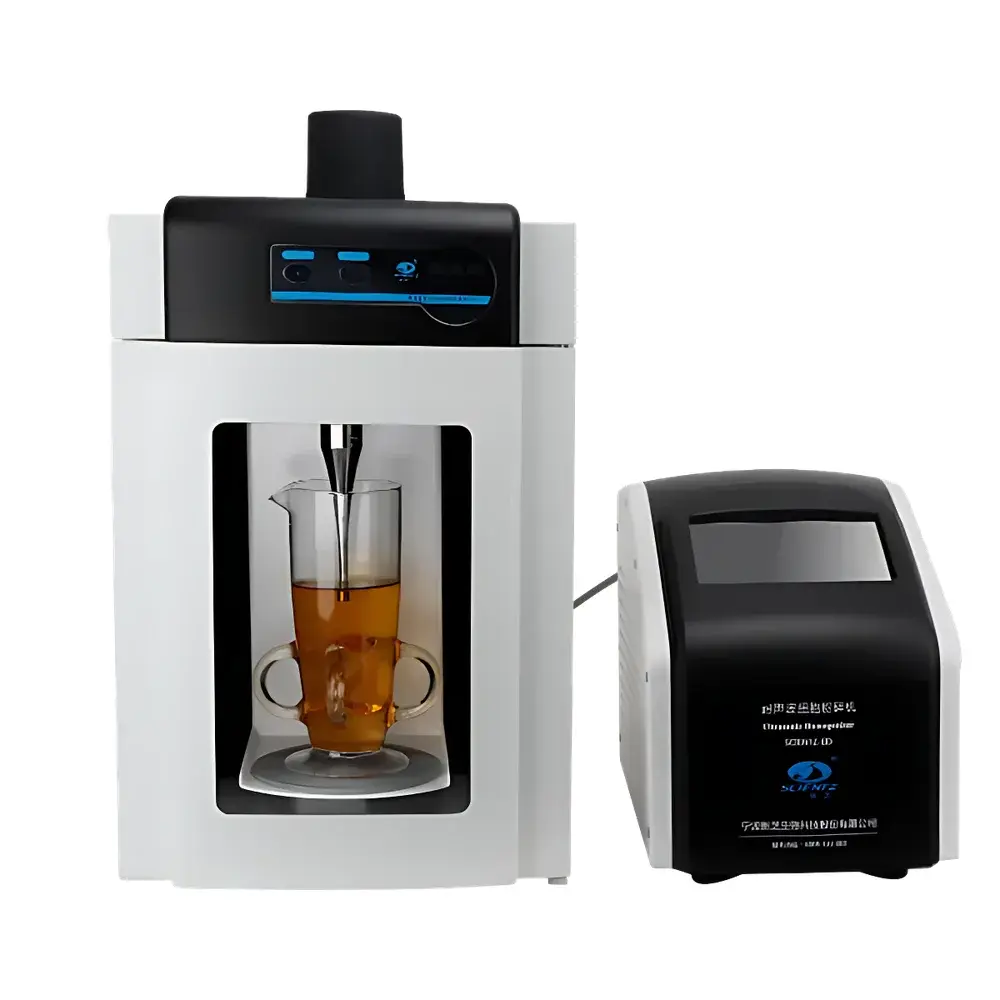
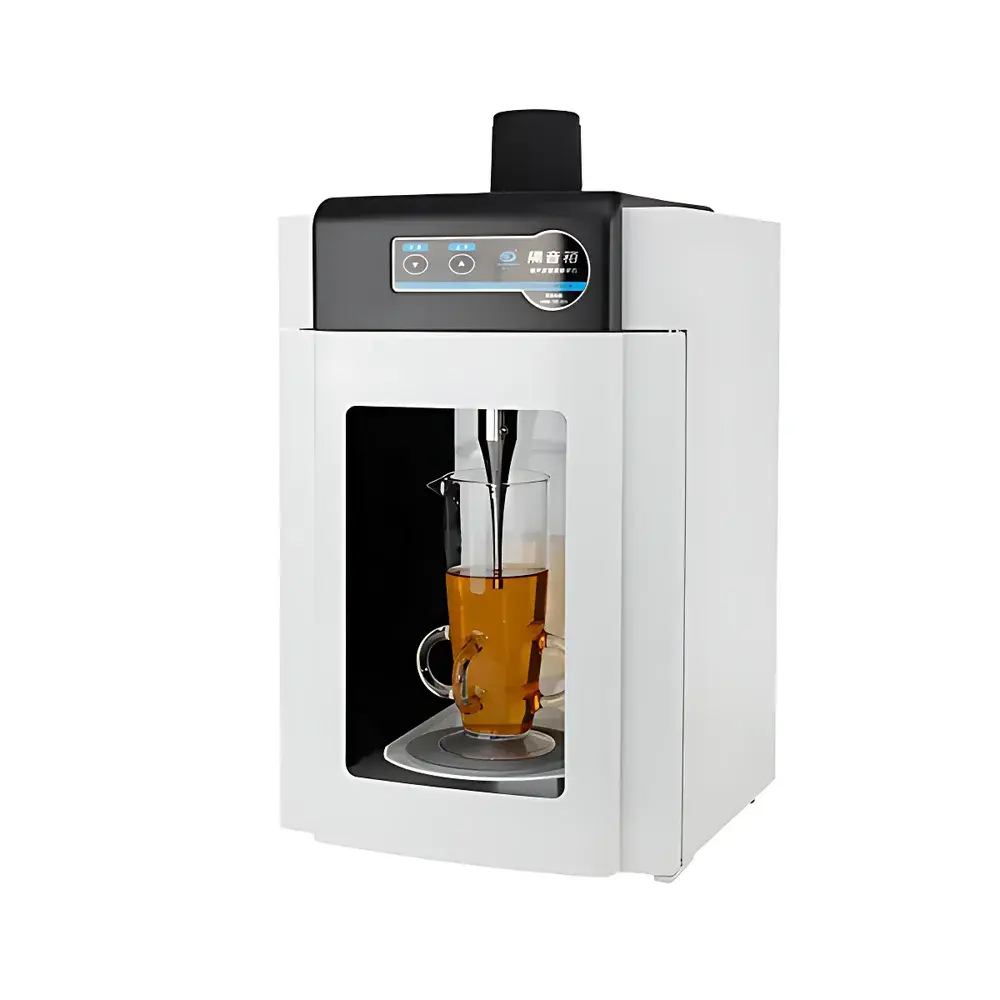
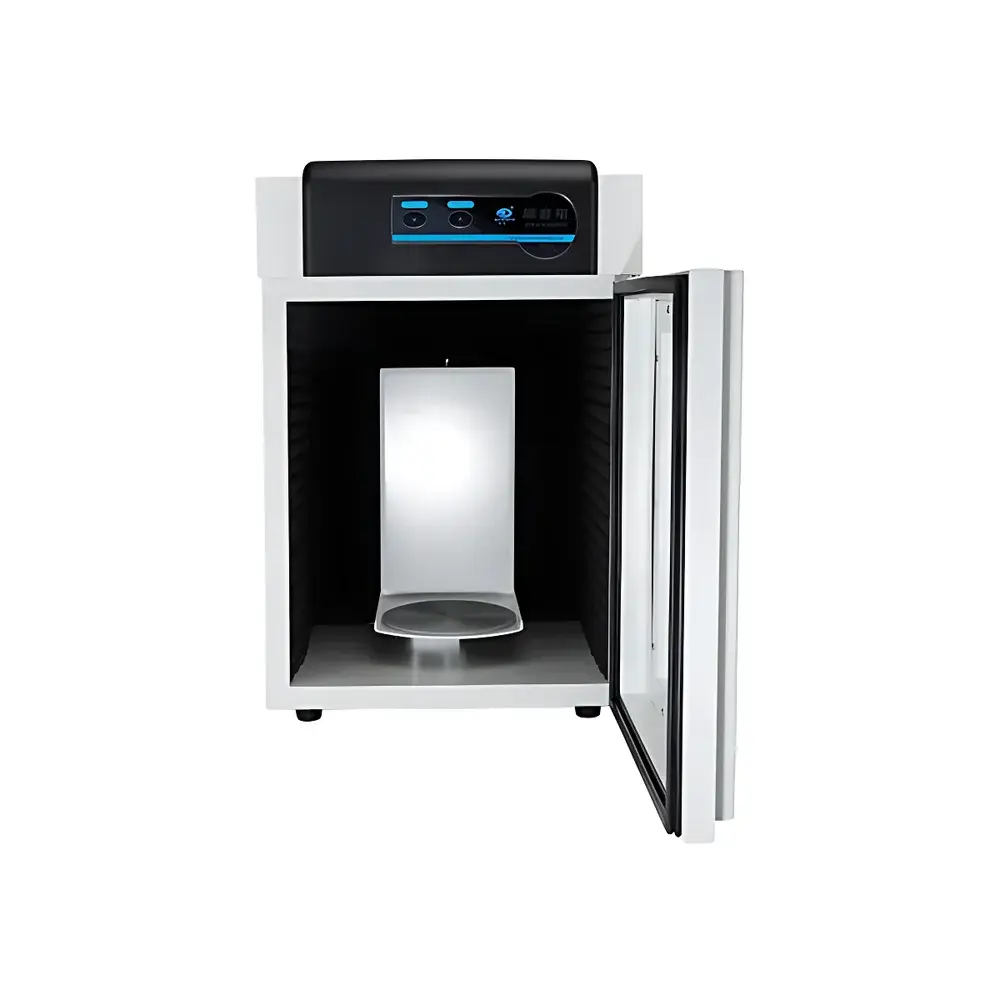
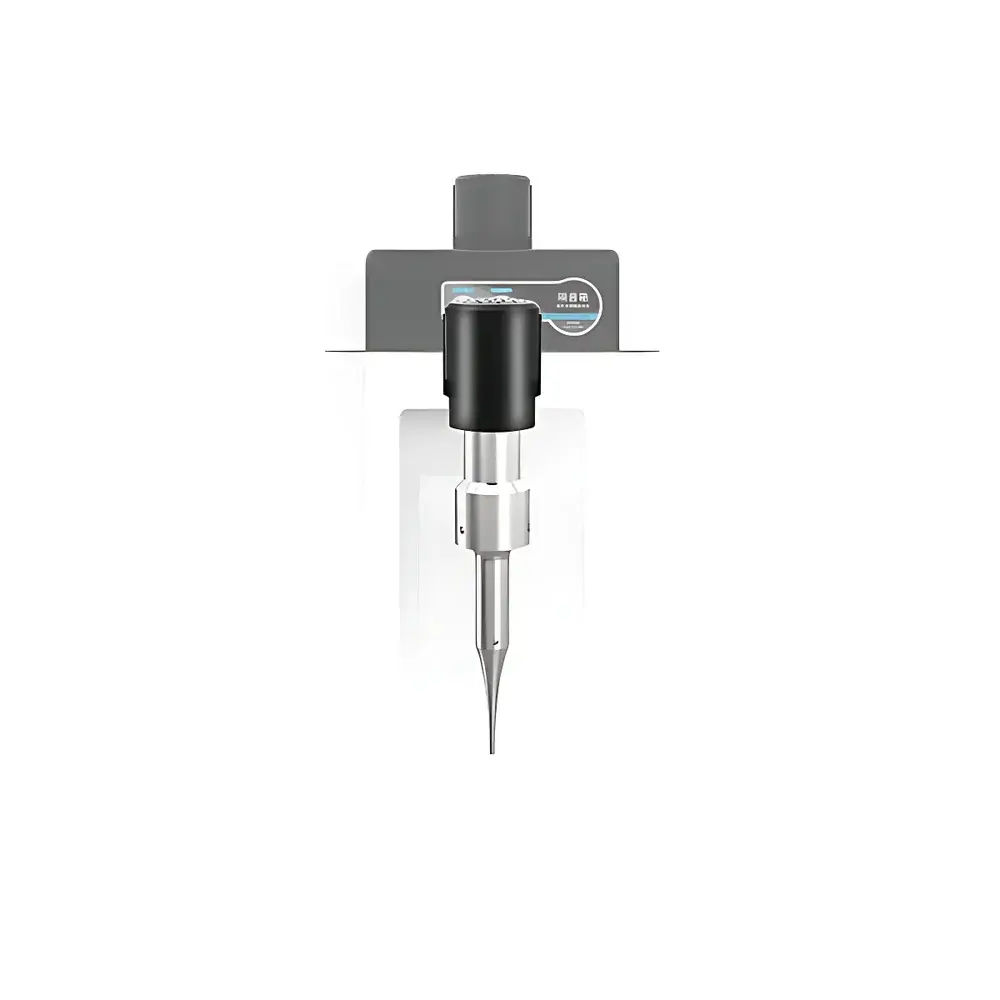
Ningbo Scientz JY98-IIIDN High-Performance Ultrasonic Cell Disruptor
| Brand | Ningbo Scientz |
|---|---|
| Origin | Zhejiang, China |
| Manufacturer Type | Direct Manufacturer |
| Instrument Type | Ultrasonic Cell Disruptor |
| Ultrasonic Power Output | 1200 W |
| Operating Frequency | 19.5–20.5 kHz |
| Temperature Control Range | 0–99 °C |
| Sample Volume Capacity | 50–1000 mL |
| Sample Throughput | Single-sample processing |
| Transducer Material | Titanium Alloy Probe |
Overview
The Ningbo Scientz JY98-IIIDN is a high-power, benchtop ultrasonic cell disruptor engineered for precise and reproducible lysis of biological materials through controlled acoustic cavitation. It operates on the physical principle of ultrasonic cavitation—where high-intensity sound waves (19.5–20.5 kHz) propagate through a liquid medium, generating transient microbubbles that rapidly expand and collapse. This implosive action produces localized shockwaves, intense shear forces, and microstreaming effects sufficient to disrupt cellular membranes, organelles, and microbial cell walls without significant thermal denaturation when temperature is actively regulated. Designed for laboratory-scale biochemistry and molecular biology workflows, the JY98-IIIDN delivers consistent energy transfer across variable sample volumes (50–1000 mL), supporting both low-volume precision lysis and larger-batch homogenization. Its titanium alloy probe ensures superior electroacoustic conversion efficiency, mechanical durability under prolonged duty cycles, and resistance to corrosion in aqueous and mildly aggressive solvents.
Key Features
- 1200 W nominal ultrasonic output power with continuous, stepless adjustment (0–100% amplitude) for fine-tuned energy delivery
- Integrated digital temperature control (0–99 °C) with real-time monitoring and Peltier-assisted cooling capability to minimize thermal degradation of heat-sensitive biomolecules
- Dual operating modes: continuous sonication and programmable pulse mode (on/off intervals adjustable in 0.1-s increments) to manage heat accumulation and improve lysis uniformity
- Intelligent protocol memory supporting up to 20 user-defined programs—including amplitude, duration, pulse parameters, and temperature setpoints—for repeatable experimental conditions
- Comprehensive safety architecture featuring over-temperature cutoff, overload protection, and audible/visual time expiration alerts
- Titanium alloy transducer and probe assembly optimized for high acoustic impedance matching, minimal energy loss, and extended service life under sustained operation
Sample Compatibility & Compliance
The JY98-IIIDN accommodates a broad range of biological and non-biological samples, including mammalian and plant tissues, bacterial and yeast cultures, spores, viral particles, and subcellular fractions. It is routinely employed in chromatin immunoprecipitation (ChIP) and next-generation sequencing (NGS) library preparation where controlled DNA fragmentation is required. In material science applications, it supports dispersion of nanomaterials (e.g., carbon nanotubes, rare-earth oxides), emulsification of pharmaceutical suspensions, and extraction of bioactive compounds from herbal matrices. The instrument conforms to general laboratory safety standards (IEC 61010-1) and supports GLP-compliant documentation when integrated with validated electronic lab notebook (ELN) systems. While not inherently 21 CFR Part 11 compliant, its parameter logging and protocol recall functions facilitate audit-ready recordkeeping in regulated environments when paired with appropriate data management infrastructure.
Software & Data Management
The JY98-IIIDN features an embedded microprocessor-based controller with an intuitive LCD interface for real-time parameter visualization and manual operation. All critical operational data—including elapsed time, actual power output, set vs. measured temperature, and active protocol ID—are logged internally and exportable via USB interface in CSV format. No proprietary software installation is required; exported datasets are compatible with common analytical platforms (e.g., Excel, GraphPad Prism, Python pandas). For laboratories implementing digital quality systems, the device’s deterministic parameter recall and timestamped event logging support traceability requirements aligned with ISO/IEC 17025 and ASTM E2500-17 guidelines for equipment qualification.
Applications
- Cell lysis for protein extraction, enzyme release, and intracellular metabolite profiling
- Preparation of sheared chromatin for ChIP-seq and ATAC-seq assays
- Disruption of Gram-positive bacteria and fungal cells with rigid cell walls
- Homogenization of soil, sediment, and mineral samples for geochemical or microbiome analysis
- Ultrasonic-assisted extraction of polyphenols, alkaloids, and essential oils from botanical materials
- Dispersion and de-agglomeration of nanoparticles in colloidal suspensions
- Accelerated hydrolysis and transesterification reactions in green chemistry applications
FAQ
What is the recommended maintenance interval for the titanium probe?
Routine visual inspection and cleaning with ethanol or mild detergent after each use is advised. Full calibration verification and probe surface integrity assessment should be performed every 6 months or after 500 cumulative operating hours.
Can the JY98-IIIDN be used for non-contact sonication (e.g., bath-style protocols)?
No—the JY98-IIIDN is a direct-probe system requiring immersion of the titanium horn into the sample vessel. It does not support indirect sonication via water bath coupling.
Is temperature control active during pulsed operation?
Yes—temperature monitoring and regulation remain fully functional during both continuous and pulse modes, enabling thermally sensitive protocols such as native protein complex isolation.
What sample containers are compatible with the 50–1000 mL volume range?
Standard cylindrical glass or polypropylene vessels (e.g., beakers, centrifuge bottles, jacketed reactors) with internal diameters between 30 mm and 90 mm are recommended to ensure optimal acoustic coupling and cavitation distribution.
Does the instrument support external trigger input or RS-232 communication?
No—communication is limited to USB mass storage mode for data export. There is no built-in serial interface or TTL trigger capability.