
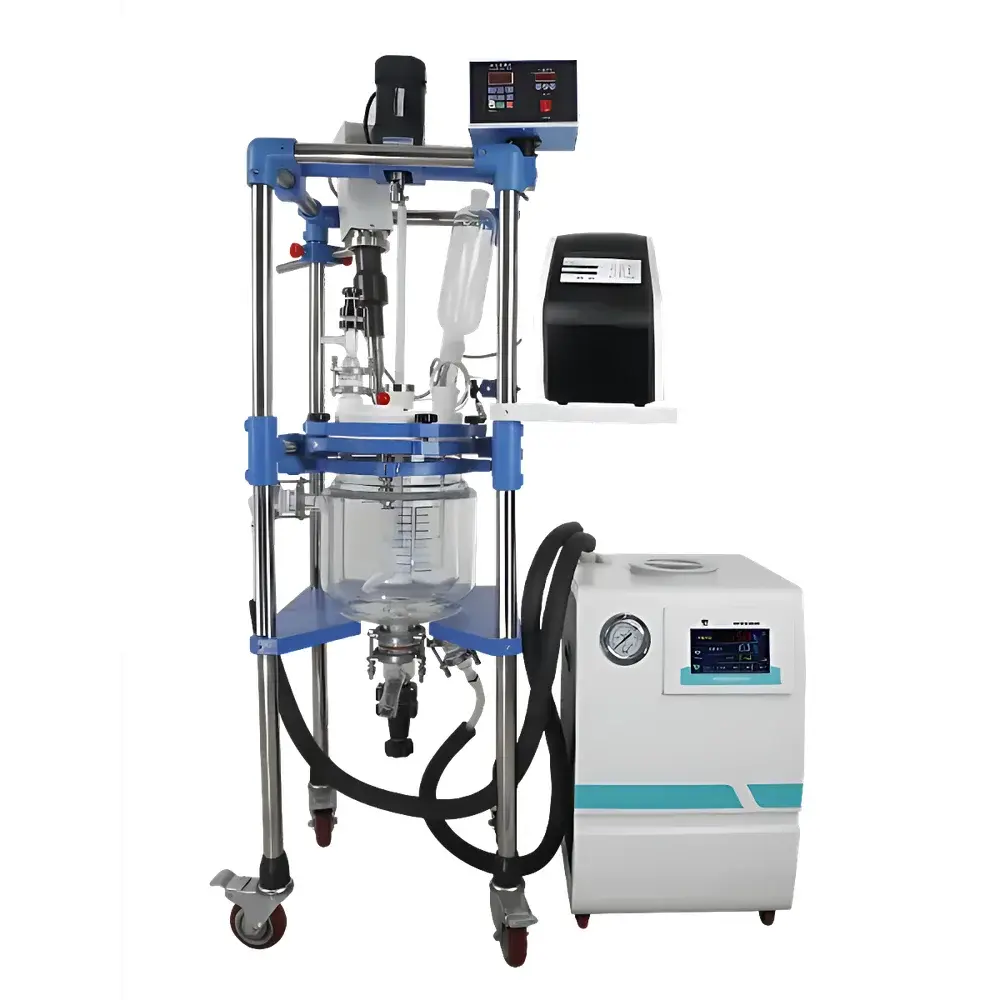
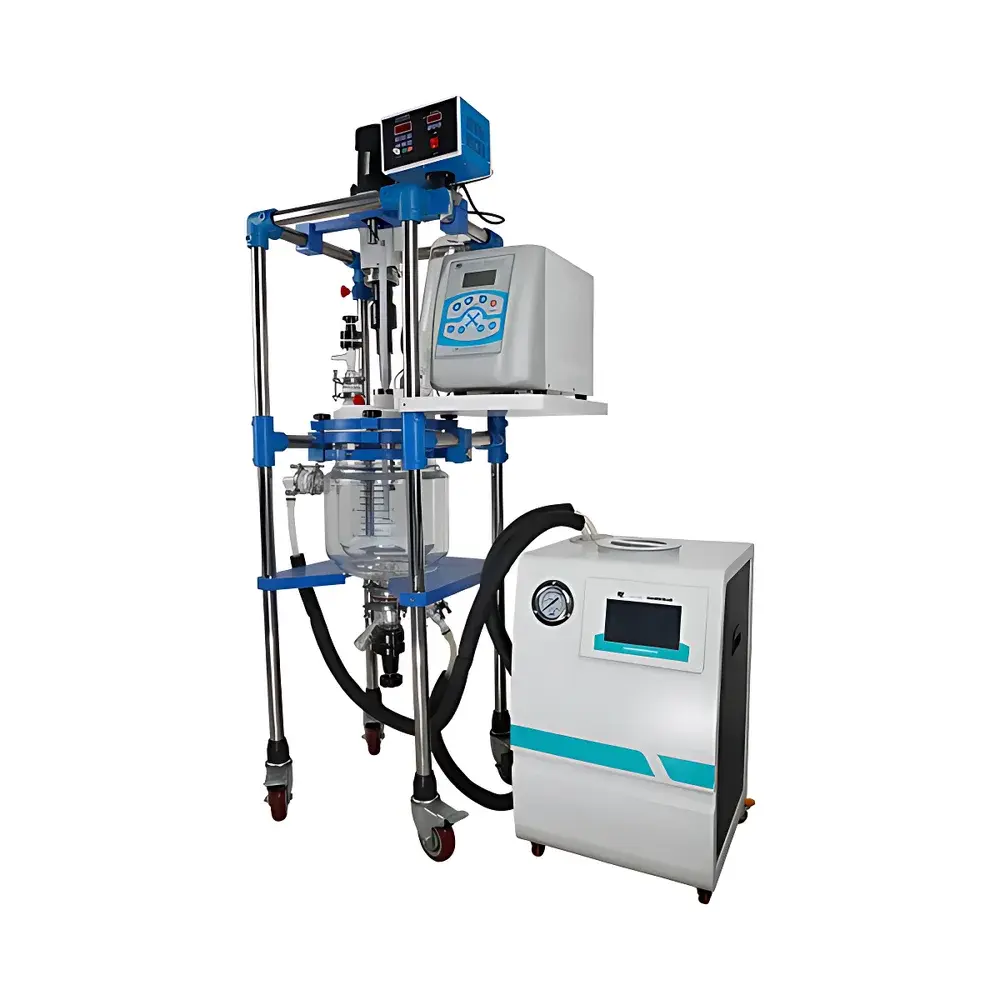
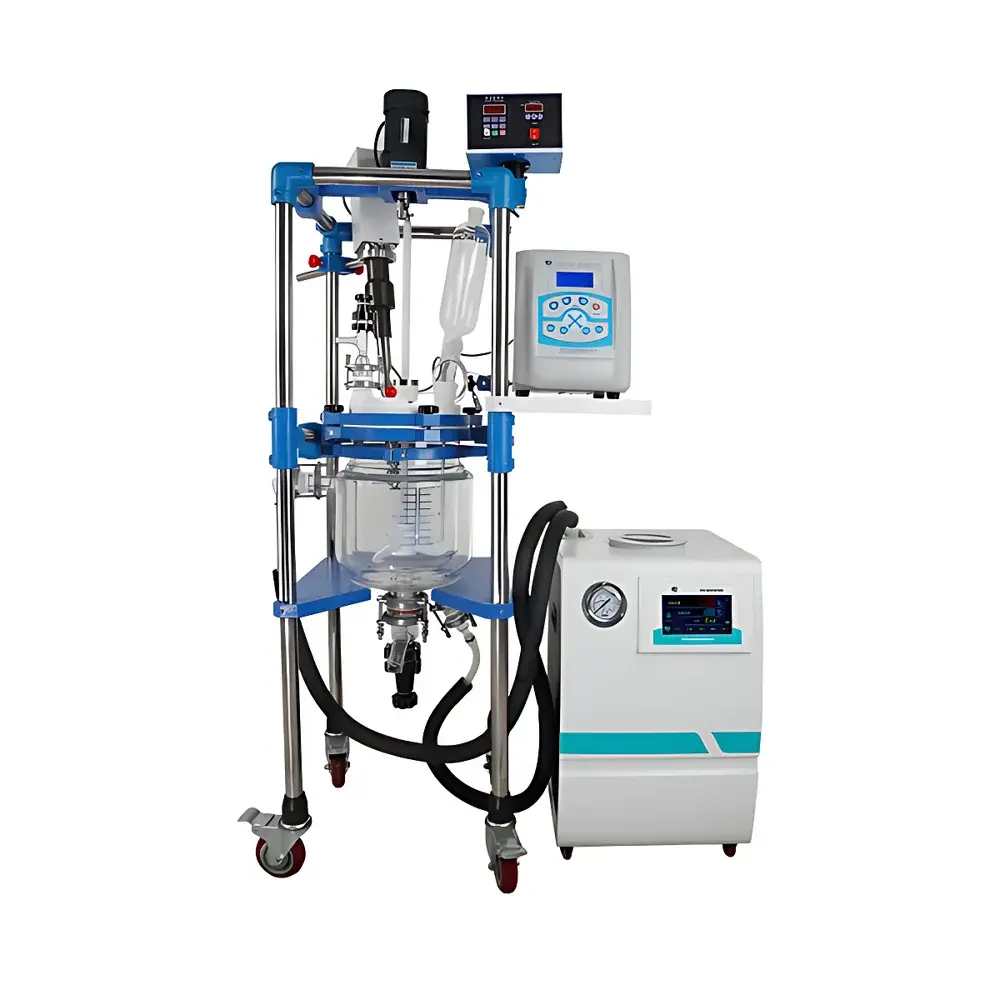
Ningbo Scientz SCIENTZ-10T Benchtop Ultrasonic Extractor with Integrated Temperature-Controlled Reactor
| Brand | Ningbo Scientz |
|---|---|
| Origin | Zhejiang, China |
| Manufacturer Type | Direct Manufacturer |
| Country of Origin | China |
| Model | SCIENTZ-10T |
| Ultrasonic Power Range | 20–1200 W |
| Ultrasonic Frequency Range | 20–25 kHz |
| Maximum Heating Power | 800 W |
| Temperature Control Range | –5 °C to Ambient |
| Reactor Volume | 10 L |
Overview
The Ningbo Scientz SCIENTZ-10T Benchtop Ultrasonic Extractor is an integrated laboratory system engineered for controlled, reproducible ultrasonic-assisted extraction (UAE) under precise thermal and mechanical conditions. It combines three functionally synchronized modules: a high-stability ultrasonic generator and transducer assembly, a Peltier-assisted intelligent temperature-controlled circulating bath, and a double-jacketed borosilicate glass reactor (10 L capacity). The system operates on the physical principle of acoustic cavitation—where rapid pressure fluctuations induced by 20–25 kHz ultrasonic waves generate transient microbubbles in liquid media; their implosive collapse produces localized shockwaves, microstreaming, and shear forces sufficient to disrupt cell walls, enhance mass transfer, and accelerate solvent–matrix interaction. Unlike standalone sonicators, the SCIENTZ-10T maintains thermodynamic stability during prolonged extraction cycles via active cooling/heating (–5 °C to ambient), enabling studies requiring strict thermal protocol adherence—such as heat-labile compound isolation or kinetic-controlled reaction monitoring.
Key Features
- Adjustable ultrasonic output (20–1200 W) with digital frequency selection within 20–25 kHz range to optimize cavitation intensity for diverse sample matrices (e.g., plant tissues, microbial pellets, polymer composites).
- Integrated Peltier-based temperature control system with ±0.3 °C stability over full operating range (–5 °C to ambient), supporting both cryo-extraction and mild thermal activation protocols.
- Double-walled borosilicate glass reactor (DIN-standard joints, 10 L working volume) compatible with inert gas purging, reflux condensation, and pH probe insertion.
- Programmable digital controller with real-time display of ultrasonic duty cycle, elapsed time, setpoint temperature, actual bath temperature, and stirring speed (0–600 rpm, optional magnetic or overhead stirrer).
- Hardware-level safety interlocks: automatic shutdown upon transducer overheating, coolant flow interruption, or reactor lid misalignment.
- Modular design allows retrofitting with alternative reactors (e.g., 2 L, 5 L, or jacketed micro-reactors) without recalibration of ultrasonic coupling efficiency.
Sample Compatibility & Compliance
The SCIENTZ-10T accommodates heterogeneous solid–liquid systems including dried botanicals, freeze-dried cell cultures, soil extracts, and synthetic hydrogels. Its non-invasive energy delivery avoids chemical degradation pathways common in Soxhlet or microwave-assisted methods. The system conforms to standard laboratory safety practices per IEC 61010-1 and carries CE marking for electromagnetic compatibility (EMC Directive 2014/30/EU). While not pre-certified for GMP environments, its programmable parameters, audit-ready operation logs (via optional RS-232/USB export), and temperature traceability support alignment with GLP documentation requirements. Users performing method validation may reference ASTM E2997-21 (“Standard Guide for Ultrasonic Extraction of Organic Compounds from Solid Matrices”) and ISO 21569:2019 (“Molecular biomarker analysis—extraction protocols”) during SOP development.
Software & Data Management
The embedded microcontroller records timestamped operational metadata—including power level, frequency setting, temperature setpoint vs. actual, stirring speed, and total sonication duration—at 1-second intervals. Data exports as CSV files for post-processing in MATLAB, Python (Pandas), or statistical packages such as JMP or Minitab. Optional Scientz LabLink software (Windows-compatible) enables remote parameter adjustment, multi-step protocol sequencing (e.g., ramped temperature + pulsed sonication), and real-time graphing of thermal and acoustic profiles. All exported datasets include unique instrument ID and firmware version tags to satisfy traceability requirements under FDA 21 CFR Part 11 when paired with user-defined electronic signature workflows.
Applications
- Pharmaceutical R&D: Accelerated extraction of alkaloids, flavonoids, and polysaccharides from herbal matrices; preparation of nanoemulsions for transdermal delivery screening.
- Food & Beverage Science: Ethanol-free polyphenol recovery from grape pomace; controlled aging simulation of wine via low-intensity cavitation-induced ester hydrolysis.
- Cosmetic Formulation: Dispersive stabilization of titanium dioxide and zinc oxide nanoparticles in aqueous surfactant systems without organic solvents.
- Environmental Analysis: EPA Method 3550C-compliant extraction of PAHs and PCBs from sediment samples using acetonitrile/water mixtures at sub-ambient temperatures.
- Materials Chemistry: Exfoliation of layered double hydroxides (LDHs) and graphene oxide precursors under inert atmosphere with simultaneous sonication and temperature ramping.
FAQ
Is the SCIENTZ-10T suitable for continuous operation over 8 hours?
Yes—its industrial-grade transducer housing and forced-air-cooled power supply are rated for uninterrupted duty cycles up to 12 hours, provided ambient temperature remains below 30 °C and coolant circulation is maintained.
Can the system be operated under nitrogen or argon atmosphere?
Yes—the double-jacketed reactor includes standard Schlenk line-compatible inlet/outlet ports and vacuum-rated O-rings; optional gas dispersion frits are available for homogeneous inert gas saturation.
Does the instrument support external PT100 probe integration for internal sample temperature measurement?
Yes—two auxiliary analog input channels accept calibrated PT100 or thermistor signals, allowing concurrent monitoring of bath temperature and core sample temperature in viscous suspensions.
What maintenance intervals are recommended for ultrasonic transducer performance verification?
Scientz recommends quarterly calibration checks using a hydrophone-based acoustic power meter (e.g., Onda HNR-500) and annual inspection of transducer bonding integrity by qualified service personnel.
Is firmware upgrade capability available remotely?
Yes—firmware updates are distributed via Scientz’s secure customer portal and installed via USB flash drive; each release includes version-controlled changelogs and ISO/IEC 17025-aligned validation reports.



