
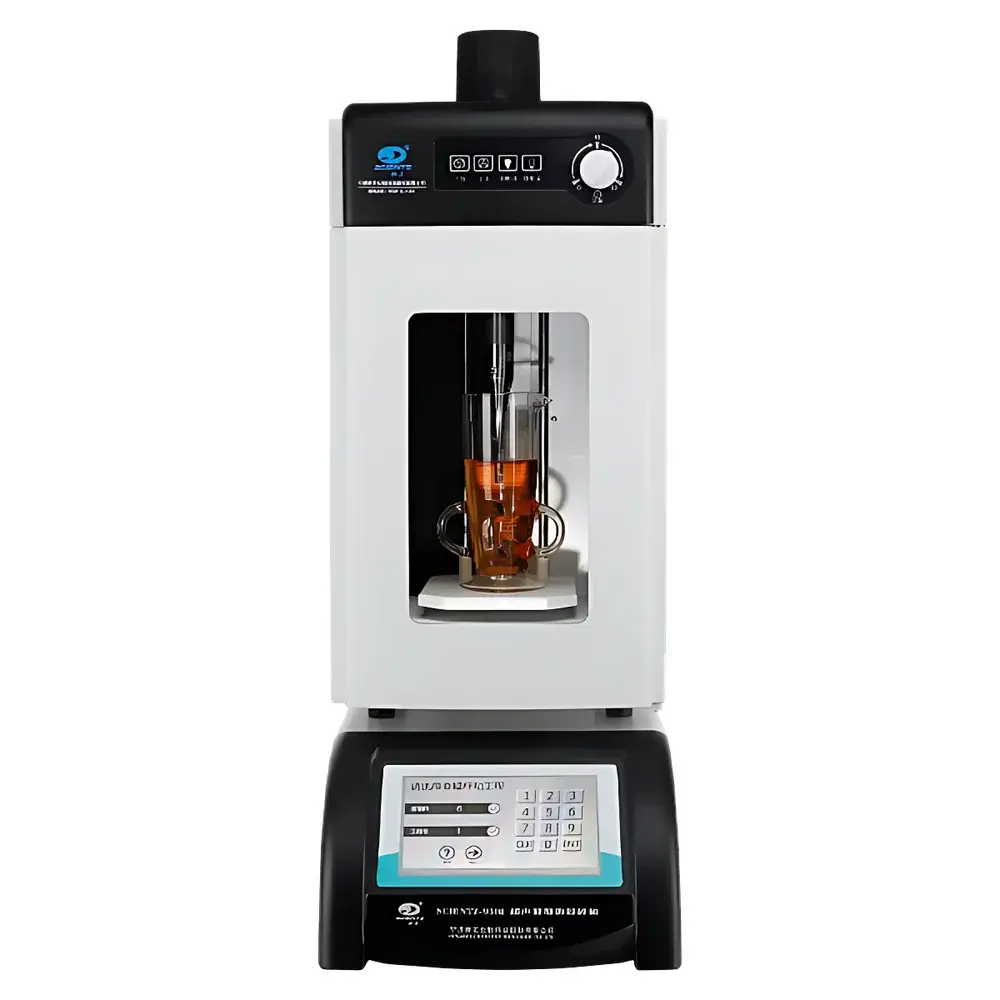
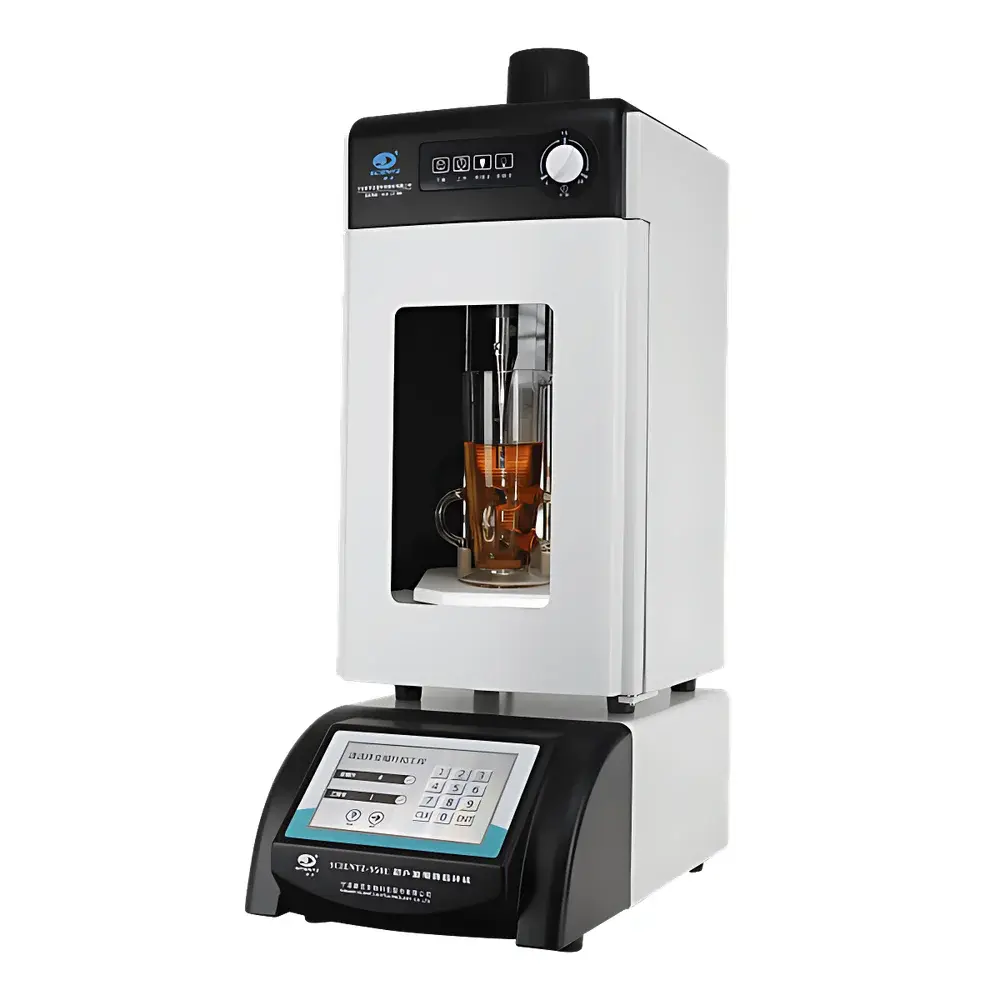
Ningbo Scientz SCIENTZ-1200E Intelligent Ultrasonic Cell Disruptor
| Brand | Ningbo Scientz |
|---|---|
| Origin | Zhejiang, China |
| Manufacturer Type | Direct Manufacturer |
| Instrument Type | Ultrasonic Cell Disruptor |
| Ultrasonic Power Range | 50–1200 W (continuously adjustable) |
| Operating Frequency | 20–25 kHz (auto-tracking & adaptive) |
| Temperature Control Range | 0–99 °C |
| Sample Volume Capacity | 50–1200 mL |
| Multi-sample Processing Capability | Yes |
| Compliance | Designed for GLP-compliant laboratories |
Overview
The Ningbo Scientz SCIENTZ-1200E Intelligent Ultrasonic Cell Disruptor is an engineered platform for controlled, reproducible lysis of biological materials using high-intensity ultrasonic cavitation. It operates on the physical principle of acoustic cavitation—where rapid pressure fluctuations generated by 20–25 kHz ultrasonic waves induce transient microbubble formation, growth, and violent collapse in liquid media. This implosive collapse produces localized shockwaves, microstreaming, and shear forces exceeding 10⁴ Pa, sufficient to disrupt membranes of eukaryotic cells, prokaryotes, viruses, spores, and subcellular organelles without significant thermal denaturation when temperature is actively regulated. Unlike mechanical homogenization or enzymatic lysis, ultrasonic disruption offers scalable, non-contact, and chemically inert sample preparation—critical for preserving native protein conformation, nucleic acid integrity, and post-translational modifications in downstream applications such as chromatin immunoprecipitation (ChIP), ATAC-seq, and RNA-Seq library construction.
Key Features
- Intelligent adaptive frequency tracking ensures stable energy delivery across variable sample loads and viscosity changes—minimizing probe erosion and maximizing cavitation efficiency.
- Programmable temperature control (0–99 °C) with Peltier-assisted cooling and real-time PT100 sensor feedback prevents thermal degradation during extended sonication cycles.
- Motorized vertical lift stage enables precise, repeatable positioning of the titanium alloy probe relative to vessel geometry—eliminating operator-induced variability in immersion depth and standoff distance.
- 20-user-defined protocol storage with timestamped execution logs supports method standardization and regulatory traceability in ISO 17025 or GMP environments.
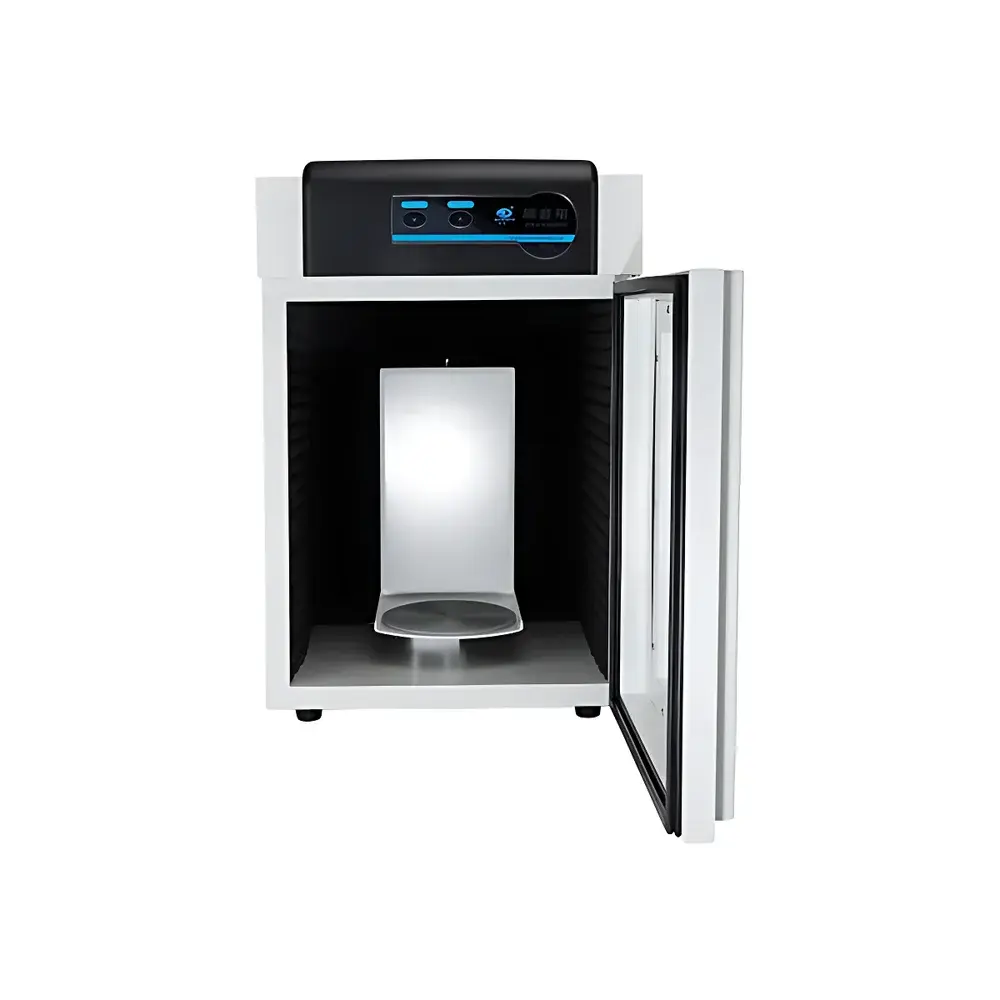
- Dual-safety interlock system: UV-C germicidal lamp (254 nm) activates automatically upon chamber closure; mechanical door lock prevents operation during access; overtemperature, overload, and timeout alarms trigger immediate shutdown with audible/visual alerts.
- Modular design accommodates interchangeable probes (3–25 mm tip diameters) and jacketed vessels for continuous-flow or batch processing configurations.
Sample Compatibility & Compliance
The SCIENTZ-1200E processes heterogeneous biological matrices—including mammalian cell suspensions, bacterial cultures (E. coli, Bacillus spp.), yeast pellets, plant leaf homogenates, soil slurries, and nanoparticle dispersions (e.g., carbon nanotubes, rare-earth oxides). Its 50–1200 mL working volume range supports analytical-scale lysate preparation through pilot-scale bioprocessing validation. The system complies with IEC 61000-6-3 (EMC emission standards) and IEC 61000-6-2 (immunity). When operated with Scientz’s validated LIMS-integrated software suite, it meets ALCOA+ data integrity principles and supports 21 CFR Part 11 electronic signature functionality—including user authentication, audit trail generation, and immutable record retention.
Software & Data Management
The instrument integrates via RS-485 and Ethernet interfaces with Scientz’s ScientzControl v3.2 software—deployable on Windows-based laboratory workstations. Software features include remote scheduling, real-time power/temperature waveform visualization, automated calibration verification (using reference glycerol-water mixtures), and CSV export of full parameter sets (amplitude %, duty cycle, cumulative energy J/mL, peak cavitation intensity index). All operational events—including user login/logout, protocol execution, alarm triggers, and firmware updates—are time-stamped and stored locally with SHA-256 hash integrity checks. Audit trails are exportable in PDF/A-2b format for regulatory submission.
Applications
- Nucleic acid shearing for next-generation sequencing (NGS) library prep—achieving fragment size distributions of 150–800 bp with coefficient of variation <8% across replicates.
- Extraction of intracellular enzymes (e.g., alkaline phosphatase, β-galactosidase) from recombinant E. coli while maintaining >92% specific activity.
- Dispersion stabilization of graphene oxide and metal-organic frameworks (MOFs) in aqueous media for catalytic or sensing applications.
- Accelerated solvent extraction (ASE) of polyphenols from botanical matrices under sub-boiling conditions—reducing extraction time by 65% versus conventional reflux.
- Preparation of uniform liposome suspensions (80–150 nm DLS diameter) for drug delivery formulation studies.
- Inactivation and lysis of biosafety level-2 (BSL-2) pathogens (e.g., S. aureus, P. aeruginosa) prior to molecular detection assays.
FAQ
What safety certifications does the SCIENTZ-1200E hold for international laboratory use?
It conforms to CE marking requirements under the EU Machinery Directive 2006/42/EC and Low Voltage Directive 2014/35/EU, with test reports issued by TÜV Rheinland (Report No. RH01223487). UL/cUL listing is available upon request for North American deployment.
Can the system be validated for GMP manufacturing environments?
Yes—IQ/OQ/PQ protocols are provided in English, aligned with ASTM E2500-13 and Annex 15 of the EU GMP Guidelines. Installation includes factory-verified amplitude linearity (±1.5% full scale) and temperature accuracy (±0.3 °C at 25 °C).
Is probe cavitation intensity quantifiable and traceable?
While absolute cavitation intensity (W/cm²) requires calibrated hydrophone measurement, the system reports normalized acoustic output power (W) and real-time impedance load (Ω), enabling comparative process consistency assessment per USP Analytical Instrument Qualification.
Does the instrument support unattended overnight operation?
Yes—programmable start/stop timers, automatic cooldown cycles, and fail-safe thermal cutoff allow fully autonomous 16-hour operation with minimal supervision.
How is data integrity maintained during network-connected operation?
All network communications use TLS 1.2 encryption; local database employs SQLite with WAL journaling and periodic encrypted backups to external NAS devices configured with RAID 5 redundancy.




