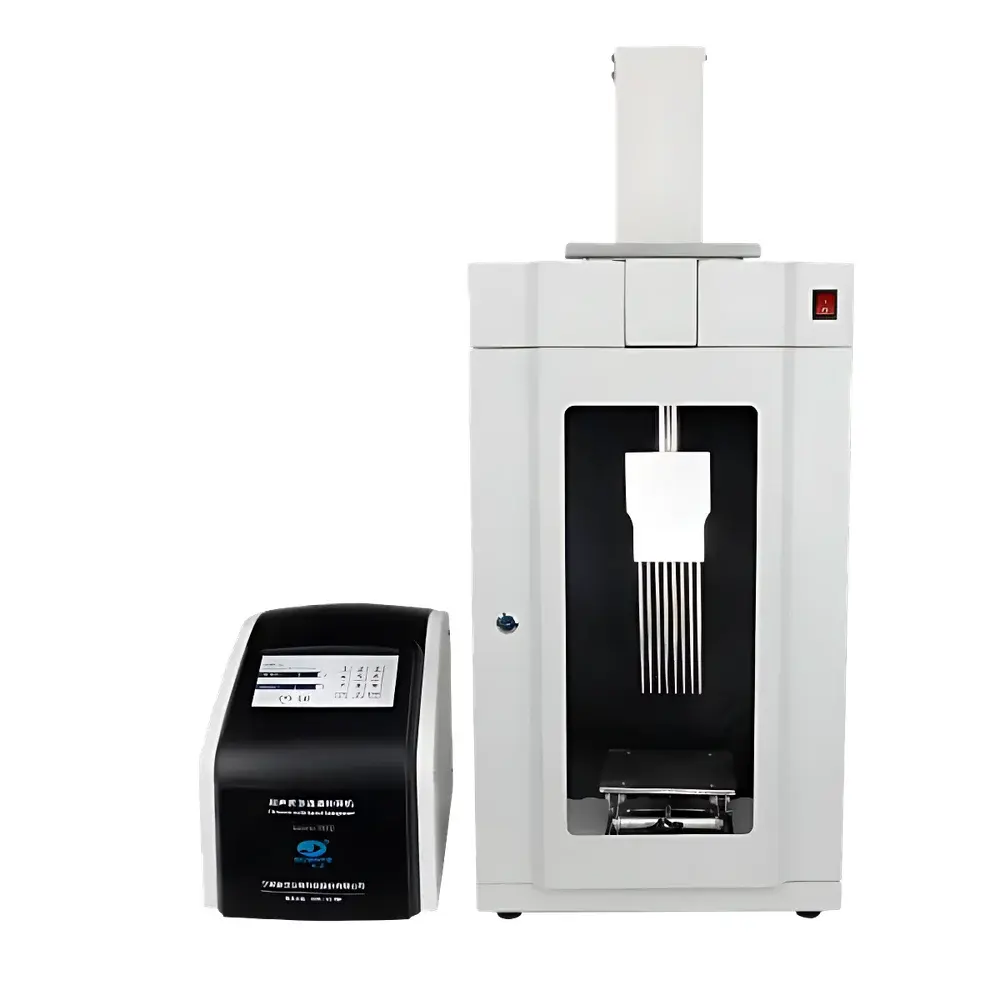
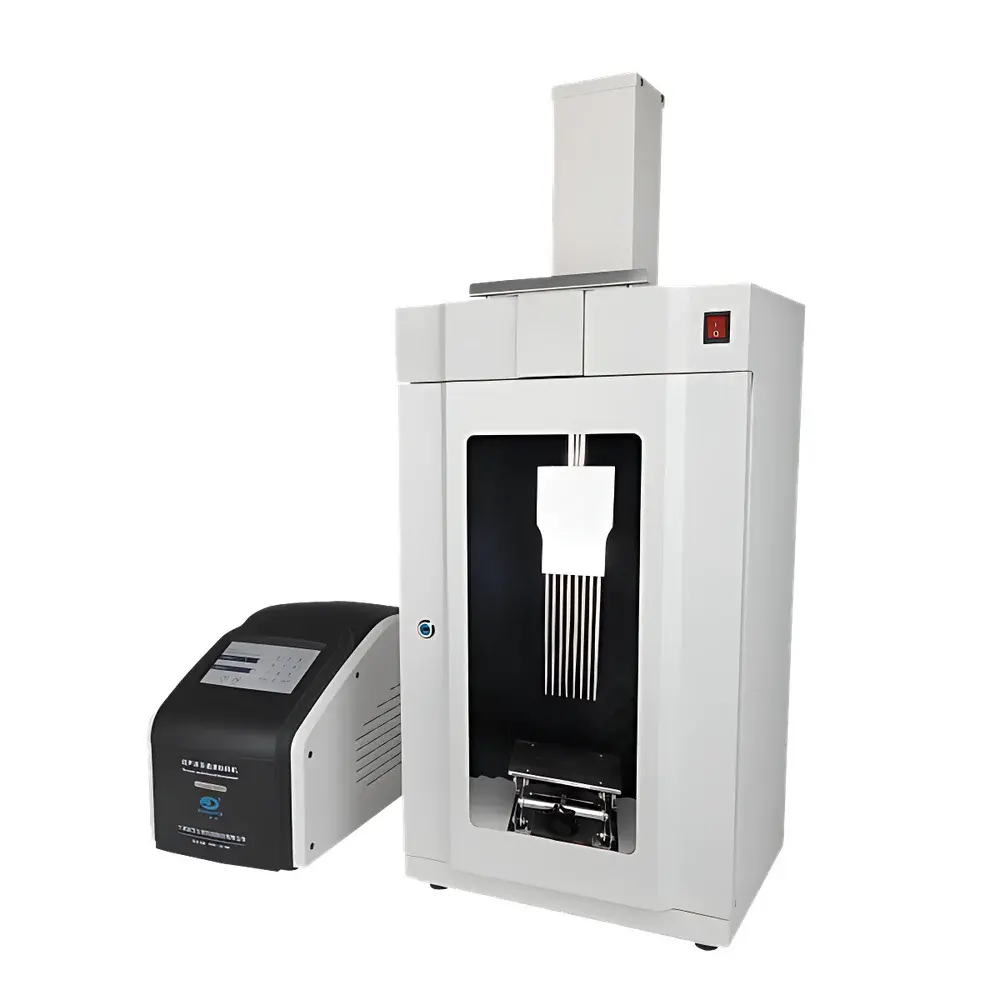
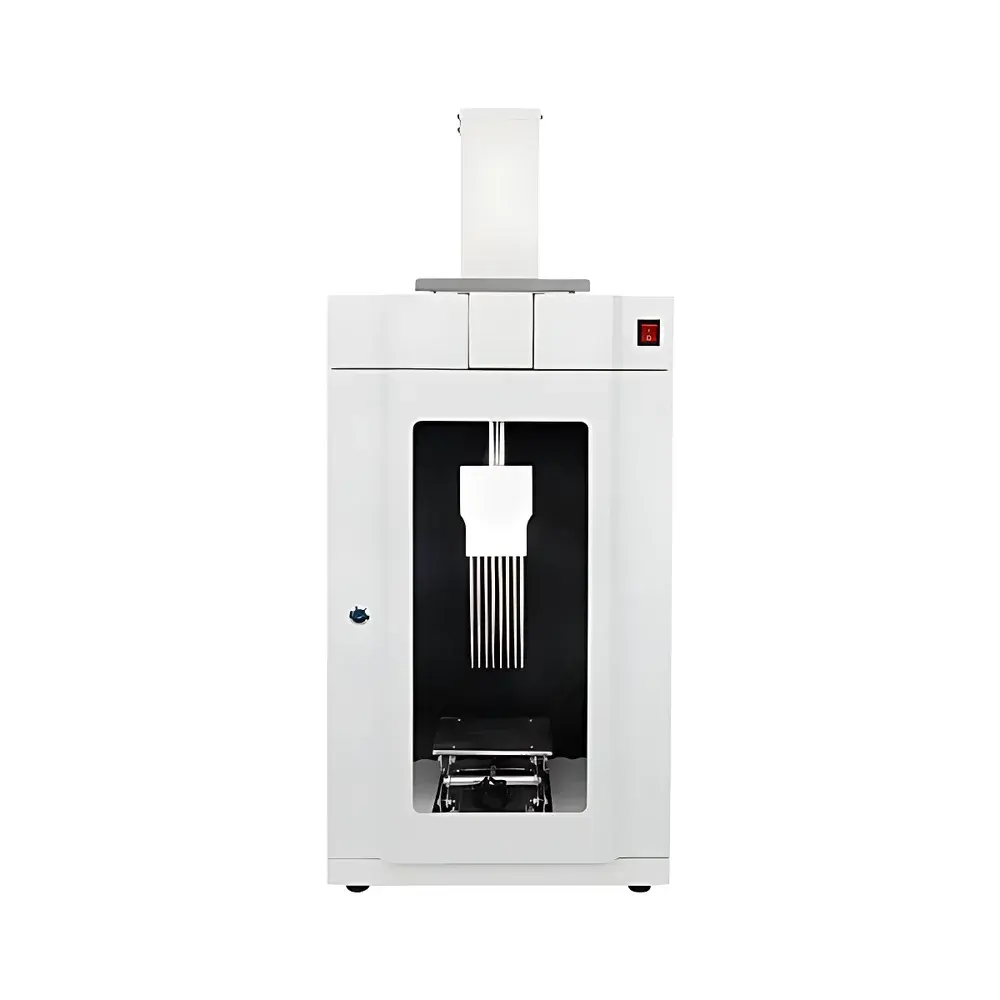
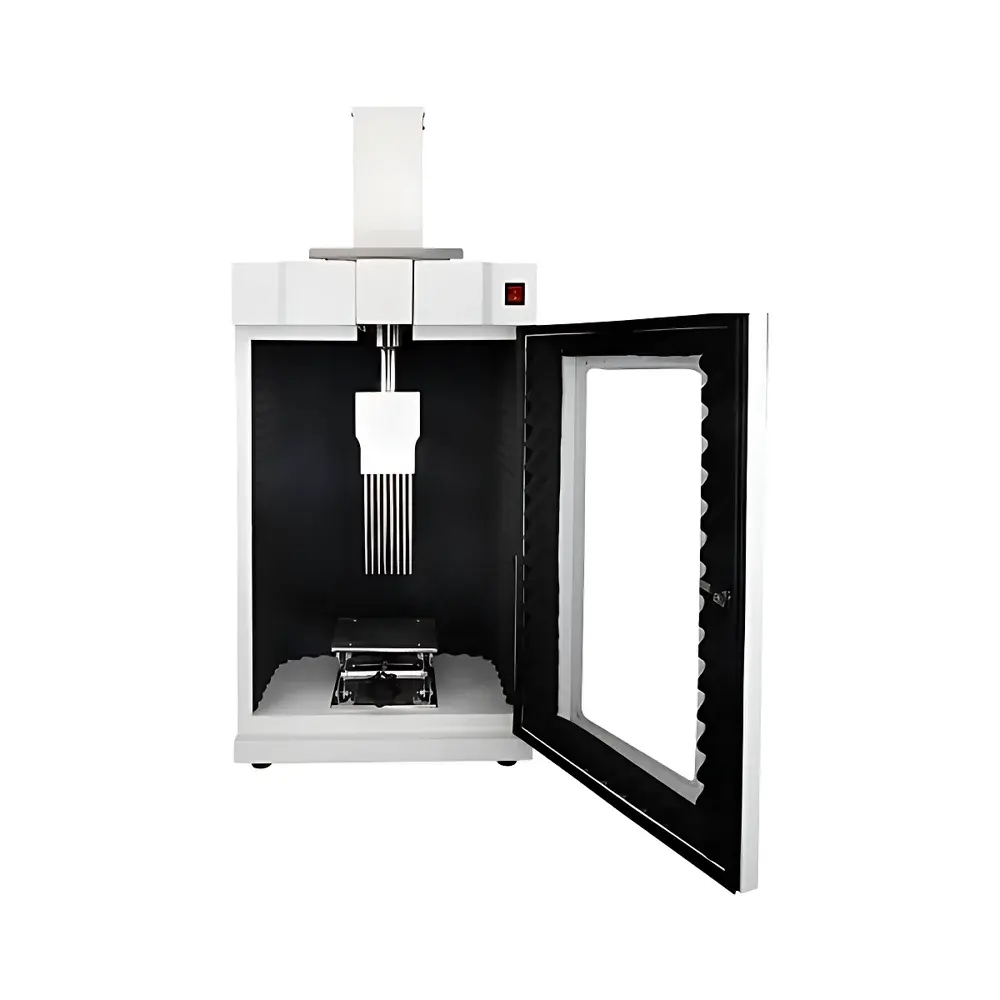
Ningbo Scientz SCIENTZ-16TD High-Throughput Ultrasonic Cell Disruptor
| Brand | Ningbo Scientz |
|---|---|
| Origin | Zhejiang, China |
| Manufacturer Type | Direct Manufacturer |
| Instrument Type | Ultrasonic Cell Disruptor |
| Model | SCIENTZ-16TD |
| Operating Frequency | 20 kHz ± 0.5 kHz |
| Ultrasonic Power Output | 2400 W |
| Sample Volume per Tube | 1–20 mL |
| Parallel Processing Capacity | 16 samples |
| Cooling Mode | Integrated temperature-controlled rack (ambient to ~15 °C recommended) |
| Pulse Mode | Adjustable on/off duty cycle |
| Protection Features | Overtemperature, overload, and system self-diagnosis |
Overview
The Ningbo Scientz SCIENTZ-16TD is a high-throughput ultrasonic cell disruptor engineered for reproducible, parallel lysis of biological samples under controlled acoustic conditions. It operates on the physical principle of acoustic cavitation—where high-intensity ultrasonic waves (20 kHz ± 0.5 kHz) propagate through liquid media, generating transient microbubbles that rapidly expand and collapse. This implosive collapse produces localized shockwaves, extreme shear forces (>10⁶ Pa), and transient hotspots (~5,000 K), collectively enabling efficient mechanical disruption of cellular membranes, organelles, and extracellular matrices without significant thermal denaturation when properly cooled. Unlike single-probe sonicators, the SCIENTZ-16TD integrates 16 synchronized titanium alloy probes mounted on a precision-machined aluminum transducer array, allowing simultaneous treatment of up to 16 tubes (1–20 mL each) with uniform energy distribution—critical for applications demanding inter-sample consistency, such as chromatin immunoprecipitation (ChIP), RNA-seq library prep, or comparative proteomics.
Key Features
- Parallel processing architecture: 16 independent, phase-synchronized ultrasonic probes ensure identical acoustic exposure across all samples—eliminating positional bias inherent in sequential sonication.
- Adjustable power delivery: Continuous output up to 2400 W total (150 W average per probe), with fine-grained digital control over amplitude (0–100%) and pulse duty cycle (0.1–99.9% on/off ratio).
- Thermal management system: Integrated Peltier-cooled sample rack maintains ambient-to-low-temperature conditions during operation; compatible with external recirculating chillers for extended protocols requiring sub-10 °C stability.
- Intelligent protocol memory: Stores up to 20 user-defined methods—including time, amplitude, pulse pattern, and cooling parameters—with timestamped execution logging.
- Real-time safety monitoring: Embedded sensors detect transducer overheating, load impedance mismatch, and probe detachment; automatic shutdown occurs within <50 ms upon fault detection.
- Compliance-ready interface: RS-232 and USB ports support integration into LIMS environments and enable audit-trail generation per FDA 21 CFR Part 11 requirements when paired with validated software.
Sample Compatibility & Compliance
The SCIENTZ-16TD accommodates standard microcentrifuge tubes (1.5–2.0 mL), cryovials (2 mL), and custom cylindrical vessels (up to 20 mL volume). It has been validated for lysis of Gram-negative and Gram-positive bacteria (e.g., E. coli, B. subtilis), yeast (S. cerevisiae), mammalian cell lines (HEK293, CHO), plant tissues (Arabidopsis leaf homogenates), and viral particles (inactivated influenza A virions). The instrument conforms to IEC 61000-6-3 (EMC emission limits) and IEC 61000-6-2 (immunity standards). Its mechanical design meets ISO 13849-1 PLc safety integrity level for laboratory equipment. For regulated workflows, it supports GLP-compliant documentation when used with Scientz’s optional LabManager Pro software (v3.2+), which provides electronic signatures, change tracking, and raw data export in CSV/CSV-TSV formats.
Software & Data Management
LabManager Pro (sold separately) provides full remote control, method synchronization across multiple SCIENTZ units, and automated report generation compliant with ISO/IEC 17025 documentation requirements. Each sonication event logs probe ID, real-time power draw, cumulative energy (J/mL), peak cavitation intensity (estimated via acoustic emission spectroscopy mode), and thermal drift (±0.3 °C resolution). All metadata are embedded in exported files using EXIF-like headers, enabling traceability from raw data to final analysis in downstream tools (e.g., Bioconductor, MaxQuant). Audit trails include operator ID, timestamp, parameter modifications, and system health status—fully exportable for regulatory submissions.
Applications
- Nucleic acid shearing: Fragmentation of genomic DNA for ChIP-seq, ATAC-seq, and long-read sequencing library preparation—achieving size distributions between 100 bp and 1 kb with coefficient of variation <8% across 16 replicates.
- Protein extraction: Solubilization of membrane-bound receptors and inclusion bodies while preserving native conformation—validated by SEC-MALS and CD spectroscopy.
- Nanomaterial dispersion: Deagglomeration of carbon nanotubes, graphene oxide, and metal–organic frameworks in aqueous and organic solvents with narrow polydispersity index (PDI <0.15).
- Phytochemical extraction: Enhanced recovery of thermolabile alkaloids and flavonoids from Salvia miltiorrhiza and Ginkgo biloba without solvent degradation.
- Food & beverage R&D: Homogenization of dairy emulsions, microbial inactivation in juice concentrates, and accelerated aging of wine via controlled free-radical generation.
FAQ
What is the maximum recommended total processing time per batch to maintain thermal stability?
For optimal reproducibility, continuous operation should not exceed 3 minutes per cycle; longer protocols require ≥2-minute cooling intervals between cycles to prevent cumulative heating above 15 °C.
Can the SCIENTZ-16TD be used for non-contact sonication (e.g., bath-style coupling)?
No—it is designed exclusively for direct probe-based coupling; indirect transmission through water baths introduces >40% energy loss and eliminates inter-sample uniformity.
Is calibration traceable to national standards?
Yes—acoustic output is calibrated annually using NIST-traceable hydrophone measurements (Onda HGL-0085) per ASTM E1002-19 Annex A1, with certificate provided upon request.
Does the system support third-party automation integration?
Yes—Modbus TCP and TTL-level trigger I/O ports allow synchronization with robotic liquid handlers (e.g., Hamilton STAR, Tecan Fluent) and environmental chambers.
What maintenance is required for sustained performance?
Titanium probes require visual inspection after every 50 hours of use; tip erosion >0.2 mm depth necessitates replacement. Transducer assemblies are rated for 10,000 hours MTBF under nominal load conditions.