
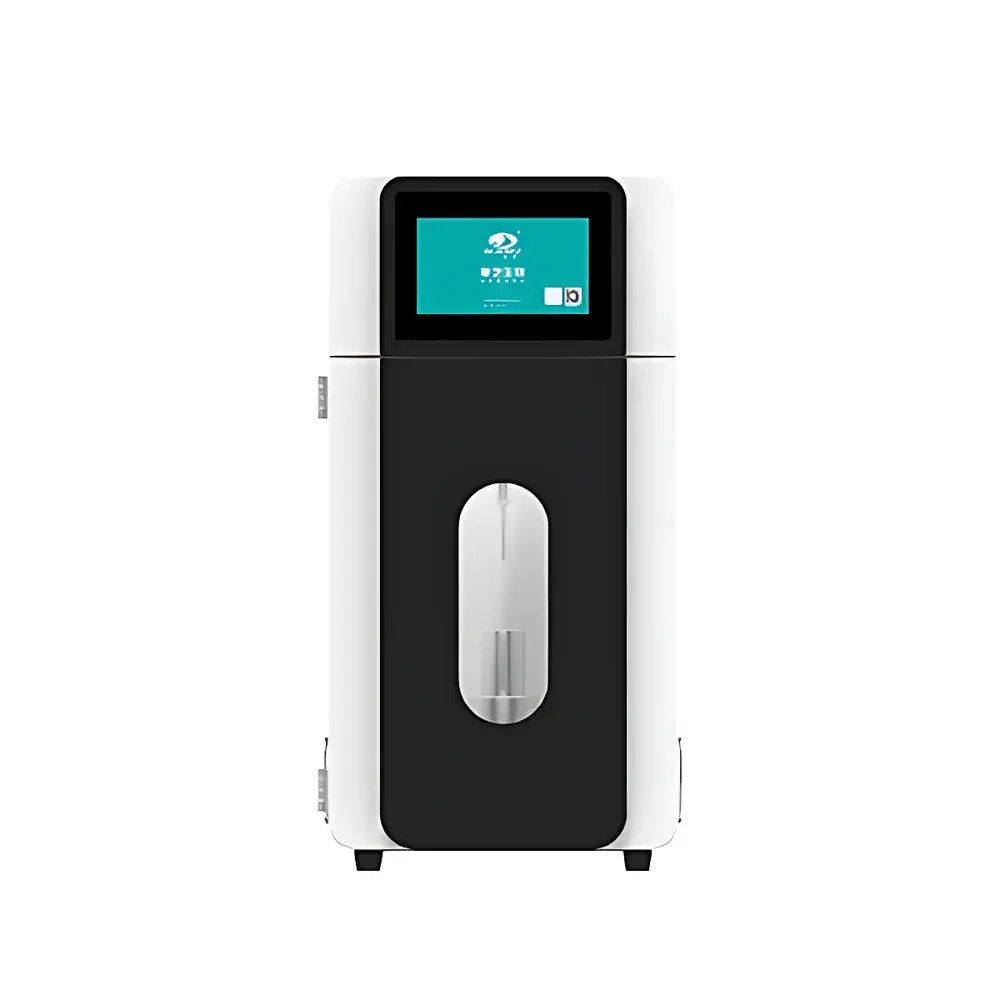
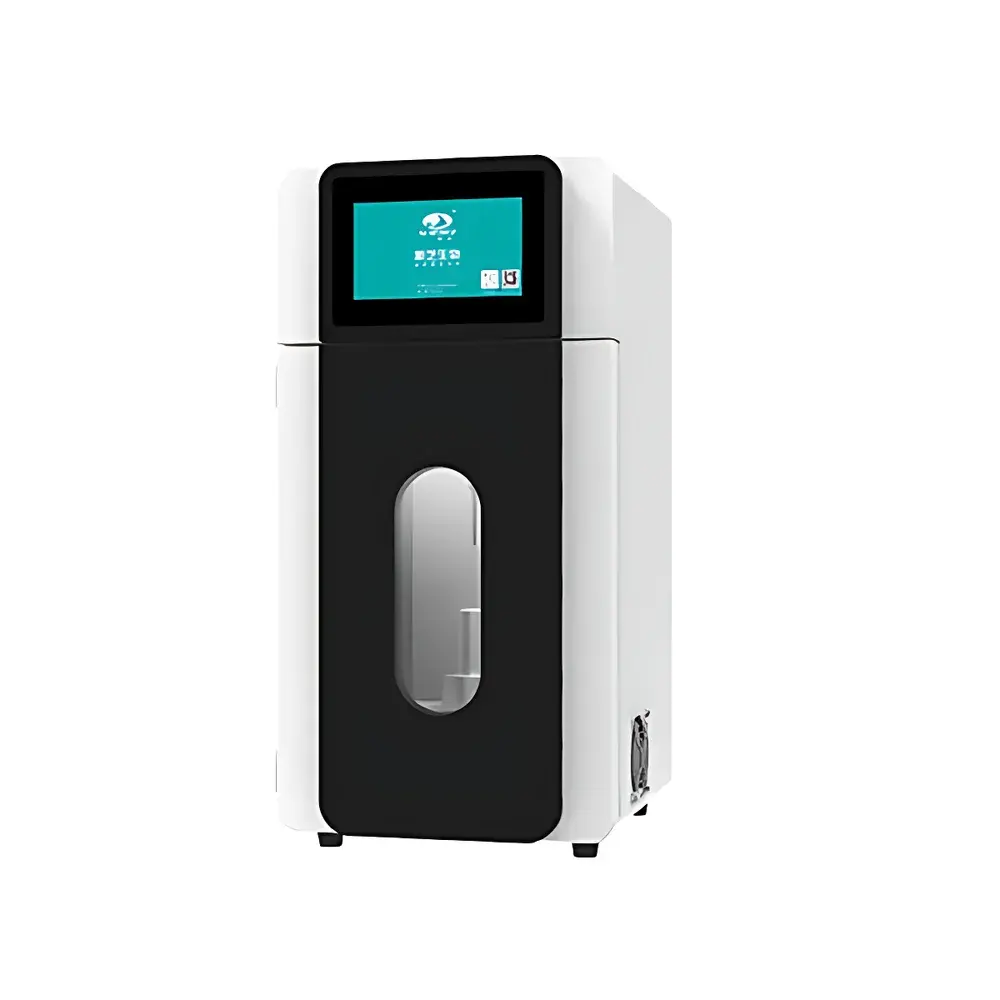
Ningbo Scientz SCIENTZ-650L Integrated Ultrasonic Cell Disruptor
| Brand | Ningbo Scientz |
|---|---|
| Origin | Zhejiang, China |
| Manufacturer Type | Direct Manufacturer |
| Instrument Type | Ultrasonic Cell Disruptor |
| Model | SCIENTZ-650L |
| Cooling | Built-in Refrigeration System |
| Power Adjustment | 1–100% in 1% increments |
| Time Resolution | 0.1 s (ultrasonication & interval) |
| Operating Modes | Continuous & Pulse (with test mode) |
| Safety Protections | Overload, overtemperature, and time-out alarms |
| Horn Material | TC4 Titanium Alloy (Grade 5, ASTM B348) |
| Acoustic Enclosure | Integrated 3D Sound-Dampening Chamber |
| Control | Motorized Vertical Lift with Remote Handheld Controller |
Overview
The Ningbo Scientz SCIENTZ-650L Integrated Ultrasonic Cell Disruptor is an engineered solution for reproducible, scalable, and thermally controlled cell lysis and subcellular particle homogenization in academic, pharmaceutical, and biotechnology laboratories. It operates on the principle of high-intensity ultrasonic cavitation—where rapid pressure oscillations generate transient microbubbles in liquid media that collapse violently, producing localized shear forces, microstreaming, and shockwaves sufficient to disrupt membranes, organelles, and inclusion bodies. Unlike benchtop probe sonicators requiring external chillers or manual positioning, the SCIENTZ-650L integrates vertical motorized sample handling, active refrigeration, and acoustic shielding into a single compact footprint—enabling consistent processing of sensitive biological samples (e.g., bacterial periplasmic extracts, mammalian nuclear lysates, viral capsid preparations) without thermal denaturation or operator variability.
Key Features
- Integrated Thermal Management: Built-in closed-loop refrigeration system maintains sample temperature between 0–25 °C during operation; eliminates dependency on external ice baths or recirculating chillers and prevents thermal degradation of labile proteins or nucleic acids.
- Precision Ultrasonic Control: Digital power regulation from 1% to 100% in 1% increments ensures fine-tuned energy delivery—critical for optimizing lysis efficiency across diverse cell types (Gram-positive bacteria, yeast, plant protoplasts) while minimizing aerosol generation and sample foaming.
- Programmable Pulse Logic: Adjustable duty cycle (ultrasonication time / interval time), each configurable to 0.1-second resolution; supports standardized protocols such as 2 s ON / 5 s OFF for heat-sensitive targets or extended continuous bursts for resilient spores.
- Motorized Vertical Positioning: Electromechanical lift mechanism with handheld remote control enables repeatable probe immersion depth (±0.5 mm repeatability), reducing inter-operator variation and enabling unattended batch processing of multiple tubes or microplates.
- Acoustically Optimized Enclosure: Triple-layer composite sound-dampening chamber—comprising mass-loaded vinyl, viscoelastic polymer, and perforated aluminum facing—reduces operational noise to ≤55 dB(A) at 1 m distance, meeting ISO 11201 occupational safety thresholds for routine lab use.
- Robust Transduction Architecture: TC4 (Ti-6Al-4V) titanium alloy horn (ASTM B348 Grade 5) delivers high fatigue resistance and corrosion immunity in aqueous buffers, including those containing reducing agents or chelators; surface finish Ra < 0.4 µm ensures cleanability and minimizes biofilm retention.
Sample Compatibility & Compliance
The SCIENTZ-650L accommodates standard laboratory vessels—including 0.5–50 mL microcentrifuge tubes, glass vials, and custom reaction cuvettes—via adjustable clamp fixtures. Its sealed transducer-horn interface prevents fluid ingress, supporting operation in mild organic solvent mixtures (e.g., chloroform:methanol extractions) when validated per user SOPs. The system complies with IEC 61000-6-3 (EMC emission limits) and IEC 61000-6-2 (immunity to electrostatic discharge and RF fields). While not certified for GMP manufacturing environments out-of-the-box, its programmable audit trail (via optional USB logging), parameter lockout, and alarm event timestamps align with GLP documentation requirements and support FDA 21 CFR Part 11 readiness when deployed with validated software extensions.
Software & Data Management
The embedded controller stores up to 50 user-defined protocols with timestamped execution logs. Optional USB data export captures real-time power output, temperature feedback, and cycle completion status in CSV format for traceability. No proprietary software installation is required; raw logs are compatible with Python pandas, MATLAB, or LIMS integration via serial command scripting (RS-232 interface). All parameter changes—including power level, duration, and pulse ratio—are recorded with operator ID (if network-authenticated) and system clock stamp, fulfilling basic ALCOA+ data integrity criteria for preclinical research settings.
Applications
- Preparation of soluble antigen extracts for ELISA and immunoblotting
- Isolation of plasmid DNA and total RNA from E. coli, Bacillus, and Saccharomyces cultures
- Disruption of cultured mammalian cells (HEK293, CHO, Jurkat) for phosphoproteome analysis
- Nanoparticle dispersion in liposomal formulation development
- Extraction of intracellular metabolites under quenching conditions (e.g., cold methanol/water)
- Shearing of chromatin for ChIP-seq library construction (validated with 200–500 bp fragment size distribution)
FAQ
Does the SCIENTZ-650L require external cooling water or cryogenic supply?
No—its integrated thermoelectric refrigeration module operates independently, maintaining sample bath temperatures within ±1.5 °C of setpoint without auxiliary infrastructure.
Can the TC4 horn be autoclaved?
TC4 titanium alloy is compatible with steam sterilization at 121 °C for 20 minutes; however, repeated autoclaving may accelerate surface oxidation—routine ethanol wipe-down and UV irradiation are recommended for aseptic workflows.
Is pulse-mode timing validated per USP <1058> analytical instrument qualification?
While the device itself is not pre-qualified, its 0.1-second timing resolution and deterministic firmware behavior allow users to perform IQ/OQ/PQ per USP <1058> using NIST-traceable stopwatches and thermal mapping probes.
What maintenance intervals are recommended for long-term reliability?
Horn tip inspection every 200 operating hours; transducer coupling grease replacement every 12 months or 1,000 cycles; acoustic chamber foam inspection annually for compression set.





