
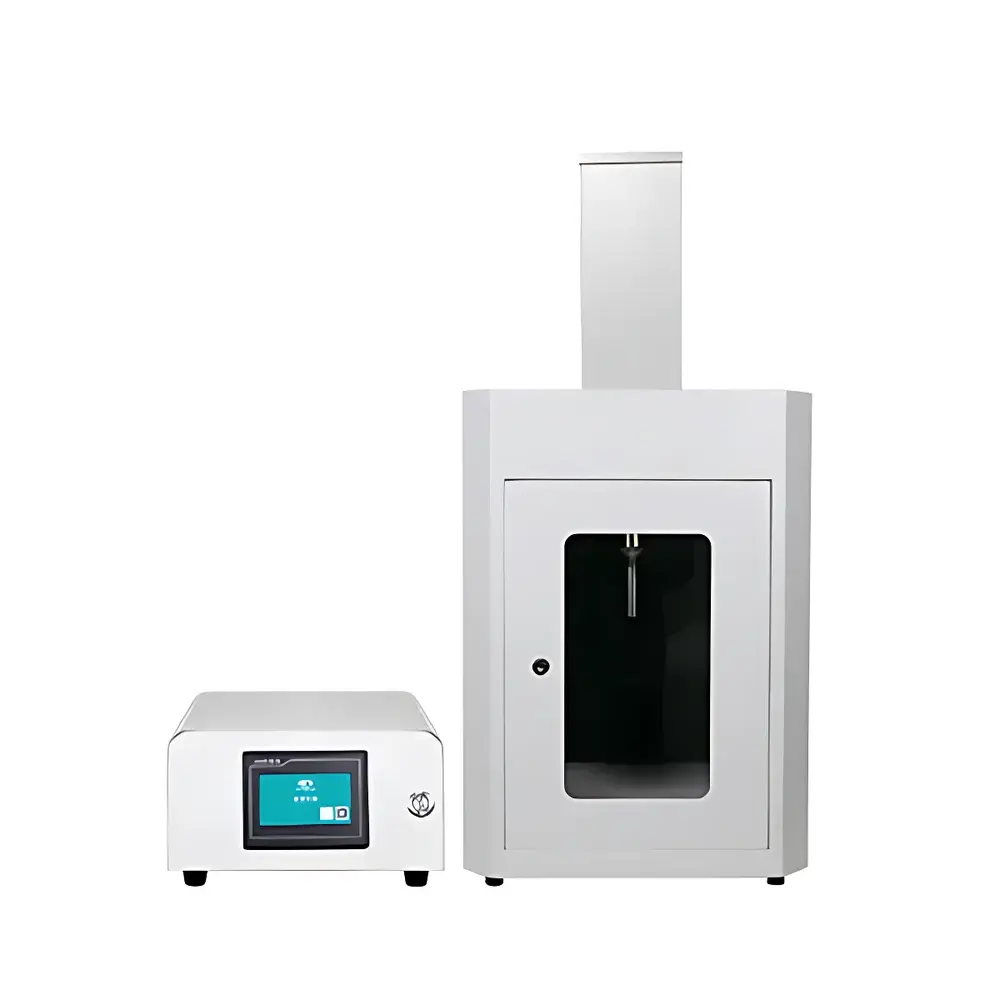
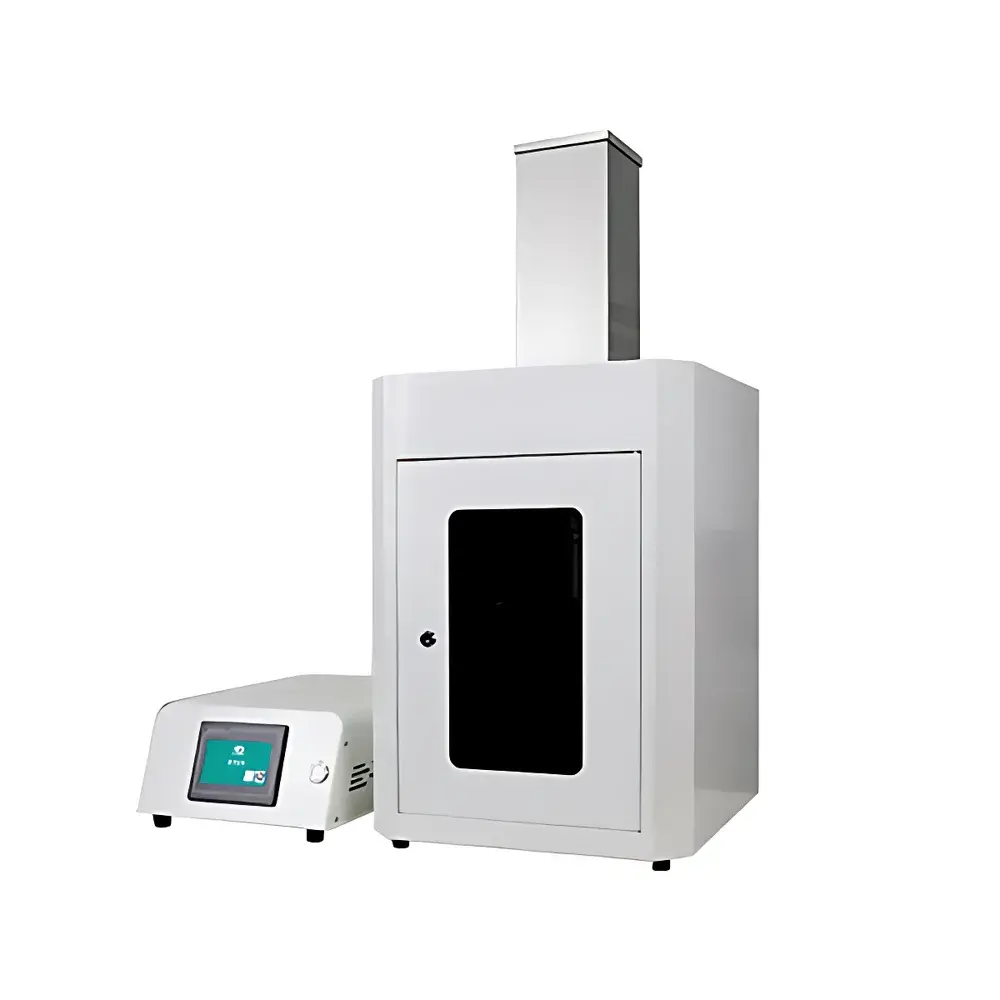
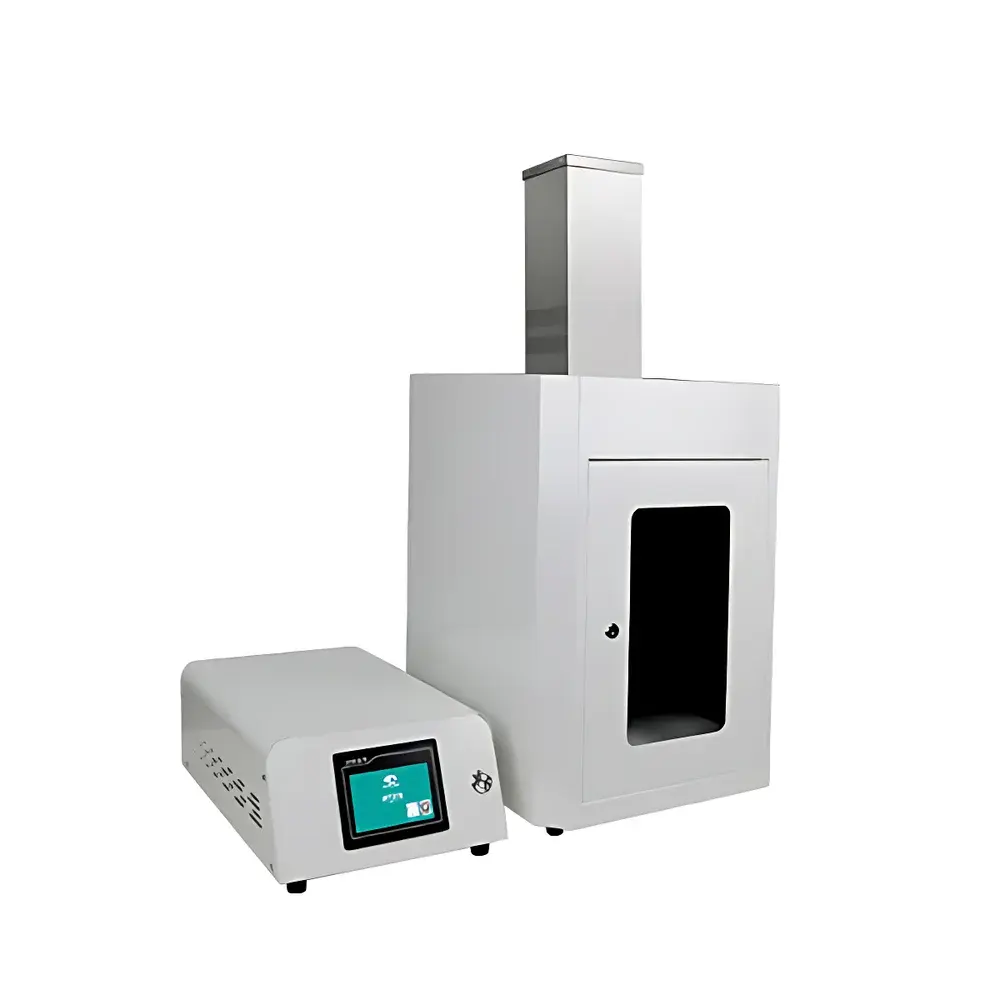
Ningbo Scientz SCINETZ-08 Industrial Ultrasonic Cell Disruptor
| Brand | Ningbo Scientz |
|---|---|
| Origin | Zhejiang, China |
| Manufacturer Type | Direct Manufacturer |
| Region Classification | Domestic (China) |
| Model | SCINETZ-08 |
| Instrument Type | Ultrasonic Cell Disruptor |
| Ultrasonic Power Output | 2400 W |
| Operating Frequency | 15 kHz |
| Batch Sample Volume | 1–5 L per cycle |
Overview
The Ningbo Scientz SCINETZ-08 Industrial Ultrasonic Cell Disruptor is an engineered solution for high-throughput, scalable disruption of biological cells, tissues, and colloidal suspensions in industrial and pilot-scale bioprocessing environments. It operates on the principle of acoustic cavitation—where high-intensity ultrasonic energy (15 kHz) propagates through a liquid medium, generating transient microbubbles that rapidly collapse under alternating pressure cycles. This implosive collapse produces localized shockwaves, microstreaming, and extreme shear gradients (>10⁶ s⁻¹) at the liquid–solid interface, effectively fracturing cell membranes, disaggregating protein complexes, and deagglomerating nanoparticles without significant thermal degradation when properly temperature-controlled. Unlike benchtop sonicators limited to mL-scale volumes, the SCINETZ-08 is purpose-built for continuous or semi-continuous batch processing of 1–5 L volumes, making it suitable for upstream biomanufacturing, natural product extraction, and nanomaterial synthesis where reproducible mechanical energy delivery is critical.
Key Features
- High-power dual-exciter transducer architecture delivering stable 2400 W nominal output with minimal harmonic distortion and extended duty-cycle capability
- Robust titanium alloy probe assembly with integrated amplitude amplification via stepped horn design, optimized for low-frequency (15 kHz) high-energy transmission
- Microprocessor-based digital controller enabling precise time, power, and pulse-mode programming (e.g., 0.1–99.9 s ON/OFF cycles) with real-time feedback monitoring
- Integrated overcurrent, overtemperature, and impedance-mismatch protection circuits ensuring operational safety during prolonged industrial use
- Modular system architecture supporting optional integration with external recirculation loops, jacketed reactors, or chiller units (e.g., -10 to +40 °C cooling range)
- IP54-rated enclosure with corrosion-resistant stainless-steel housing designed for compliance with ISO 14644-1 Class 8 cleanroom-adjacent environments
Sample Compatibility & Compliance
The SCINETZ-08 accommodates viscous, particulate-laden, and thermosensitive samples including microbial cultures (E. coli, yeast), plant biomass slurries, animal tissue homogenates, polymer emulsions, and metal oxide nanoparticle dispersions. Its low-frequency, high-amplitude operation avoids excessive localized heating typical of higher-frequency systems—enabling processing of heat-labile biomolecules such as enzymes and extracellular vesicles when coupled with active cooling. The system supports Good Manufacturing Practice (GMP)-aligned workflows through configurable audit trails, user-access levels, and event logging compatible with FDA 21 CFR Part 11 requirements when deployed with validated software extensions. It meets IEC 61000-6-2/6-4 electromagnetic compatibility standards and conforms to ISO 20487:2021 guidelines for ultrasonic equipment used in biological sample preparation.
Software & Data Management
The embedded control firmware provides deterministic timing resolution (±0.05 s) and power regulation accuracy (±3% full scale) across all operating modes. Optional Scientz LabLink™ software enables remote parameter configuration, real-time power waveform visualization, and export of CSV-formatted process logs—including cumulative energy dose (kJ/L), peak amplitude (µm), and thermal drift profiles. All data files are timestamped, digitally signed, and support traceability for GLP/GMP documentation. Integration with LIMS platforms is achievable via Modbus TCP or OPC UA protocols, facilitating automated batch record generation and electronic signature workflows.
Applications
- Biopharmaceutical: Lysis of recombinant E. coli for inclusion body recovery; disruption of CHO cell cultures prior to monoclonal antibody purification
- Natural Product Extraction: Enhanced release of polyphenols, flavonoids, and essential oils from botanical matrices (e.g., ginger rhizomes, citrus peels) with >25% yield improvement vs. maceration
- Materials Science: Deagglomeration of graphene oxide, TiO₂, and Fe₃O₄ nanoparticles into stable aqueous colloids for inkjet printing or catalytic coating applications
- Environmental Engineering: Sonolytic degradation of persistent organic pollutants (e.g., PFAS precursors, chlorinated hydrocarbons) in wastewater effluents
- Food & Cosmetics: Homogenization of nanoemulsions for functional beverages; particle size reduction of mica and silica pigments in cosmetic suspensions
FAQ
What is the maximum recommended operating duration per cycle without active cooling?
Continuous operation is limited to 15 minutes at full power (2400 W) with ambient air convection; extended runs require external chiller integration to maintain sample temperature below 40 °C.
Can the SCINETZ-08 be integrated into a closed-loop recirculation system?
Yes—the unit features standardized 1.5-inch sanitary clamp ports and optional flow-through horn adapters compatible with peristaltic or centrifugal pump manifolds.
Is the transducer replaceable as a field-serviceable component?
The dual-excitation piezoceramic stack is sealed within the transducer housing and requires factory recalibration after replacement; however, the titanium horn and booster assembly are user-replaceable using standard torque specifications.
Does the system comply with CE marking requirements for machinery safety?
It carries CE marking under Machinery Directive 2006/42/EC and Low Voltage Directive 2014/35/EU, with conformity verified by TÜV Rheinland.
What validation documentation is provided for GMP environments?
A Factory Acceptance Test (FAT) report, IQ/OQ templates, and calibration certificates traceable to NIM (National Institute of Metrology, China) are supplied with each unit.



