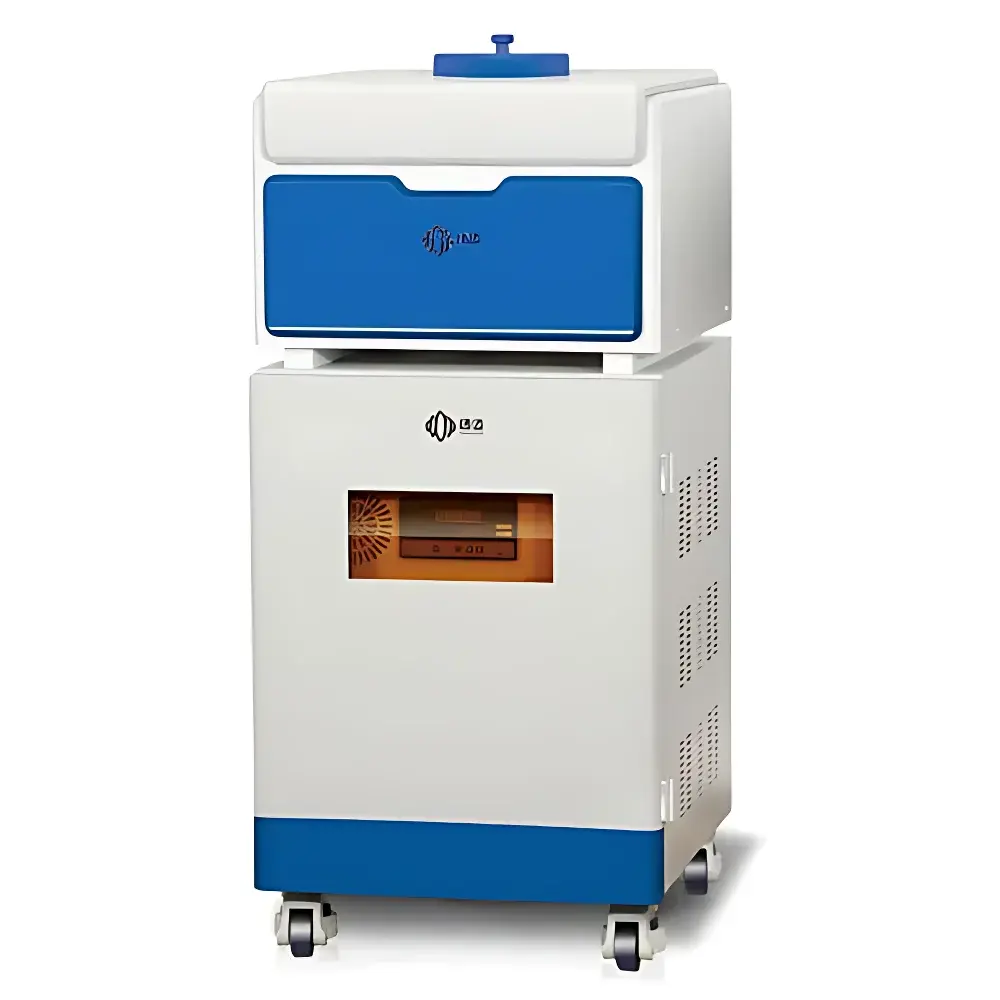
NIUMAG NMI20-ta Low-Field Nuclear Magnetic Resonance Analyzer for Tobacco Moisture Content Measurement
| Brand | NIUMAG |
|---|---|
| Origin | Jiangsu, China |
| Manufacturer Type | Authorized Distributor |
| Country of Origin | China |
| Model | NMI20-ta |
| Pricing | Available Upon Request |
| Magnet Type | Permanent Magnet |
| Static Magnetic Field Strength | 0.5 ± 0.08 T |
| Probe Coil Diameters | 25 mm and 40 mm |
| Measurement Principle | Proton (¹H) NMR Relaxometry |
Overview
The NIUMAG NMI20-ta is a dedicated low-field nuclear magnetic resonance (LF-NMR) analyzer engineered for rapid, non-destructive, and quantitative moisture content assessment in tobacco materials across leaf, stem, cut filler, reconstituted tobacco sheet (RTS), and expanded tobacco products. Unlike conventional gravimetric methods—such as ASTM D143–22 (Standard Test Methods for Small Clear Specimens of Timber) adapted for tobacco or ISO 2880:2016 (Tobacco — Determination of moisture content — Oven-drying method)—the NMI20-ta relies on the physical response of hydrogen nuclei (¹H) to controlled radiofrequency (RF) excitation within a stable static magnetic field. When placed in the 0.5 ± 0.08 T homogeneous field generated by its permanent magnet system, hydrogen protons in water molecules undergo spin excitation upon application of a resonant RF pulse at the Larmor frequency (~21.3 MHz). The subsequent free induction decay (FID) and transverse relaxation (T₂) behavior are acquired and processed to yield both total moisture content (via integrated signal amplitude) and molecular mobility information (via multi-exponential T₂ distribution analysis). This enables discrimination between bound, intermediate, and free water populations—critical for understanding hygroscopic behavior, processing stability, and shelf-life prediction in tobacco manufacturing.
Key Features
- Non-invasive measurement: No sample grinding, drying, or chemical reagents required—preserves sample integrity for downstream testing or archival.
- Dual-probe configuration: Interchangeable 25 mm and 40 mm diameter RF coils accommodate diverse sample geometries—from small leaf fragments to bulk-cut filler—while maintaining optimal signal-to-noise ratio (SNR) and field homogeneity.
- Permanent magnet architecture: Eliminates cryogen dependency and operational complexity associated with superconducting systems; ensures long-term field stability (<0.01% drift/24 h) with minimal maintenance.
- Temperature-controlled sample compartment (optional): Supports standardized moisture evaluation at defined thermal conditions (e.g., 25 °C ± 0.5 °C), aligning with ISO/IEC 17025 calibration traceability requirements.
- Robust industrial design: IP54-rated enclosure suitable for QC laboratory and pilot-line environments; compliant with IEC 61000-6-3 (EMC emission) and IEC 61000-6-2 (immunity) standards.
Sample Compatibility & Compliance
The NMI20-ta accepts solid, semi-solid, and compressed tobacco samples up to 40 mm in diameter and 30 mm in height. It supports routine analysis of unprocessed air-cured, flue-cured, sun-cured, and burley leaf grades; processed cut filler (including expanded and reconstituted forms); and blended cigarette or cigar formulations. Method validation follows principles outlined in ICH Q2(R2) for analytical procedure verification. Data output complies with GLP and GMP documentation requirements—including full audit trails, electronic signatures (per FDA 21 CFR Part 11 when paired with validated software), and raw FID/T₂ data export in ASCII or HDF5 format. Instrument performance verification adheres to ASTM E2972–21 (Standard Practice for Verification of Low-Field NMR Instruments).
Software & Data Management
The system operates under NIUMAG’s proprietary MesoMR software suite, featuring intuitive workflow-driven acquisition, real-time signal visualization, automated T₂ inversion using non-negative least squares (NNLS) algorithms, and customizable report generation. Calibration curves are established using reference standards traceable to NIST SRM 2890 (Moisture in Ground Corn) or in-house matrix-matched tobacco standards characterized via coulometric Karl Fischer titration (ASTM D6304). All raw data, processing parameters, user actions, and timestamps are logged in immutable binary logs, supporting full data integrity and regulatory inspection readiness. Export formats include CSV, Excel, and XML for integration into LIMS platforms such as LabWare or Thermo Fisher SampleManager.
Applications
- Real-time moisture monitoring during threshing, drying, and casing operations to optimize energy consumption and prevent over-drying or case hardening.
- Stability studies evaluating moisture migration in laminated tobacco sheets or filter rod components under accelerated aging conditions.
- QC release testing of incoming leaf lots against internal specifications (e.g., 11.5–13.5% w/w moisture for flue-cured leaf).
- Research into water–cellulose–pectin interactions affecting draw resistance, burn rate, and smoke chemistry profiles.
- Correlation modeling between T₂ relaxation components and sensory attributes (e.g., harshness, mouthfeel) in product development.
FAQ
Is the NMI20-ta compliant with international tobacco industry testing standards?
Yes—the instrument supports method development aligned with ISO 2880, CORESTA Recommended Method No. 62, and internal BAT, PMI, and JTI moisture specification protocols.
Can it differentiate between surface moisture and internally bound water?
Yes—multi-component T₂ analysis resolves at least three distinct relaxation populations, enabling quantification of immobilized, capillary-bound, and bulk-like water phases.
What is the typical measurement time per sample?
Standard single-point moisture quantification requires ≤90 seconds; full T₂ distribution acquisition takes 2–5 minutes depending on SNR requirements and resolution settings.
Does the system require external cooling or shielding?
No—permanent magnet design eliminates cryogenic infrastructure; passive magnetic shielding is integrated, requiring no additional room modifications.
How is calibration maintained over time?
Daily system suitability checks use a sealed polyvinyl chloride (PVC) reference phantom; annual field homogeneity and RF power calibration are performed by NIUMAG-certified service engineers with NIST-traceable equipment.
Related Products