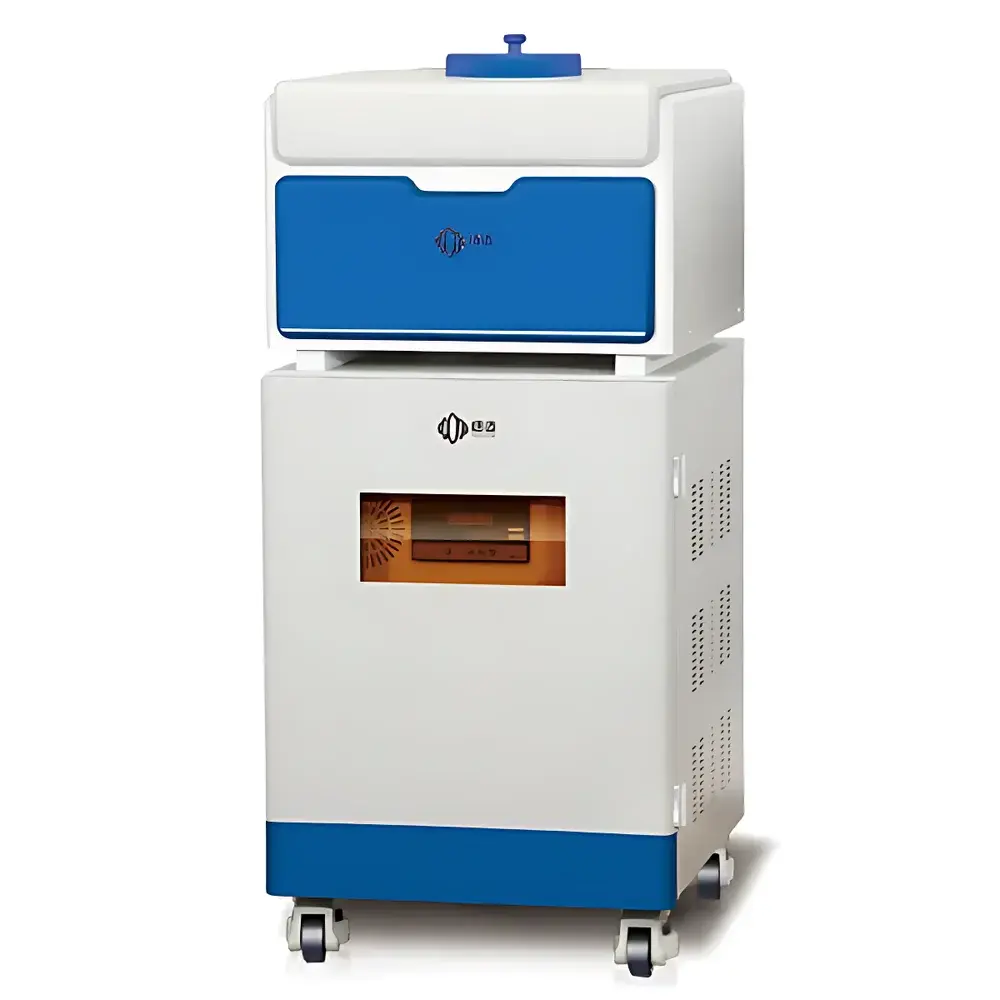
NIUMAG NMR Relaximetry Hydrogen Content Analyzer for Jet Fuel
| Brand | NIUMAG |
|---|---|
| Origin | Jiangsu, China |
| Manufacturer Type | Authorized Distributor |
| Country of Origin | China |
| Model | NMR Relaximetry |
| Pricing | Available Upon Request |
| Magnet Type | Permanent Magnet |
| Magnetic Field Strength | 0.5 ± 0.08 T |
| Probe Coil Diameter | 18 mm |
| Calibration Options | Pure Hydrocarbon Standard (e.g., Dodecane) or User-Provided Reference Sample with Certified H-content |
| Compliant Standards | ASTM D7171, ASTM D3701, ASTM D4808 |
Overview
The NIUMAG NMR Relaximetry Hydrogen Content Analyzer is a dedicated benchtop nuclear magnetic resonance (NMR) instrument engineered for rapid, non-destructive quantification of total hydrogen mass fraction (wt% H) in hydrocarbon-based liquid fuels—particularly jet fuel (Jet A/A-1), diesel, kerosene, and related distillates. It operates on the principle of 1H NMR transverse relaxation (T2) measurement under a stable permanent magnetic field (0.5 ± 0.08 T), enabling direct correlation between integrated NMR signal amplitude and hydrogen concentration. Unlike combustion-based CHN analyzers or infrared spectroscopy methods, this system eliminates sample oxidation, chemical reagents, and operator-dependent digestion steps. Its design adheres to ASTM D7171 “Standard Test Method for Hydrogen Content of Aviation Turbine Fuels by Low-Resolution Nuclear Magnetic Resonance Spectroscopy”, ensuring regulatory alignment for aviation fuel certification workflows. The analyzer delivers traceable, matrix-independent results without reliance on surface homogeneity, color, or physical form—making it suitable for QC labs, refinery process control units, and R&D facilities requiring high reproducibility across batch-to-batch fuel verification.
Key Features
- Permanent magnet architecture ensures long-term field stability with zero cryogen consumption or active shimming requirements.
- 18 mm diameter RF probe optimized for standard 10–15 mL glass NMR tubes—compatible with routine laboratory handling and automated sample changers (optional).
- Dual calibration protocols: certified pure hydrocarbon reference (e.g., n-dodecane, C12H26) or user-supplied reference material with certified hydrogen content (traceable to NIST or equivalent national metrology institutes).
- Non-invasive, non-destructive analysis preserves sample integrity; same specimen may be reanalyzed multiple times or subjected to complementary testing (e.g., distillation, sulfur analysis).
- No sample preparation beyond simple homogenization and transfer into the NMR tube—no drying, grinding, or derivatization required.
- Robust signal acquisition algorithm compensates for minor temperature drift and field inhomogeneity, maintaining accuracy across ambient lab conditions (15–30 °C).
- Integrated safety interlock and RF shielding meet IEC 61000-6-3 and IEC 61000-6-4 electromagnetic compatibility standards.
Sample Compatibility & Compliance
The analyzer accepts liquid, semi-solid, and heterogeneous samples—including neat jet fuel, hydrotreated distillates, biodiesel blends, and residual fuel oils—without phase separation or filtration prerequisites. Solid forms (e.g., wax deposits, polymer-modified fuels) are accommodated when presented as homogeneous suspensions or gels within the detection volume. It complies with ASTM D7171 for jet fuel, ASTM D3701 for aviation turbine fuels, and ASTM D4808 for light/intermediate distillates and residual oils. While not intended for elemental carbon quantification, its hydrogen output supports derived calculations of H/C atomic ratio when paired with independently measured carbon data (e.g., via ASTM D5291). The system architecture supports GLP-compliant operation: audit trails, electronic signatures, and user-access-level controls align with FDA 21 CFR Part 11 requirements when deployed with validated software modules.
Software & Data Management
NIUMAG’s proprietary NMR-Quant software provides intuitive workflow-driven interface for calibration, acquisition, processing, and reporting. All raw FID data, processed spectra, relaxation decay curves, and integration parameters are stored in vendor-neutral HDF5 format with embedded metadata (timestamp, operator ID, calibration status, instrument configuration). Batch reporting exports compliant PDF certificates including uncertainty estimation per ISO/IEC 17025 guidelines. Optional LIMS integration via ASTM E1467-compliant API enables seamless data transfer to enterprise quality management systems. Software validation packages—including IQ/OQ documentation, test scripts, and UAT reports—are available for regulated environments.
Applications
- Hydrogen content verification of jet fuel batches prior to aircraft refueling (ASTM D7171 compliance).
- In-line QC monitoring during hydrotreating and hydrocracking processes to track hydrogen saturation trends.
- Blending ratio confirmation in bio-jet fuel (e.g., HEFA-SPK) production where hydrogen density affects energy content and thermal stability.
- Hydrogen quantification in lubricant base stocks and specialty solvents where H-content correlates with oxidative stability.
- Water and hydrocarbon phase differentiation in contaminated fuel samples using multi-exponential T2 analysis (research mode).
- Supporting ASTM D7467 Annex A1 for hydrogen content-based cetane number estimation in diesel formulations.
FAQ
Does this instrument require liquid helium or cryogenic cooling?
No. It employs a passively stabilized permanent magnet system operating at ambient temperature—eliminating recurring cryogen costs and infrastructure dependencies.
Can it measure hydrogen in solid coal-derived samples?
While primarily designed for liquid fuels, it can quantify bulk hydrogen in powdered or pelletized coal samples if packed uniformly within the 18 mm coil volume and moisture-equilibrated; however, ASTM D3176 or D5373 remain preferred for coal-specific CHN analysis.
How often must the instrument be recalibrated?
Calibration verification is recommended before each analytical session using a check standard; full recalibration is typically required only after hardware maintenance, magnet realignment, or quarterly—per internal SOPs aligned with ISO/IEC 17025 clause 7.7.
Is method validation support available for regulatory submissions?
Yes. NIUMAG provides application notes, method transfer protocols, and collaborative validation assistance—including precision studies (repeatability, intermediate precision) and robustness testing per ICH Q2(R2).