
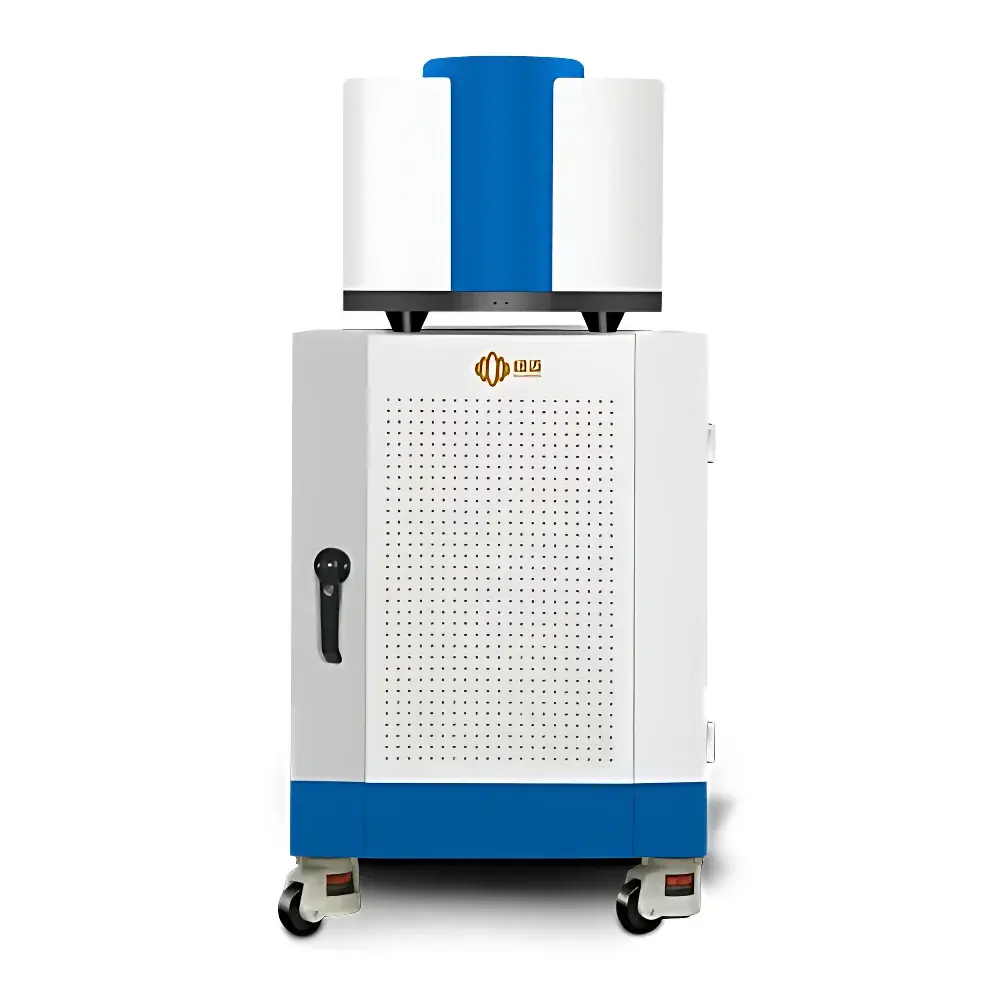
NIUMAG PQ001 Fiber Suspension Dispersion Analyzer – Low-Field NMR Analyzer
| Brand | NIUMAG |
|---|---|
| Origin | Jiangsu, China |
| Model | PQ001-Fiber Suspension Dispersion |
| Instrument Type | Low-Field Nuclear Magnetic Resonance (LF-NMR) Analyzer |
| Sample Type | Solid–Liquid Hybrid Systems |
| Magnet Type | Permanent Magnet |
| Magnetic Field Strength | 0.5 T ± 0.03 T |
| Sample Tube Dimensions | Ø24.2 mm × H25 mm |
| Measurement Time | ≤120 s per test |
| Software Architecture | Integrated GUI with Real-Time T₂ Relaxometry |
| Compliance Framework | Designed for GLP-compliant environments |
Overview
The NIUMAG PQ001 Fiber Suspension Dispersion Analyzer is a purpose-built low-field nuclear magnetic resonance (LF-NMR) instrument engineered to quantify dispersion homogeneity in high-viscosity fiber suspensions—primarily used in pulp and paper manufacturing, biocomposite development, and cellulose-based nanomaterial research. Unlike optical or electrophoretic methods constrained by turbidity, particle concentration, or rheological limitations, this analyzer leverages the physical principle of transverse relaxation time (T₂) measurement to non-invasively probe water mobility in heterogeneous solid–liquid systems. In fiber suspensions, clustered fibers restrict local water diffusion and shorten observed T₂ distributions, while well-dispersed fibers yield longer, narrower T₂ peaks. This correlation enables quantitative, calibration-free assessment of dispersion state without sample dilution, centrifugation, or chemical labeling—making it uniquely suited for in-process quality control and formulation optimization.
Key Features
- Permanent magnet architecture delivering stable 0.5 T field (±0.03 T), eliminating cryogen dependency and enabling benchtop deployment in production labs.
- Optimized RF coil design for Ø24.2 mm × 25 mm cylindrical samples—matching standard pulp suspension vials and ensuring reproducible signal excitation across viscosity ranges up to 10,000 mPa·s.
- Integrated CPMG (Carr–Purcell–Meiboom–Gill) pulse sequence implementation with adjustable echo spacing (0.1–2.0 ms) and total acquisition time (<120 s), balancing resolution and throughput.
- Dedicated dispersion analysis module that deconvolutes multi-exponential T₂ decay curves into discrete components, assigning relative amplitudes to bound, intermediate, and bulk water populations—each correlating to fiber surface coverage, aggregation density, and free-phase volume.
- Touch-enabled GUI with dual-panel interface: left-side parameter configuration (pulse count, receiver gain, temperature offset) and right-side real-time T₂ spectrum visualization with automatic peak integration and dispersion index calculation.
Sample Compatibility & Compliance
The PQ001 accepts undiluted, opaque, and non-Newtonian fiber suspensions—including hardwood/softwood kraft pulps, recycled fiber slurries, nanocellulose dispersions, and modified cellulose derivatives in aqueous or polar aprotic media (e.g., NMP). It does not require filtration, sedimentation, or optical clarity. The system complies with ISO/IEC 17025 foundational requirements for testing laboratories and supports traceable calibration via standardized reference phantoms (e.g., doped water–glycerol mixtures with certified T₂ values). When operated under documented SOPs and paired with version-controlled firmware, the analyzer meets GLP documentation standards and interfaces with LIMS platforms supporting ASTM E2500-22 (Good Automated Manufacturing Practice) and FDA 21 CFR Part 11 for electronic records and signatures.
Software & Data Management
NIUMAG’s proprietary NMIQ software provides full-cycle data handling—from raw FID acquisition to T₂ distribution modeling and dispersion metric generation (e.g., D-index = Abulk / (Abound + Aintermediate)). All datasets retain full metadata: timestamp, operator ID, ambient temperature, sample ID, and instrument status logs. Export formats include CSV (for statistical process control), XML (for LIMS ingestion), and PNG/PDF (for regulatory reporting). Audit trails record every parameter change, result override, and user login event—enabling retrospective verification during internal audits or regulatory inspections.
Applications
- Real-time evaluation of mechanical refining efficiency and its impact on fiber liberation and fines generation.
- Quantitative screening of dispersants, cationic polymers, and enzymatic treatments in pilot-scale slurry trials.
- Correlation of T₂-derived dispersion metrics with final sheet properties: tensile strength (ISO 1924-3), tear resistance (ISO 1974), and formation uniformity (ISO 9712).
- Supporting green chemistry initiatives by reducing overuse of retention aids—typical dosage reductions of 20–30% have been validated in mill trials using PQ001-guided dosing protocols.
- Cross-industry extension to lignin–polymer blends, bacterial cellulose hydrogels, and microfibrillated cellulose (MFC) stabilization studies.
FAQ
How does LF-NMR distinguish between dispersed and aggregated fibers?
It measures the transverse relaxation time (T₂) of hydrogen nuclei in water molecules. Aggregated fibers reduce local water mobility, shortening T₂; well-dispersed systems exhibit longer, more homogeneous T₂ distributions.
Can the PQ001 analyze samples at elevated temperatures?
Yes—the system accommodates ambient temperature control via optional Peltier stage (range: 5–60 °C), enabling thermal stability studies of dispersion behavior.
Is method validation required before routine use?
Yes—users must perform system suitability testing using reference suspensions and establish acceptance criteria for T₂ repeatability (RSD ≤ 3.5% across n=6 replicates) per ISO 5725-2.
Does the instrument require external shielding or dedicated infrastructure?
No—it operates within standard laboratory electromagnetic environments and requires only 100–240 V AC, 50/60 Hz power and no special grounding or Faraday cage.
How is data integrity ensured during long-term deployment?
All measurements are digitally signed upon completion, and raw FID files are immutable. Firmware enforces write-once storage for audit trail entries, preventing post-acquisition modification.



