
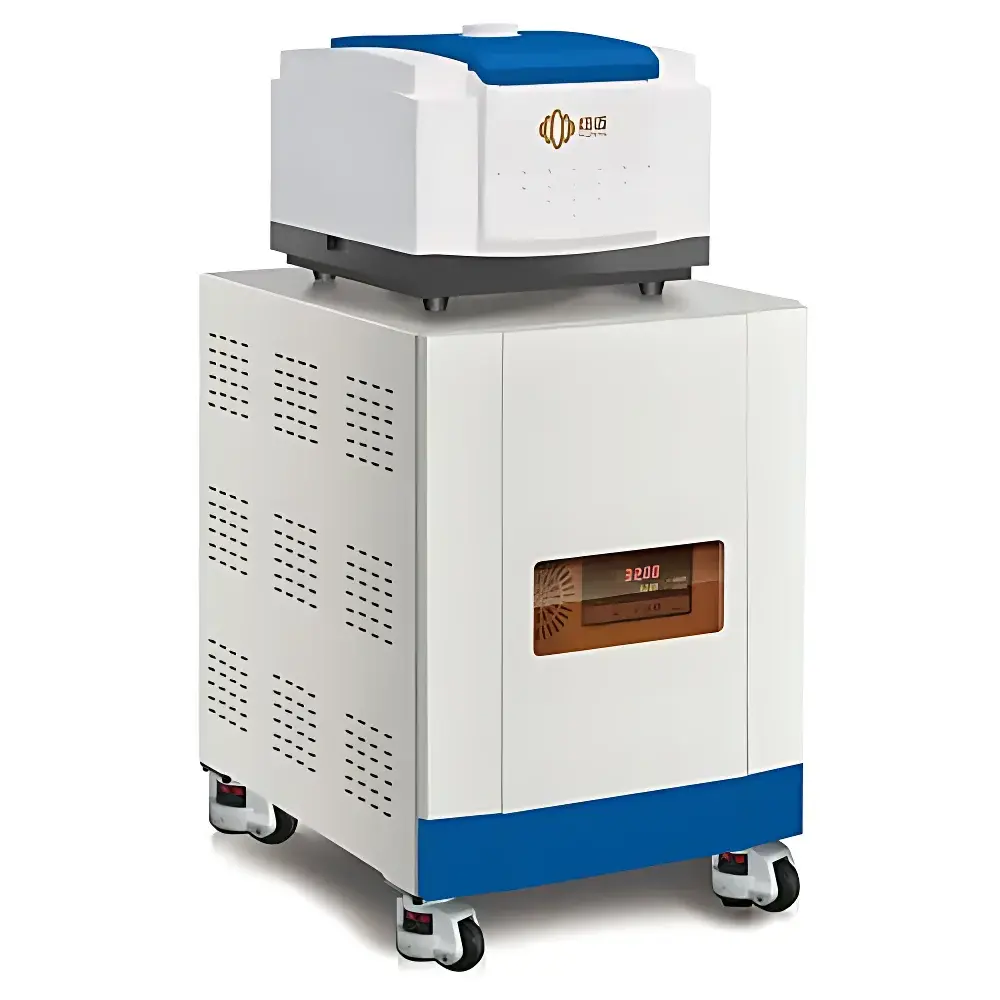
NIUMAG PQ001-NMR Powder Wettability Analyzer
| Brand | NIUMAG |
|---|---|
| Origin | Jiangsu, China |
| Manufacturer Type | Authorized Distributor |
| Region of Manufacture | Domestic (China) |
| Model | PQ001-NMR |
| Measurement Scope | In-situ wettability analysis of particle suspensions in native liquid media |
Overview
The NIUMAG PQ001-NMR Powder Wettability Analyzer is a dedicated benchtop instrument engineered for quantitative, non-invasive assessment of particle–liquid interfacial interactions through low-field nuclear magnetic resonance (LF-NMR) relaxometry. Unlike optical or gravimetric methods, the PQ001-NMR measures the transverse relaxation time (T2) distribution of hydrogen nuclei in the liquid phase surrounding solid particles—directly correlating with bound vs. free fluid fractions, surface hydration layers, and interfacial wetting efficiency. This principle enables true in-situ characterization without sample drying, centrifugation, or dilution, preserving native dispersion state and dynamic equilibrium. Designed for R&D laboratories and QC environments in advanced materials, pharmaceuticals, and energy sectors, the system delivers reproducible, physics-based metrics for wettability—defined here as the thermodynamic affinity between particle surface functional groups and solvent molecules—under ambient or controlled temperature conditions.
Key Features
- Low-field NMR-based wettability quantification: Measures T2 decay profiles (0.1–3000 ms range) to resolve mobile vs. immobilized liquid fractions at particle interfaces
- In-situ suspension analysis: Direct measurement of undiluted, concentrated slurries and pastes—no filtration, drying, or phase separation required
- Integrated temperature control module (optional): Enables wettability profiling across 5–60 °C for thermal stability assessment
- Automated pulse sequence selection: Pre-configured CPMG (Carr–Purcell–Meiboom–Gill) protocols optimized for colloidal and high-viscosity systems
- Minimal operator dependency: Fully guided workflow from sample loading to report generation; no NMR expertise required
- Robust hardware architecture: Permanent magnet (0.5 T), shielded RF coil, and vibration-damped platform ensure long-term signal stability
Sample Compatibility & Compliance
The PQ001-NMR accepts standard 15-mm OD glass NMR tubes containing 0.8–1.2 mL of native suspension—compatible with aqueous, organic, and mixed-solvent systems (e.g., water/ethanol, NMP, DMF). It supports particles ranging from nanoscale (≥10 nm) to coarse powders (<500 µm), including oxides (SiO2, Al2O3), carbon allotropes (graphene, CNTs), metal nanoparticles, ceramic precursors, and API powders. The methodology aligns with ASTM D7928 (particle size by sedimentation) and ISO 13321 (dynamic light scattering) in its emphasis on dispersion state integrity. While not a regulatory instrument per se, raw data files (FID and T2 distributions) are timestamped and exportable in ASCII/CSV format, supporting GLP-compliant documentation and internal audit trails.
Software & Data Management
The proprietary PQ-Analyzer software provides a unified interface for acquisition, processing, and reporting. Key modules include: (1) Pulse sequence setup with real-time preview of echo train quality; (2) T2 inversion using non-negative least squares (NNLS) with regularization parameter optimization; (3) Quantitative wettability index calculation—defined as the ratio of bound liquid fraction (T2 < 10 ms) to total detectable liquid; (4) Batch processing for comparative studies (e.g., surfactant screening, pH titration series); (5) PDF report generation with embedded metadata (operator ID, date/time, instrument SN, calibration status). All data files retain full audit trail information and comply with FDA 21 CFR Part 11 requirements when deployed on validated Windows OS platforms with user access controls enabled.
Applications
- Ceramics & Advanced Manufacturing: Optimization of slurry rheology and green-body density via wetting-controlled particle packing in tape casting and slip casting
- Nanomaterials R&D: Quantifying surface ligand grafting efficiency on quantum dots or metal–organic frameworks by tracking hydration shell disruption
- Electronics Slurries: CMP slurry stability assessment—correlating T2 shortening with abrasive particle agglomeration onset
- Inkjet & Functional Inks: Screening dispersants for pigment-carbon black systems based on interfacial adhesion energy proxies
- Battery Electrode Slurries: Monitoring binder–active-material wetting kinetics during mixing to prevent dry spots and calendering defects
- Pharmaceutical Solid Dosage: Differentiating hydrate formation propensity among polymorphs via surface water mobility mapping
FAQ
What physical parameter does the PQ001-NMR actually measure?
It measures the transverse relaxation time (T2) distribution of 1H nuclei in the liquid phase, which reflects molecular mobility gradients near particle surfaces.
Can it distinguish between chemisorbed and physisorbed water?
No—it reports aggregate bound-liquid fractions; differentiation requires complementary techniques such as FTIR or XPS.
Is calibration required before each test?
A single reference scan using deionized water is performed daily to verify system stability; no per-sample calibration is needed.
Does the instrument require liquid nitrogen or cryogens?
No—operates exclusively with permanent magnet technology and ambient air cooling.
How is data traceability ensured for regulated environments?
All acquisitions embed digital signatures, operator IDs, timestamps, and instrument configuration logs—exportable for ALCOA+ compliant archiving.



