
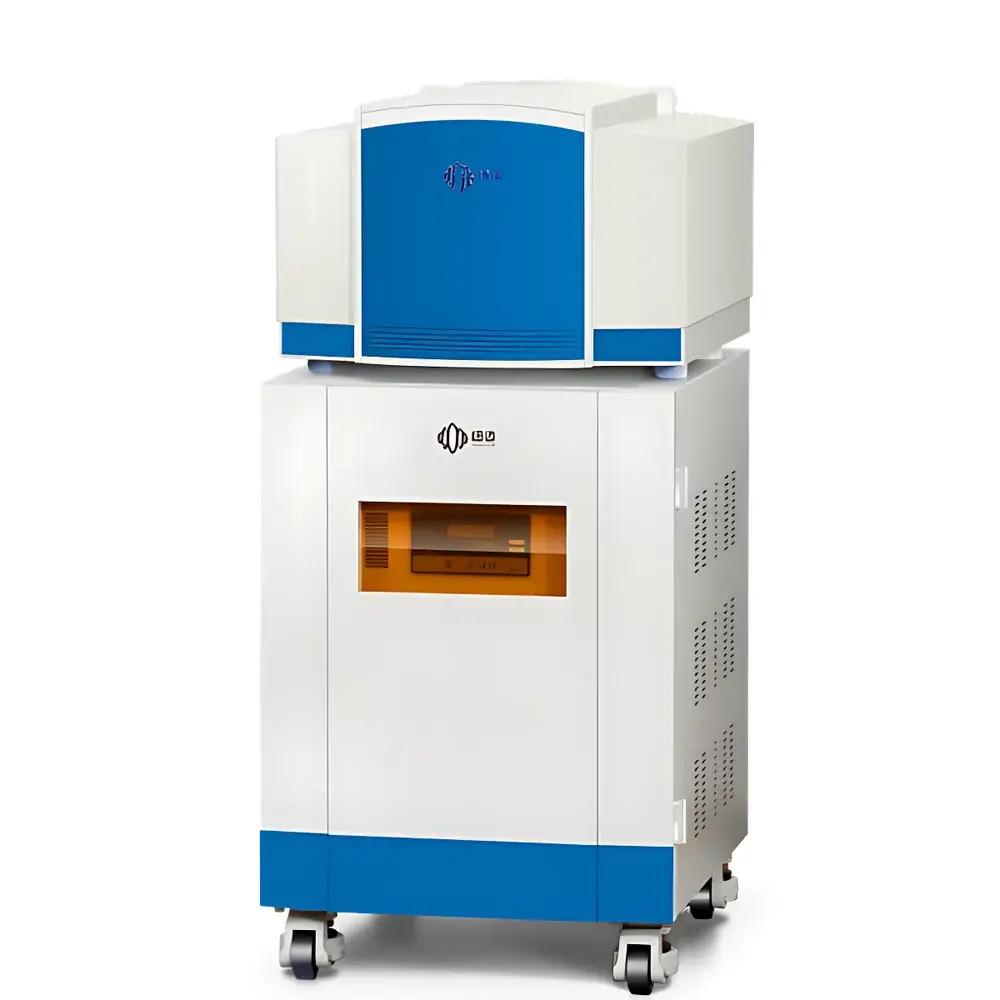
NIUMAG PQ001 Powder Wettability Analyzer
| Brand | NIUMAG |
|---|---|
| Origin | Jiangsu, China |
| Manufacturer Type | Authorized Distributor |
| Country of Origin | China |
| Model | PQ001-Powder |
| Pricing | Available Upon Request |
Overview
The NIUMAG PQ001 Powder Wettability Analyzer is a benchtop low-field nuclear magnetic resonance (NMR) instrument engineered specifically for quantitative assessment of powder wettability and interfacial interaction dynamics in liquid–solid dispersions. Unlike conventional contact-angle or capillary-rise methods, the PQ001 leverages NMR relaxometry—measuring transverse relaxation time (T2) distributions of hydrogen-bearing liquids—to non-invasively probe the fraction of liquid immobilized at particle surfaces, thereby deriving wetting efficiency, surface affinity, and dispersion stability. This principle enables direct correlation between NMR signal decay kinetics and physical adsorption layers, bound vs. bulk liquid populations, and interfacial hydration states—critical parameters in formulation development across ceramics, battery slurries, pharmaceutical actives, and nanomaterials processing.
Key Features
- Low-field (0.5 T) permanent magnet system with temperature-stabilized probe head for high reproducibility across ambient conditions
- Multi-scale T2 relaxometry: Resolves liquid populations with distinct mobility—surface-bound, interstitial, and bulk—via inversion-recovery or CPMG pulse sequences
- Modular probe design: Interchangeable RF coils (10 mm, 15 mm, and 25 mm inner diameters) accommodate diverse sample geometries—from dry powders to highly viscous pastes (up to 10,000 mPa·s)
- No sample pretreatment required: Direct insertion of standard glass tubes (10–25 mm OD); no drying, sieving, or dilution needed
- Integrated thermal management: Maintains ±0.3 °C stability during acquisition to minimize T2 drift in time-resolved kinetic studies
- 3-minute standard acquisition protocol: Optimized for routine QC while retaining sufficient SNR for sub-5% bound-liquid quantification
Sample Compatibility & Compliance
The PQ001 accepts all hydrogen-containing dispersing media—including water, alcohols, hydrocarbons, silicone oils, glycols, and aqueous surfactant solutions—and accommodates particulates ranging from sub-10 nm nanoparticles to >500 µm granules. It supports concentrated suspensions (up to 60 wt% solids), shear-thinning slurries, and agglomerated systems without centrifugation or filtration. The instrument complies with ISO 18473-3 (nanomaterials—characterization of surface treatment), ASTM D7897 (standard guide for NMR characterization of colloidal dispersions), and supports GLP-compliant workflows via audit-trail-enabled software logging. All hardware and firmware meet IEC 61000-6-3 EMC emission standards and CE safety directives.
Software & Data Management
The proprietary PQ-Analyzer software provides a validated, single-screen interface with dedicated modules for: (i) T2 spectrum deconvolution using non-negative least-squares (NNLS) algorithms; (ii) bound-liquid fraction calculation based on user-defined T2 cutoff thresholds; (iii) comparative kinetic profiling across solvent–powder pairs; and (iv) batch-mode reporting compliant with 21 CFR Part 11 requirements—including electronic signatures, version-controlled method templates, and immutable raw-data archiving. Export formats include CSV, PDF reports, and HDF5 for third-party analysis (e.g., MATLAB, Python SciPy). Software updates are delivered via secure HTTPS channel with SHA-256 integrity verification.
Applications
- Ceramics & Advanced Materials: Optimization of wet-milling parameters and slurry rheology control via real-time monitoring of particle–liquid affinity during attrition
- Battery Electrode Slurries: Quantifying carbon-black or Si-anode wettability in NMP or aqueous binders to predict coating uniformity and adhesion strength
- Pharmaceutical Solid Dosage: Differentiating moisture uptake behavior and surface hydrophobicity of API polymorphs or coated excipients
- Nanocomposites: Validating silane coupling agent efficacy on silica or cellulose nanocrystals by tracking bound-solvent reduction post-treatment
- Electronics CMP Slurries: Assessing alumina or ceria particle compatibility with oxidizers and pH buffers to minimize aggregation-induced defects
- Personal Care Formulations: Screening ZnO or TiO2 nanoparticle dispersion in silicone vs. hydrocarbon vehicles—directly correlating with SPF performance and sensory attributes
FAQ
What physical parameter does the PQ001 measure to infer wettability?
It measures the transverse relaxation time (T2) distribution of hydrogen nuclei in the liquid phase; reduced T2 values indicate restricted molecular motion due to surface adsorption, enabling quantification of bound-liquid fraction.
Can the PQ001 analyze samples containing paramagnetic or ferromagnetic impurities?
Yes—the system detects and differentiates paramagnetic contributions via characteristic T2 shortening and signal attenuation patterns, supporting impurity identification in catalyst or pigment batches.
Is calibration required before each test?
No external calibration is needed; instrument stability is verified daily using a sealed reference sample with known T2 profile, traceable to NIST SRM 1921b.
How does the PQ001 handle highly viscous or thixotropic slurries?
Its wide-bore probe design (up to 25 mm ID) and gravity-fed sample loading eliminate pumping artifacts; T2 measurement is insensitive to macroscopic flow, ensuring robustness across rheological regimes.
Does the software support statistical process control (SPC) for manufacturing QA?
Yes—built-in SPC charts (X-bar/R, Cpk) integrate with LIMS via ODBC, enabling real-time release testing against pre-defined wettability acceptance criteria.



