
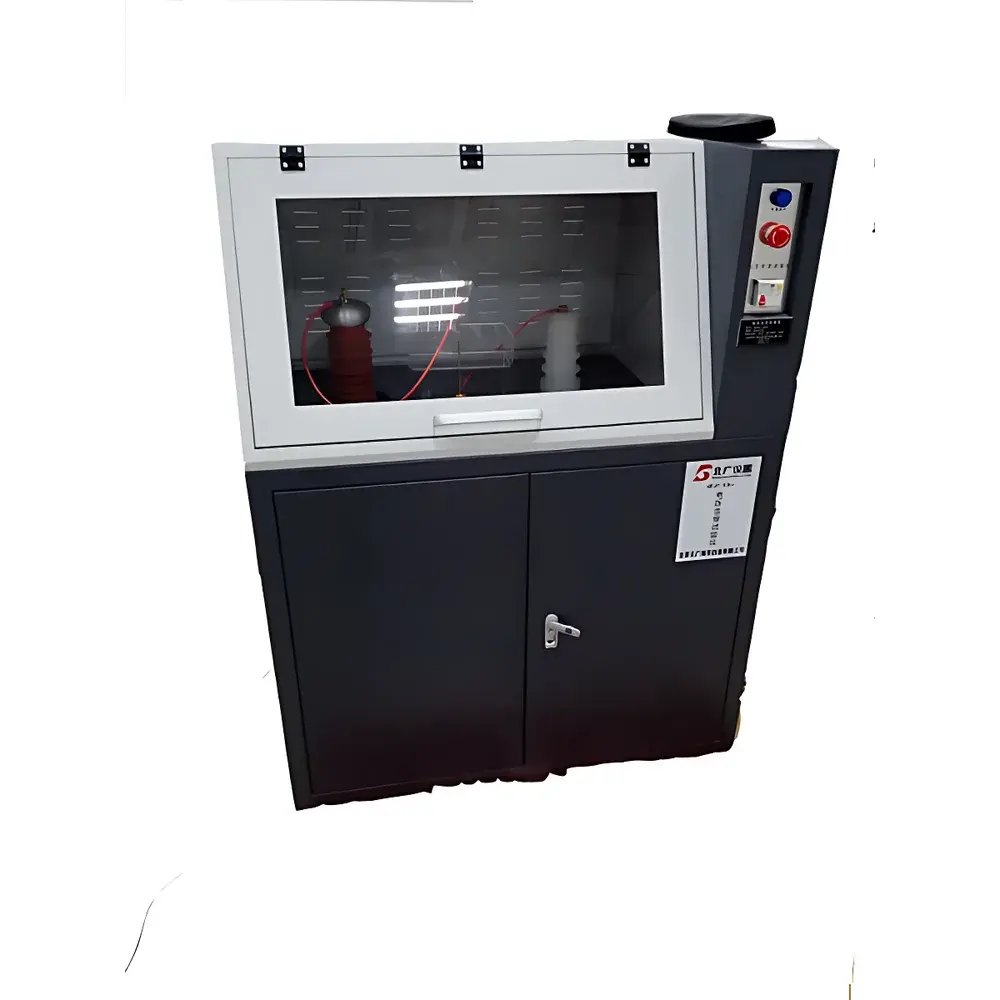
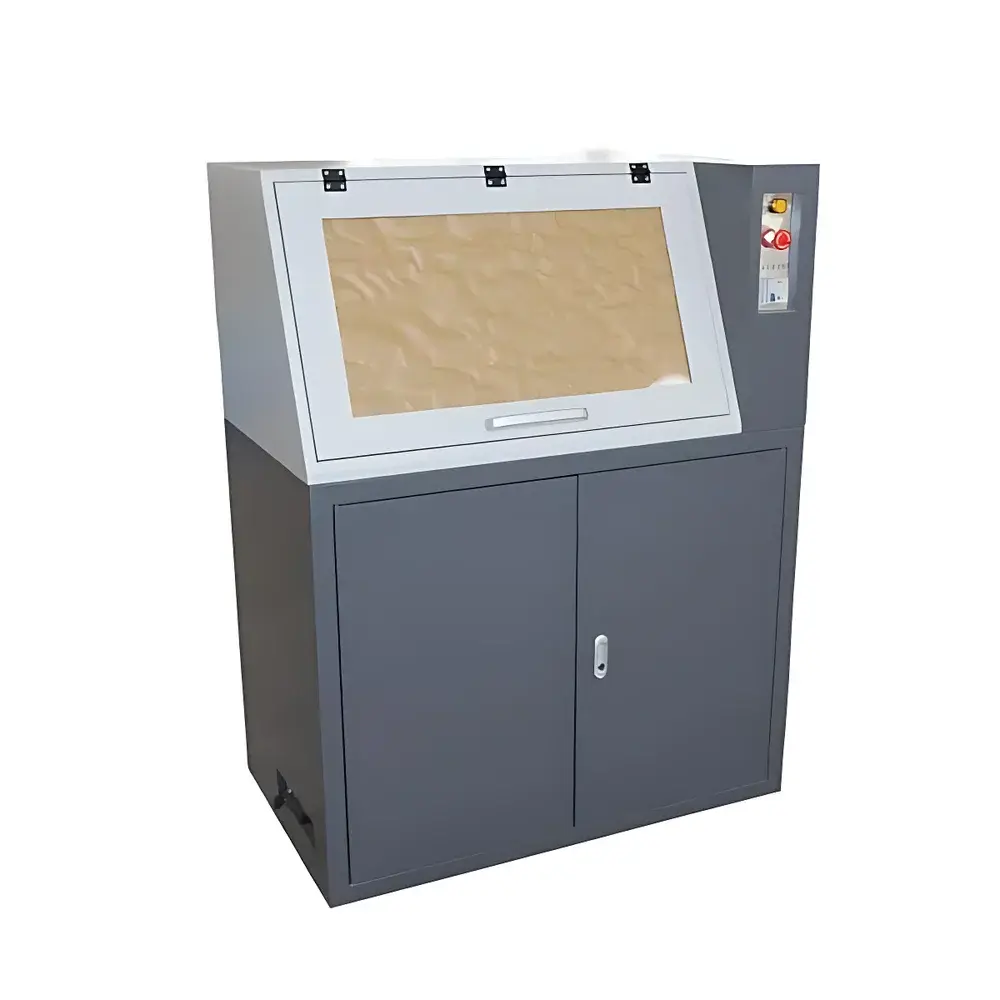
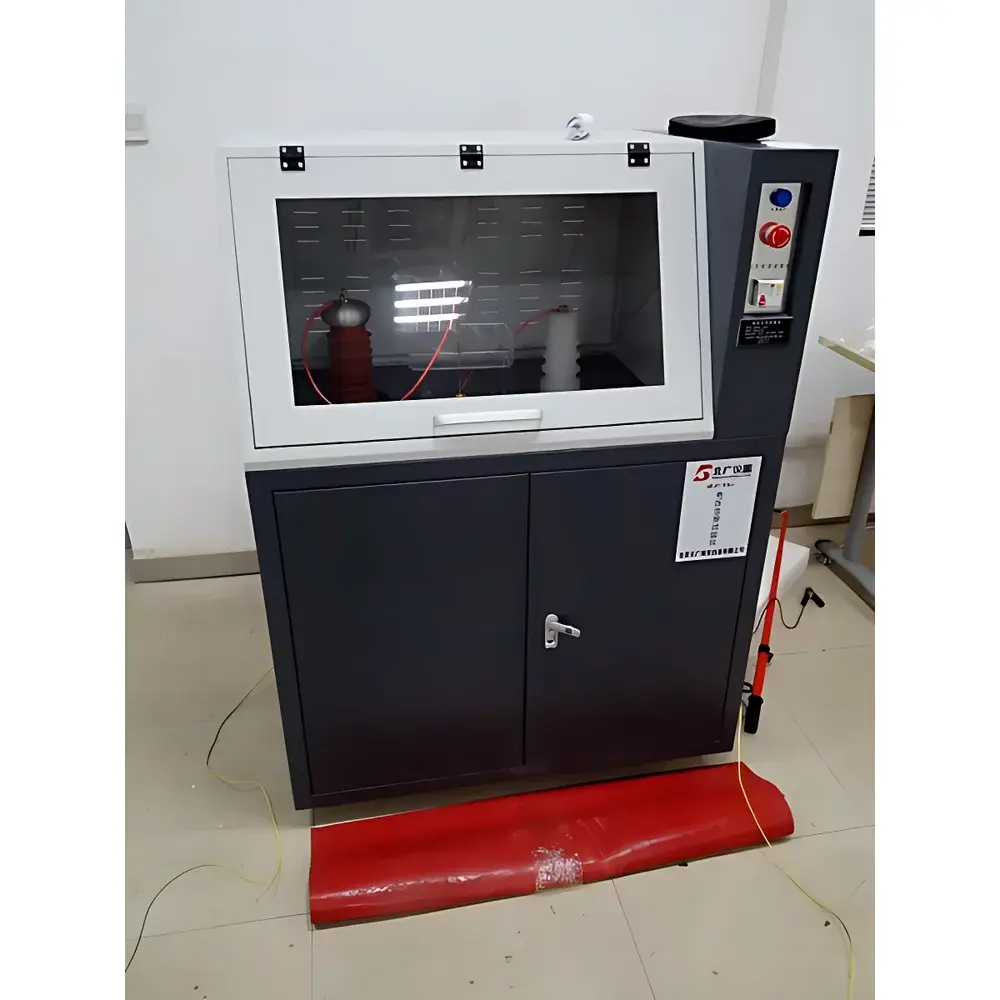
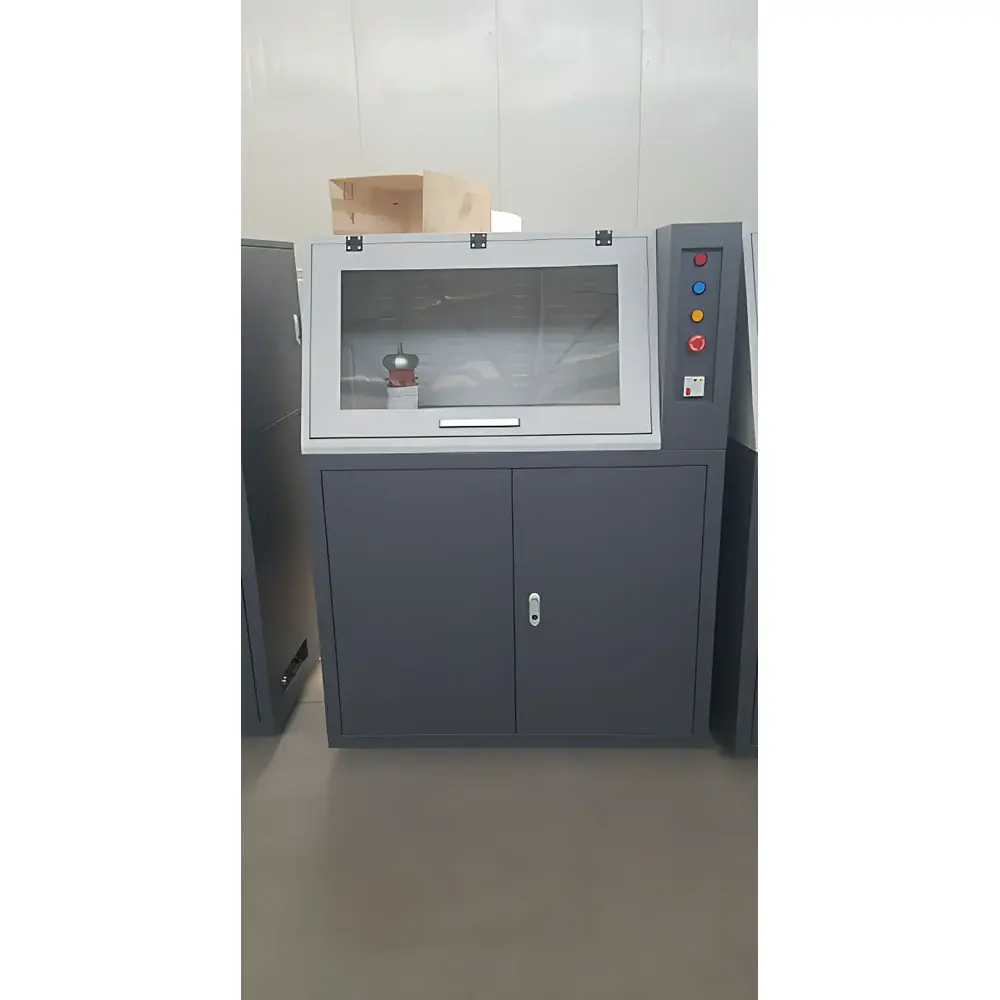
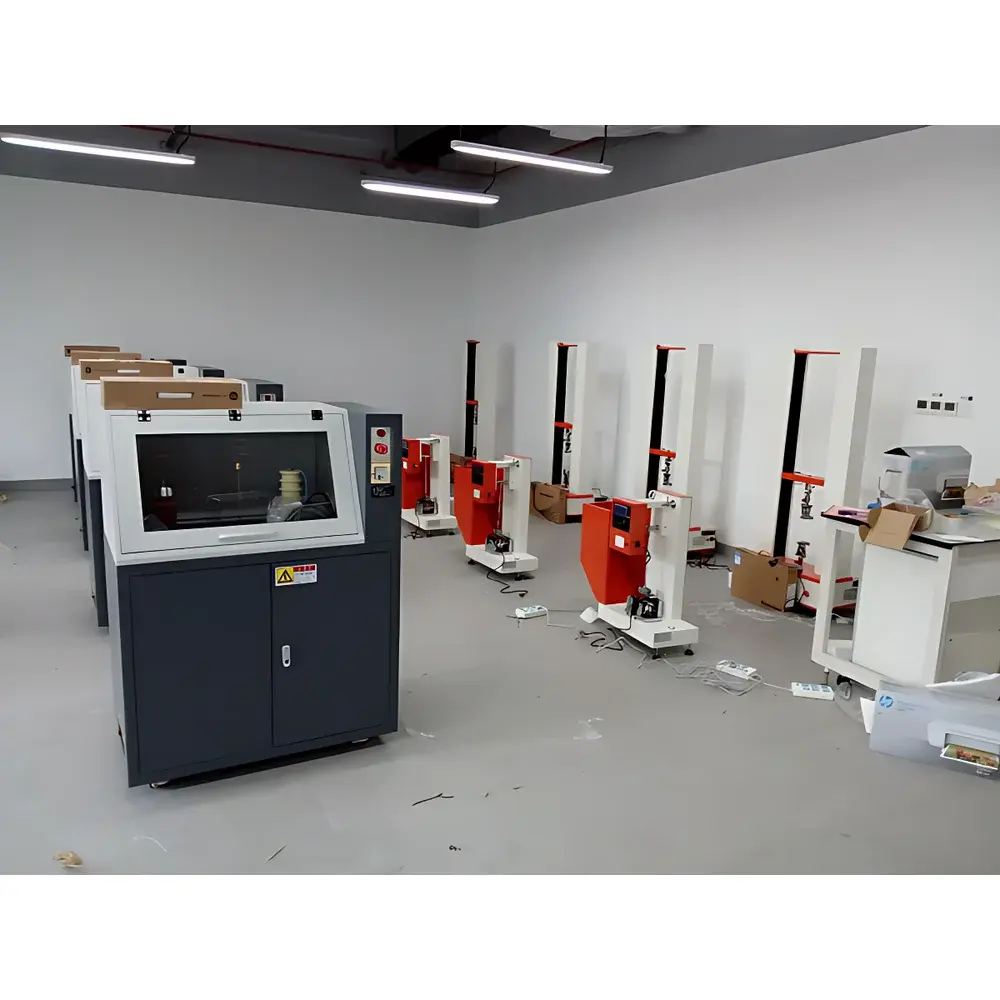
North Guangjingyi BDJC-50kV Computer-Controlled Dielectric Voltage Breakdown Tester
| Brand | All Precision Instrument |
|---|---|
| Origin | Beijing, China |
| Manufacturer Type | Direct Manufacturer |
| Model | BDJC-50kV |
| Maximum Output Voltage | 50 kV AC/DC |
| Output Current | Adjustable up to 100 mA (standard setting: 30 mA) |
| Voltage Accuracy | ≤ ±1% |
| Rising Rate Range | 10–3000 V/s (adjustable in 7 steps) |
| Power Input | AC 220 V, 3 kVA |
| Electrode Configurations | Two φ25 mm brass electrodes + One φ75 mm brass electrode |
| Test Environments | Air or transformer oil immersion |
| Compliance | Designed per IEC 60243-1, ASTM D149, GB/T 1408.1, and ISO 60243-1 |
| Safety Enclosure | Transparent acrylic shield |
| Dimensions (L×W×H) | 700 × 800 × 1500 mm |
| Weight | ~120 kg |
Overview
The North Guangjingyi BDJC-50kV Computer-Controlled Dielectric Voltage Breakdown Tester is an engineered solution for precise measurement of dielectric strength in solid and liquid insulating materials under controlled AC or DC voltage stress. It operates on the fundamental principle of electric field-induced breakdown—wherein a material’s ability to withstand electrical stress without irreversible conduction is quantified as its dielectric breakdown voltage. The instrument supports three primary test modes: stepwise voltage ramp (gradient test), time-dependent withstand testing (dielectric endurance), and instantaneous breakdown detection—each aligned with standardized failure criteria defined by international electrotechnical standards. Its architecture integrates high-voltage generation, real-time current monitoring, programmable rise-rate control, and closed-loop safety interlocks to ensure repeatability, operator protection, and regulatory traceability.
Key Features
- Programmable voltage ramp rates from 10 V/s to 3000 V/s—enabling compliance with both slow-ramp (e.g., IEC 60243-1 Annex B) and fast-ramp (e.g., ASTM D149 Method A) protocols.
- Dual-mode output: fully isolated AC (0–50 kV RMS) and DC (0–50 kV) high-voltage sources, each independently calibrated and monitored.
- Auto-trip logic with dual threshold detection: voltage-based termination (for flashover detection) and current-based termination (for leakage current exceeding user-defined thresholds—default 30 mA, configurable up to 100 mA).
- Integrated acrylic safety enclosure meeting IP2X mechanical protection requirements; interlocked door switch halts HV output immediately upon access.
- DC servo motor-driven precision voltage regulator ensures stable, jitter-free voltage progression—critical for low-noise gradient testing and long-duration withstand evaluation.
- Real-time dynamic curve plotting during test execution, with color-coded overlay capability for comparative analysis across multiple specimens or batches.
- Comprehensive hardware redundancy: over-current protection circuitry interrupts power within ≤100 ms of fault detection; thermal cutoffs prevent coil overheating during extended operation.
Sample Compatibility & Compliance
The BDJC-50kV accommodates flat-sheet, film, rod, and molded insulator geometries up to 10 mm thickness. Standard electrode configurations include two 25 mm diameter brass disc electrodes (for volume resistivity assessment) and one 75 mm diameter electrode (for surface tracking evaluation). Testing may be performed in ambient air or dielectric oil immersion (using supplied oil bath chamber), supporting both dry and wet-condition assessments per IEC 60243-2. The system is validated against key international standards including IEC 60243-1 (Electric Strength of Insulating Materials – Tests at Power Frequencies), ASTM D149 (Dielectric Breakdown Voltage of Solid Electrical Insulating Materials), GB/T 1408.1 (Chinese national standard equivalent), and ISO 60243-1. All calibration records, uncertainty budgets, and verification reports are provided with shipment to support GLP/GMP audit readiness.
Software & Data Management
The proprietary Windows-based control software provides full experimental lifecycle management—from test definition and parameter assignment to report generation and archival. User roles are enforced via password-protected access levels (administrator, technician, viewer), ensuring data integrity and procedural accountability. Each test session logs timestamped metadata: operator ID, environmental conditions (optional external sensor integration), electrode configuration, voltage waveform type (AC/DC), ramp rate, termination mode, and raw acquisition timestamps at 1 kHz sampling resolution. Export functions support direct output to CSV, Excel (.xlsx), and PDF formats; report templates comply with ISO/IEC 17025 documentation requirements. Audit trails record all parameter modifications, test start/stop events, and software-initiated aborts—fully compliant with FDA 21 CFR Part 11 electronic record and signature provisions when configured with digital certificate authentication.
Applications
This tester serves laboratories engaged in quality assurance of polymeric insulation systems—including cable jacketing compounds (XLPE, EPR), transformer board, epoxy encapsulants, silicone rubber gaskets, ceramic substrates, and battery separator films. It supports R&D validation of new formulations under accelerated aging conditions (e.g., post-thermal cycling or humidity exposure), incoming raw material screening per supplier specifications, and production lot release testing per internal QC protocols. In academic settings, it enables mechanistic studies of breakdown pathways—distinguishing intrinsic (electronic) breakdown from thermally activated degradation or partial discharge initiation—when combined with synchronized optical emission or acoustic emission monitoring (externally interfaced).
FAQ
What standards does the BDJC-50kV comply with?
It meets the technical and procedural requirements of IEC 60243-1, ASTM D149, GB/T 1408.1, and ISO 60243-1 for dielectric strength determination.
Can the system perform both AC and DC breakdown tests?
Yes—dual independent HV outputs allow seamless switching between sinusoidal AC (50/60 Hz) and stabilized DC voltage application.
Is oil-immersion testing supported out of the box?
Yes—the included oil bath chamber (with integrated electrode holders and level indicator) enables immediate setup for ASTM D877 or IEC 60156-compliant liquid dielectric testing.
How is data integrity ensured during long-duration withstand tests?
All voltage and current waveforms are continuously sampled at ≥1 kHz and stored with nanosecond-resolution timestamps; no interpolation or lossy compression is applied.
Does the software support multi-user environments with role-based permissions?
Yes—administrators define granular access rights per function (e.g., calibration adjustment, report approval, raw data export), logged in immutable audit trail format.
What maintenance intervals are recommended for sustained accuracy?
Annual recalibration is advised; HV divider verification and current sensor linearity checks should be performed quarterly using NIST-traceable reference standards.



