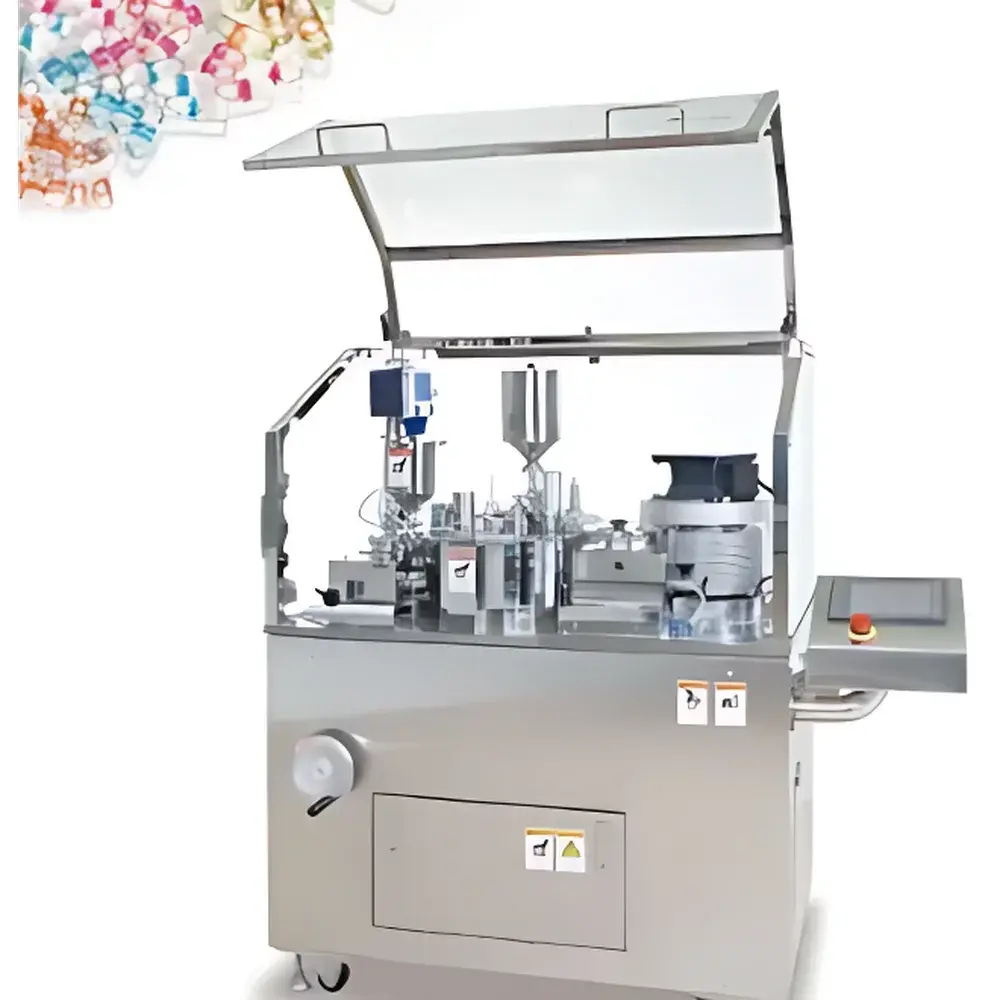
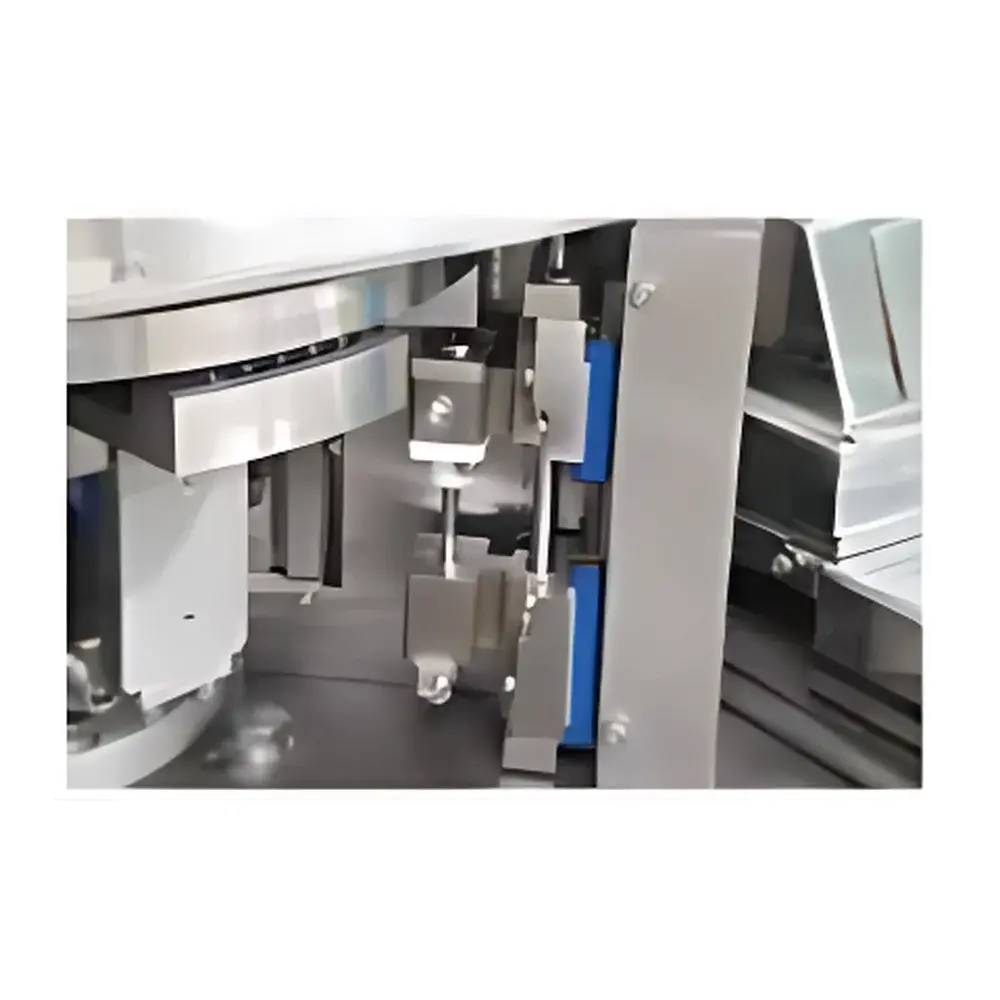
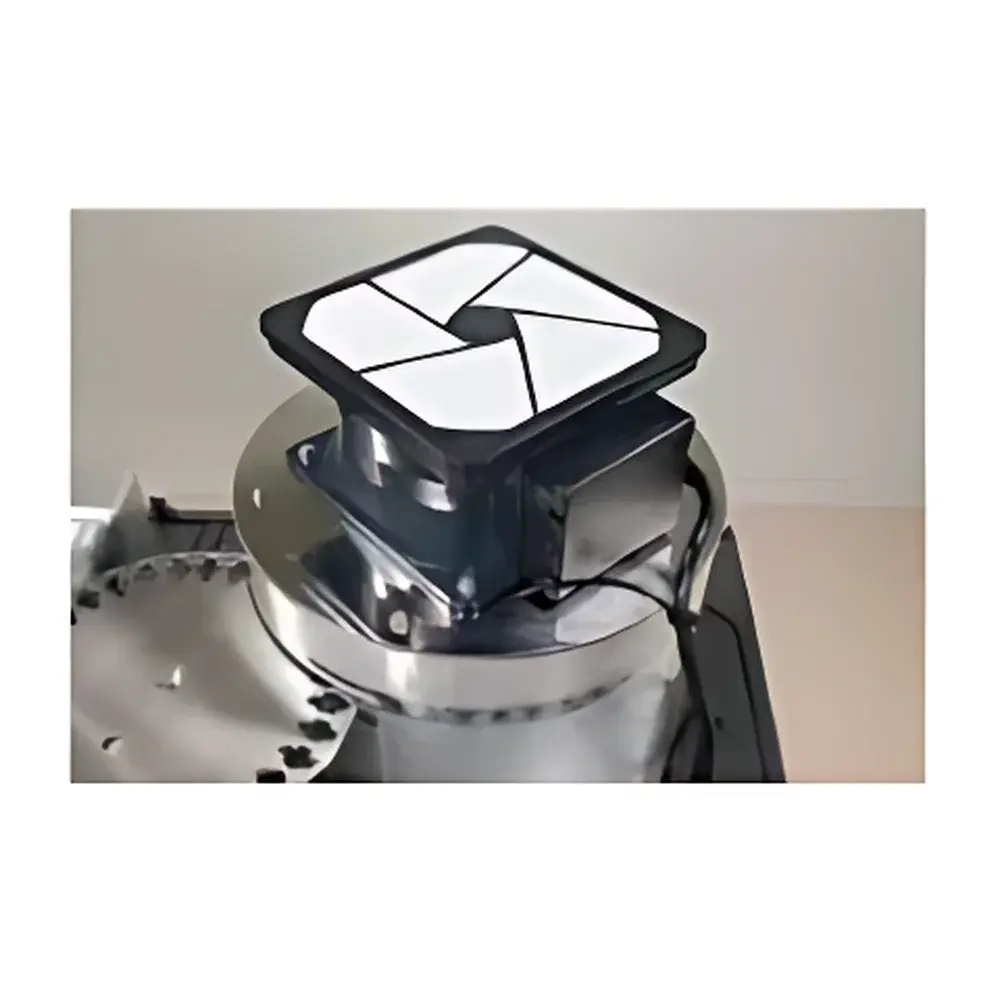
Nosaka EKITEN-Read Automated Liquid-Filled Hard Capsule Filler and Sealer
| Brand | Nosaka |
|---|---|
| Origin | Japan |
| Model | EKITEN-Read |
| Capsule Sizes | #00, #0, #1, #2, #3, #4 |
| Production Rate | 500–2,500 capsules/hour |
| Fill Volume Range | 0.075–0.85 mL |
| Fill Temperature Control | Ambient to 75 °C |
| Power Supply | 200 V, 3-phase, 50/60 Hz, 15 A |
| Compressed Air Requirement | 0.5 MPa |
| Dimensions (W×D×H) | 1,450 × 715 × 1,470 mm |
| Weight | 600 kg |
| Sealing Method | Heat-activated polymer tape seal |
| Drying Method | Filtered ambient-air convection (non-thermal) |
| Orientation Correction | Force-free quadrisectional alignment |
| Vacuum-Assisted Capping | Integrated vacuum-decompression system for bubble-free cap-body junction |
Overview
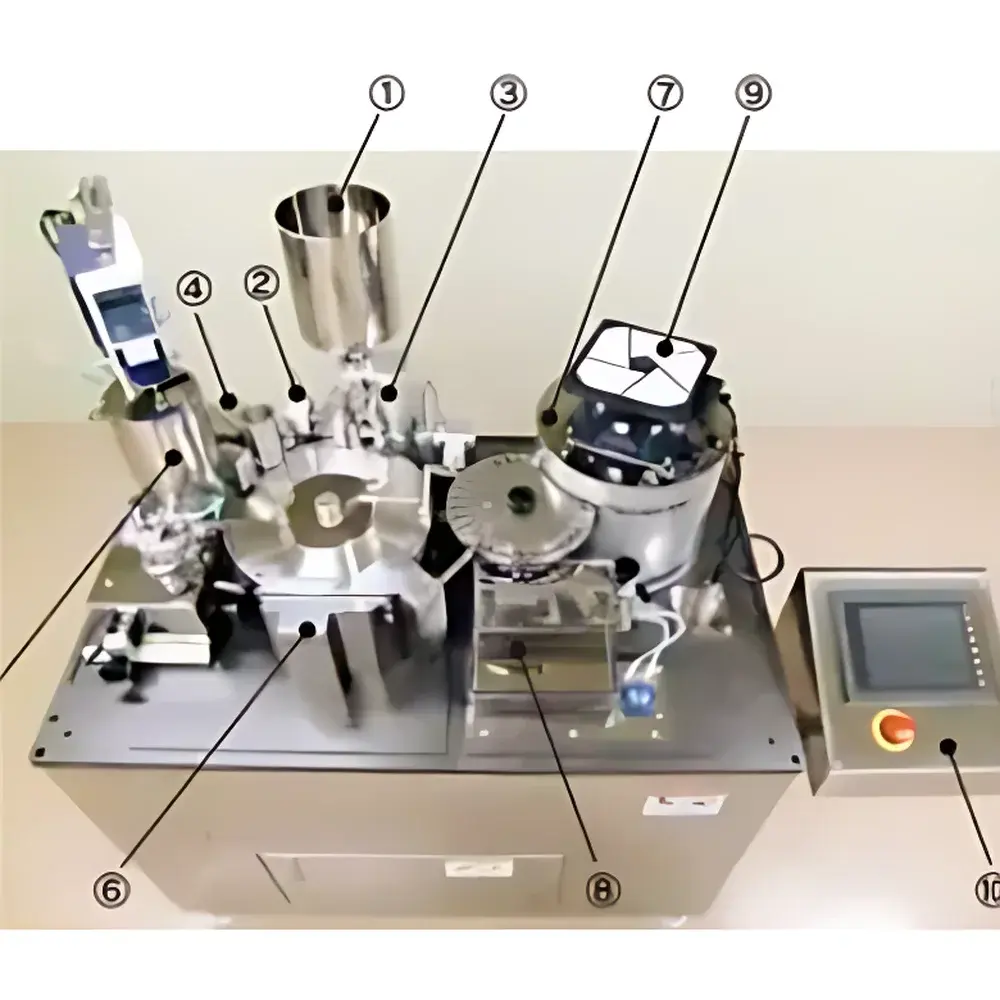
The Nosaka EKITEN-Read is a fully automated, bench-scale liquid-filling and sealing system engineered for R&D laboratories and pilot-scale formulation development of liquid-filled hard gelatin or HPMC capsules. It operates on a sequential, synchronized motion principle—integrating capsule orientation, body-cap separation, precision volumetric liquid dosing, vacuum-assisted capping, band-type thermal sealing, and non-thermal air-drying—within a single compact footprint. Unlike conventional semi-automatic fillers, the EKITEN-Read eliminates manual intervention after initial loading, delivering repeatable, GMP-aligned unit-dose manufacturing under controlled conditions. Its core engineering addresses three critical failure modes in liquid capsule processing: mechanical deformation during orientation, trapped air-induced voids at the cap-body interface, and thermal degradation during post-seal drying. Each solution is grounded in physical design—not software compensation—ensuring robustness across viscosity ranges (from low-viscosity oils to semi-solid suspensions) and capsule sizes (#00–#4).
Key Features
- Force-Free Quadrisectional Orientation System: Capsules are aligned without axial compression or shear stress using a four-point contact mechanism, preventing deformation that leads to misalignment, incomplete separation, or seal-line leakage—critical for maintaining dose accuracy and container integrity.
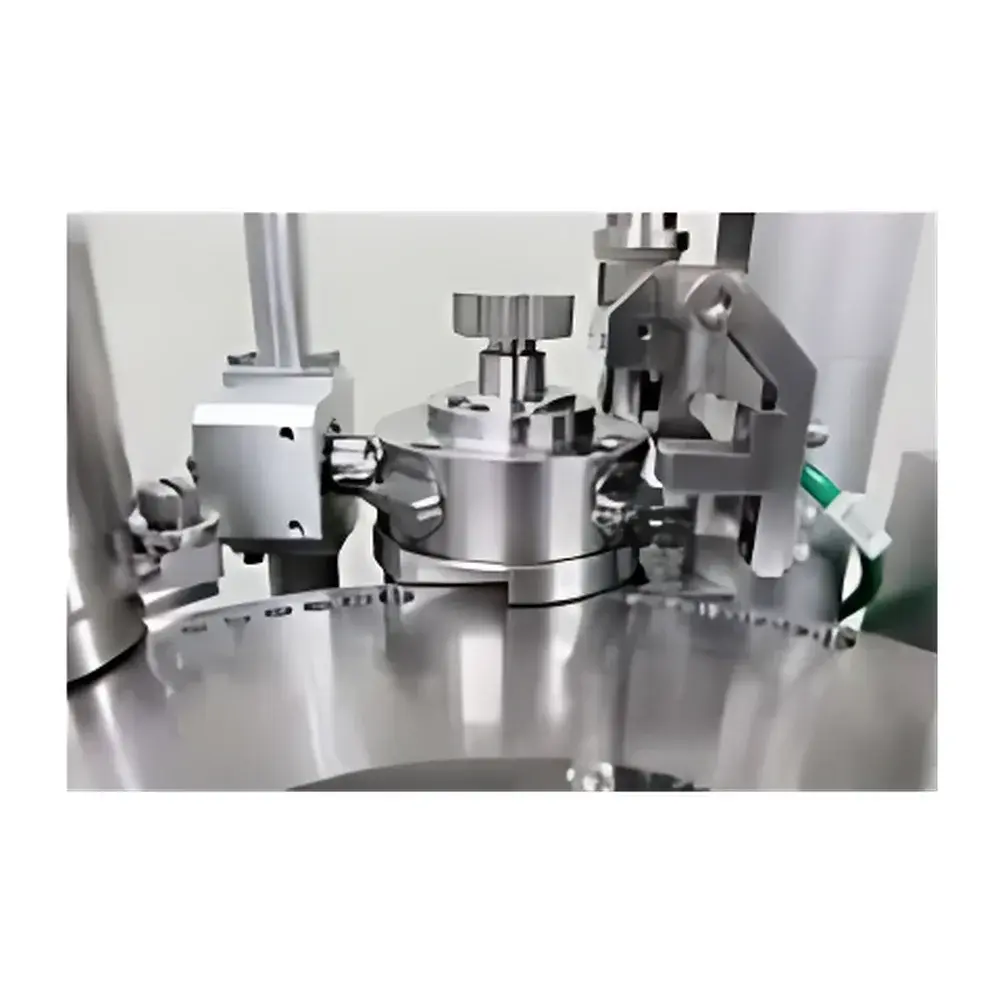
- Vacuum-Decompression Capping Module: A proprietary vacuum chamber evacuates residual air from the cap-body gap immediately prior to mechanical joining, eliminating internal pressure spikes that cause blistering, warping, or inconsistent seal adhesion during band application.
- Thermally Controlled Liquid Dosing Unit: Equipped with heated syringe pumps and temperature-regulated fluid paths (ambient to 75 °C), enabling stable metering of thermosensitive actives, viscous oils, and suspension-based formulations without phase separation or nozzle clogging.
- Color-Coded Band Sealing System: Applies heat-activated polymer tape seals directly across the cap-body junction; seal tape color options facilitate rapid visual identification of formulation batches or dosage strengths in multi-product lab environments.
- Ambient-Air Convection Dryer: Utilizes HEPA-filtered room air—without resistive heating—to accelerate solvent evaporation from the seal zone, minimizing thermal stress on capsule shells and preserving moisture-sensitive APIs or excipients.
Sample Compatibility & Compliance
The EKITEN-Read accommodates standard gelatin and vegetarian (HPMC) hard capsules in sizes #00 through #4, with validated performance across fill viscosities ranging from 10 mPa·s (e.g., medium-chain triglyceride oil) to >50,000 mPa·s (e.g., thickened suspension gels). All wetted components comply with USP <661.1> and ISO 10993-5 biocompatibility requirements. The system supports audit-ready operation per GLP and pre-GMP standards: full event logging (including vacuum cycle pressure profiles, fill volume timestamps, and seal temperature setpoints), user-access-level controls, and electronic signature capability via optional external authentication integration. While not certified as 21 CFR Part 11 compliant out-of-the-box, its architecture permits validation documentation packages for regulated environments.
Software & Data Management
Operation is managed via an industrial-grade touchscreen HMI running deterministic real-time firmware—no general-purpose OS. All process parameters (fill volume, temperature, vacuum dwell time, seal dwell time, conveyor speed) are stored per batch ID with timestamped metadata. Raw data exports in CSV format include per-capsule fill deviation (±0.5% typical repeatability), vacuum decay rate, and seal temperature variance. Audit trails record operator login/logout, parameter changes, and emergency stop events—retained for ≥30 days onboard and exportable for long-term archiving. Optional Ethernet/IP or Modbus TCP interfaces enable integration into centralized MES or LIMS platforms.
Applications
- Preformulation screening of liquid dosage forms (oil-based, self-emulsifying, nanoemulsion, and suspension fills)
- Stability study batch production under ICH Q1–Q5 conditions
- Comparative bioavailability trial material generation with matched capsule shell batches
- Process validation support for commercial-scale transfer (e.g., defining critical process parameters for DOE studies)
- Regulatory submission batch manufacturing (e.g., ANDA, M4 modules requiring documented unit-dose consistency)
FAQ
What capsule shell materials are compatible with the EKITEN-Read?
Gelatin (type A/B) and hydroxypropyl methylcellulose (HPMC) shells are fully supported across all standard sizes. Shell thickness tolerance is ±0.02 mm; brittle or over-plasticized shells require pre-validation.
Can the system handle suspensions with particles up to 50 µm?
Yes—provided the suspension remains rheologically stable during filling (no sedimentation within 30 s dwell time); optional ultrasonic agitator modules are available for high-settling formulations.
Is compressed air quality specified?
ISO 8573-1 Class 2:2:2 is required: ≤0.1 µm particles, ≤0.1 ppm oil aerosol, dew point ≤−40 °C at operating pressure.
Does the sealer accommodate custom tape widths or materials?
Standard tape width is 3.5 mm; custom widths (2.0–6.0 mm) and specialty polymers (e.g., ethylene-vinyl acetate copolymer) are available under OEM agreement with minimum order quantities.
What maintenance intervals are recommended for the vacuum pump and dosing syringes?
Vacuum pump oil replacement every 2,000 operating hours; syringe barrel and plunger inspection every 500 cycles; full calibration verification recommended quarterly or after 10,000 capsules processed.