
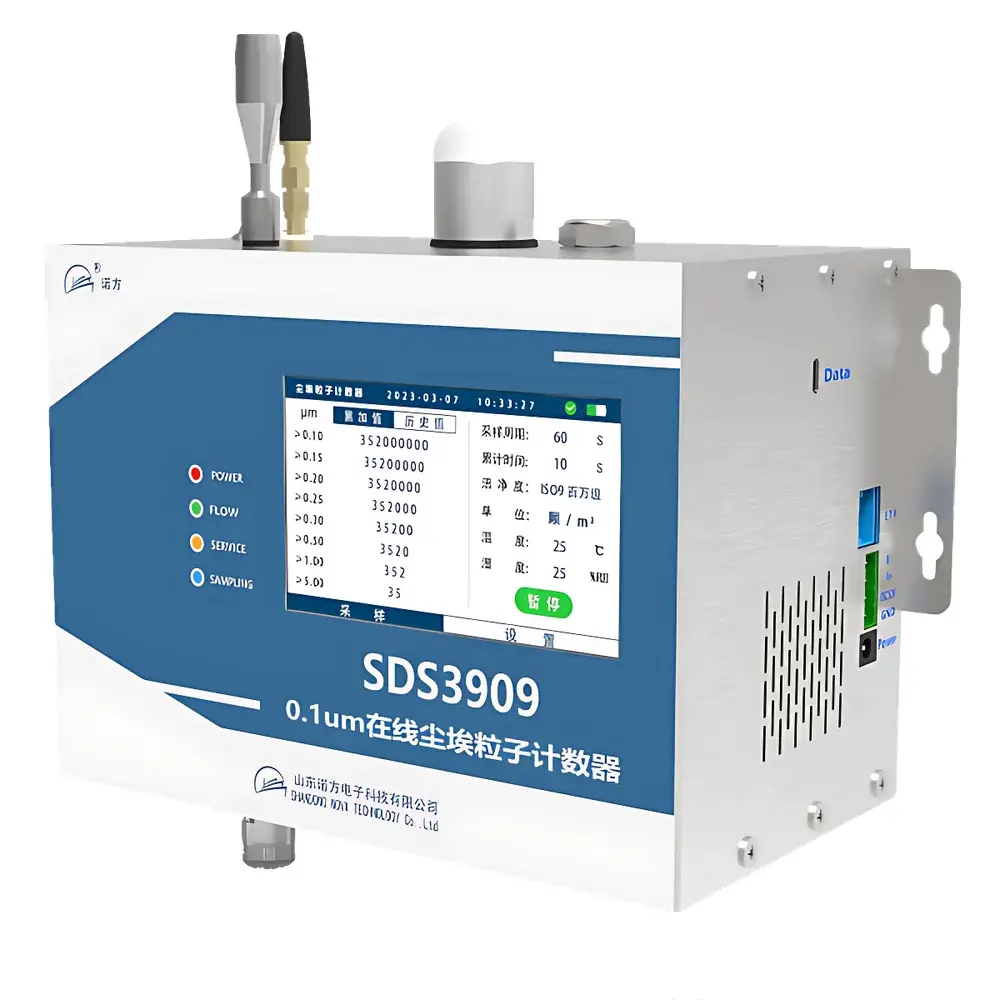
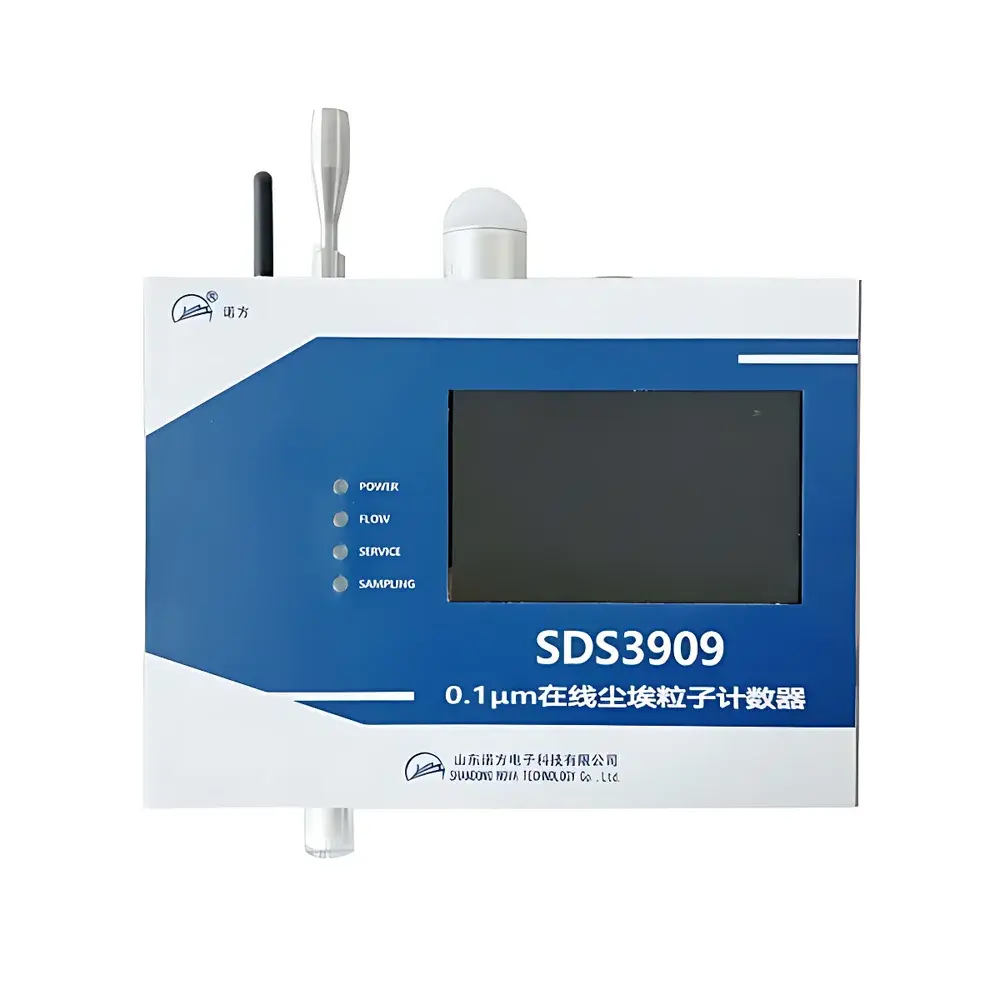
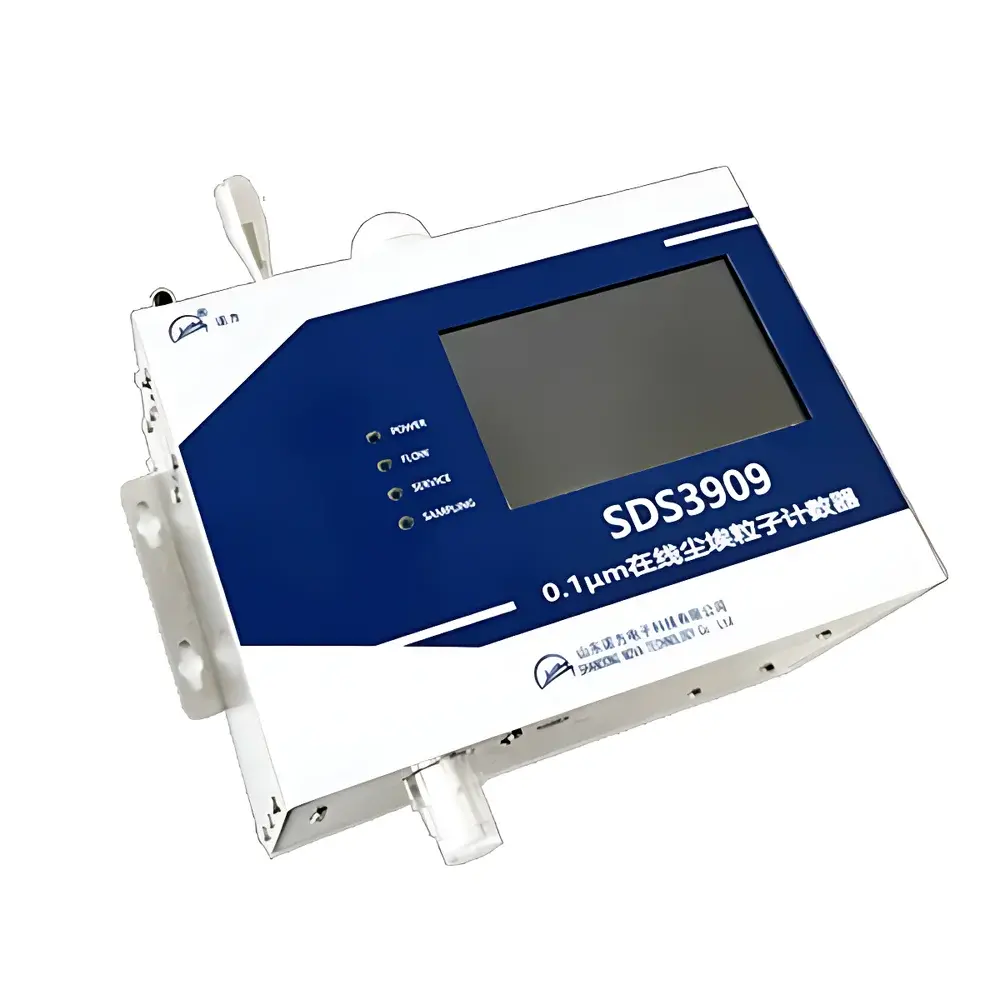
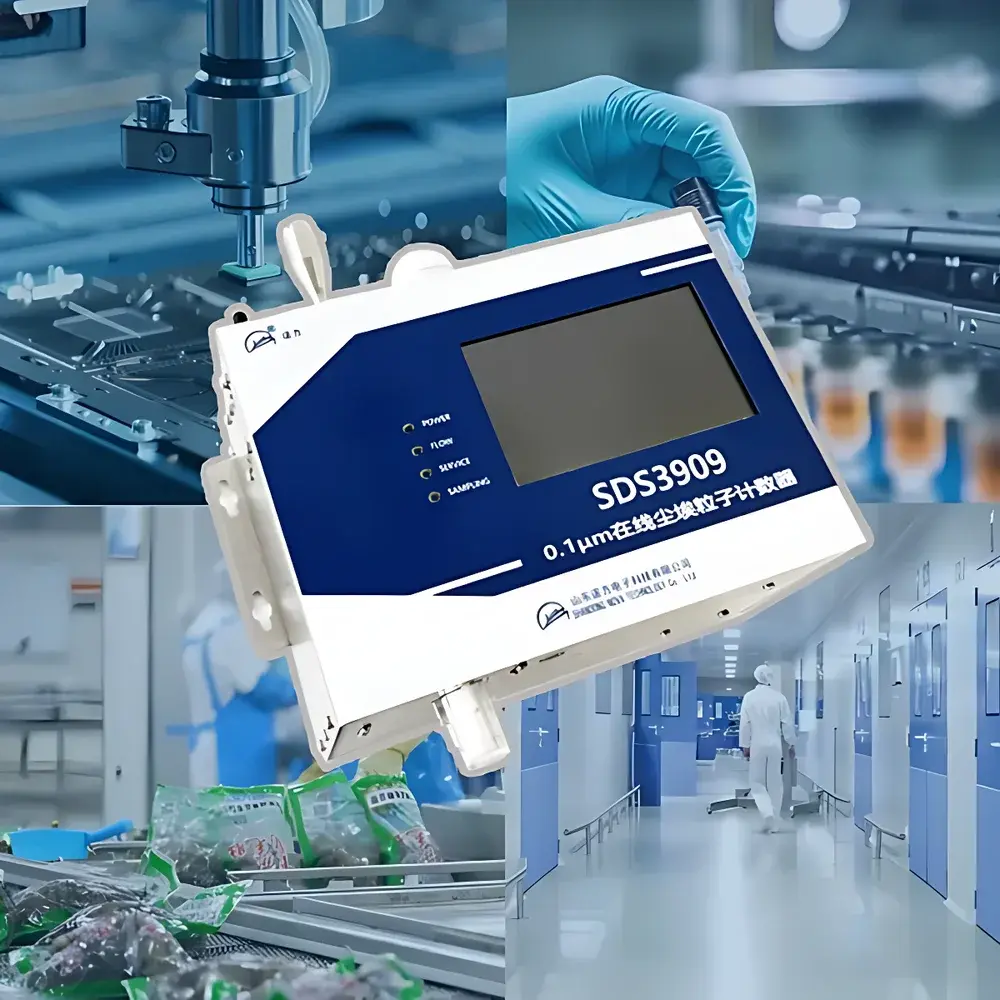
NOVA TECHNOLOGY SDS3909 Online Airborne Particle Counter (2.83 L/min, 0.1 μm Detection Threshold)
| Brand | NOVA TECHNOLOGY Co., Ltd. |
|---|---|
| Origin | Shandong, China |
| Manufacturer Type | Authorized Distributor |
| Product Category | Domestic |
| Model | SDS3909 |
| Instrument Type | Online Particle Counter |
| Flow Rate | 2.83 L/min |
| Detection Threshold | 0.1 μm |
| Calibration Standard | ISO 21501-4 |
| Communication Interface | RS485 (Modbus RTU) |
| Particle Size Channels | 0.1, 0.15, 0.2, 0.25, 0.3, 0.5, 1.0, 5.0 μm |
Overview
The NOVA TECHNOLOGY SDS3909 is a high-sensitivity, continuous-duty online airborne particle counter engineered for real-time environmental monitoring in critical cleanroom and controlled environments. It operates on the principle of single-particle laser light scattering (SPLS), where aerosol particles drawn through a precisely conditioned optical sensing zone interact with a high-stability, wide-temperature-range semiconductor laser. Scattered light intensity is captured by a multi-element photodetector array and converted into digital pulse signals. These pulses are processed by a 32-bit high-frequency microcontroller running a proprietary weak-signal amplification circuit and adaptive particle recognition algorithm—enabling reliable discrimination and counting of particles down to a verified 0.1 μm detection threshold. Designed and validated per ISO 21501-4:2018 (“Determination of particle size distribution — Single particle light interaction methods”), the SDS3909 delivers traceable, repeatable performance suitable for ISO Class 3–5 cleanrooms, semiconductor front-end fabrication, biopharmaceutical isolators, and aseptic filling suites requiring sub-0.2 μm monitoring capability.
Key Features
- True 0.1 μm lower detection limit, validated per ISO 21501-4 calibration protocols
- Fixed volumetric flow rate of 2.83 L/min (0.1 ft³/min), compliant with ISO 21501-4 and JIS B 9921 requirements for standardized sampling
- Eight user-selectable particle size channels: 0.1, 0.15, 0.2, 0.25, 0.3, 0.5, 1.0, and 5.0 μm
- Optimized optical cavity with laminar-flow air path and anti-contamination baffling to minimize coincidence error and wall losses
- Embedded 32-bit RISC processor with dedicated DSP core for real-time pulse height analysis and noise-suppressed particle classification
- RS485 serial interface supporting Modbus RTU protocol for seamless integration into SCADA, DCS, or building management systems (BMS)
- Industrial-grade enclosure rated IP54 for operation in ambient temperatures from 10 °C to 40 °C and relative humidity up to 80 % RH (non-condensing)
Sample Compatibility & Compliance
The SDS3909 is designed for continuous sampling of non-corrosive, non-explosive ambient or process air streams in regulated manufacturing environments. It supports direct duct mounting or remote sampling via conductive tubing (recommended length ≤ 3 m, ID 4 mm). The instrument complies with electromagnetic compatibility (EMC) requirements per IEC 61326-1:2020 and safety standards per IEC 61010-1:2010. Its metrological design adheres to ISO 21501-4:2018 for light-scattering particle counters, ensuring comparability with reference instruments used in GLP/GMP audits. While not intrinsically safe, it may be deployed in Zone 2/Class I, Division 2 areas when installed per local electrical codes. Data integrity meets foundational expectations for ALCOA+ principles; full 21 CFR Part 11 compliance requires integration with validated third-party data acquisition software providing audit trail, electronic signatures, and role-based access control.
Software & Data Management
The SDS3909 operates as a sensor node within larger environmental monitoring systems (EMS). It transmits raw channel counts, cumulative counts, timestamped event logs, and internal diagnostics (e.g., laser power, flow stability, detector saturation status) via Modbus registers. No onboard display or local storage is provided—data must be collected by an external host system. Compatible EMS platforms include Siemens Desigo CC, Honeywell Experion PKS, and custom LabVIEW or Python-based solutions using open Modbus libraries. Firmware updates are performed via UART interface using NOVA’s certified configuration utility. All communication payloads are timestamped using the host-synchronized clock; local RTC maintains time accuracy within ±2 seconds/day for unsynchronized deployments.
Applications
- Continuous ISO Class 3–5 cleanroom certification and surveillance in semiconductor lithography and wafer handling zones
- In-line monitoring of HEPA/ULPA filter integrity testing in pharmaceutical Grade A environments
- Real-time particulate trending during lyophilization, vial filling, and isolator glove port operations
- Environmental qualification of microelectronics packaging clean booths and thin-film deposition chambers
- Baseline particulate mapping and excursion investigation in hospital sterile processing departments (SPDs)
- Supporting risk-based monitoring strategies under EU Annex 1 (2022) and FDA Guidance for Industry: Sterile Drug Products Produced by Aseptic Processing (2004)
FAQ
What is the minimum detectable particle size, and how is it verified?
The SDS3909 achieves a lower detection limit of 0.1 μm, confirmed through NIST-traceable polystyrene latex (PSL) standard aerosols and alignment with ISO 21501-4:2018 calibration procedures.
Does the instrument support analog output or Ethernet connectivity?
No. The SDS3909 provides only RS485 Modbus RTU output. Optional variants (e.g., SDS3909-P with integrated pump) do not add Ethernet, Wi-Fi, or LoRa; those require external gateways.
Can the device operate unattended for extended periods?
Yes. Rated for continuous 7×24 operation with mean time between failures (MTBF) exceeding 15,000 hours under nominal conditions. Regular zero-checks and annual recalibration are recommended per ISO 21501-4 Clause 8.
Is the flow rate internally regulated or dependent on external vacuum?
The SDS3909-F variant uses a built-in fan; the SDS3909-P variant includes a calibrated diaphragm pump. Both maintain stable 2.83 L/min flow across inlet pressure differentials from −5 to +5 kPa.
How is data traceability ensured for regulatory submissions?
Raw Modbus register values—including timestamps, channel counts, and diagnostic flags—are logged by the host EMS. Full compliance with 21 CFR Part 11 requires implementation of audit trail, electronic signature, and permission controls at the host system level.
Related Products







