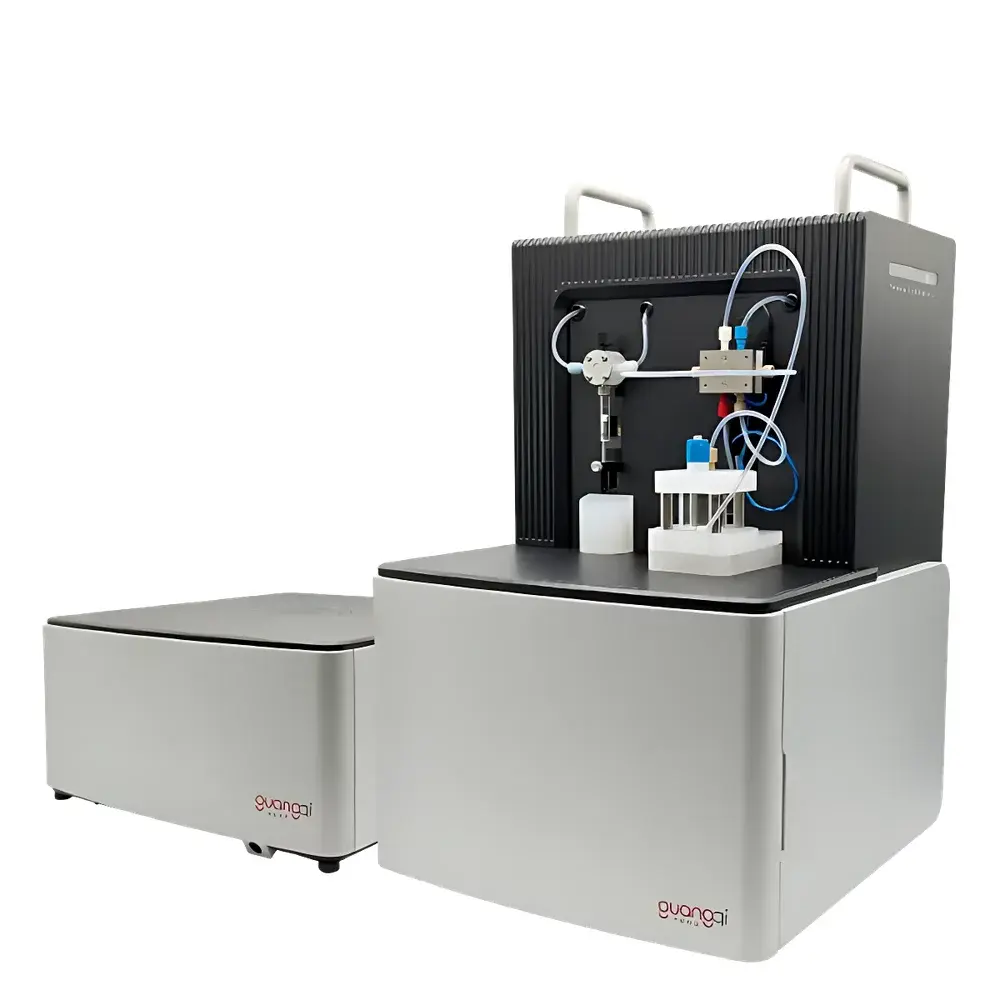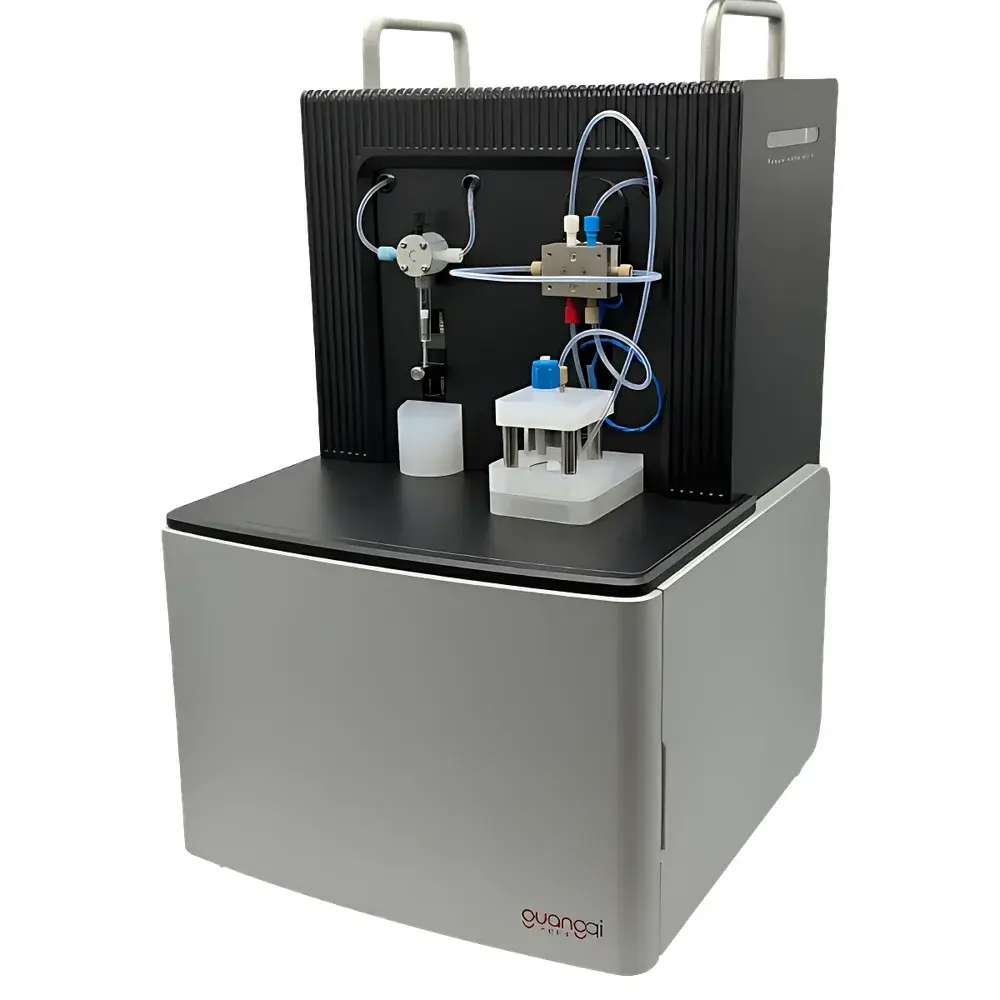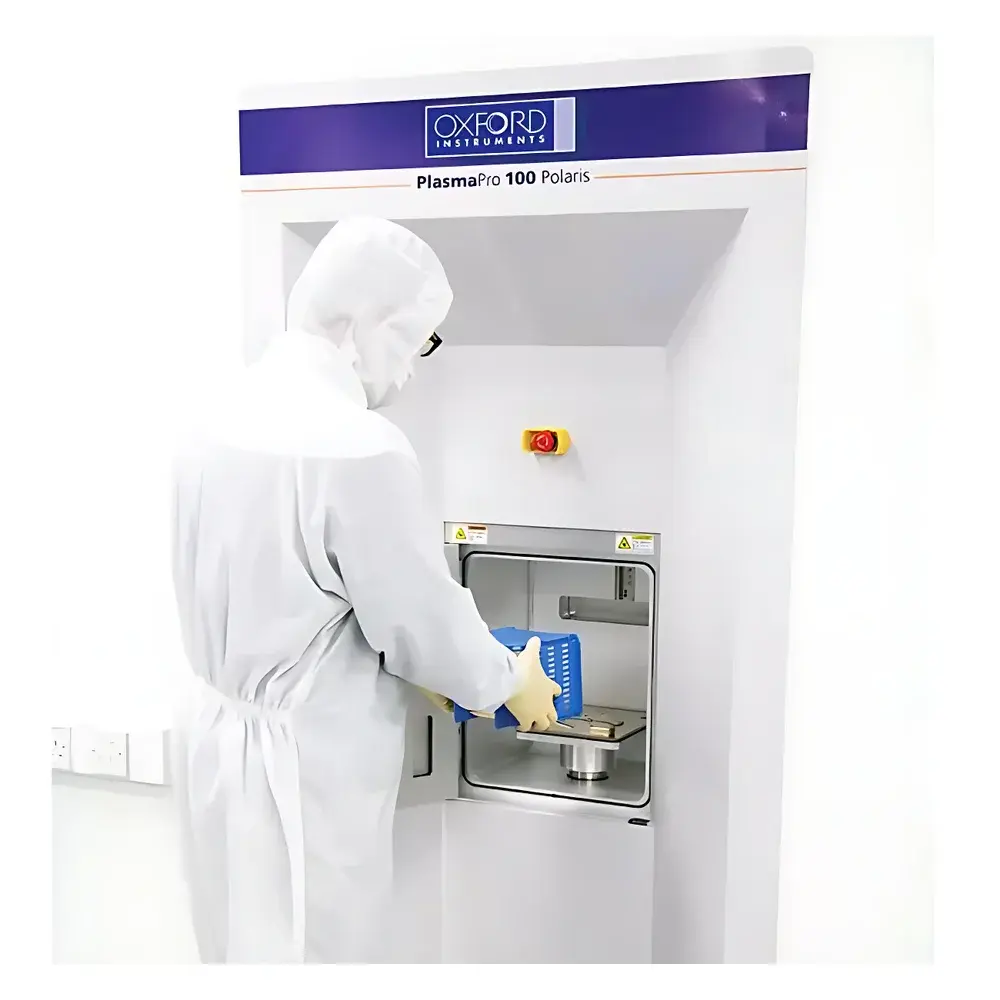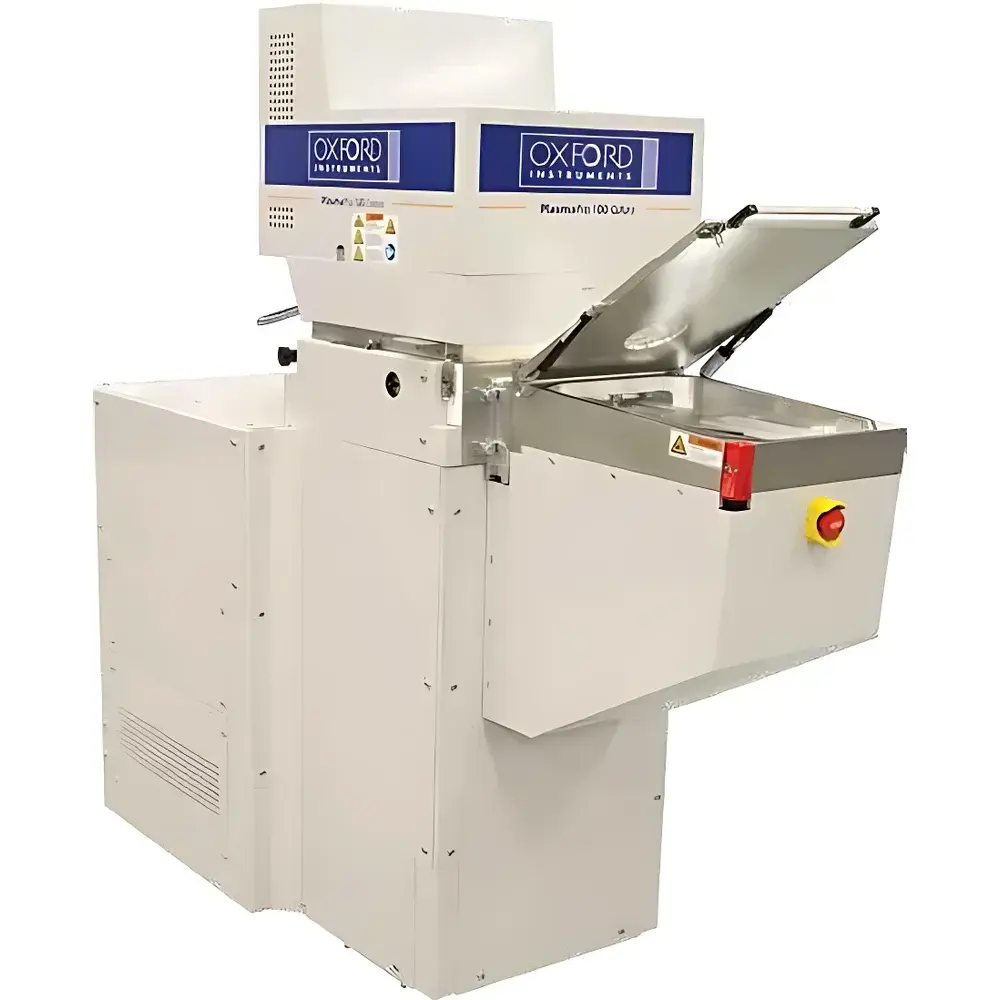
NS 20-M/NS-12 Kaufman-Type Ion Beam Etching System (Imported from Japan, Distributed by Pfeiffer Vacuum Authorized Partner in China)
| Brand | NS (Japan) |
|---|---|
| Origin | Japan |
| Model | 20-M/NS-12 |
| Etching Principle | Kaufman-Type Ion Beam Etching (Physical Sputtering) |
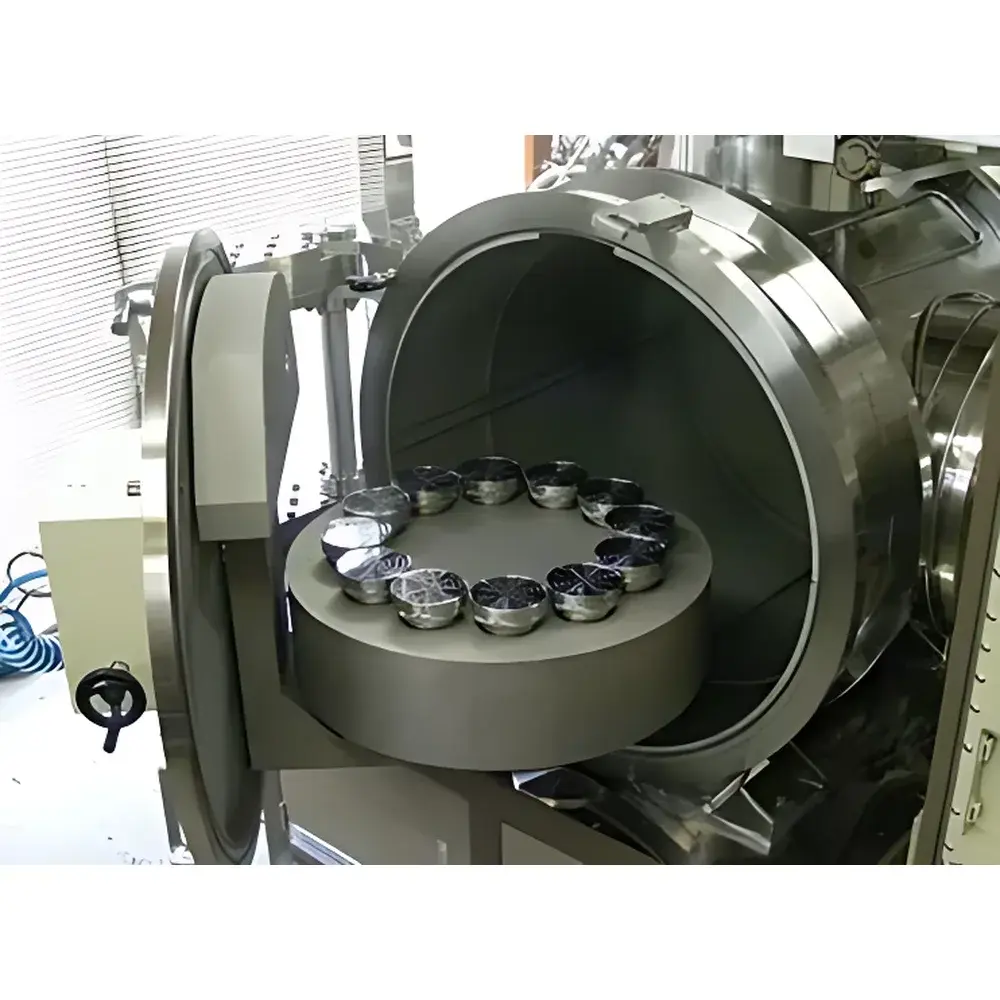
| Substrate Capacity | 12 × 4-inch wafers OR 3 × 18-inch substrates |
| Ion Source | 20 cm Diameter Kaufman Ion Source (KRI Original, WELL-5100 Power Supply Standard) |
| Sample Stage | Direct Liquid-Cooled Electrode with Planetary Rotation (Rotation + Revolution) |
| Beam Tilt Adjustment | Motorized ±15° Continuous Adjustment |
| Cooling Method | Integrated Direct Chilled Stage (Temperature Control Enabled During Etch) |
Overview
The NS 20-M/NS-12 is a high-precision, production-capable ion beam etching (IBE) system engineered for physical sputter etching in advanced microfabrication environments. Unlike reactive ion etching (RIE) or inductively coupled plasma (ICP) systems, the 20-M/NS-12 employs a thermionically heated, broad-beam Kaufman-type ion source to generate a stable, collimated argon (or other inert gas) ion beam—enabling purely physical, chemically inert material removal. This principle ensures exceptional selectivity independence from substrate chemistry, making it uniquely suited for etching non-volatile, high-melting-point, or electrically sensitive materials including magnetic alloys (e.g., NiFe, CoFeB), noble metals (Au, Pt), superconductors (Nb, YBCO), and insulating oxides (Al₂O₃, SiO₂). Designed for both R&D validation and pilot-line transition, the system supports repeatable process transfer from laboratory development to controlled manufacturing under ISO 9001–compliant operational protocols.
Key Features
- 20 cm diameter original KRI Kaufman ion source with integrated neutralizer and optimized extraction grid geometry—ensuring beam uniformity ≥92% across 150 mm diameter at 10 cm working distance
- Direct liquid-cooled sample stage with active temperature regulation (–40 °C to +150 °C range), enabling cryogenic etching for reduced redeposition and enhanced anisotropy in magnetic multilayers
- Planetary motion system: simultaneous rotation (0–30 rpm) and revolution (0–10 rpm) of substrate carrier—achieving <±2.5% etch rate variation across full wafer area
- Motorized ion beam tilt mechanism (±15°, 0.1° resolution) for controlled sidewall profile engineering—supporting vertical, tapered, or retrograde profiles without mask reflow
- Integrated vacuum architecture: base pressure ≤5×10⁻⁷ Pa (with turbomolecular pumping); process pressure range: 1×10⁻⁴ to 5×10⁻³ Pa (Ar, O₂, Xe optional)
- Full automation via PLC-based control interface with recipe management, interlock monitoring, and real-time parameter logging compliant with FDA 21 CFR Part 11 audit trail requirements
Sample Compatibility & Compliance
The 20-M/NS-12 accommodates rigid and fragile substrates up to 18 inches in diameter—including Si, GaAs, sapphire, quartz, glass, and flexible metal foils—without requiring conductive backing layers. Its physical etch mechanism eliminates concerns related to plasma-induced damage, charging, or chemical residue—critical for spintronic device fabrication (e.g., MTJ stacks), RF MEMS resonators, and superconducting quantum interference devices (SQUIDs). The system meets ISO 14644-1 Class 5 cleanroom compatibility standards when installed with HEPA-filtered exhaust and conforms to CE Machinery Directive 2006/42/EC, IEC 61000-6-2 (EMC immunity), and IEC 61000-6-4 (EMC emission) requirements. Optional GLP/GMP documentation packages available for regulated semiconductor and medical device manufacturing facilities.
Software & Data Management
Operation is managed through a dedicated Windows-based HMI platform supporting dual-language UI (English/Japanese), multi-user role-based access control (administrator, engineer, operator), and encrypted recipe storage. All process parameters—including beam current/voltage, chamber pressure, stage temperature, tilt angle, and exposure time—are timestamped and archived in SQLite-formatted databases with SHA-256 integrity hashing. Export functions support CSV, XML, and ASTM E1397-compliant data interchange formats. Remote diagnostics and firmware updates are supported via TLS 1.2–secured Ethernet connection; no cloud dependency or third-party telemetry is enabled by default.
Applications
- Thin-film magnetic head (TFMH) pole tip definition and shield trimming with sub-5 nm edge roughness control
- Spintronic stack patterning: CoFeB/MgO/Ta trilayer etching with preserved interfacial crystallinity and TMR ratio stability
- High-Q RF MEMS capacitors and inductors—etching low-loss dielectrics without plasma-induced surface trap generation
- Optical grating and photonic crystal fabrication on fused silica and CaF₂ substrates using maskless angular profiling
- Superconductor circuit patterning (NbN, NbTiN) with minimal proximity effect degradation and critical current uniformity >98%
- Calibration standard fabrication for AFM tip sharpening, TEM lamella preparation, and nanoimprint master mold generation
FAQ
What vacuum pumping configuration is required to achieve specified base pressure?
A two-stage vacuum system is mandatory: primary roughing via dry scroll pump (≥20 m³/h) followed by turbomolecular pumping (≥1200 L/s for Ar). Optional cryo-trapping recommended for ultra-high-purity etching of oxide films.
Can the system be upgraded to support reactive ion beam etching (RIBE)?
Yes—via retrofit of gas injection manifold (O₂, Cl₂, SF₆) and RF bias electrode integration. Requires mechanical modification approval and updated safety certification per IEC 60335-1.
Is remote service and preventive maintenance supported outside Japan?
NS provides global technical support through authorized partners; annual PM includes ion source refurbishment, grid alignment verification, and vacuum integrity testing—with certified reports issued per ISO/IEC 17025.
Does the system comply with semiconductor industry environmental standards (e.g., RoHS, REACH)?
All structural materials, wiring harnesses, and internal coatings meet RoHS Directive 2011/65/EU Annex II substance restrictions and REACH SVHC candidate list thresholds (<0.1 wt%).
What level of operator training is provided upon installation?
A five-day onsite commissioning program includes vacuum fundamentals, ion optics calibration, recipe development workshop, failure mode analysis, and GLP documentation practice—all delivered by NS-certified field application engineers.