
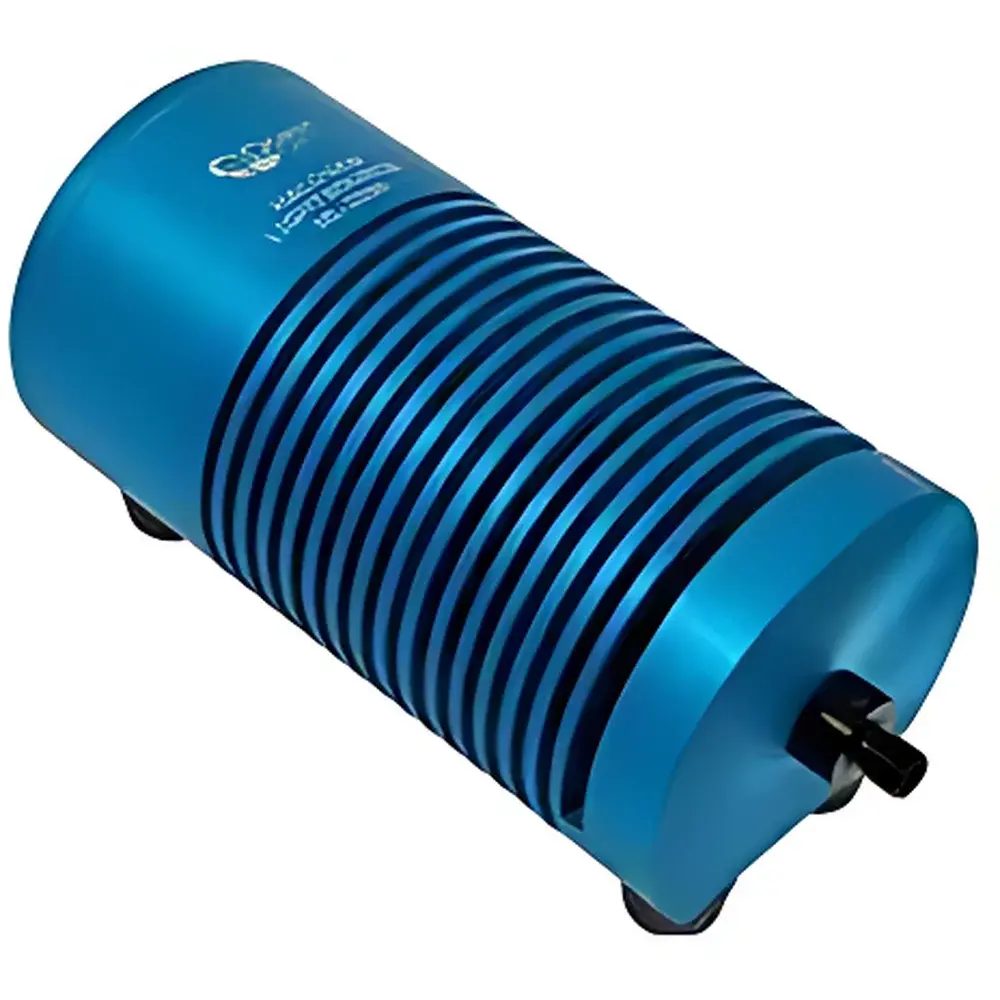
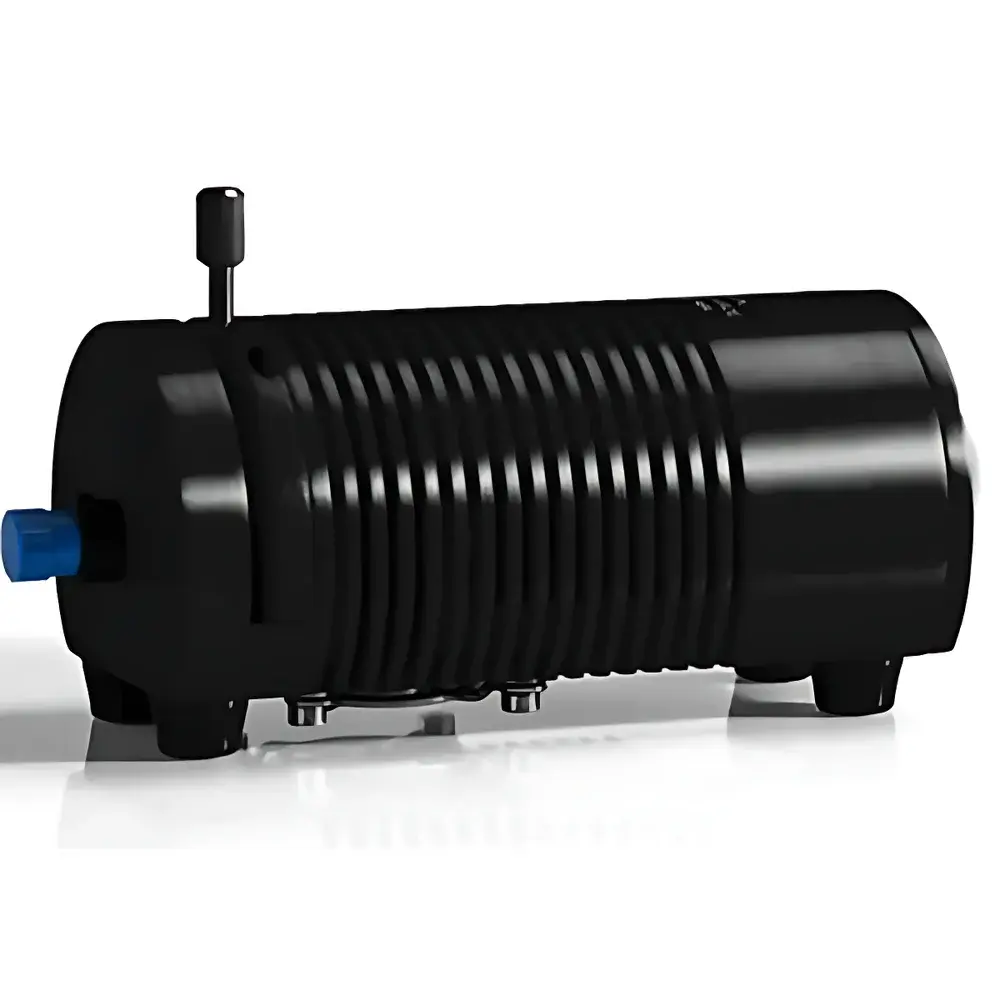
Ocean Optics HL-2000 Tungsten-Halogen Light Source
| Brand | Ocean Optics |
|---|---|
| Model | HL-2000 |
| Light Source Type | Tungsten-Halogen Lamp |
| Spectral Range | 360–2400 nm |
| Color Temperature | 2960 K (HL-2000), 2800 K (LL), 3000 K (HP) |
| Nominal Bulb Power | 5 W (standard/LL), 20 W (HP) |
| Output Stability | ±0.15% peak-to-peak (standard), ±0.25% (HP) |
| Drift | <0.3% per hour |
| Warm-up Time | 10 min (at 23°C, free-air convection) |
| Lifetime | 1,500 h (standard), 10,000 h (LL), 1,000 h (HP) |
| Cooling | Integrated fan-cooled thermal management |
| Optical Interface | SMA905 connector, adjustable for optimal fiber coupling |
| Filter Holder | Integrated, accepts 25.4 mm × 25.4 mm or 50.8 mm × 50.8 mm square filters (3 mm thick) |
| Shutter Options | Manual/TTL-triggered (FHSA variants) |
| TTL input | ≤2.5 Hz (standard/LL/HP-FHSA), ≤1.0 Hz (HP-232-R) |
| Control Interface | RS-232 (HP-232-R and FHSA models) for shutter and programmable intensity attenuation (0–100%) |
| Power Supply | 12 VDC (standard/LL), 24 VDC (HP) |
| max. power draw | 15 W (standard/LL), 30 W (HP) |
| Dimensions | 6.2 cm × 6.0 cm × 15.0 cm (standard/LL/FHSA), 6.0 cm × 13.0 cm × 19.0 cm (HP-232-R) |
| Weight | 0.5 kg (standard/LL/FHSA), 0.9 kg (HP-232-R) |
| Compliance | CE, RoHS, WEEE |
| Operating Temperature | 5–35 °C |
| Operating Humidity | 5–95% RH (non-condensing, at 40 °C) |
Overview
The Ocean Optics HL-2000 Tungsten-Halogen Light Source is a precision-engineered broadband illumination system optimized for spectroscopic applications across the visible and near-infrared (VIS-NIR) spectral region—from 360 nm to 2400 nm. Based on stabilized incandescent tungsten-halogen lamp technology, the HL-2000 delivers high radiometric stability, low temporal drift, and reproducible spectral output—critical attributes for quantitative reflectance, transmittance, absorbance, and calibration measurements in laboratory and industrial settings. Its thermally managed architecture incorporates forced-air cooling via an integrated low-noise fan, ensuring consistent color temperature (2960 K nominal) and minimizing thermal-induced spectral shift during extended operation. The source features a precisely aligned optical path terminating in an adjustable SMA905 connector, enabling repeatable, low-loss coupling to UV/VIS/NIR optical fibers—including 600 µm core diameter configurations—with minimal modal noise.
Key Features
- Stable broadband output spanning 360–2400 nm with calibrated spectral continuity for reference-grade measurements
- Three performance tiers: Standard (HL-2000), Long-Life (HL-2000-LL, 10,000 h rated lifetime), and High-Power (HL-2000-HP, 20 W filament, +30% radiant flux)
- Programmable intensity control via RS-232 interface (HL-2000-HP-232-R): enables 0–100% analog-equivalent attenuation synchronized with shutter actuation
- TTL-compatible fast shutter options (HL-2000-FHSA series) supporting up to 2.5 Hz external triggering for time-resolved experiments and synchronization with detectors or data acquisition systems
- Integrated filter holder accommodating standard 25.4 mm × 25.4 mm or 50.8 mm × 50.8 mm square optical filters (3 mm thickness), facilitating spectral shaping without external mounts
- Low-drift operation: <0.3% intensity drift per hour; ±0.15% peak-to-peak short-term stability (standard model); CE, RoHS, and WEEE compliant
Sample Compatibility & Compliance
The HL-2000 is designed for use with standard silica-based optical fibers (e.g., Ocean Insight’s QP-series, P600-1-SR, or similar UV/VIS/NIR graded-index fibers) and compatible fiber-optic probes, cuvette holders, integrating spheres, and reflection accessories. It meets essential electromagnetic compatibility and safety requirements for deployment in regulated environments—including ISO/IEC 17025-accredited laboratories—where traceable illumination sources support method validation per ASTM E308, ISO 11664, or CIE S 014. While not intrinsically FDA 21 CFR Part 11 compliant as a standalone device, its RS-232 control interface supports integration into validated instrument networks where audit-trail-enabled software manages configuration changes, shutter events, and intensity logs under GLP/GMP frameworks.
Software & Data Management
Control of shutter state and attenuator position on FHSA and HP-232-R variants is implemented through ASCII command protocol over RS-232. Ocean Insight provides open documentation for command syntax (e.g., “SHUTTER ON”, “ATTEN 50” for 50% transmission), enabling native integration with LabVIEW, Python (pySerial), MATLAB, or custom C++ applications. No proprietary drivers are required. All operational parameters—including power-on time, cumulative shutter cycles, and thermal status—are accessible via query commands, supporting automated log generation for maintenance tracking and IQ/OQ documentation. Firmware updates are delivered via serial bootloader, ensuring long-term interoperability with evolving control architectures.
Applications
- UV/VIS/NIR spectrophotometer calibration and wavelength verification (NIST-traceable reference standards recommended)
- Reflectance and transmittance measurement of thin films, coatings, and optical components
- In-line process monitoring using fiber-coupled probe assemblies in pharmaceutical, food, and semiconductor manufacturing
- Colorimetry and spectral radiance characterization of displays, lighting, and emissive materials
- Reference illumination for hyperspectral imaging systems requiring stable, broadband excitation
- Teaching labs for fundamental optics, photometry, and spectroscopy experiments requiring reproducible continuum sources
FAQ
What is the difference between HL-2000 and HL-2000-LL?
The HL-2000-LL uses a specially formulated long-life tungsten-halogen lamp rated for 10,000 hours (vs. 1,500 h for standard HL-2000), achieved via reduced filament temperature and optimized halogen cycle—resulting in slightly lower color temperature (2800 K) and ~30% lower radiant output.
Can the HL-2000 be used with multimode NIR fibers beyond 1100 nm?
Yes—when coupled to low-OH silica or fluoride-zirconia fibers (e.g., FT-IR grade), the HL-2000 maintains usable output up to 2400 nm; however, system throughput must account for fiber attenuation above 1800 nm.
Is the RS-232 interface optically isolated?
No—the RS-232 port is electrically isolated via internal DC-DC conversion but lacks galvanic isolation; for noisy industrial environments, use an external isolated RS-232 repeater.
How often should the lamp be replaced?
Replace based on measured output degradation (>10% deviation from baseline at 550 nm) or after reaching rated lifetime—especially critical in regulated applications where intensity stability directly impacts measurement uncertainty budgets.
Does the HL-2000 require warm-up before spectral measurements?
Yes—a minimum 10-minute warm-up at ambient 23°C is specified to achieve thermal equilibrium; output stability improves further after 30 minutes, particularly for high-precision radiometric work.




