
OFITE CLF-40 Automatic Compressive Strength Tester for Proppants and Oilwell Cement
| Key | Brand: OFITE |
|---|---|
| Origin | USA |
| Model | 120-285-230-DAS |
| Maximum Load Capacity | 40,000 lbf (178 kN) |
| Maximum Pressure | 10,000 psi (based on 4 in² surface area of 2″ cement cube) |
| Adjustable Loading Rate | 250–40,000 lbf/min (in 250 lbf/min increments) |
| Minimum Load Threshold | 1,000 lbf |
| Minimum Pressure | 250 psi |
| Dimensions (W×D×H) | 23″ × 23″ × 26.5″ (58 × 58 × 67 cm) |
| Weight | 102 kg |
| Power Supply | 230 V, 50 Hz |
| Compliance | API RP 10B-2 (Cement), API RP 19C (Proppant) |
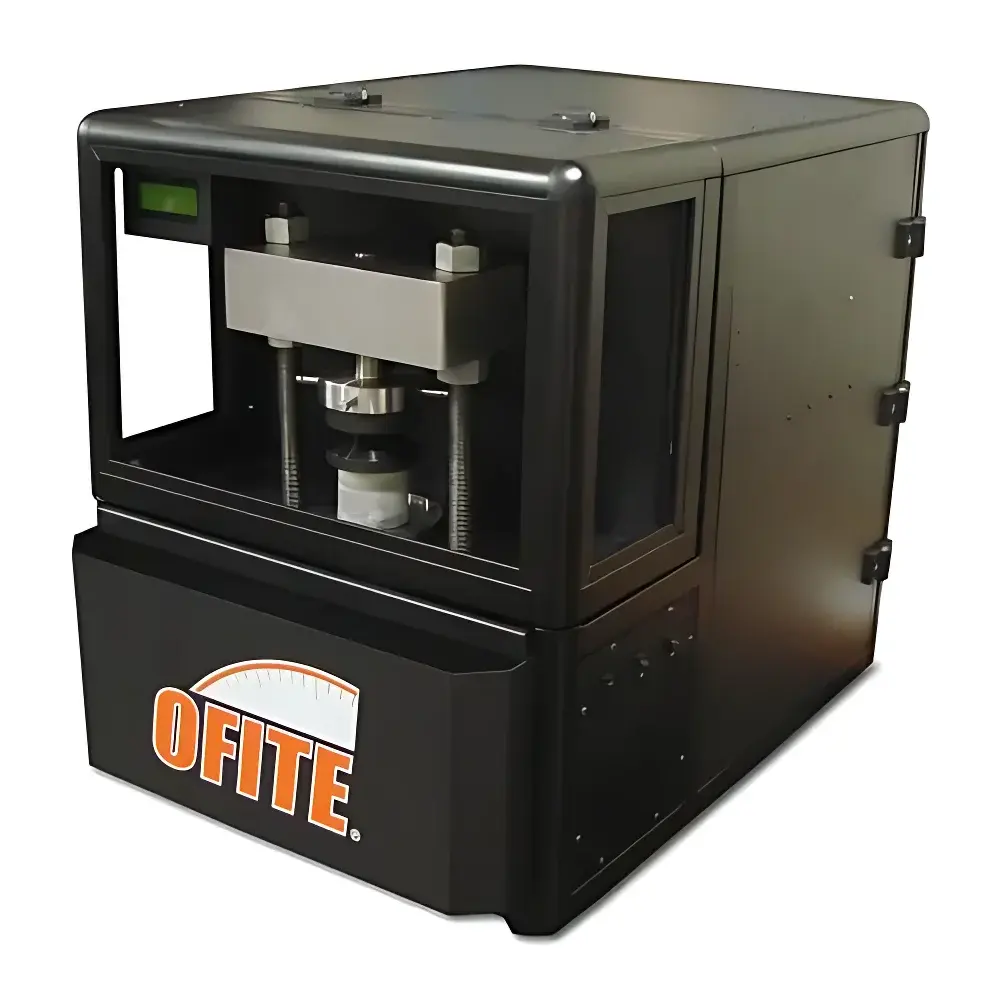
| Safety Features | Interlocked safety guard, burst disc, overpressure alarm, self-aligning platens |
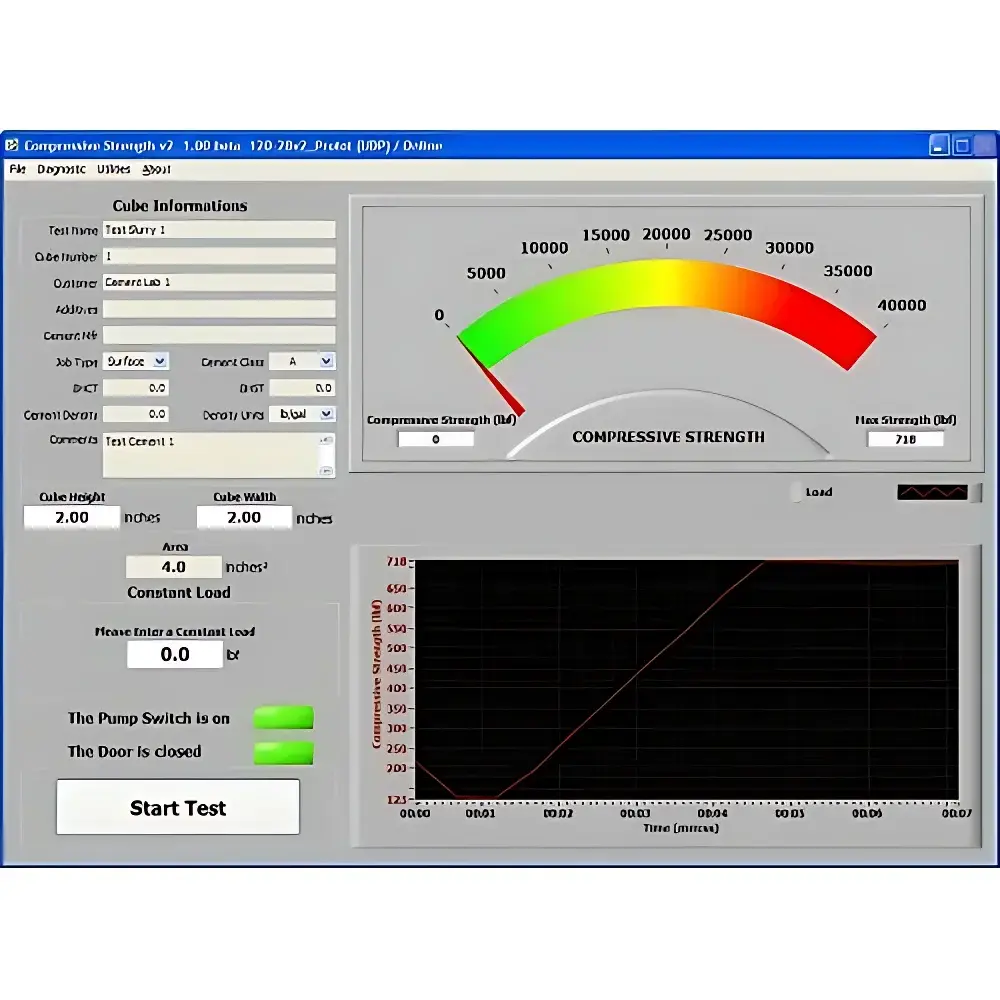
| Control Interface | Windows-based software with RS-232 and Ethernet connectivity |
| Sample Types | Cylindrical and cubic cement specimens |
Overview
The OFITE CLF-40 Automatic Compressive Strength Tester is an engineered solution for high-reproducibility mechanical evaluation of oilwell cement systems and hydraulic fracturing proppants under controlled loading conditions. Based on the fundamental principle of uniaxial compressive stress application—where a continuously increasing axial force is applied at a defined rate until specimen failure—the instrument delivers traceable, standards-aligned results essential for wellbore integrity assessment and proppant performance qualification. Unlike manual or semi-automated presses prone to operator-induced variability in loading rate and alignment, the CLF-40 employs a closed-loop electro-hydraulic servo system with proportional pressure control valves to maintain precise, programmable loading rates across its full dynamic range. Its compact footprint, integrated safety interlocks, and dual-purpose design enable seamless transition between API RP 10B-2 cement testing and API RP 19C proppant crush resistance evaluation—making it a core asset in upstream materials laboratories, cementing service QA/QC facilities, and independent testing centers operating under GLP or ISO/IEC 17025 frameworks.
Key Features
- Electro-hydraulic actuation with real-time proportional valve control ensures stable, repeatable loading profiles from 250 to 40,000 lbf/min in 250 lbf/min increments.
- Interlocked safety guard prevents operation unless fully engaged; integrated burst disc and overpressure alarm provide redundant mechanical and electronic protection.
- Self-aligning platens minimize eccentric loading effects and reduce setup time for both cubic cement specimens (2″ or 3″) and cylindrical proppant test cells.
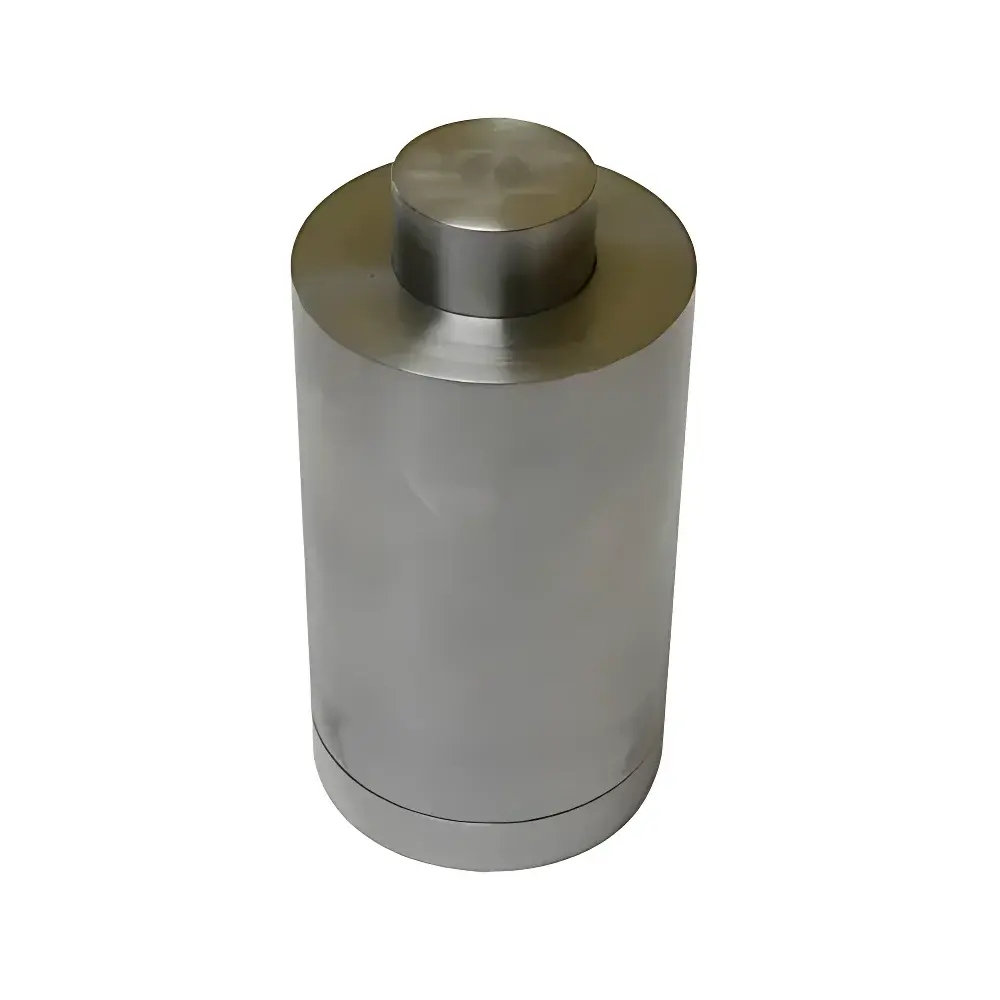
- Modular hardware configuration supports both ASTM C109/C349-compliant cement compression and API RP 19C-compliant proppant crush testing using standardized confinement vessels and piston assemblies.
- Compact form factor (58 × 58 × 67 cm) optimizes bench space utilization without compromising structural rigidity or thermal stability during extended test cycles.
- Dual-mode operation: standalone via front-panel interface or networked via RS-232 or Ethernet for centralized data logging and remote supervision.
Sample Compatibility & Compliance
The CLF-40 accommodates standard cement specimens per API RP 10B-2—including 2″ and 3″ cubes, 2″ × 4″ cylinders—and conforms to dimensional tolerances specified in ASTM C109 and ISO 679. For proppant evaluation, the system integrates API RP 19C-compliant test cells (e.g., 2.54 cm diameter × variable height) with precision-machined pistons and calibrated load transmission paths. All mechanical components are constructed from corrosion-resistant alloys suitable for exposure to cement slurries and brine-saturated proppants. The instrument meets electrical safety requirements per IEC 61000-6-2/6-4 and carries CE marking for use in EU-regulated environments. Audit-ready calibration records and traceable load cell certification (NIST-traceable) support compliance with FDA 21 CFR Part 11 when used in regulated cement additive development workflows.
Software & Data Management
The Windows-based control software provides a tab-driven interface with context-sensitive menus, eliminating hierarchical navigation delays. Real-time force–displacement curves update at ≥100 Hz, with user-definable thresholds for peak load capture, fracture onset detection, and post-failure relaxation monitoring. Each test session auto-generates a timestamped report including environmental metadata (operator ID, ambient temperature/humidity), calibration status, and raw binary data export (CSV, XML). Historical datasets are indexed by sample ID, test type, and compliance standard, enabling cross-lot trending and statistical process control (SPC) analysis. Software audit trails log all parameter changes, user logins, and report modifications—fully compliant with ALCOA+ principles for data integrity in GxP environments.
Applications
- Quantification of compressive strength development in Class A, C, G, and H oilwell cements cured under simulated downhole conditions (temperature, pressure, slurry composition).
- Evaluation of proppant crush resistance at target closure stresses (e.g., 2,000–12,000 psi), including post-crush permeability screening via optional permeameter integration.
- Comparative assessment of cement additives (e.g., silica flour, latex, nanomaterials) on early-age strength gain kinetics.
- Validation of laboratory-scale cement formulations prior to field deployment or regulatory submission (e.g., API monogram licensing).
- Root cause analysis of cement sheath failures through controlled failure mode replication under varying loading rates and confinement conditions.
FAQ
Does the CLF-40 meet API RP 19C requirements for proppant crush testing?
Yes—the system includes API-compliant test cells, calibrated piston assemblies, and software-defined test protocols aligned with Sections 6 and 7 of API RP 19C, including ramp-rate control and crush fraction calculation.
Can the instrument be calibrated in-house?
While routine verification can be performed using certified reference load cells, full recalibration requires NIST-traceable deadweight standards and must be conducted by OFITE-certified service engineers or accredited third-party labs.
Is the software compatible with LIMS integration?
Yes—via configurable ODBC drivers and RESTful API endpoints, the software supports bidirectional data exchange with major laboratory information management systems (LIMS) for automated result ingestion and workflow triggering.
What maintenance intervals are recommended?
Hydraulic fluid replacement every 24 months, seal inspection every 6 months, and annual verification of load cell linearity and zero drift—documented in the included Preventive Maintenance Log template.
How is data integrity ensured during power interruption?
The controller features non-volatile memory that preserves active test state and raw acquisition buffers; upon recovery, tests resume from last valid data point without loss of resolution or timing fidelity.




