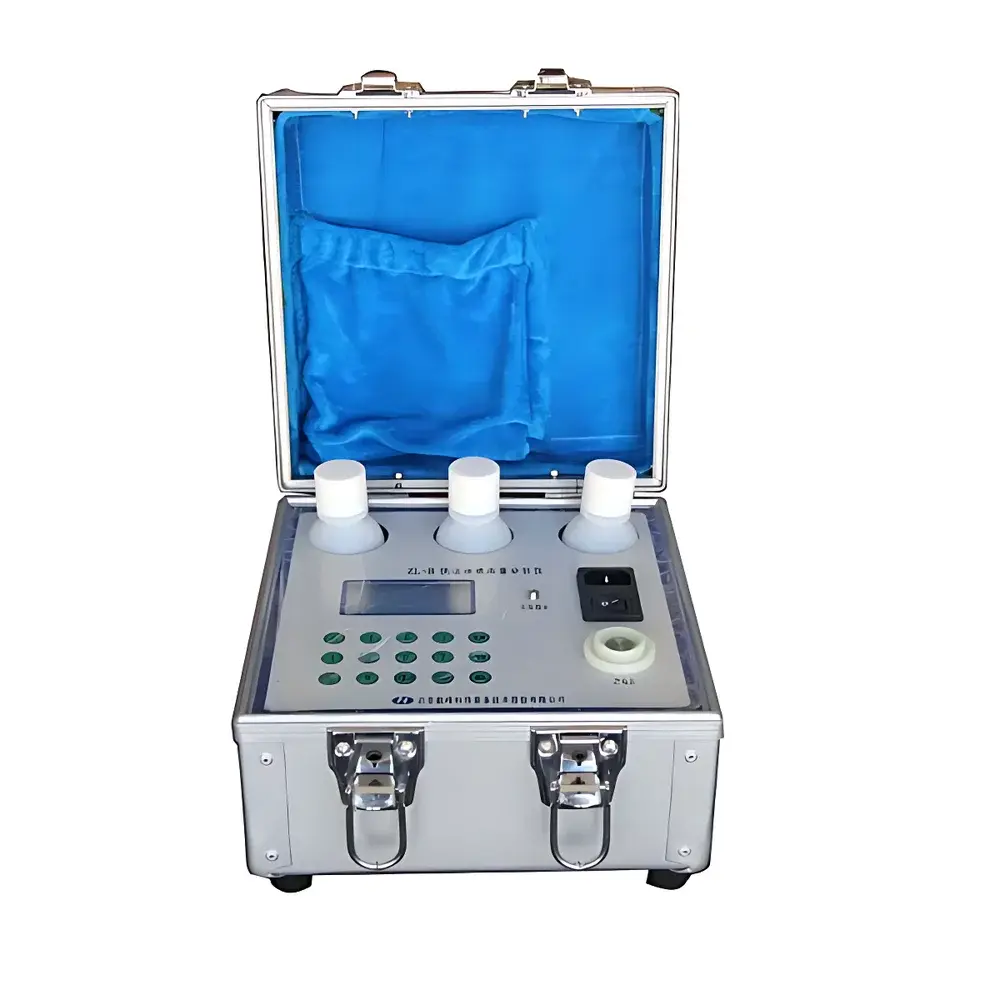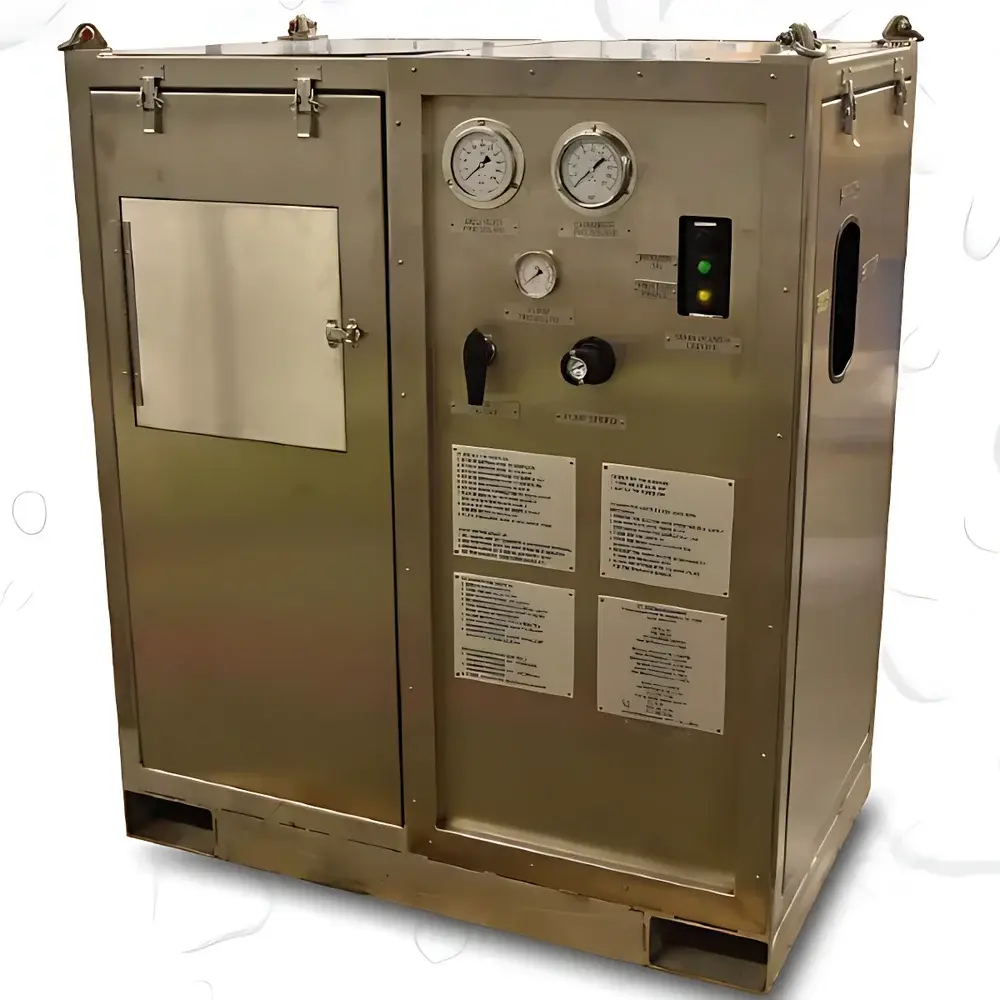
OFITE OASys-EX Automated Drilling Fluid Monitoring System
| Brand | OFITE |
|---|---|
| Origin | USA |
| Manufacturer Status | Authorized Distributor |
| Origin Category | Imported |
| Model | 355-00 |
| Pricing | Upon Request |
| Certification | ATEX & IECEx Certified (IEC 60079-46, Ex h IIB T3 Gb, Zone 1) |
| Power Requirement | 115 V / 20 A |
| Pneumatic Supply | 120 psi |
| Footprint | 48" × 26" × 48" (L × W × H) |
| Net Weight | 990 lb |
| Sample Interface | Standard 1" cam-lock hose |
| Cleaning Fluid Inlet | Yes |
| Safety | Dual-stage sealed containment with drain |
| Connectivity | Ethernet, RS-232/485, WiFi, WITS, WITSML |
| Optional Software | HWD Hydraulic Calculation Suite (ECD, pressure loss, cuttings transport efficiency, surge & swab analysis) |
Overview
The OFITE OASys-EX Automated Drilling Fluid Monitoring System (Model 355-00) is an intrinsically safe, fully integrated process analytical technology platform engineered for continuous, real-time characterization of drilling fluids in offshore and onshore rig environments. Operating on the principle of direct physical measurement—rather than inference or proxy correlation—the system employs precision-engineered rotational viscometry, hydrostatic density transduction, and calibrated thermal sensing to deliver traceable, repeatable data under dynamic downhole-representative conditions. Designed specifically for Zone 1 hazardous areas per ATEX and IECEx directives (certified to IEC 60079-46, Ex h IIB T3 Gb), the OASys-EX eliminates manual sampling and offline lab analysis, reducing human exposure risk while enabling proactive mud engineering decisions. Its architecture supports closed-loop integration with rig control systems, allowing automated response triggers based on user-defined thresholds—critical for maintaining equivalent circulating density (ECD) integrity and preventing formation damage or wellbore instability.
Key Features
- Continuous, in-line measurement of mud density (±0.01 ppg resolution), apparent viscosity (at 600 rpm), and fluid temperature (±0.5 °C)
- Full-API rheological profiling: plastic viscosity (PV), yield point (YP), and gel strength (10-sec & 30-sec) across programmable shear rates from 3 to 600 rpm at user-set temperature stabilization points (±0.3 °C control accuracy)
- Automated cleaning cycle with timed solvent flush and dual-stage containment—integrated drain path ensures no residual carryover between samples
- Redundant safety architecture: secondary mechanical seal system with independent vented drain manifold, compliant with API RP 54 and ISO 13702 requirements for hazardous area fluid handling
- Multi-protocol digital output: native support for Ethernet TCP/IP, RS-232/485 serial, WiFi (802.11n), WITS (Wellsite Information Transfer Specification), and WITSML v1.4.1 for seamless SCADA and DCS interoperability
- Compact footprint (48″ × 26″ × 48″) and modular mounting design enable installation in constrained rig-floor spaces without structural reinforcement
Sample Compatibility & Compliance
The OASys-EX accommodates water-based muds (WBM), oil-based muds (OBM), synthetic-based muds (SBM), and invert emulsions within standard rheological operating ranges. All wetted components—including shear geometry, density cell, and temperature probe—are constructed from corrosion-resistant 316 stainless steel and Hastelloy C-276, qualified for H₂S service per NACE MR0175/ISO 15156. The system meets rigorous regulatory expectations for field-deployed instrumentation: ATEX/IECEx Zone 1 certification (Ex h IIB T3 Gb), compliance with IEC 61508 SIL 2 functional safety requirements for monitoring subsystems, and alignment with API RP 13B-1 and ISO 10414-2 for rheological test methodology traceability. Data acquisition logs include full audit trail metadata (timestamp, operator ID, calibration status, environmental ambient conditions) to satisfy GLP and internal QA/QC documentation protocols.
Software & Data Management
OASys-EX operates via embedded Linux-based firmware with deterministic real-time scheduling, ensuring sub-second measurement intervals and time-synchronized multi-parameter capture. Configuration, diagnostics, and historical trending are managed through a web-accessible interface (HTTPS/TLS 1.2 secured) compatible with modern browsers—no client-side software installation required. All raw and derived parameters are stored locally on encrypted industrial-grade microSD with 30-day rolling buffer; optional cloud synchronization enables remote access via secure API endpoints. For regulatory compliance, the system supports FDA 21 CFR Part 11–aligned electronic signature workflows and audit log export in CSV/JSON formats. Optional HWD hydraulic modeling software integrates directly via OPC UA, providing real-time ECD prediction, annular pressure loss calculation, cuttings bed height estimation, and surge/swab sensitivity analysis—all validated against industry-standard hydraulics models (e.g., Moore, Bingham Plastic, Herschel-Bulkley).
Applications
- Real-time optimization of rheological properties during drilling, casing, and cementing operations
- Early detection of fluid degradation, contamination (e.g., gas influx, solids loading), or chemical depletion
- Support for managed pressure drilling (MPD) and underbalanced drilling (UBD) by feeding high-fidelity density and viscosity inputs into surface backpressure controllers
- Automated reporting for daily drilling reports (DDRs), MWD/LWD correlation, and post-well performance review
- Validation of laboratory rheometer calibrations and inter-lab method harmonization studies
- Training and simulation environments where representative dynamic fluid behavior must be replicated under controlled hazardous-area constraints
FAQ
What certifications apply to the OASys-EX for hazardous area deployment?
The system carries ATEX and IECEx certification for Zone 1 (Ex h IIB T3 Gb) per IEC 60079-46, with full documentation available upon request for site-specific authority verification.
Can the OASys-EX operate without a local PC or network infrastructure?
Yes—it functions autonomously with onboard data logging, local display, and scheduled self-diagnostics. Network connectivity is optional for remote access and integration.
Is calibration traceable to NIST or other national standards?
All primary sensors undergo factory calibration with NIST-traceable reference standards; calibration certificates include uncertainty budgets and are provided with each unit.
What maintenance intervals are recommended for field operation?
Preventive maintenance is scheduled every 300 operational hours or quarterly—whichever occurs first—with documented procedures covering seal inspection, cleaning nozzle verification, and torque verification of rotary sensor assemblies.
Does the system support third-party SCADA or DCS integration beyond WITS/WITSML?
Yes—via Modbus TCP, OPC UA, or custom RESTful API endpoints, enabling bidirectional communication with Emerson DeltaV, Honeywell Experion, and Siemens PCS7 platforms.