
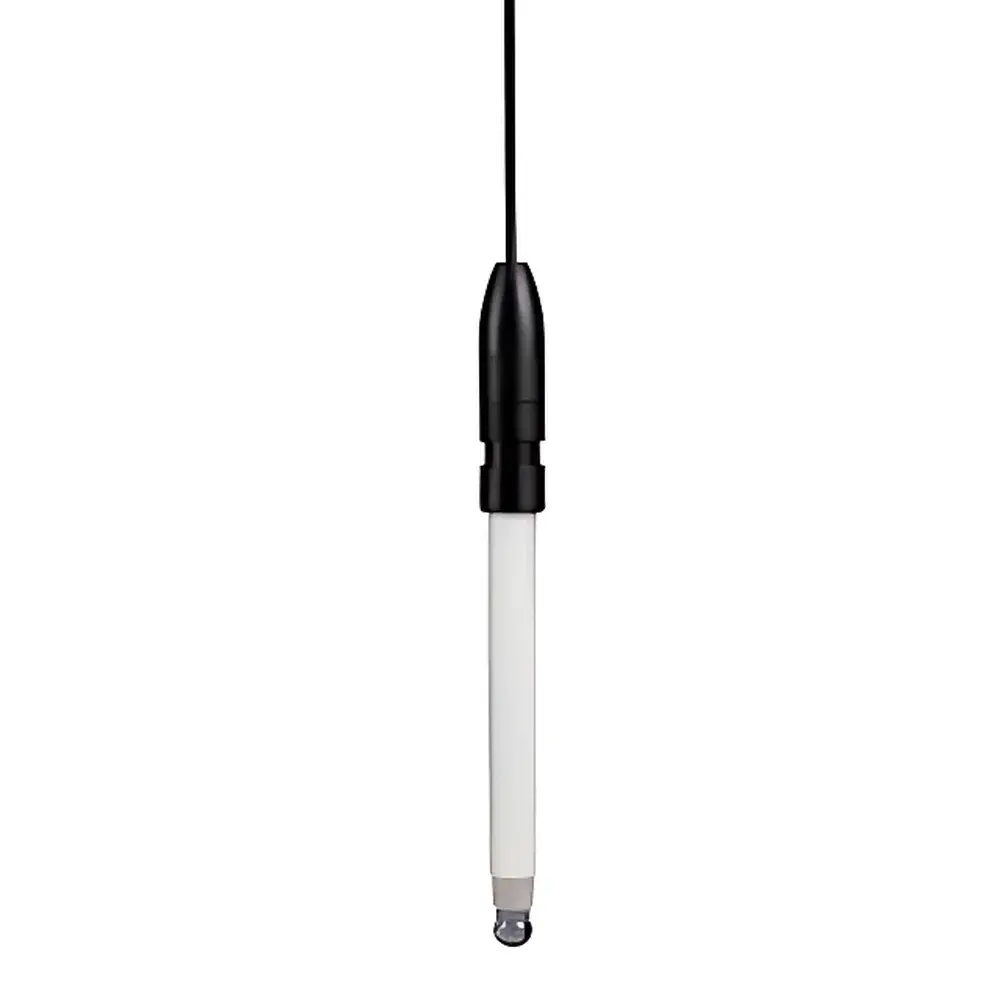
OHAUS ST230 Combination Ring-Body Glass pH Electrode
| Origin | Shanghai, China |
|---|---|
| Manufacturer Type | Authorized Distributor |
| Regional Origin | Domestic (PRC) |
| Model | ST230 |
| Pricing | Available Upon Request |
Overview
The OHAUS ST230 is a robust, combination-type pH electrode engineered for reliable potentiometric measurement in challenging liquid matrices. It employs a conventional glass membrane sensing element paired with an integrated Ag/AgCl reference system housed within a single, compact probe body. The electrode operates on the Nernst principle—generating a voltage potential proportional to the hydrogen ion activity in solution—enabling accurate and repeatable pH determination across aqueous and semi-aqueous samples. Its defining mechanical feature is the ring-shaped porous ceramic junction (sand-core junction), which provides a stable, low-resistance electrolyte pathway while minimizing clogging from particulates or viscous media. This architecture makes the ST230 particularly suited for routine quality control and process monitoring in food & beverage, dairy, juice production, and academic teaching laboratories where sample turbidity, suspended solids, or moderate protein content are common.
Key Features
- Combination design eliminates need for separate reference and measuring electrodes—reducing setup time and calibration complexity.
- Ring-body sand-core junction offers enhanced flow stability and resistance to fouling compared to conventional capillary or fiber junctions, especially in high-solids or colloidal suspensions.
- Low-resistance glass membrane (350–500 MΩ at 25 °C) ensures rapid response (<30 seconds to 95% stabilization) and improved signal stability in low-conductivity samples.
- Integrated temperature sensor (NTC 30 kΩ) enables automatic temperature compensation (ATC) when used with compatible OHAUS or third-party meters supporting analog or digital RTD input.
- Chemically resistant PPS (polyphenylsulfone) body withstands repeated cleaning with mild detergents, ethanol, or dilute acid/base solutions—supporting extended service life under routine lab handling.
- Standard BNC connector ensures broad compatibility with benchtop and portable pH meters adhering to IEC 60651 or ASTM D1293 signal interface conventions.
Sample Compatibility & Compliance
The ST230 demonstrates consistent performance in non-aggressive, aqueous-based samples with pH range 0–14 and temperature range 0–80 °C. It is validated for use with fruit juices (e.g., orange, apple), raw and pasteurized milk, yogurt slurries, soft cheese extracts, plant-based beverages (soy, oat), and fermentation broths containing up to 5% total suspended solids (TSS). While not rated for strong oxidizers (e.g., hypochlorite), concentrated hydrofluoric acid, or non-aqueous solvents (>20% organic content), its junction design maintains operational integrity in samples where standard sleeve-junction electrodes typically exhibit drift or slow equilibration. The electrode complies with general laboratory safety standards per ISO/IEC 17025:2017 for measurement traceability when used within validated calibration protocols. It supports GLP-aligned documentation practices when paired with meters offering audit-trail logging (e.g., OHAUS ST5000 series with CFR Part 11-compliant firmware).
Software & Data Management
As a passive analog transducer, the ST230 does not incorporate onboard memory or digital communication interfaces. All data acquisition, calibration management, and reporting functions are handled externally by the host pH meter. When connected to OHAUS ST-series instruments (e.g., ST200, ST300, ST5000), users benefit from built-in calibration verification tools—including slope and offset diagnostics, buffer recognition, and multi-point calibration history storage. These meters support export of timestamped pH and temperature readings via USB or RS-232 to LIMS or Excel-compatible formats. For regulated environments, ST5000 models with optional software modules provide electronic signature capability, user access levels, and full 21 CFR Part 11 audit trails—including operator ID, calibration parameters, and raw mV values—ensuring compliance with FDA-regulated QC workflows.
Applications
- Quality assurance testing of dairy products: pH monitoring during cheese curd formation, yogurt acidification, and UHT milk shelf-life studies.
- Process control in juice processing lines: real-time pH verification pre- and post-pasteurization to ensure microbial stability and regulatory compliance (e.g., FDA 21 CFR 120).
- Academic instruction: hands-on electrochemistry labs demonstrating junction potential effects, calibration drift analysis, and matrix interference mitigation strategies.
- R&D in plant-based food development: tracking acidification kinetics in fermented nut milks and grain-based beverages.
- Environmental screening: preliminary pH assessment of wastewater effluents with moderate turbidity where disposable electrodes are cost-prohibitive.
FAQ
Can the ST230 be used in high-fat or high-protein samples like cream or whey protein isolate?
Yes—its ring-body junction resists protein adsorption better than tapered or fiber junctions; however, regular cleaning with pepsin/HCl solution (1% pepsin in 0.1 M HCl) is recommended after each use.
What is the expected service life under daily QC use?
With proper storage (in 3 M KCl solution) and weekly calibration, typical functional lifespan exceeds 12–18 months in controlled lab environments.
Is the electrode compatible with non-OHAUS meters?
Yes—any pH meter with standard BNC input and adjustable asymmetry potential (±200 mV range) can accommodate the ST230.
Does it require special storage conditions?
It must be stored tip-down in 3 M KCl storage solution; never in distilled water or dry conditions, as dehydration irreversibly damages the glass membrane.
Can it measure pH in alcoholic beverages such as wine or beer?
It is suitable for finished wine (pH 3.0–4.0) and filtered beer; however, unfiltered wort or high-ethanol distillates (>15% v/v) may cause reference junction instability and should be avoided.






