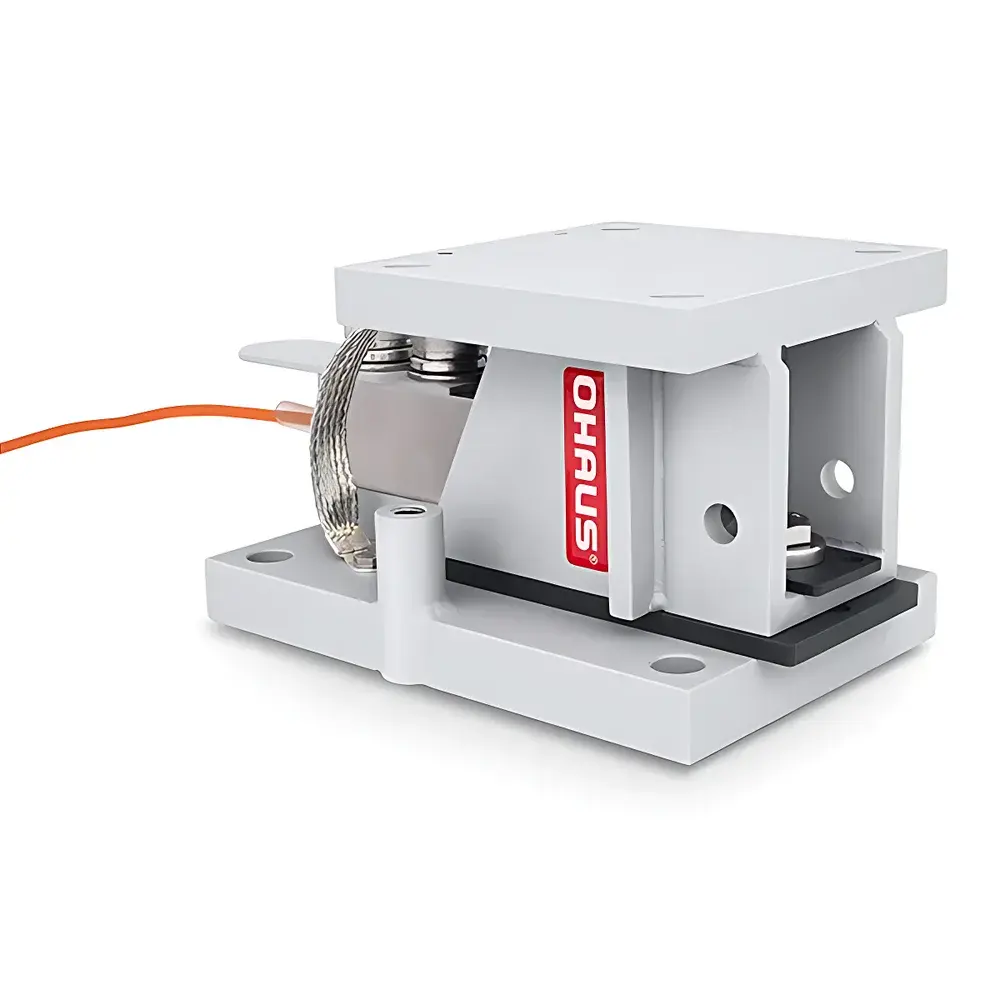
OHAUS Trooper Series i-TME Load Cell Modules
| Brand | OHAUS |
|---|---|
| Origin | Jiangsu, China |
| Manufacturer Type | Manufacturer |
| Product Origin | Domestic (China) |
| Model | i-TME |
| Pricing | Available Upon Request |
| Module Material | Alloy Steel (Q345) / Stainless Steel (SUS304) |
| Rated Capacity | 0.5 t / 1 t / 2 t / 5 t |
| Sensor Model | LBZ4-CS (alloy steel) / LBZ4-SS (stainless steel) |
| Protection Rating | IP67 (i-TME) / IP68 (i-TMES) |
| Accuracy Class | C3 |
| Max. Verification Scale Intervals (nmax) | 3,000 |
| Combined Error | ≤ ±0.020 %FS |
| Creep (30 min) | ≤ ±0.016 %FS |
| Temp. Effect on Sensitivity | ≤ ±0.011 %FS/10 °C |
| Temp. Effect on Zero | ≤ ±0.015 %FS/10 °C |
| Nominal Sensitivity | 3.0 ±0.003 mV/V (LBZ4-CS), 2.0 ±0.004 mV/V (LBZ4-SS), 3.0 ±0.008 mV/V (LBZ4-SS, 5 t), 2.0 ±0.002 mV/V (LBZ4-CS, 5 t) |
| Input Impedance | 350 ±3.5 Ω (0.5–2 t), 1000 ±10 Ω (5 t) |
| Output Impedance | 351 ±2 Ω (LBZ4-CS, 0.5–2 t), 350 ±3.5 Ω (LBZ4-SS, 0.5–2 t), 1000 ±10 Ω (5 t) |
| Insulation Resistance | ≥5000 MΩ @ 50 VDC |
| Zero Balance | ≤ ±1.0 %FS |
| Temp. Compensation Range | −10 to +40 °C |
| Operating Temp. Range | −35 to +70 °C |
| Recommended Excitation Voltage | 5–12 V DC |
| Max. Excitation Voltage | 18 V DC |
| Safe Overload | 150 %FS |
| Ultimate Overload | 300 %FS |
| Cable Length | 5 m |
Overview
The OHAUS Trooper Series i-TME Load Cell Modules are precision-engineered force transduction systems designed for high-reliability static and dynamic weighing applications in industrial process control, tank and hopper monitoring, conveyor-based checkweighing, and material handling automation. Built upon proven load cell architecture rooted in Hooke’s law and strain gauge Wheatstone bridge principles, each module delivers stable, repeatable analog output proportional to applied mechanical load. The i-TME (alloy steel construction) and i-TMES (austenitic stainless steel SUS304) variants are optimized for distinct environmental and regulatory requirements—offering IP67 ingress protection for general-purpose industrial settings and IP68 for continuous exposure to moisture, washdown, or corrosive agents. With C3 accuracy class certification per OIML R60 and ISO 376 compliance, these modules meet the metrological rigor demanded by GLP, GMP, and ISO/IEC 17025-accredited laboratories and production facilities.
Key Features
- Robust Mechanical Architecture: Self-stabilizing rocker-column design maintains optimal load alignment across the upper mounting plate, minimizing off-axis loading errors and preserving long-term repeatability (≤ ±0.016 %FS creep over 30 minutes).
- Overload Resilience: Engineered for 150 % safe overload and 300 % ultimate overload capacity—critical for safeguarding sensor integrity during transient shocks, misloading, or maintenance-related impacts.
- 360° Horizontal Restriction: Integrated lateral constraint system limits horizontal displacement under shear forces, ensuring structural stability during dynamic operation without compromising vertical load fidelity.
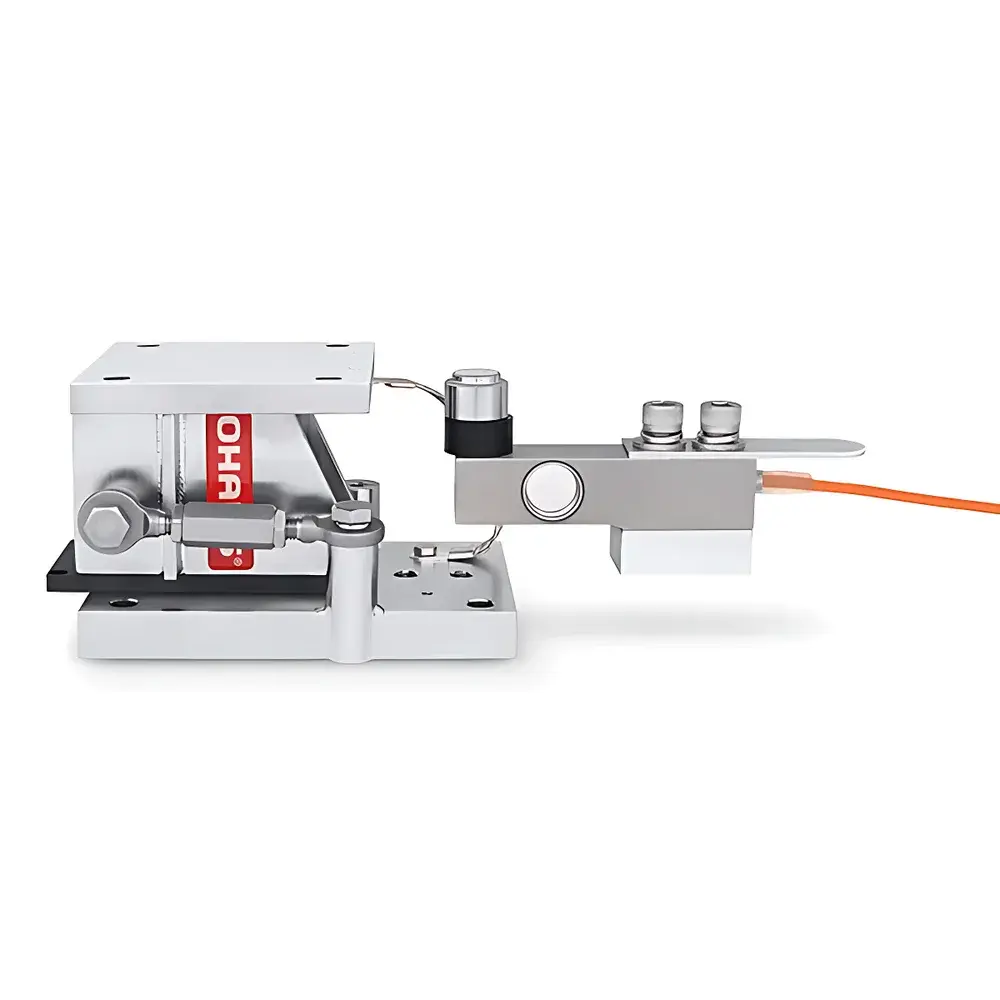
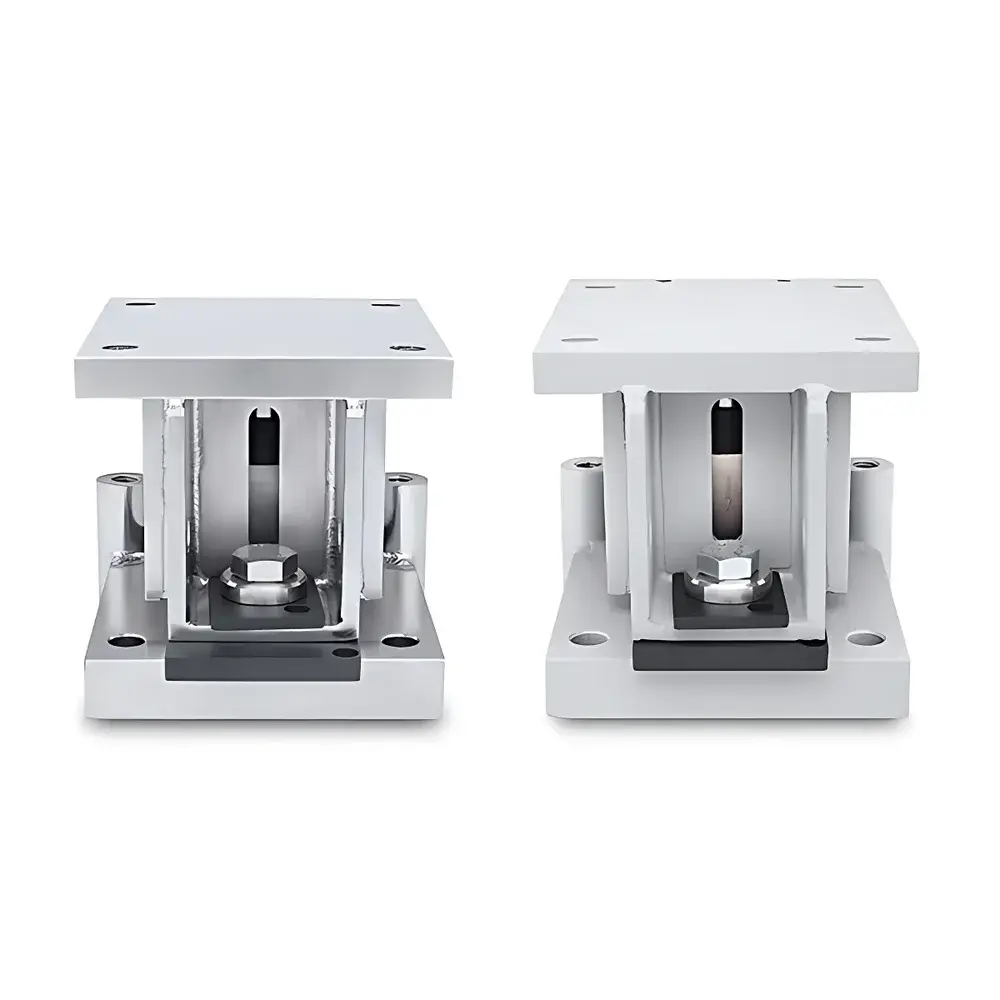
- Modular Installation Flexibility: Supports both sensor-integrated and sensor-free mounting configurations—enabling seamless integration into existing frames, silos, or custom platforms with minimal structural modification.
- Maintenance-Optimized Design: Tool-free sensor access via minimal vertical lift; no disassembly of load-bearing hardware required for replacement or calibration verification—reducing downtime and service labor costs.
Sample Compatibility & Compliance
The i-TME/i-TMES series accommodates a broad range of industrial load profiles—from low-mass batch dispensing (0.5 t) to heavy-duty bulk material transfer (5 t). All variants comply with international metrological standards including OIML R60 (C3 class), EN 45501, and ISO 376 for force transducer calibration traceability. Stainless steel (SUS304) models feature electropolished surfaces and hermetic welding, satisfying FDA 21 CFR Part 11 and EHEDG guidelines for food, pharmaceutical, and bioprocessing environments. Alloy steel versions utilize epoxy-powder-coated Q345 substrate and silicone-sealed strain gauges, suitable for controlled indoor manufacturing and warehouse logistics where corrosion resistance is secondary to cost-effective durability.
Software & Data Management
As analog-output devices, i-TME modules interface seamlessly with industry-standard signal conditioning electronics—including OHAUS IND570, METTLER TOLEDO ICS, and Siemens SIMATIC S7-compatible weight transmitters. When paired with compliant data acquisition systems supporting audit trail functionality (e.g., LabArchives, DeltaV, or custom SCADA with 21 CFR Part 11-compliant electronic signatures), full traceability of calibration events, zero checks, and load history is achievable. Raw mV/V output enables linearization, temperature compensation, and tare management at the transmitter level—ensuring compliance with ISO/IEC 17025 clause 5.10 on result reporting and uncertainty evaluation.
Applications
- Static and dynamic weighing of mixing vessels, reactors, and storage tanks in chemical and pharmaceutical manufacturing
- Real-time mass flow monitoring on belt conveyors and vibratory feeders
- Legal-for-trade batching systems requiring NTEP or MID certification (when integrated with certified indicator/transmitter)
- Structural health monitoring of load-bearing platforms in automated guided vehicle (AGV) docking stations
- In-process quality control for powder blending, tablet compression, and liquid filling operations
FAQ
What is the difference between i-TME and i-TMES modules?
The i-TME uses Q345 alloy steel with epoxy powder coating and silicone-sealed sensors (IP67); the i-TMES employs electropolished SUS304 stainless steel with welded hermetic seals (IP68), offering superior corrosion and hygiene performance.
Can these modules be used in hazardous areas?
No—i-TME/i-TMES modules are not intrinsically safe or ATEX-certified. For Zone 1/2 installations, consult OHAUS for explosion-proof enclosures or compatible certified barrier systems.
Is factory calibration documentation provided?
Yes—each unit ships with a manufacturer’s calibration certificate traceable to NIST or CNAS-accredited standards, listing as-tested values for sensitivity, zero balance, creep, and thermal effects.
What excitation voltage range ensures optimal linearity?
A regulated 5–12 V DC supply is recommended; operation above 12 V increases self-heating error, while below 5 V reduces signal-to-noise ratio and effective resolution.
Are mounting dimensions identical across capacities?
Yes—0.5 t, 1 t, and 2 t models share identical footprint (A/B/C/D/F/L = 114/124/114/17.5/17.5/185 mm); only the 5 t variant features enlarged dimensions (153/153/153/18/18/235 mm) to accommodate higher structural rigidity.